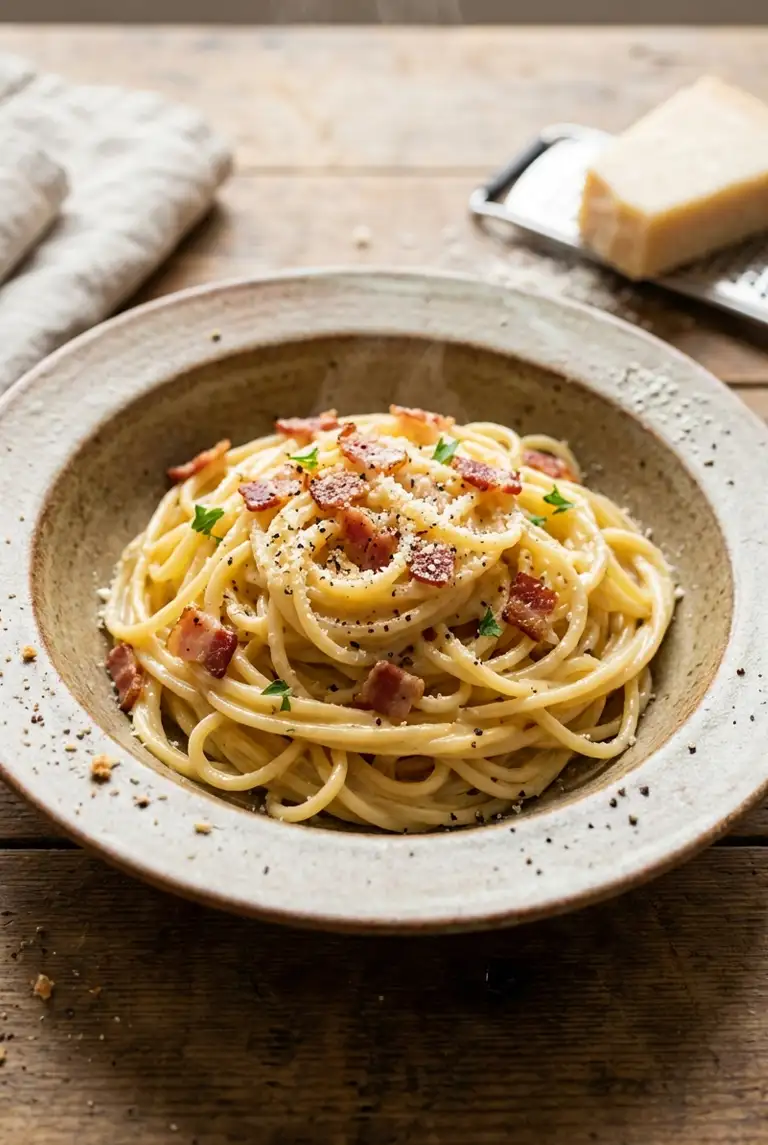
The first time I tried to make a creamy no-egg carbonara, I treated it too much like Alfredo with bacon and added the cheese while the pan was still too hot. It clumped almost immediately, then turned grainy and heavy instead of silky.
That batch made the key part clear: keep the cream at a bare simmer, then add the parmesan off the heat. If the sauce looks slightly loose in the skillet, that is usually right. It tightens as it hits the pasta and settles into the glossy, lightly thick texture you want.
This is not traditional Roman carbonara. It is a creamy, no-egg carbonara-style pasta for weeknights when you want the bacon, black pepper, cheese, and spaghetti combination without dealing with eggs.
Why This Creamy No-Egg Carbonara Works
- It gives you the carbonara flavor profile in a more forgiving format.
- The sauce stays smooth because the cheese is added off the heat.
- Bacon fat, cream, pasta water, and finely grated parmesan build a sauce that coats the noodles instead of turning greasy.
- It comes together quickly, but it still tastes deliberate.
What Makes This Carbonara Without Eggs So Creamy
The cream helps, but the texture mostly comes from how the sauce is built:
- Rendered bacon fat gives the sauce depth and helps carry the cheese and pepper.
- Pasta water loosens the sauce and helps it cling to the spaghetti in a thin layer.
- Finely grated parmesan melts much more smoothly than coarse shreds.
- Adding the cheese off the heat keeps the sauce from breaking or turning grainy.
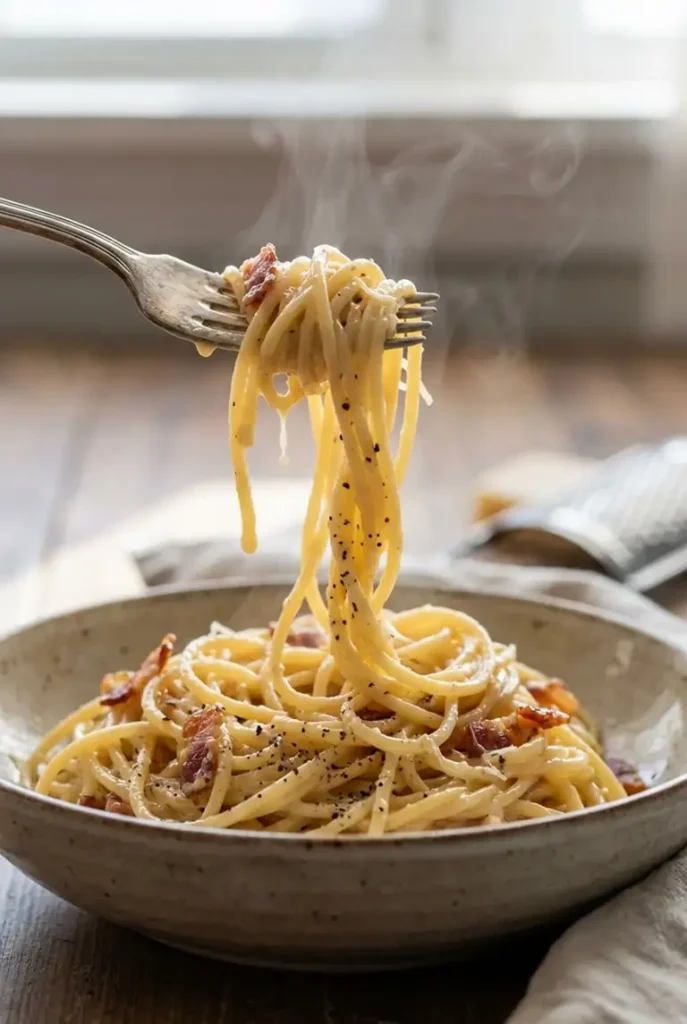
The finished pasta should look glossy and fluid, not stiff or gluey. The noodles should stay coated, not buried in sauce.
Ingredients for Creamy No-Egg Carbonara Pasta
- 12 ounces spaghetti (340g)
- 8 ounces bacon, chopped (225g)
- 1 tablespoon olive oil (15g)
- 3 cloves garlic, minced
- 1 cup heavy cream (240g)
- 1 cup finely grated parmesan cheese (100g)
- 1 teaspoon freshly ground black pepper (I like a 👉fragrant black pepper here, not a flat pre-ground one)
- Salt, for the pasta water
- 2 tablespoons chopped parsley, optional
Best pasta for no-egg carbonara
Spaghetti is the most straightforward choice here. It gives you the classic carbonara feel and holds a light coating of sauce well. Linguine also works. Short pasta is usable, but this sauce makes the most sense on long strands.
Bacon, pancetta, or guanciale
Bacon is the easiest option and brings smoke along with the salt. Pancetta gives a cleaner cured-pork flavor and lands a little closer to the usual carbonara direction. Guanciale works too, though at that point you may prefer a more traditional egg-based version.
Parmesan vs pecorino for a smoother sauce
Parmesan melts more gently and gives a nuttier, rounder flavor. Pecorino is sharper and saltier. For a smoother no-egg carbonara sauce, parmesan is the safer choice. If you want more bite, use half parmesan and half pecorino.
How to Make Carbonara Without Eggs
Cook the Pasta Just to Al Dente
- Bring a large pot of water to a boil and season it well. It should taste lightly salty, but don’t overdo it since the bacon and cheese add plenty later.
- Cook the spaghetti 1 minute shy of package time. Before draining, reserve at least 1 cup of pasta water.
Render the Bacon Until Crisp, Not Hard
- While the pasta cooks, set a large skillet over medium heat. Add the bacon and cook for 6 to 8 minutes, stirring now and then, until the edges are deep golden and crisp, but not dark brown or brittle.
- If the bacon is lean and the pan looks dry, add the olive oil. If it gives off a lot of fat, you can skip some or all of the oil.
- Transfer a spoonful of bacon to a plate if you want some pieces to stay extra crisp for serving, then leave the rest in the skillet.
Build a Silky Cream Sauce
- Lower the heat to medium-low. Add the garlic and cook for 30 to 60 seconds, just until fragrant. If it starts turning tan, lower the heat right away.
- Pour in the heavy cream and stir to combine with the bacon fat. Let it come to a gentle simmer for 2 to 3 minutes. You want small bubbles around the edge, not a rolling boil. The cream is ready when it lightly coats the back of a spoon.
- Stir in the black pepper.
Toss Until the Sauce Clings to Every Strand
- Add the drained spaghetti to the skillet along with 1/2 cup of the reserved pasta water. Toss well over low heat for 1 to 2 minutes so the pasta finishes cooking and starts absorbing the sauce.
- Take the skillet off the heat. Add the finely grated parmesan a handful at a time, tossing continuously until the sauce turns glossy and smooth. If it looks tight or sticky, add more pasta water in small splashes until the sauce loosens.
- The final texture should cling to the noodles in a thin, silky layer. If it sits in a thick mass, it needs more pasta water. If it looks watery, let it sit 30 seconds and toss again; the cheese will usually pull it together.
- Taste and add more pepper if needed. The pepper should be noticeable in each bite, not just scattered on top.
- Serve immediately, with parsley and extra parmesan if you like. Warm bowls help keep the sauce fluid for the first few minutes at the table.
Tips for the Best No-Egg Spaghetti Carbonara
- Use finely grated parmesan, not thick shreds.
- Keep the heat low once the cream goes in.
- Save more pasta water than you think you need.
- Do not salt the finished dish until you taste it.
Variations
Chicken Carbonara Pasta Recipe No Egg
For a higher-protein version, add 1 to 1 1/2 cups cooked sliced chicken breast or rotisserie chicken when you toss in the pasta. You can keep the bacon for flavor or cut it back to 4 ounces (115g) so the dish doesn’t get too salty.
For another silky stovetop pasta idea, take a look at White Sauce Chicken Pasta without Cheese.
Carbonara Pasta Bake No Egg
Make the pasta as directed, but keep the sauce slightly looser by adding an extra splash of cream or pasta water. Transfer to a baking dish, top with extra parmesan and a small handful of mozzarella, and bake at 400°F for 10 to 15 minutes, until bubbling at the edges and lightly browned on top.
Common Problems and How to Fix Them
Why did my no-egg carbonara turn grainy?
The pan was probably too hot when the cheese went in, or the parmesan was too coarse. Remove the skillet from the heat before adding cheese and use finely grated parmesan.
How do I keep it from getting too thick?
Hold back extra pasta water and add it a tablespoon or two at a time while tossing. The sauce should look slightly loose in the skillet because it firms up as it cools.
Can I use frozen peas or spinach?
Yes. Add frozen peas during the last 1 to 2 minutes of simmering. Add spinach right before serving and toss just until wilted. Do not add too much or the sauce gets diluted.
Can I use pancetta instead of bacon?
Yes. Pancetta gives a less smoky, more cured flavor. It can also be saltier, so taste the dish before adding any extra salt.
How to Store and Reheat Leftovers
Store leftovers in an airtight container in the fridge for up to 3 days.
To reheat, put the pasta in a skillet or saucepan with a small splash of cream, milk, or water. Warm over low heat, tossing gently until the sauce loosens. The microwave works, but use short bursts and stir in between so the cheese doesn’t tighten too much.
If you want to round out an Italian-style dinner night, serve this with my Authentic Italian Spaghetti Sauce with Fresh Tomatoes on another pasta night for a brighter, tomato-forward option.
Nutrition
- Serving size: approximately 1/4 of the total recipe
- Calories: 740 kcal
- Protein: 27g
- Fat: 44g
- Carbohydrates: 57g
- Per 100g: Calories: 258 kcal, Protein: 9g, Fat: 15g, Carbohydrates: 20g.
These nutritional values are approximate and can vary based on the specific ingredients and brands used.
Equipment
- Large pot
- Large skillet
- Tongs
- Spoon
- Measuring cups
- Measuring spoons
Ingredients
- 12 ounces Spaghetti (340g)
- 8 ounces Bacon chopped (225g)
- 1 tablespoon Olive oil (15g)
- 3 cloves Garlic minced
- 1 cup Heavy cream (240g)
- 1 cup Finely grated parmesan cheese (100g)
- 1 teaspoon Freshly ground black pepper
- To taste Salt for pasta water
- 2 tablespoons Parsley chopped, optional
Instructions
- Bring a large pot of salted water to a boil, cook spaghetti 1 minute shy of package instructions, reserving 1 cup pasta water before draining.
- In a large skillet over medium heat, cook bacon 6–8 minutes, stirring occasionally, until crisp but not burnt. Add olive oil if pan looks dry.
- Remove some bacon pieces to a plate for garnish, keep the rest in skillet. Lower heat to medium-low, add garlic and cook 30–60 seconds until fragrant, not browned.
- Pour in heavy cream, stirring to combine with bacon fat. Simmer gently 2–3 minutes until cream lightly coats the back of a spoon with small bubbles at edges.
- Stir in black pepper. Add drained spaghetti and 1/2 cup reserved pasta water, toss over low heat 1–2 minutes until pasta absorbs sauce.
- Remove skillet from heat, add parmesan gradually, tossing continuously until sauce is glossy and smooth. Add more pasta water if sauce is too tight or sticky.
- Taste and adjust pepper if needed. Serve immediately topped with reserved bacon, parsley, and extra parmesan if desired.
