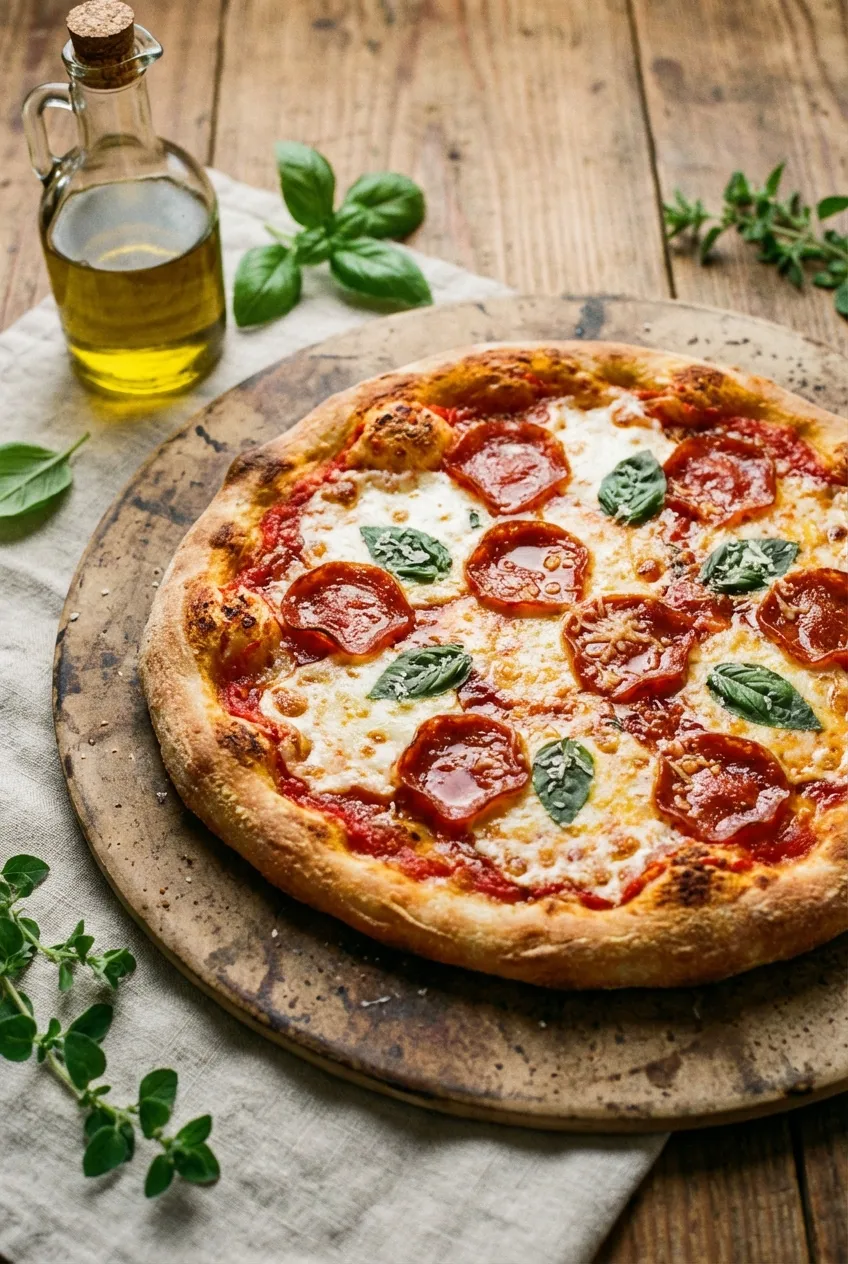
The biggest change I had to make with homemade pizza on a pizza stone was patience. If I rushed the preheat, the top browned before the bottom had any real color, and the crust stayed pale and soft under the sauce.
Once I started giving the stone a full heat-up and keeping the toppings lighter, the pizza baked the way it should: a dry, crisp underside, a chewy rim, and enough structure to hold a slice without the center collapsing. That comes down to heat management and restraint with the toppings, not luck.
How to Make Homemade Pizza on a Pizza Stone
1 medium pizza, about 10 to 12 inches
- Prep: 20 minutes
- Rise: 1 hour
- Bake: 10 to 14 minutes
Ingredients
For the dough
- 2 1/4 teaspoons active dry yeast
- 3/4 cup warm water (180g)
- 2 cups all-purpose flour (240g)
- 1 teaspoon sugar
- 1 teaspoon salt
- 1 tablespoon olive oil (15g)
For the pizza
- 1/3 to 1/2 cup pizza sauce (80g to 120g)
- 6 to 8 ounces low-moisture mozzarella, shredded (170g to 225g)
- 2 to 3 ounces pepperoni, if using (55g to 85g)
- 2 tablespoons grated Parmesan (10g)
- 4 to 6 fresh basil leaves, torn
- 1/2 teaspoon dried oregano (I like a 👉softer oregano here, not one that tastes dusty or harsh)
- Cornmeal or flour, for dusting the peel or parchment
Instructions
- In a large bowl, combine the warm water, yeast, and sugar. Let it sit for 5 to 10 minutes until the surface looks foamy. If nothing happens, the yeast is likely old, or the water was too hot or too cool.
- Add the flour, salt, and olive oil. Stir until the dough looks shaggy and rough, with no dry flour left at the bottom of the bowl.
- Turn the dough onto a lightly floured surface and knead for 6 to 8 minutes. At first it may look uneven, but it should become smooth, elastic, and slightly tacky rather than sticky. If it clings heavily to your fingers after the first minute or two, add flour 1 teaspoon at a time. When properly kneaded, the dough should spring back slowly when poked.
- Place the dough in a lightly oiled bowl, cover, and let rise in a warm spot for 1 hour, or until doubled and slightly domed. In a cool kitchen, this may take 75 to 90 minutes.
- While the dough rises, place your pizza stone in the oven and preheat to 500°F. Let the stone heat for at least 30 to 45 minutes, even if the oven reaches temperature sooner. That full preheat is what gives you a browned bottom instead of a pale, soft crust.
- Punch down the dough and turn it onto a lightly floured surface. Press and stretch it into a 10- to 12-inch round, keeping the center thinner and leaving a slightly thicker rim. If the dough keeps shrinking back, let it rest 5 to 10 minutes and try again.
- Transfer the dough to a pizza peel dusted with flour or cornmeal, or set it on a piece of parchment. Spread on 1/3 to 1/2 cup sauce, leaving a small border. Add the mozzarella in an even layer, then the pepperoni if using, Parmesan, and oregano. Keep the toppings moderate; too much sauce or cheese weighs down the center and traps steam.
- Before baking, give the peel a small shake. The dough should move freely. If it sticks, lift the edge and add a little more flour or cornmeal underneath. Slide the pizza onto the hot stone. If using parchment, bake with it underneath for the first 2 to 3 minutes, then pull it out once the crust has set.
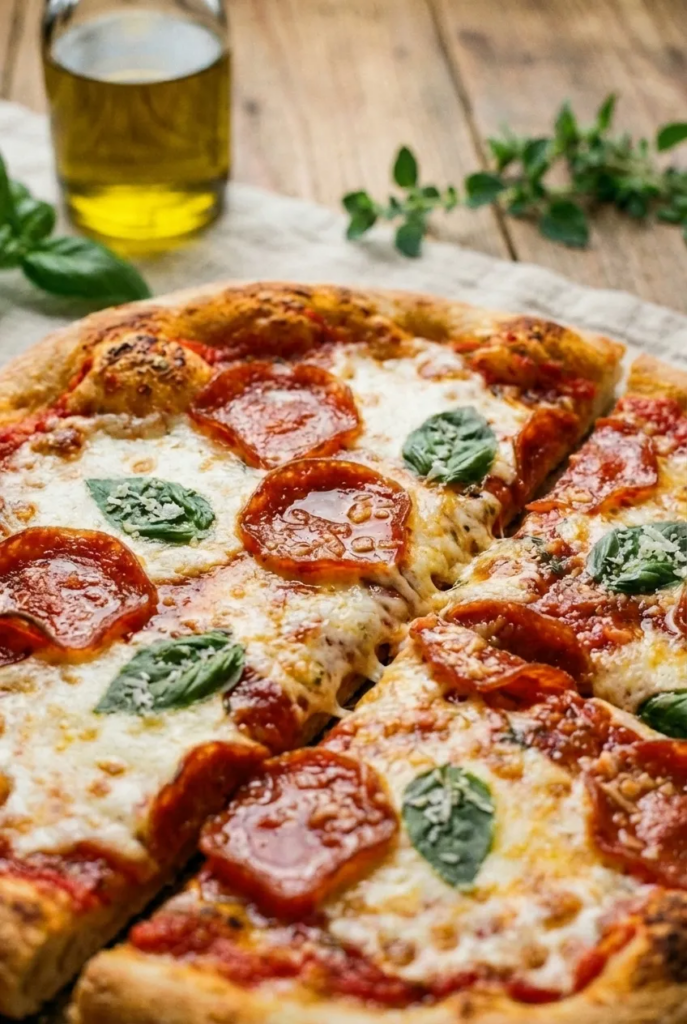
- Bake for 10 to 14 minutes, rotating halfway if your oven has hot spots, until the cheese is fully melted and browned in spots, the rim is golden with a few blisters, and the bottom is deep golden-brown and crisp.
- Remove the pizza and let it rest for 2 to 3 minutes before slicing. That short rest helps the cheese settle so the center stays cleaner when cut. Finish with torn basil.
If you want an easy side for pizza night, these One-Pot Tuscan White Beans make a simple, hearty addition without much extra work.
Why a Pizza Stone Gives You a Crispier Crust
A pizza stone stores heat and transfers it directly into the dough the moment the crust hits the surface. That fast contact helps set and dry the bottom before the sauce can soak through.
A fully heated stone browns the underside faster than a standard sheet pan, helps the center stay less floppy under sauce and cheese, and gives you better contrast between the crisp bottom and chewy edge. The difference becomes obvious once the pizza is sliced.
Best Flour for Pizza Dough on a Pizza Stone
All-Purpose Flour vs Bread Flour vs 00 Flour
All three can work. The best one depends on the crust you want and how hot your oven runs.
- All-purpose flour: The most practical option for most home cooks. It gives a crust that’s crisp on the bottom with a moderate chew. That’s what this recipe is built around.
- Bread flour: Higher in protein, so the dough is a little stronger and chewier. It also browns well and stretches nicely once rested. If you like a more elastic rim, use it in the same amount.
- 00 flour: Fine-textured and often used for very hot pizza ovens. In a standard home oven, it can still work, but it usually performs best at higher heat than most home kitchens can produce.
If you use bread flour, the dough may feel slightly firmer. If you use 00 flour, watch the hydration and avoid adding too much extra flour during kneading.
How to Tell When Pizza Dough Is Properly Kneaded
You’re looking for dough that feels smooth and flexible, not rough or stiff. It should hold together as one piece, stretch without tearing right away, and slowly bounce back when pressed. If it’s still lumpy and breaks easily, it needs more kneading.
For a tangier crust with more developed flavor, try this Sourdough Discard Pizza Dough the next time you make pizza night at home.
How to Shape and Top Pizza Without a Soggy Center
The center gets soggy for three common reasons: too much sauce, too much cheese, or wet toppings.
A better balance looks like this:
- Keep sauce to 1/3 to 1/2 cup
- Use 6 to 8 ounces low-moisture mozzarella (170g to 225g)
- Blot fresh mozzarella, mushrooms, or other wet toppings before using
- Leave the center thin and the rim slightly thicker
- Don’t pile toppings into the middle
That lighter hand gives you a cleaner bake. The heavy, damp center you get from overloaded pizzas usually comes from trapped moisture, not from the dough recipe itself.
How to Bake Pizza on a Pizza Stone Without Sticking
How Hot Should a Pizza Stone Be Before Baking?
The oven should be at 500°F, and the stone should stay in there for 30 to 45 minutes before baking. A hot oven alone is not enough. The stone itself needs time to absorb heat.
Should You Use Parchment Paper or a Pizza Peel?
Both are useful.
- Pizza peel: Best if you’re comfortable launching the pizza directly. Dust it lightly and make sure the dough still slides before it goes in.
- Parchment paper: Easier and more forgiving, especially if you’re new to using a stone. Just remove it after 2 to 3 minutes once the crust firms up.
If your pizza sticks, it usually means one of three things: the dough sat too long after topping, the peel wasn’t dusted enough, or the dough was too wet on the bottom.
Storage, Reheating, and Make-Ahead Tips
Store leftover slices in the refrigerator for up to 3 days. Let them cool first so condensation doesn’t soften the crust.
To reheat, place slices in a 425°F oven directly on a sheet pan or stone for 5 to 8 minutes, until the cheese loosens and the bottom is crisp again. The microwave softens the crust and turns the cheese rubbery.
You can also make the dough ahead:
- Refrigerate after kneading for up to 72 hours
- Let it sit at room temperature for 30 to 45 minutes before shaping
A slower cold rise gives the dough fuller flavor and better browning.
Pizza Stone FAQs
Why did my pizza stick to the peel or stone?
Usually the dough sat too long after you added toppings, so moisture soaked through the flour underneath. Build the pizza quickly, dust the peel lightly, and test with a shake before you launch. If it doesn’t move, fix it before it goes near the oven.
Why is my pizza crust pale on the bottom but overdone on top?
The stone probably wasn’t heated long enough. This is the most common problem with pizza stone baking. Give the stone a full 30 to 45 minutes in the oven after preheating starts, and position it in the lower-middle part of the oven if your top browns too fast.
Can I use bread flour or 00 flour instead of all-purpose flour?
Yes. Bread flour gives you more chew and a slightly stronger dough. 00 flour gives a finer texture, but in a regular home oven it won’t always outperform all-purpose flour. For a reliable weeknight pizza, all-purpose flour is still a solid choice.
Can I bake frozen pizza on a pizza stone?
Yes, but preheat the stone first and follow the package temperature as a starting point. Bake the frozen pizza directly on the hot stone if the instructions allow it. Watch the bottom closely near the end, because the crust can brown faster on stone than on a standard rack or tray.
Nutrition
- Serving size: approximately 1/4 of the total recipe
- Calories: 483 kcal
- Protein: 22g
- Fat: 18g
- Carbohydrates: 56g
- Per 100g: Calories: 252 kcal, Protein: 11g, Fat: 9g, Carbohydrates: 29g
These nutritional values are approximate and can vary based on the specific ingredients and brands used.
Homemade Pizza on a Pizza Stone
Equipment
- Pizza stone
- Oven
- Large bowl
- Mixing spoon
- Pizza peel
- Parchment paper (optional)
- Measuring cups and spoons
- Floured surface
Ingredients
- 2 1/4 teaspoons active dry yeast
- 3/4 cup warm water (180g)
- 2 cups all-purpose flour (240g)
- 1 teaspoon sugar
- 1 teaspoon salt
- 1 tablespoon olive oil (15g)
- 1/3 to 1/2 cup pizza sauce (80g to 120g)
- 6 to 8 ounces low-moisture mozzarella, shredded (170g to 225g)
- 2 to 3 ounces pepperoni, if using (55g to 85g)
- 2 tablespoons grated Parmesan (10g)
- 4 to 6 fresh basil leaves, torn
- 1/2 teaspoon dried oregano
- Cornmeal or flour for dusting
Instructions
- Combine warm water, yeast, and sugar in a large bowl and let sit for 5 to 10 minutes until foamy.
- Add flour, salt, and olive oil; stir until dough is shaggy and no dry flour remains.
- Turn dough onto a floured surface and knead for 6 to 8 minutes until smooth, elastic, and slightly tacky; add flour 1 teaspoon at a time if sticky.
- Place dough in an oiled bowl, cover, and let rise in a warm spot for 1 hour or until doubled and slightly domed.
- Place pizza stone in the oven and preheat to 500°F; heat stone for at least 30 to 45 minutes.
- Punch down dough and shape into a 10- to 12-inch round with a thinner center and slightly thicker rim; rest 5 to 10 minutes if it shrinks back.
- Transfer dough to a peel dusted with flour or cornmeal or parchment; spread 1/3 to 1/2 cup sauce leaving a border; add mozzarella, pepperoni if using, Parmesan, and oregano; keep toppings moderate.
- Shake peel to ensure dough moves freely; slide pizza onto the hot stone; bake with parchment for 2 to 3 minutes then remove parchment.
- Bake for 10 to 14 minutes until cheese is melted and browned in spots, rim golden with blisters, and bottom crisp and deep golden-brown.
- Remove pizza and rest for 2 to 3 minutes before slicing; finish with torn basil.
