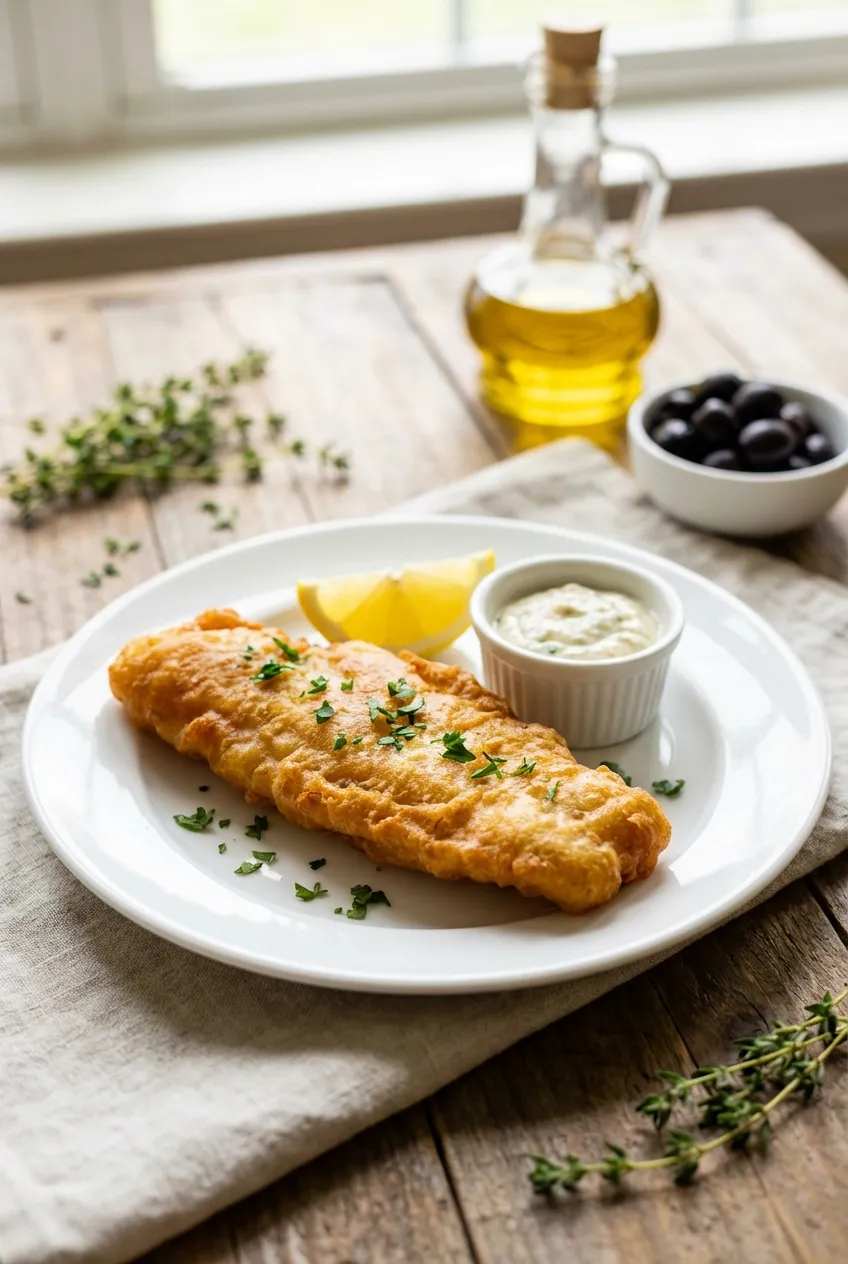
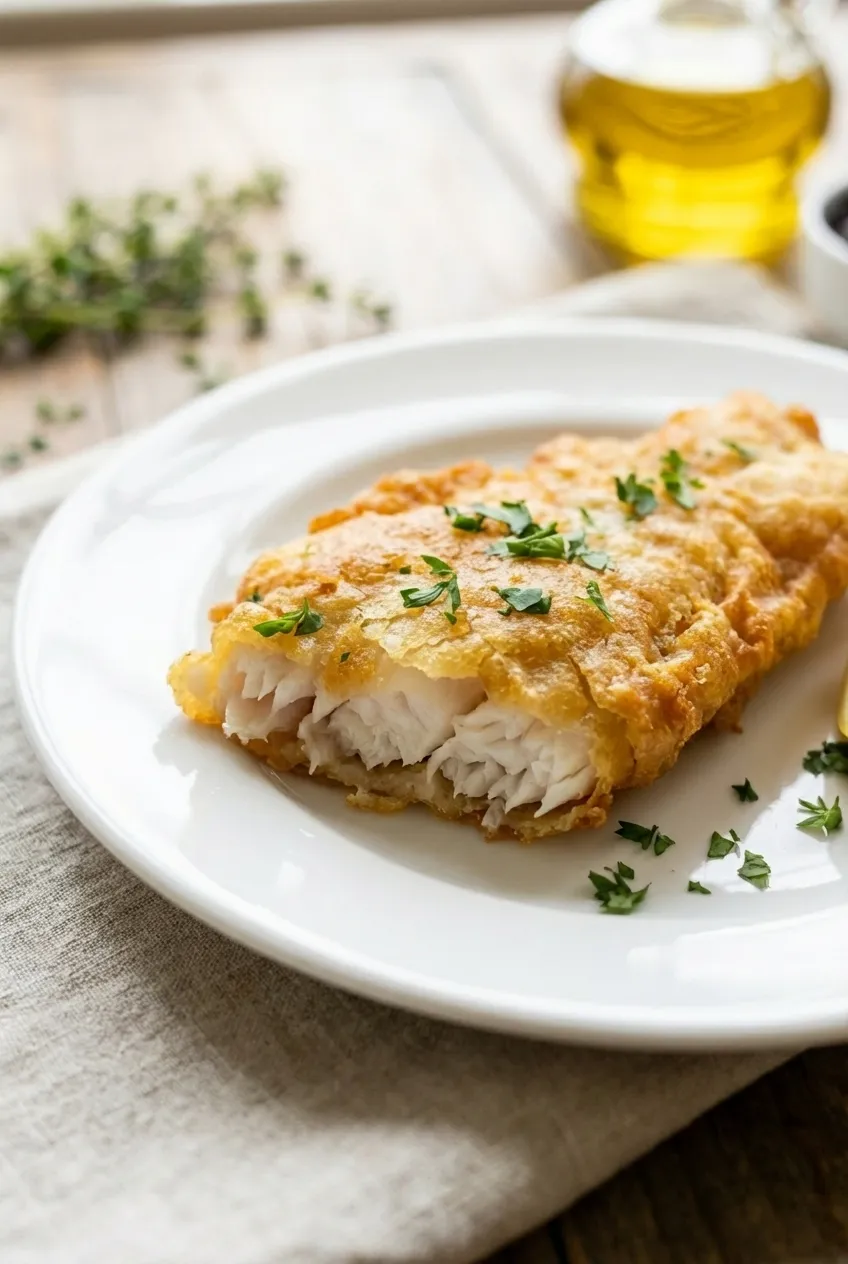
I find myself turning to this recipe on warm summer evenings when I want something that feels special but comes together quickly. There’s nothing better than that first bite of shatteringly crisp batter giving way to perfectly flaky fish. It brings back memories of the best seaside fish and chips, and I love that I can recreate that same satisfying crunch right in my own kitchen.
What makes this recipe so reliable is the batter. It’s a simple combination of flour, cornstarch, and a light beer, which work together to create a coating that’s incredibly airy and stays crisp. This isn’t a heavy, dense batter; it’s a light shell that perfectly complements the delicate fish inside. It’s a fantastic weekend dinner or a fun way to elevate a simple weeknight meal.
Master the Art of Batter Consistency
Achieving the ideal batter consistency is the first step to success. You are looking for a mixture that is thick enough to generously coat the fish but still thin enough to feel light, not heavy. A good test is to dip a spoon in; the batter should cling to the back in a smooth, even layer. If it seems too thick, whisk in another tablespoon of beer. If it’s too thin, add a tablespoon of flour. Be careful not to over-mix, which can develop gluten and make the final crust tough rather than crispy.
Oil Temperature is Non-Negotiable
For a truly crispy, golden-brown finish, maintaining the right oil temperature is crucial. Your target is 375°F (190°C). If the oil is too cool, the batter will absorb it and become heavy and greasy. If it’s too hot, the outside will burn before the fish inside has a chance to cook through. I strongly recommend using a deep-fry or candy thermometer clipped to the side of your pot for an accurate reading. A small drop of batter should sizzle immediately and float to the surface when the oil is ready.
Choosing the Right Fish for Frying
The type of fish you choose makes a big difference. For this recipe, you want a firm, mild white fish that can stand up to the hot oil without falling apart. Cod and haddock are the classic, reliable choices for a reason—they have a satisfyingly flaky texture and a clean flavor that lets the crispy batter shine. You could also use pollock or halibut. I would avoid very delicate fish like flounder or oily fish like salmon, as their texture and flavor don’t work as well here.
Recipe Overview
- Prep Time: 20 minutes
- Cook Time: 15 minutes
- Total Time: 35 minutes
- Servings: 4 servings
- Difficulty: Medium
Ingredients
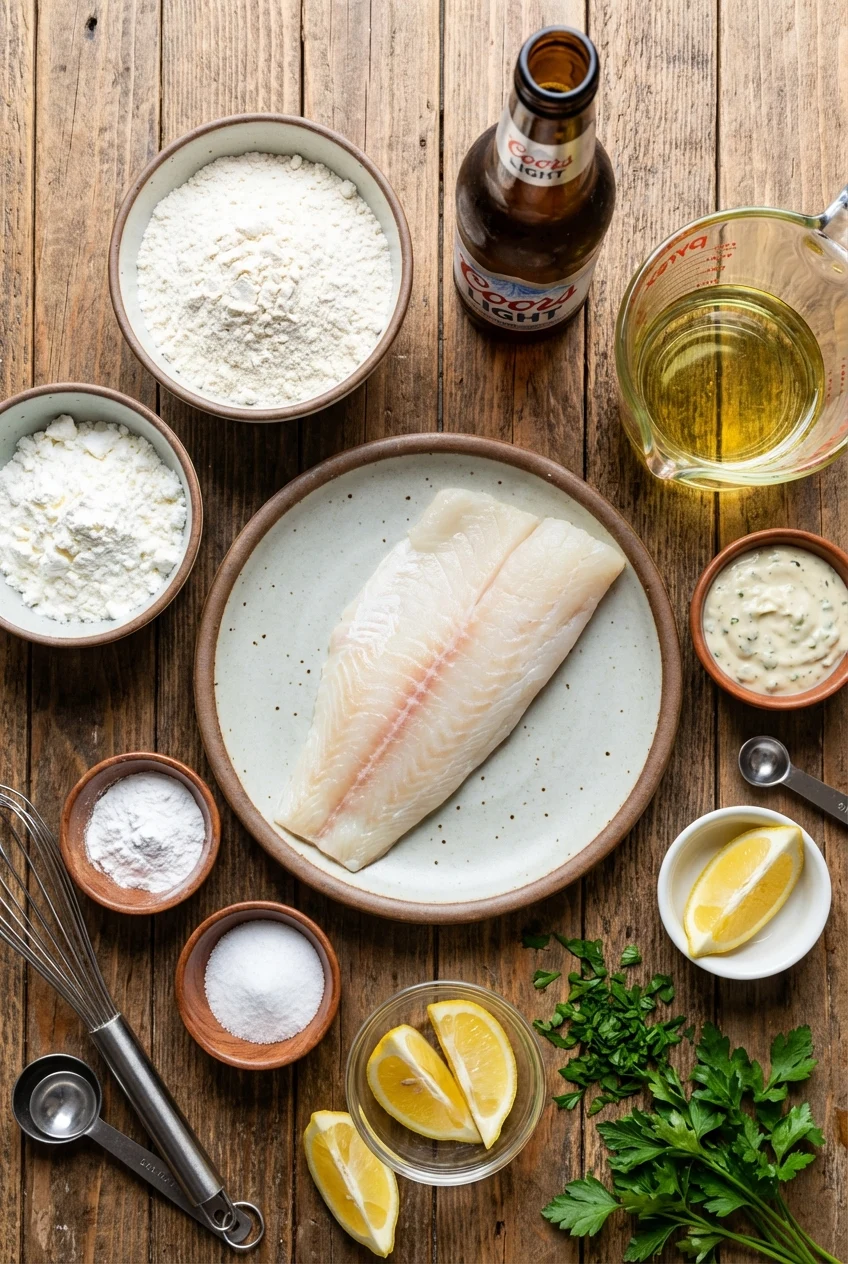
- 454 g (1 lb) white fish fillets (such as cod or haddock)
- 125 g (1 cup) all-purpose flour
- 64 g (1/2 cup) cornstarch
- 4 g (1 tsp) baking powder
- 6 g (1 tsp) salt
- 240 g (1 cup) light beer, cold
- Vegetable oil, for frying
For Serving
- 1 lemon, cut into wedges
- Fresh parsley, chopped
- 120 g (1/2 cup) tartar sauce
Step-By-Step Instructions
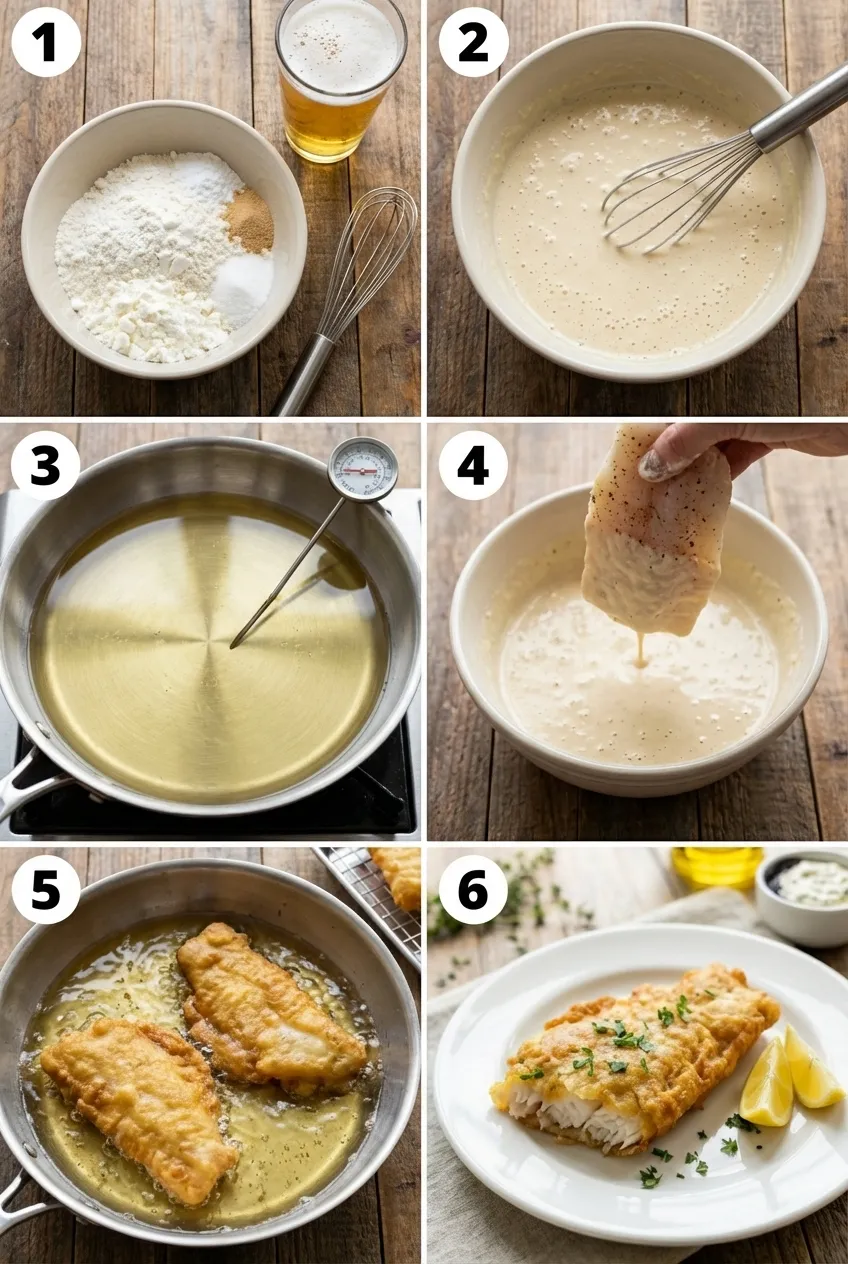
- Prepare the Batter
In a large mixing bowl, whisk together the all-purpose flour, cornstarch, baking powder, and salt. Gradually pour in the cold beer, whisking continuously until a smooth, lump-free batter forms. It should be the consistency of thin pancake batter. Let the batter rest for 10 minutes.
- Heat the Oil
While the batter rests, pour oil into a deep fryer or a large, heavy-bottomed skillet to a depth of at least 2 inches. Heat the oil over medium-high heat until it reaches 375°F (190°C) on a thermometer. If you don’t have one, test the oil by dropping in a small amount of batter; it should sizzle immediately and turn golden in about 30 seconds.
- Coat the Fish
Use paper towels to pat the fish fillets completely dry. A dry surface helps the batter adhere properly. Season the fillets lightly with a little more salt. One by one, dip each fillet into the batter, turning to coat it completely. Lift the fish and allow any excess batter to drip back into the bowl for a few seconds.
- Fry the Fish
Carefully lower two or three battered fillets into the hot oil, making sure not to overcrowd the pan, which can lower the oil temperature. Fry for about 5-6 minutes, turning once halfway through, until the batter is deep golden brown and beautifully crisp. The fish should be cooked through and flake easily.
- Drain and Serve
Using a slotted spoon or tongs, remove the fish from the oil and transfer it to a wire rack to drain. This allows air to circulate, keeping the bottom crispy. Serve immediately with fresh lemon wedges for squeezing, a sprinkle of parsley, and tartar sauce on the side.
Substitutions & Variations
- Non-Alcoholic Version: You can easily substitute the beer with an equal amount of cold club soda. The carbonation is the key ingredient for a light, airy batter.
- Add Some Spice: For a spicy kick, whisk 1/4 to 1/2 teaspoon of cayenne pepper or smoked paprika into the dry ingredients with the salt.
- Gluten-Free Option: Use a 1-to-1 gluten-free all-purpose flour blend in place of the regular flour for a gluten-free version. Ensure your beer is also gluten-free.
If you enjoy this dish, try our Cheesy Chicken and Rice Casserole for a perfect pairing or next-weeknight option.
Make-Ahead, Storage & Reheat
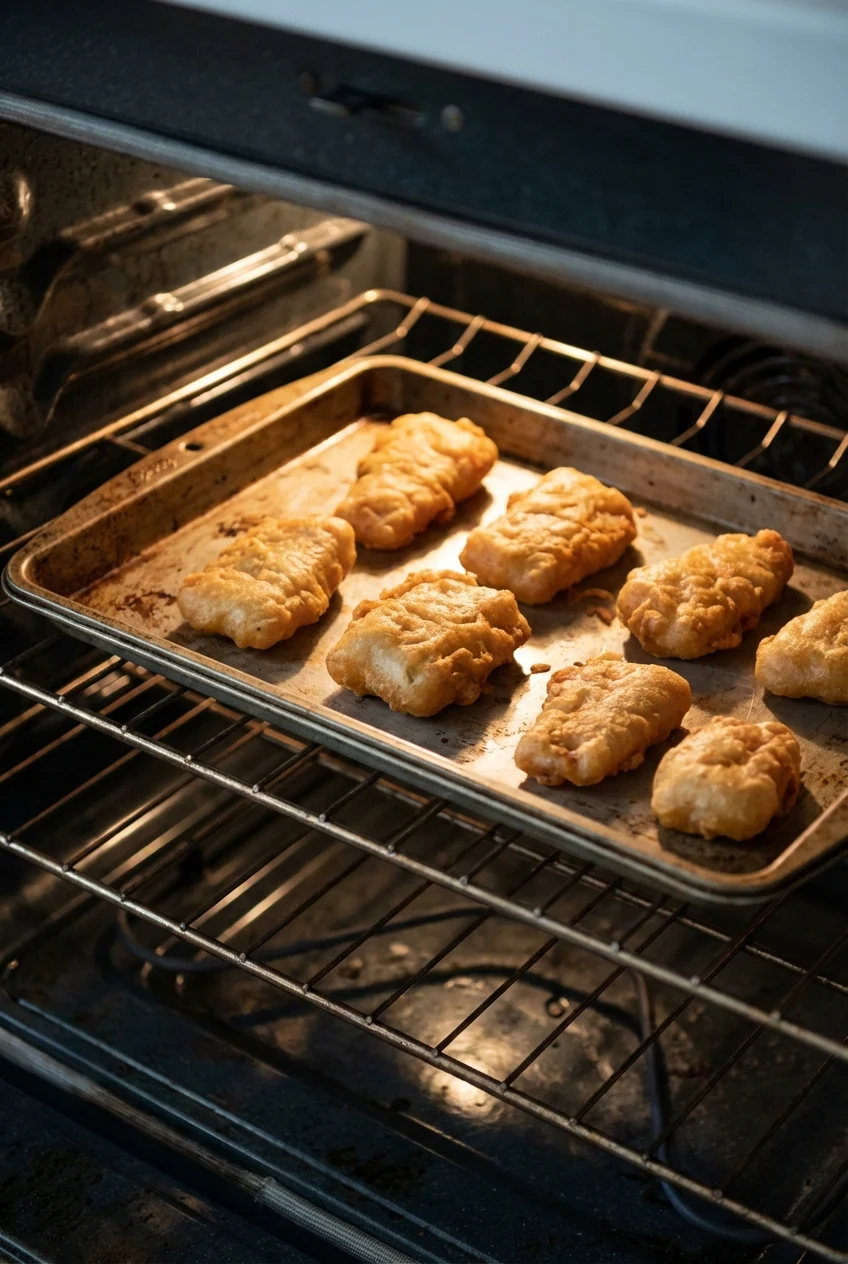
This dish is best enjoyed immediately after frying for maximum crispiness. Store any leftovers in an airtight container in the refrigerator for up to 2 days. To reheat, place the fish on a baking sheet in a single layer and bake in a preheated oven at 350°F (175°C) for 10-12 minutes, or until heated through and crisp again.
Nutrition
- Serving Size: 1 fillet with sauce and garnish
- Per Serving: 350 calories, 25 g protein, 18 g fat, 20 g carbs
- Per 100g: 190 calories, 14 g protein, 10 g fat, 11 g carbs
- Estimates only.
FAQ
What is the best type of firm white fish for this batter recipe?
Stick with cod, haddock, or pollock. These fish are sturdy enough to hold their shape during frying and their mild flavor complements the crispy beer batter well.
My fried fish turned out greasy and soggy. What did I do wrong?
Your oil temperature was likely too low. Use a thermometer to maintain 375°F, as this allows the batter to crisp up instantly instead of absorbing excess oil.
Why is the batter sliding off my fish when I put it in the oil?
This usually happens if the fish is too wet. Pat each fillet completely dry with a paper towel before dipping it, so the batter has a dry surface to cling to.
What consistency should I aim for when I am mixing the batter?
The batter should be similar to a thin pancake batter. It should be thick enough to coat the back of a spoon but still drip off in a steady, even stream.
Can I prepare the beer batter an hour or two ahead of frying?
It’s best to mix the batter just before you use it. The carbonation from the beer creates the light, airy texture, and it will lose its fizz if it sits out.
I heard resting batter is good. Should I let this one sit for a while?
No, do not rest this batter. Resting allows gluten to develop and carbonation to escape, which would make the final coating tough and dense instead of light.
What is the best way to reheat leftovers so they are crispy again?
Place the fish on a baking sheet in a single layer. Reheat in a 350°F oven for 10-12 minutes, which helps drive off moisture and re-crisp the batter.
How can I make a successful gluten-free version of this recipe?
Use a 1-to-1 gluten-free all-purpose flour blend. Also, make sure your beer is certified gluten-free, as standard beer contains gluten from the barley.
Can I freeze the cooked beer-battered fish for a future meal?
Yes, you can. Cool the fried fish completely, then freeze it on a baking sheet before transferring it to a freezer bag. Reheat from frozen in a 375°F oven.
Equipment
- Large mixing bowl
- Whisk
- Deep fryer or large heavy-bottomed skillet
- Candy or deep-fry thermometer
- Paper towels
- Slotted spoon or tongs
- Wire rack
Ingredients
- 454 g (1 lb) White fish fillets (such as cod or haddock)
- 125 g (1 cup) All-purpose flour
- 64 g (1/2 cup) Cornstarch
- 4 g (1 tsp) Baking powder
- 6 g (1 tsp) Salt
- 240 g (1 cup) Light beer cold
- Vegetable oil for frying
- For Serving
- 1 unit Lemon cut into wedges
- Fresh parsley chopped
- 120 g (1/2 cup) Tartar sauce
Instructions
- In a large mixing bowl, whisk together the flour, cornstarch, baking powder, and salt.
- Gradually pour in the cold beer while whisking continuously until the batter is smooth and lump-free, with the consistency of thin pancake batter.
- Let the batter rest for 10 minutes.
- Pour vegetable oil into a deep fryer or heavy skillet to a depth of at least 2 inches and heat to 375°F (190°C), using a thermometer for accuracy.
- Pat the fish fillets dry with paper towels and lightly season with additional salt.
- Dip each fillet into the batter, coating completely, and let excess batter drip back into the bowl.
- Carefully lower 2 or 3 fillets into the hot oil without overcrowding.
- Fry for 5 to 6 minutes, turning once halfway through, until golden brown and crisp, and the fish flakes easily.
- Remove fillets with a slotted spoon or tongs and place on a wire rack to drain and keep crisp on the bottom.
- Serve immediately with lemon wedges, sprinkled parsley, and tartar sauce.
