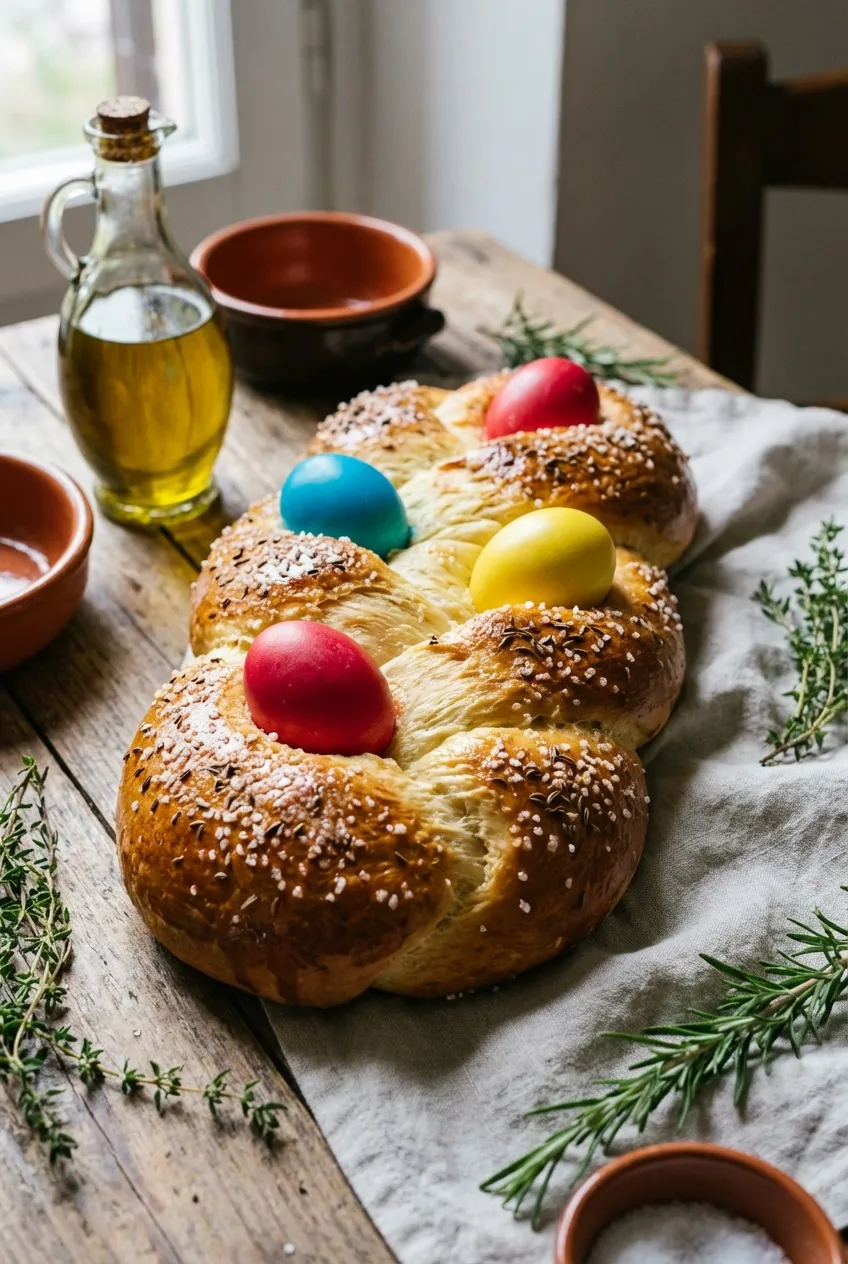
This Italian Easter Bread is one of my favorite traditions to bring to the table each spring. It’s a recipe that feels both celebratory and deeply comforting, with its soft, slightly sweet crumb and beautiful braided shape. The colorful eggs nestled in the dough make it a stunning centerpiece for a holiday brunch or dinner, and the process of making it is a welcome, mindful activity. Julia’s note: I love the classic licorice hint from the anise seeds, but if you’re serving a crowd with mixed tastes, a teaspoon of vanilla or orange zest works beautifully too.
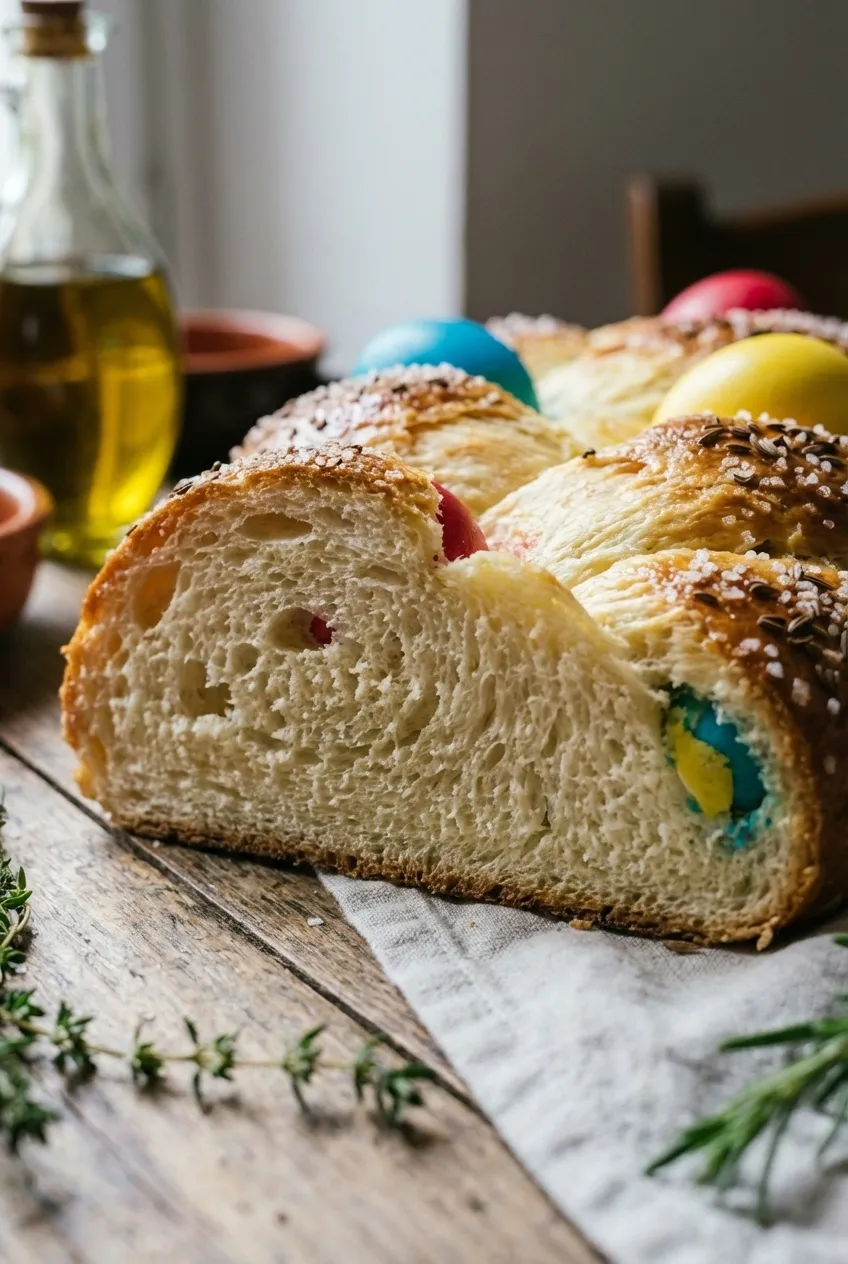
What I appreciate most about this recipe is its reliability. While it looks impressive, the dough is straightforward and forgiving for home bakers. It’s a wonderful project for a quiet weekend morning, filling the house with an incredible aroma. The result is a tender, flavorful bread that’s perfect for sharing with family and friends during the Easter holiday.
Mastering the Dough Texture
The goal for this dough is a texture that is soft and slightly tacky, but not so sticky that it’s unmanageable. If you find the dough is too wet after adding all the flour, add more flour one tablespoon at a time. Conversely, if it feels stiff or dry, a teaspoon of milk can help soften it. The key is to knead it for the full 8–10 minutes. This develops the gluten, which gives the bread its structure and classic chewy, soft crumb. You’ll know it’s ready when the dough is smooth, elastic, and springs back slowly when you press it.
How to Place the Decorative Eggs
The colored eggs are what make this bread so festive. Be sure to use hard-boiled eggs that have been cooled completely before dyeing. When you’re ready to add them to the shaped wreath, press them gently but firmly into the dough. You want them to be secure enough that they won’t fall out as the bread does its final rise and bakes. Space them evenly around the ring for a balanced look. They will bake right into the bread, creating lovely little nests within the braid.
The Role of Anise Seed
Anise seeds give this bread its traditional, distinctive flavor—a subtle, sweet licorice note that is common in Italian baking. If you’ve never used them before, they add a lovely, aromatic warmth. However, the flavor is unique and can be omitted if you or your guests prefer. The bread will still be delicious without it, tasting more like a simple sweet bread, similar to challah or brioche. Omitting it allows the simple flavors of the rich, eggy dough to shine through on their own.
Recipe Overview
- Prep Time: 30 minutes
- Cook Time: 25 minutes
- Total Time: 2 hours
- Servings: 8 servings
- Difficulty: Medium
Ingredients
For the Dough
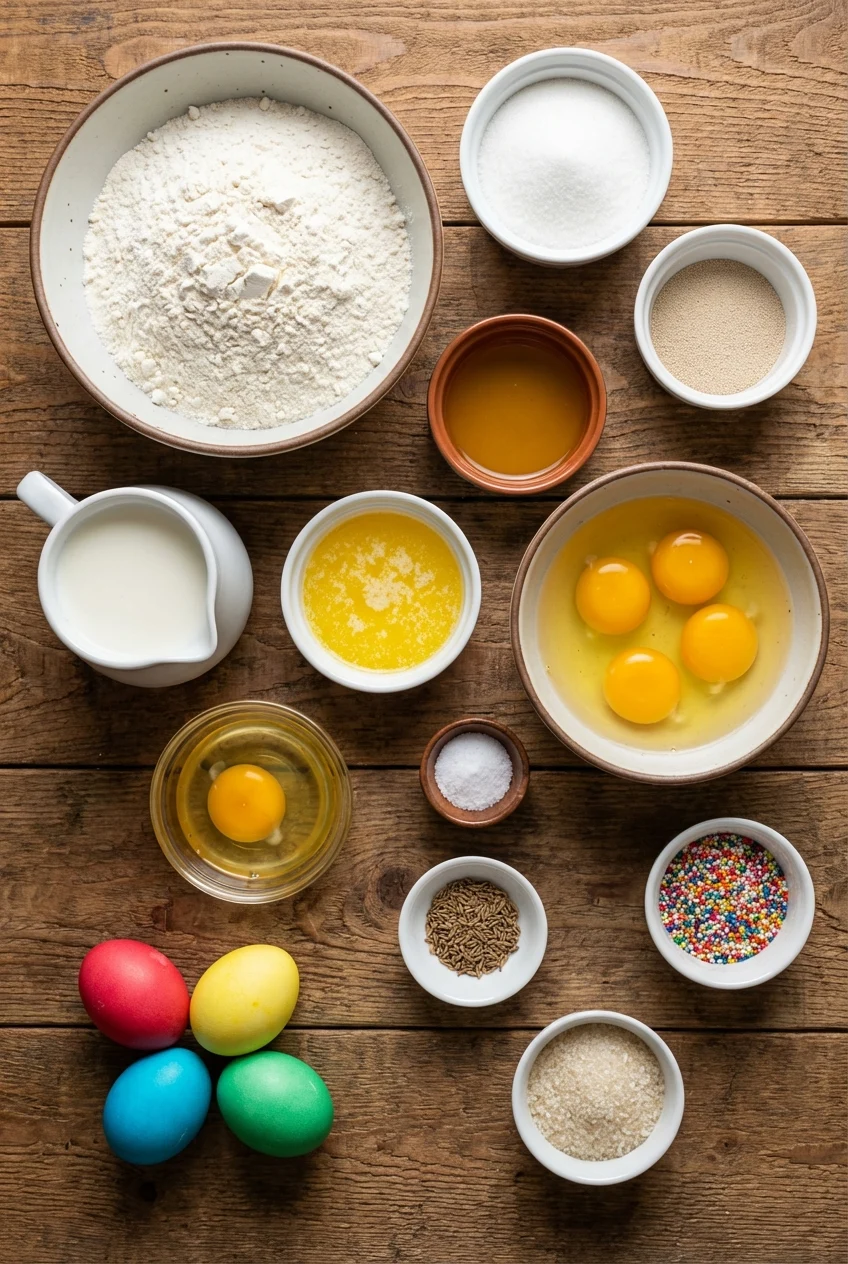
- 240g warm milk (1 cup), about 110°F / 43°C
- 7g active dry yeast (2¼ teaspoons)
- 100g granulated sugar (1/2 cup), plus 1 tablespoon for yeast
- 480g all-purpose flour (about 4 cups)
- 6g salt (1 teaspoon)
- 4 large eggs (about 200g), at room temperature
- 57g unsalted butter (1/4 cup), melted and slightly cooled
- 4g anise seeds (2 teaspoons), optional
For Finishing
- 4 colored hard-boiled eggs
- 1 large egg, beaten, for egg wash
- Sprinkles or coarse sugar, for topping
Step-By-Step Instructions
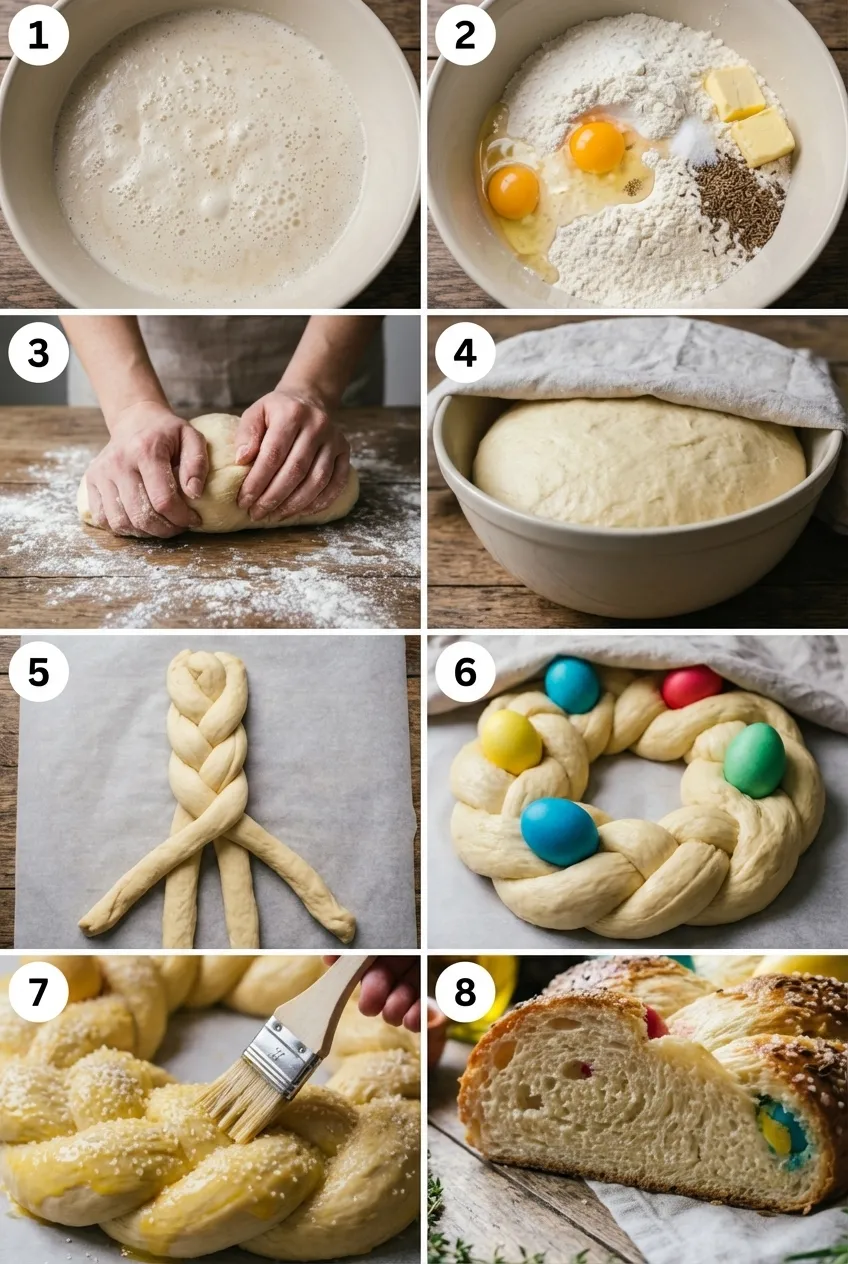
- Activate the Yeast. In a large bowl, whisk together the warm milk, active dry yeast, and one tablespoon of sugar. Let the mixture stand for 10 minutes until it becomes foamy. This shows the yeast is active and ready to work.
- Mix the Dough. To the yeast mixture, add the remaining sugar, 3 of the large eggs (reserving one for the egg wash later, if you don’t want to use a separate one), melted butter, and anise seeds, if using. Whisk to combine. Gradually add the flour and salt, mixing with a wooden spoon until a shaggy dough forms.
- Knead Until Smooth. Turn the dough out onto a lightly floured surface. Knead for 8–10 minutes until the dough is smooth and elastic. Place it in a lightly greased bowl, cover it with a clean cloth, and let it rise in a warm, draft-free spot for 1 hour, or until doubled in size.
- Shape the Braid. Gently punch down the risen dough to release the air. Divide it into three equal pieces. Roll each piece into a 16-inch rope. Lay the ropes side-by-side and braid them together. Form the braid into a circle or wreath, pinching the ends together to seal. Transfer the wreath to a baking sheet lined with parchment paper.
- Add Eggs and Proof. Gently nestle the 4 colored hard-boiled eggs between the braids, spacing them evenly. Press them down slightly to secure them. Cover the loaf with a cloth and let it rise for another 30 minutes.
- Preheat and Prepare for Baking. While the bread proofs, preheat your oven to 350°F (175°C). In a small bowl, beat the remaining egg to create an egg wash. Gently brush the egg wash over the top and sides of the braid, avoiding the colored eggs. Sprinkle generously with sprinkles or coarse sugar.
- Bake Until Golden. Bake for 25–30 minutes, until the bread is a deep golden brown and sounds hollow when you tap the bottom. If it browns too quickly, you can tent it loosely with aluminum foil for the last 5-10 minutes of baking.
- Cool Before Serving. Let the bread cool on the baking sheet for a few minutes before transferring it to a wire rack to cool completely. It is best enjoyed the day it is made.
If you enjoy this dish, try our Spring Berry Chocolate Tart for a perfect pairing or next-weekend option.
Substitutions & Variations
- Citrus Zest: Instead of anise, add 1 tablespoon of fresh orange or lemon zest to the dough for a bright, citrusy flavor.
- Dried Fruit: Knead 1/2 cup of raisins or chopped dried apricots into the dough during the last minute of kneading for extra sweetness and texture.
- Alternative Topping: For a nuttier finish, skip the sprinkles and top with 1/4 cup of sliced almonds before baking.
Make-Ahead, Storage & Reheat
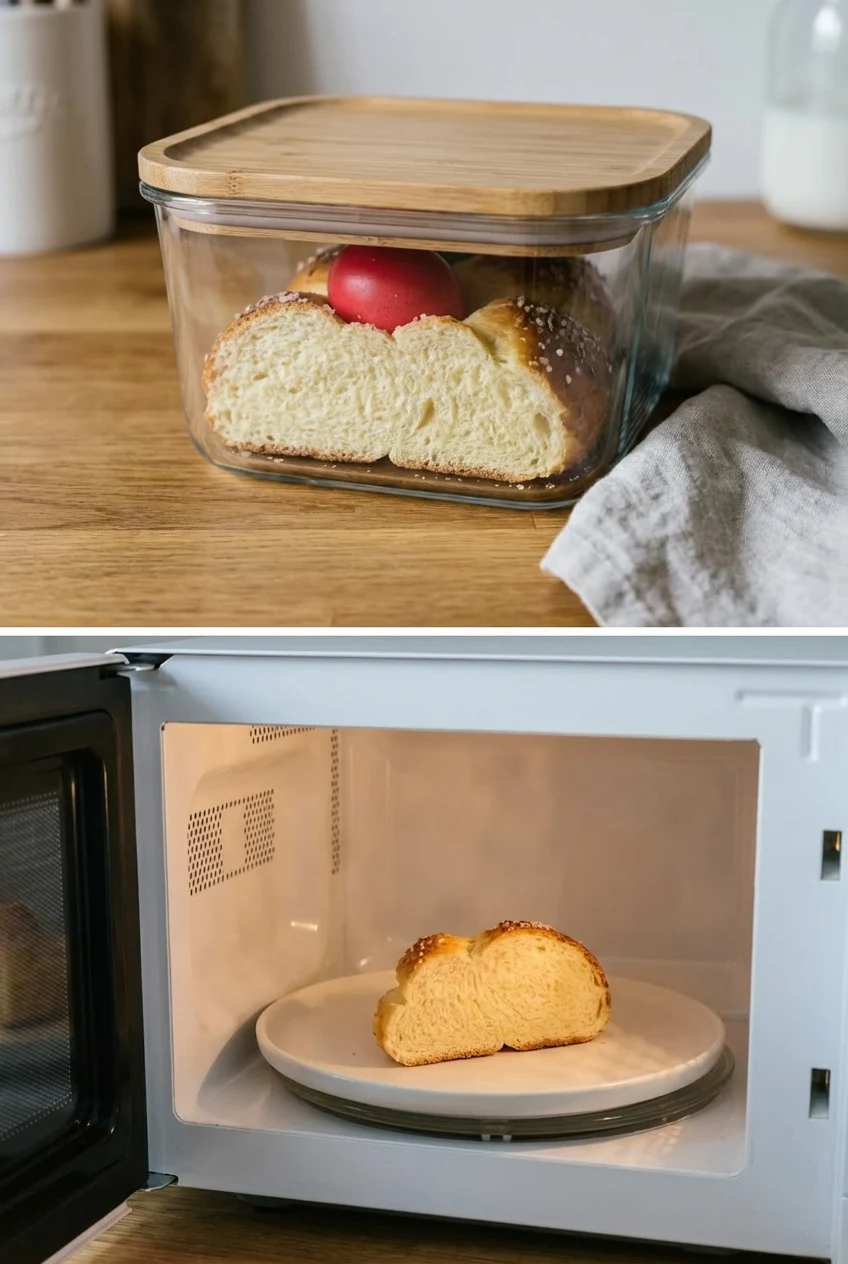
This bread is best enjoyed on the day it is baked for the softest texture. Store any leftovers in an airtight container or wrapped tightly at room temperature for up to 3 days. To refresh, you can warm individual slices in a toaster or microwave for a few seconds.
Nutrition
- Serving Size: 1 slice (1/8th of the loaf)
- Per Serving: 250 calories, 8g protein, 5g fat, 45g carbohydrates
- Per 100g: 280 calories, 9g protein, 6g fat, 50g carbohydrates
- Estimates only.
FAQ
Why is my dough so sticky even though I followed the recipe exactly?
Flour can absorb liquid differently based on brand or humidity. Add flour one tablespoon at a time, just until the dough pulls away from your hands or the bowl.
My dough isn't rising at all. What could have gone wrong here?
The most common issues are old yeast or milk that was too hot, which can kill the yeast. Check the date on your yeast and aim for lukewarm milk, around 110°F.
Why did my baked bread turn out tough and dense instead of soft?
This often happens from adding too much flour during kneading. Be sparing with bench flour, as the dough will get less sticky on its own as you continue to work it.
How do I know when I'm done kneading if I don't use a mixer?
The dough should feel smooth and elastic, not shaggy or overly sticky. It will spring back slowly when you press it, which shows the gluten is well-developed.
How can I add mix-ins like dried fruit without them tearing the dough?
Add them during the last minute of kneading. This incorporates them evenly without breaking down the gluten structure you've worked to build, ensuring a strong rise.
Is it possible to freeze this dough for baking at a later date?
Yes, you can freeze the dough after its first rise. Punch it down, wrap it tightly, and freeze. Thaw in the fridge overnight before shaping, proofing, and baking.
Do the decorative eggs need to be hard-boiled before baking them?
Yes, use hard-boiled and cooled eggs. Raw eggs will not cook fully in the baking time and can expand, cracking the shell and leaking onto your braided loaf.
Can I substitute a gluten-free flour blend in this bread recipe?
This recipe relies on gluten for its classic chewy structure. For the best results, I recommend seeking out a recipe developed specifically for gluten-free flours.
Equipment
- Large mixing bowl
- Small bowl
- Wooden spoon
- Clean cloth
- Baking sheet
- Parchment paper
- Brush
Ingredients
- 240 g Warm milk (about 110°F / 43°C, 1 cup)
- 7 g Active dry yeast (2¼ teaspoons)
- 100 g Granulated sugar (1/2 cup), plus 1 tablespoon for yeast
- 480 g All-purpose flour (about 4 cups)
- 6 g Salt (1 teaspoon)
- 4 large Eggs (about 200g), at room temperature
- 57 g Unsalted butter (1/4 cup), melted and slightly cooled
- 4 g Anise seeds (2 teaspoons), optional
- For Finishing
- 4 pieces Colored hard-boiled eggs
- 1 large Egg beaten, for egg wash
- Sprinkles or coarse sugar for topping
Instructions
- Whisk warm milk, active dry yeast, and 1 tablespoon sugar in a large bowl; let stand 10 minutes until foamy.
- Add remaining sugar, 3 eggs (reserve 1 for egg wash), melted butter, and optional anise seeds; whisk to combine.
- Gradually add flour and salt, mixing until a shaggy dough forms.
- Turn dough onto a floured surface and knead for 8–10 minutes until smooth and elastic.
- Place dough in a greased bowl, cover with cloth, and let rise 1 hour until doubled.
- Punch down dough, divide into three equal pieces, roll each into 16-inch ropes.
- Braid ropes together, form into a circle, and seal ends; place on parchment-lined baking sheet.
- Nestle 4 colored hard-boiled eggs evenly between braids and press gently to secure.
- Cover and let bread rise 30 minutes more.
- Preheat oven to 350°F (175°C). Brush braid with egg wash and sprinkle with sprinkles or coarse sugar.
- Bake 25–30 minutes until deep golden brown and hollow sounding when tapped; tent with foil if browning too fast.
- Cool on baking sheet for a few minutes, then transfer to wire rack to cool completely before serving.
