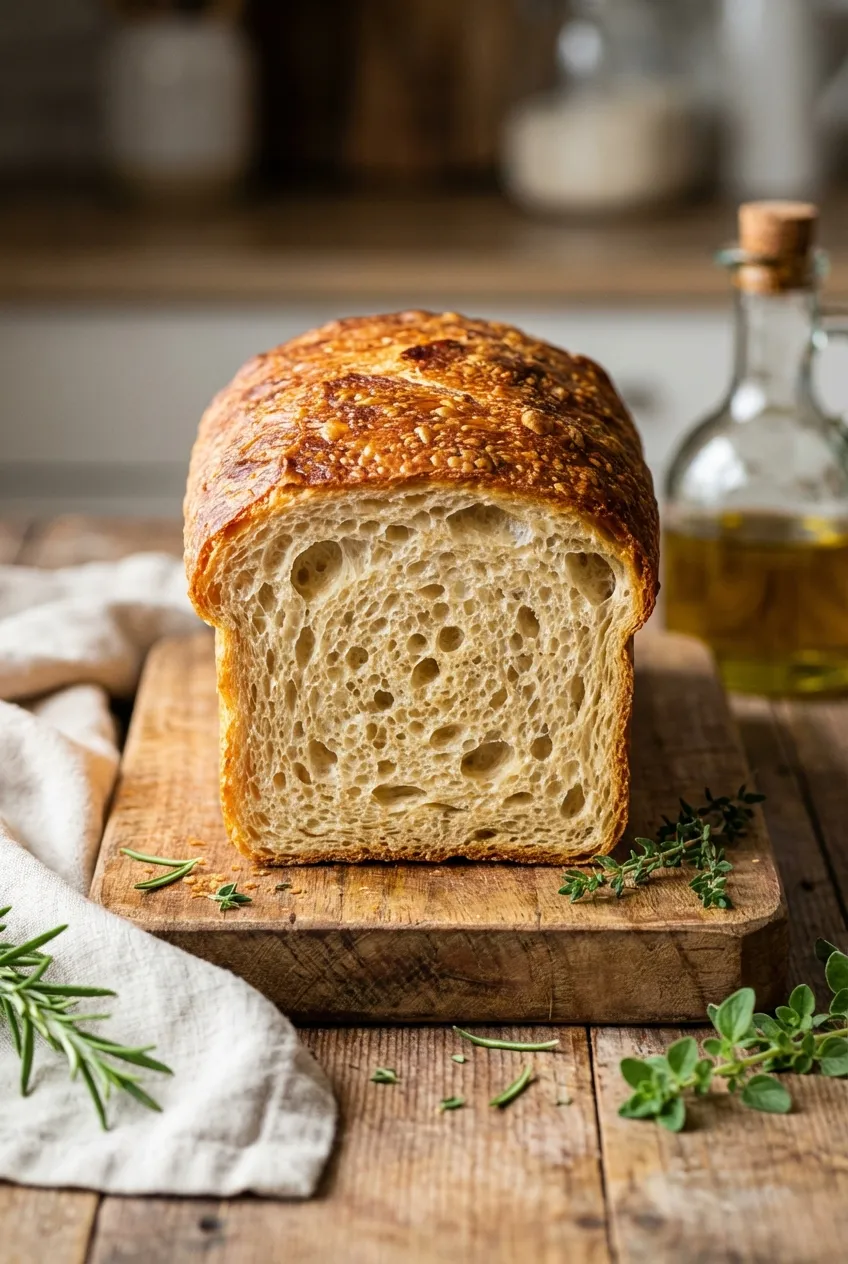
I always feel a pang of guilt when it’s time to discard part of my sourdough starter. This recipe is my favorite solution—it transforms that discard into a wonderfully soft and flavorful sandwich loaf with very little effort. It has the gentle tang of sourdough without the demanding schedule of a traditional artisan loaf, making it a regular bake in my kitchen for weekday lunches and morning toast.
This bread delivers a soft, tight crumb perfect for sandwiches, unlike crusty, open-crumb artisan styles. The process is straightforward, relying on instant yeast for a reliable rise while the discard adds a delicious depth of flavor. If you’re looking for a practical and delicious way to use your sourdough discard, this recipe is for you.
Mastering the Perfect Sourdough Rise
The key to a light, airy loaf is controlling the fermentation. Your dough’s rise time depends entirely on temperature. A warm spot in your kitchen (like near a sunny window or on top of the refrigerator) will speed up the yeast activity, helping the dough double in size faster. If your kitchen is cool, the rise will be slower, which can actually develop a more complex flavor. Don’t just rely on the clock; pay attention to the dough itself. It’s ready for the next step when it has visibly doubled and feels pillowy to the touch.
Optimizing Dough Texture
For a classic sandwich bread with a soft, even crumb, proper kneading is essential. Kneading develops the gluten network in the flour, creating an elastic structure that traps the gas produced by the yeast. A stand mixer with a dough hook makes this step easy and consistent, but kneading by hand is just as effective. You are looking for a dough that is smooth, elastic, and slightly tacky but doesn’t stick to your hands. This structure is what gives the final loaf its satisfyingly soft texture, perfect for slicing.
Adding Flavor with Herbs
Incorporating herbs is a simple way to elevate this loaf from a daily basic to something special. Mediterranean herbs like dried rosemary or thyme are classic additions that complement the subtle tang of the sourdough discard beautifully. The best time to add them is after the first rise, as you are shaping the loaf. Gently fold the herbs into the dough to ensure they are evenly distributed without disrupting the gluten structure you’ve already built. This method infuses every slice with a fresh, aromatic flavor.
Recipe Overview
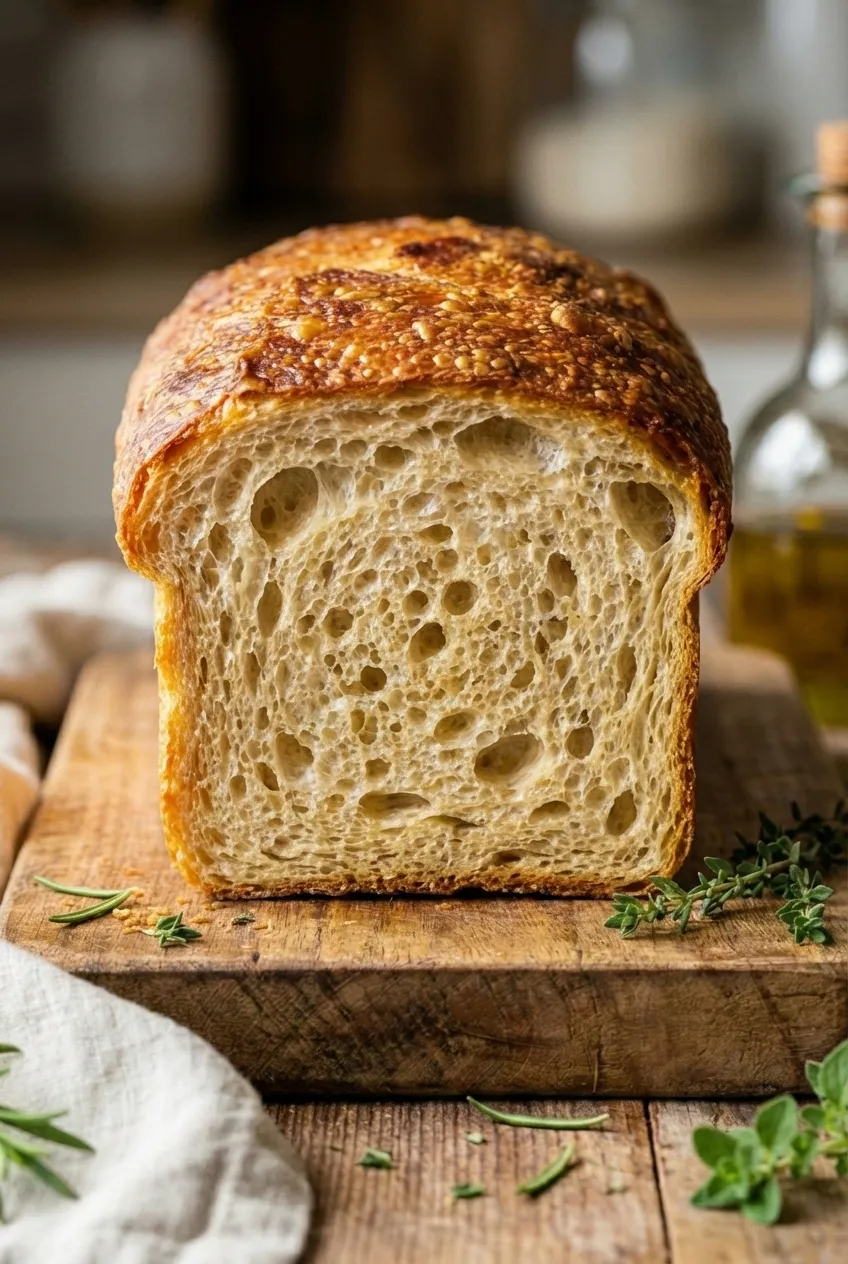
- Prep Time: 15 minutes
- Cook Time: 40 minutes
- Total Time: 3 hours
- Servings: 1 loaf (12 slices)
- Difficulty: Medium
Ingredients
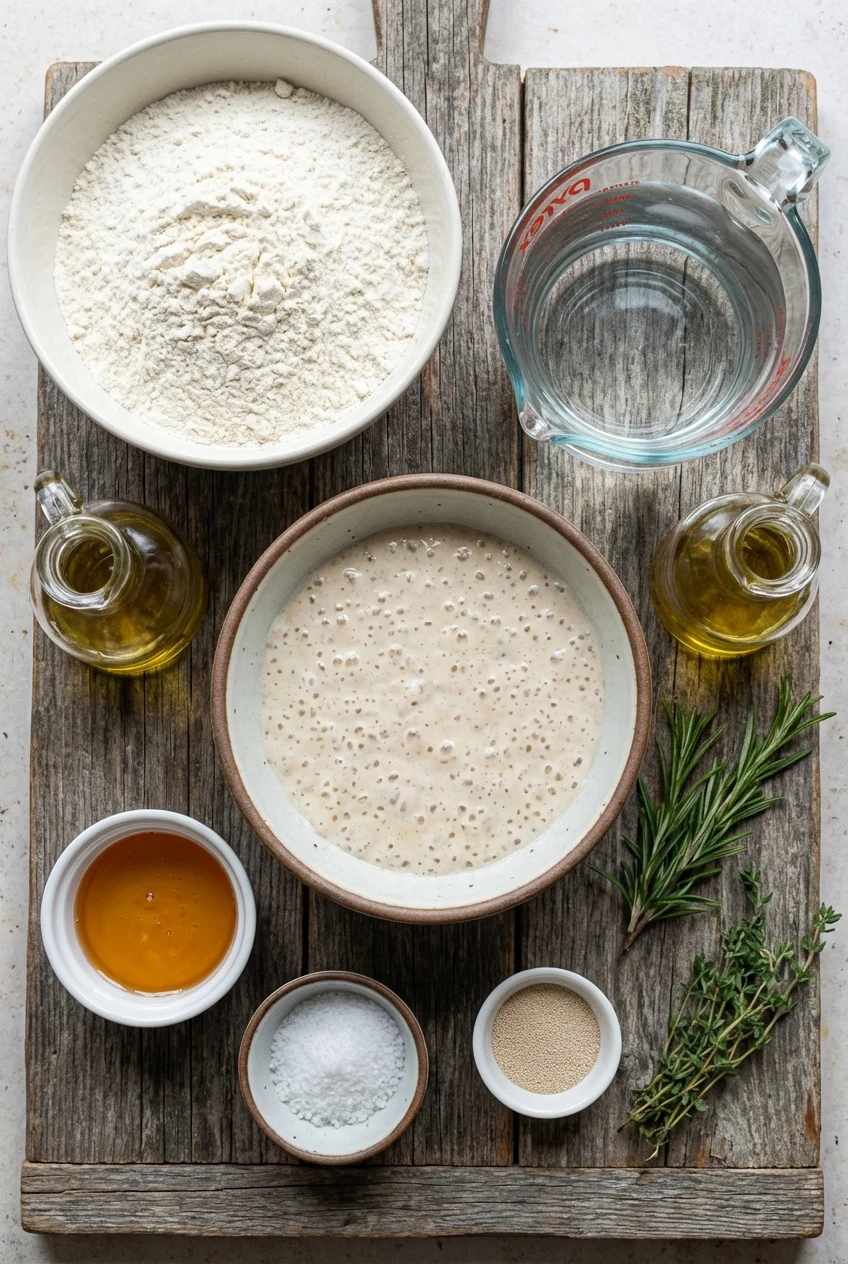
- 240g (1 cup) sourdough discard, unfed and room temperature
- 420g (3 1/2 cups) all-purpose flour, plus more for dusting
- 240g (1 cup) lukewarm water
- 27g (2 tablespoons) olive oil
- 25g (2 tablespoons) sugar or honey
- 15g (1 tablespoon) salt
- 6g (2 teaspoons) instant yeast
- 5g (2 teaspoons) dried herbs, such as rosemary or thyme (optional)
Step-By-Step Instructions
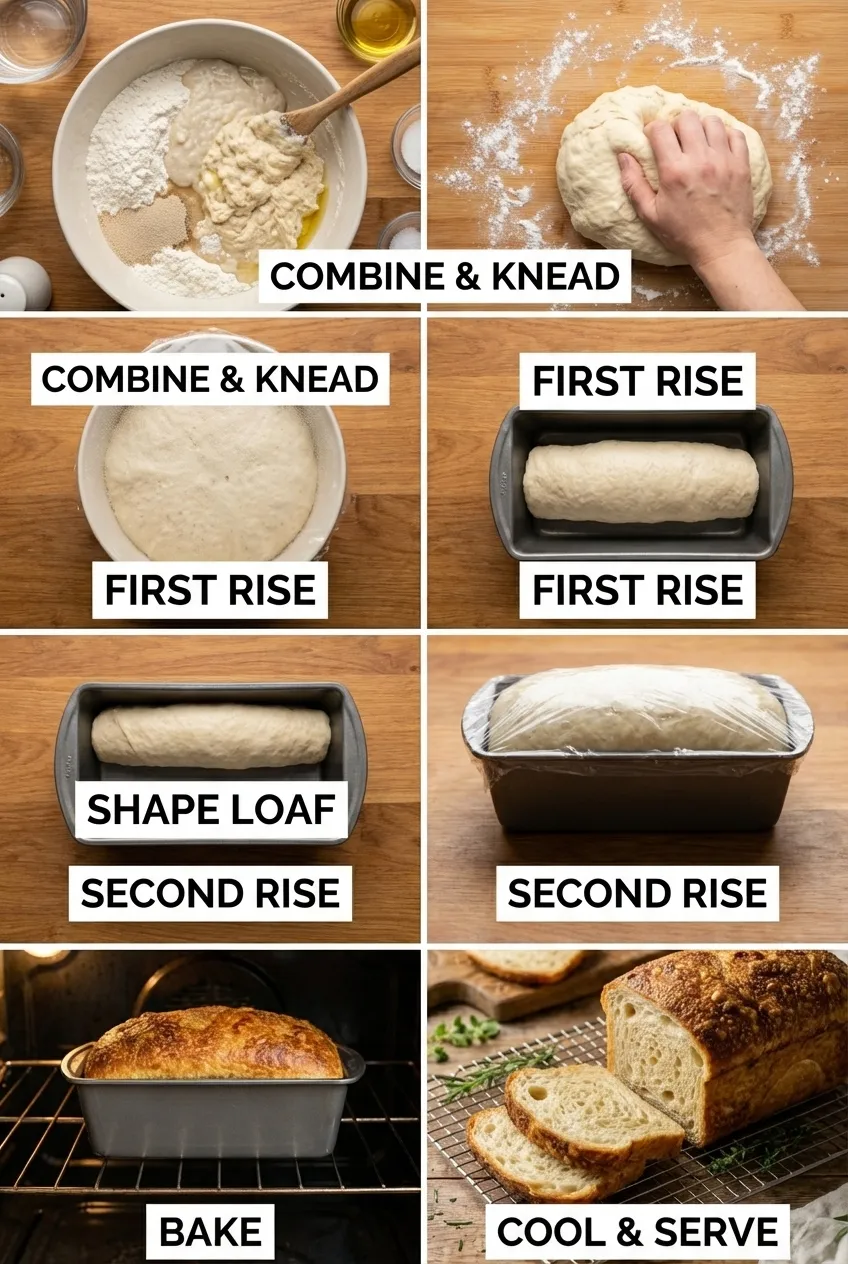
- Combine and Knead the Dough
In a large mixing bowl, stir together the sourdough discard, lukewarm water, olive oil, and sugar until the sugar dissolves. Add the all-purpose flour, instant yeast, and salt. Mix with a spoon or spatula until a shaggy, sticky dough forms. Turn the dough out onto a lightly floured surface and knead by hand for 10 minutes, or use a stand mixer with a dough hook on medium-low speed for 8-10 minutes. The finished dough should be smooth and elastic.
- Complete the First Rise
Place the dough in a lightly oiled bowl, turning it over to coat. Cover the bowl with a damp towel or plastic wrap. Let it rise in a warm, draft-free place for 1 to 1.5 hours, or until it has doubled in size. The dough will feel soft and full of air.
- Shape the Loaf
Gently punch down the risen dough to release the excess gas. Transfer it to a lightly floured surface and pat it into a rough rectangle. Tightly roll the rectangle into a log shape to form your loaf. Pinch the seam at the bottom to seal it, and place it seam-side down in a greased 9×5-inch loaf pan.
- Complete the Second Rise
Cover the loaf pan with a damp cloth and let the dough rise again for 45 minutes to 1 hour. The dough is ready when it has risen about 1 inch above the rim of the pan.
- Preheat the Oven
About 20 minutes before the second rise is complete, preheat your oven to 375°F (190°C). Arranging an oven rack in the center position ensures even baking.
- Bake the Bread
Bake for 35-40 minutes, until the crust is a deep golden brown. To check for doneness, you can tap the bottom of the loaf—it should sound hollow. For complete accuracy, an instant-read thermometer inserted into the center should register 190°F (88°C).
- Cool Completely
Let the bread cool in the pan for 10 minutes before carefully turning it out onto a wire rack. Allowing the loaf to cool completely, for at least 1 hour, is crucial for the internal structure to set. This prevents a gummy texture when you slice it.
If you enjoy this dish, try our Baked Chicken Veggie Meal Prep for a perfect pairing or next-weeknight option.
Substitutions & Variations
- Richer Flavor: Swap the olive oil with an equal amount of melted unsalted butter for a softer crust and richer taste.
- Savory Twist: Fold in 1/2 cup of grated sharp cheddar or Parmesan cheese when you shape the loaf for a savory, cheesy bread.
- Deeper Sourdough Tang: For more pronounced flavor, let the dough complete its first rise overnight in the refrigerator (8-12 hours).
- Sweetener Swap: Honey can be used in place of sugar for a slightly different flavor profile and a moister crumb.
Make-Ahead, Storage & Reheat
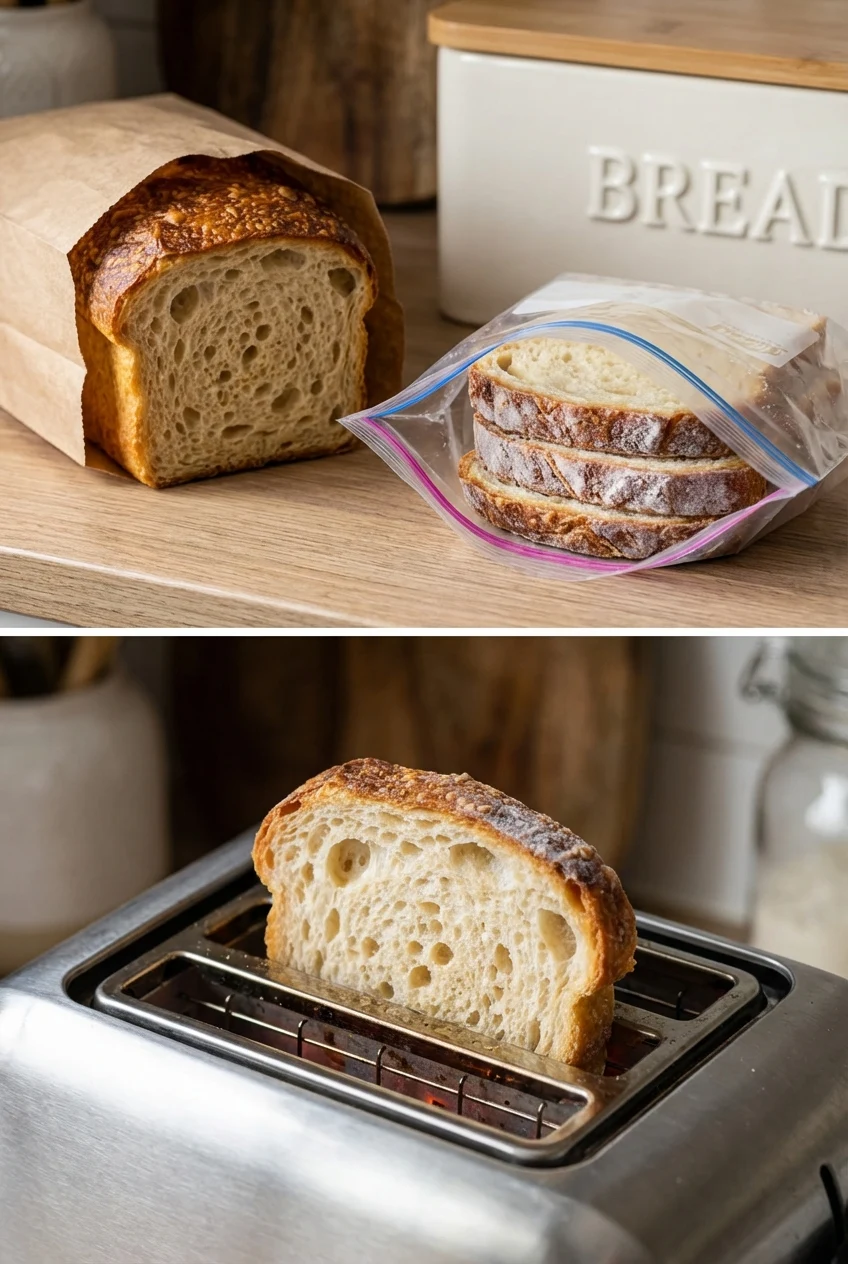
Store the completely cooled bread in a bread box or paper bag at room temperature for up to 3 days. Avoid plastic bags, which can trap moisture and make the crust soft. For longer storage, slice the loaf and freeze it in an airtight freezer bag for up to 3 months. Reheat slices directly from the freezer in a toaster.
Nutrition
- Serving Size: 1 slice (approx. 75g)
- Calories: 150 kcal
- Protein: 4g
- Fat: 2g
- Carbohydrates: 30g
Estimates only.
FAQ
My sourdough loaf came out dense and gummy inside. What did I do wrong?
A dense crumb often means the gluten wasn't strong enough to trap air. Ensure you develop it well during kneading until it feels elastic and holds its shape.
What are the key signs my bulk fermentation is finished, besides doubling?
Look for a slightly domed surface with some visible bubbles. The dough should feel full of air and jiggle as a whole when you gently shake the container.
Why does my sourdough rise well in the bowl but then flatten after shaping?
This is a classic sign of over-proofing, where the gluten structure has weakened. Try reducing your proofing time and shaping when the dough is still resilient.
Can I use bread flour instead of all-purpose for a better, higher rise?
Absolutely. Bread flour has more protein, which creates a stronger gluten network. This helps the dough trap more gas, resulting in a taller loaf and chewier crumb.
My kitchen is cold and my dough is rising too slowly. How can I fix this?
Yeast activity slows in the cold. Place your dough in a consistently warm spot, like an oven with only the light on, to encourage a more active and timely rise.
How important is shaping for getting that big oven spring and a tall loaf?
Shaping is critical. The goal is to create surface tension by pulling the dough's outer layer taut. This strong 'skin' helps the loaf hold its shape as it expands.
What is the best way to freeze sourdough to maintain its great texture?
For best results, let the loaf cool completely, then slice it. Freeze the slices in an airtight bag so you can toast them directly from frozen for a fresh taste.
Can I substitute some of the white flour with whole wheat in this recipe?
Yes, you can swap up to half the flour with whole wheat. You may need another tablespoon of water, as whole wheat flour absorbs more liquid than all-purpose.
Equipment
- 1 Large mixing bowl
- 1 Stand mixer with dough hook (optional)
- 1 9×5-inch loaf pan
- 1 Wire cooling rack
- 1 Damp towel or plastic wrap
Ingredients
- 240 g Sourdough discard unfed and room temperature
- 420 g All-purpose flour plus more for dusting
- 240 g Lukewarm water
- 27 g Olive oil
- 25 g Sugar or honey
- 15 g Salt
- 6 g Instant yeast
- 5 g Dried herbs such as rosemary or thyme (optional)
Instructions
- In a large mixing bowl, stir together sourdough discard, lukewarm water, olive oil, and sugar until dissolved.
- Add flour, instant yeast, and salt; mix until a shaggy, sticky dough forms.
- Turn the dough onto a lightly floured surface and knead by hand for 10 minutes or use a stand mixer with dough hook for 8-10 minutes until smooth and elastic.
- Place dough in a lightly oiled bowl, turning to coat; cover and let rise in a warm place for 1 to 1.5 hours until doubled in size.
- Gently punch down dough and transfer to floured surface; pat into a rectangle and tightly roll into a log shape to form a loaf; pinch bottom seam to seal.
- Place loaf seam-side down in a greased 9×5-inch loaf pan.
- Cover with a damp cloth and let rise again for 45 to 60 minutes until risen about 1 inch above pan rim.
- Preheat oven to 375°F (190°C) about 20 minutes before baking.
- Bake loaf for 35-40 minutes until deep golden brown and hollow when tapped, or internal temperature reaches 190°F (88°C).
- Cool bread in pan 10 minutes, then turn out onto wire rack; cool completely at least 1 hour before slicing.
