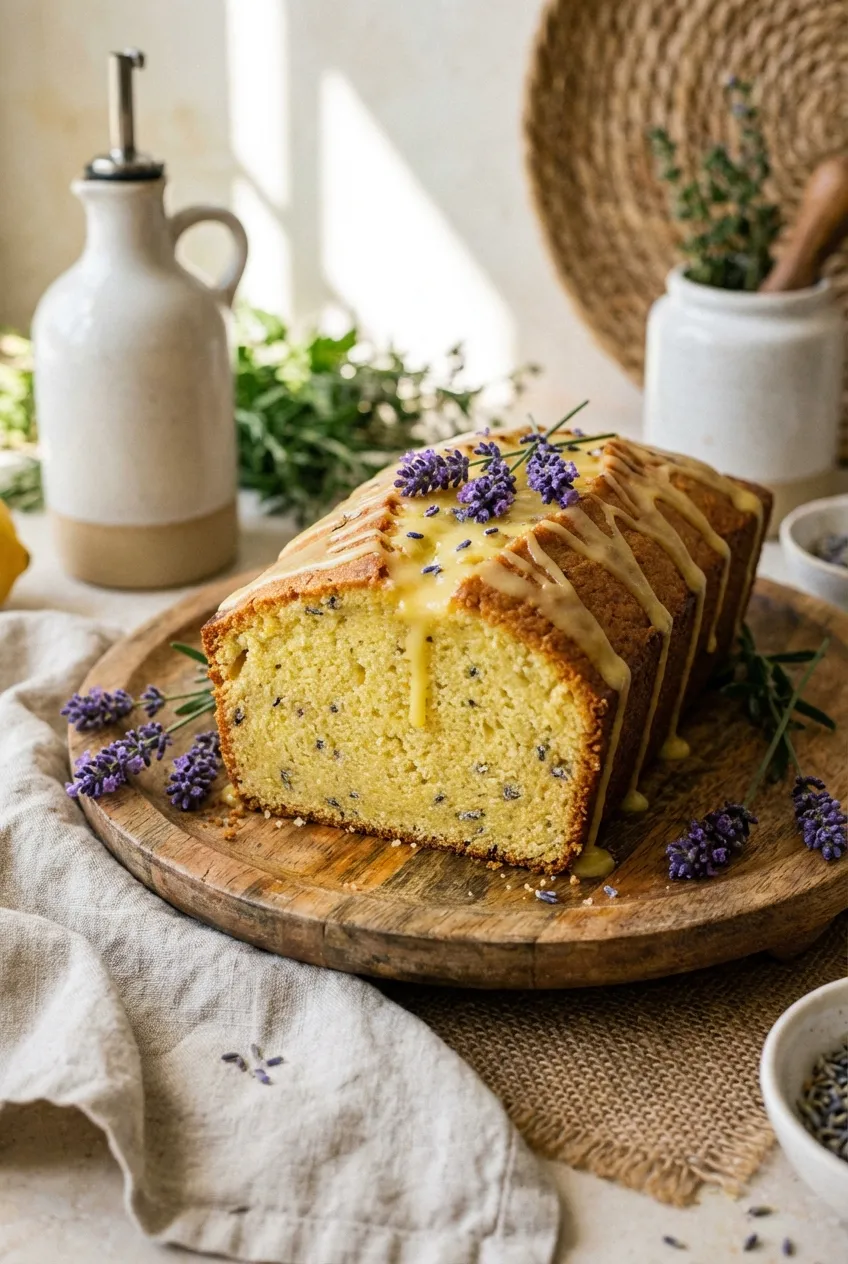
This Lemon Lavender Pound Cake brings the feeling of a spring afternoon right into my kitchen. I recently baked it for a small get-together, and the subtle floral scent and bright lemon flavor were an instant hit. It’s a wonderfully elegant yet rustic cake that feels special without being complicated.
What makes this recipe so reliable is the classic pound cake method, which guarantees a dense, moist crumb every time. The combination of fragrant lavender and sharp lemon creates a beautifully balanced flavor that’s refreshing and unique. It’s the perfect bake for a weekend treat, a special occasion, or just because.
Dense Yet Fluffy Pound Cake
The signature texture of a great pound cake—dense but never heavy—comes from creating a strong emulsion. The key is to cream the softened butter and sugar thoroughly, for at least 3 to 4 minutes. This process whips tiny air pockets into the butter, which gives the cake its lift and tender crumb. Adding room-temperature eggs one at a time maintains this stable structure. When you finally add the flour, mix it gently and only until it disappears. Overmixing develops gluten, which will make your cake tough and rubbery instead of soft.
Floral Notes in Baking
Baking with lavender can be a delicate balance. Too much, and your cake can taste soapy; too little, and the flavor gets lost. For this recipe, we use culinary-grade dried lavender, which has a more concentrated flavor than fresh. One tablespoon is just enough to provide a lovely floral aroma that complements the lemon without overwhelming it. Always make sure you’re using culinary lavender, which is grown specifically for consumption, to avoid any bitterness or unwanted chemicals found in decorative varieties. It’s a simple way to add a sophisticated twist to a classic bake.
Perfecting the Lemon Glaze
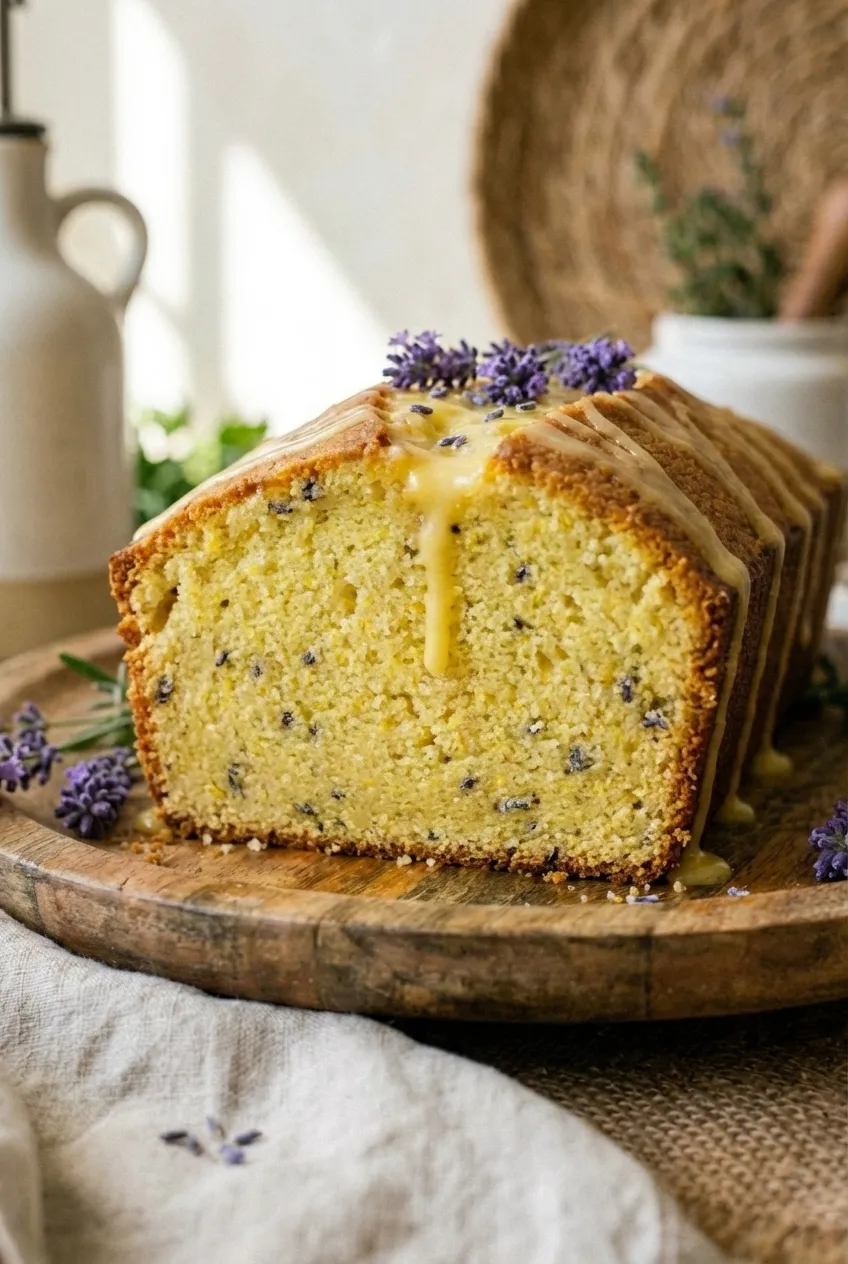
A simple lemon glaze should be just two things: bright and smooth. The trick is to find the right consistency. You want it thin enough to drizzle and drip beautifully down the sides of the cake, but thick enough to set into a delicate, sweet-tart crust. Start by whisking the powdered sugar and lemon juice together. If it’s too thick, add more lemon juice, just a half-teaspoon at a time. If it’s too thin, add a bit more powdered sugar. Drizzle it over the cake while it’s still slightly warm; the gentle heat will help it set into a perfect, crackly finish.
Recipe Overview
- Prep Time: 20 minutes
- Cook Time: 60 minutes
- Total Time: 1 hour 20 minutes
- Servings: 8 servings
- Difficulty: Medium
Ingredients
For the Cake
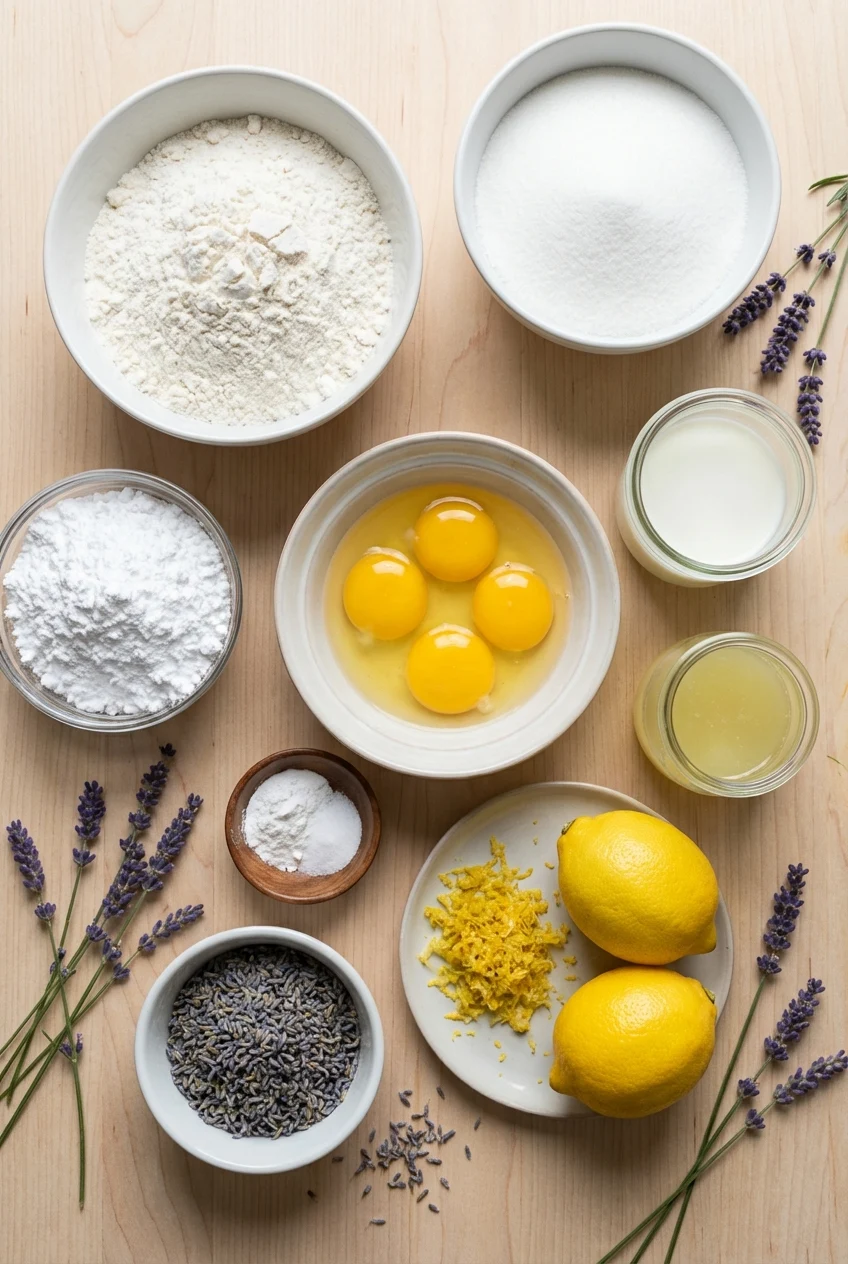
- 240g (2 cups) all-purpose flour
- 5g (1 teaspoon) baking powder
- 3g (1/2 teaspoon) salt
- 227g (1 cup) unsalted butter, softened
- 300g (1 1/2 cups) sugar
- 200g (4 large) eggs, at room temperature
- 6g (2 tablespoons) lemon zest, from about 2 lemons
- 3g (1 tablespoon) culinary grade, dried lavender flowers
- 120g (1/2 cup) whole milk
For the Glaze
- 120g (1 cup) powdered sugar
- 30g (2 tablespoons) freshly squeezed lemon juice
Step-By-Step Instructions
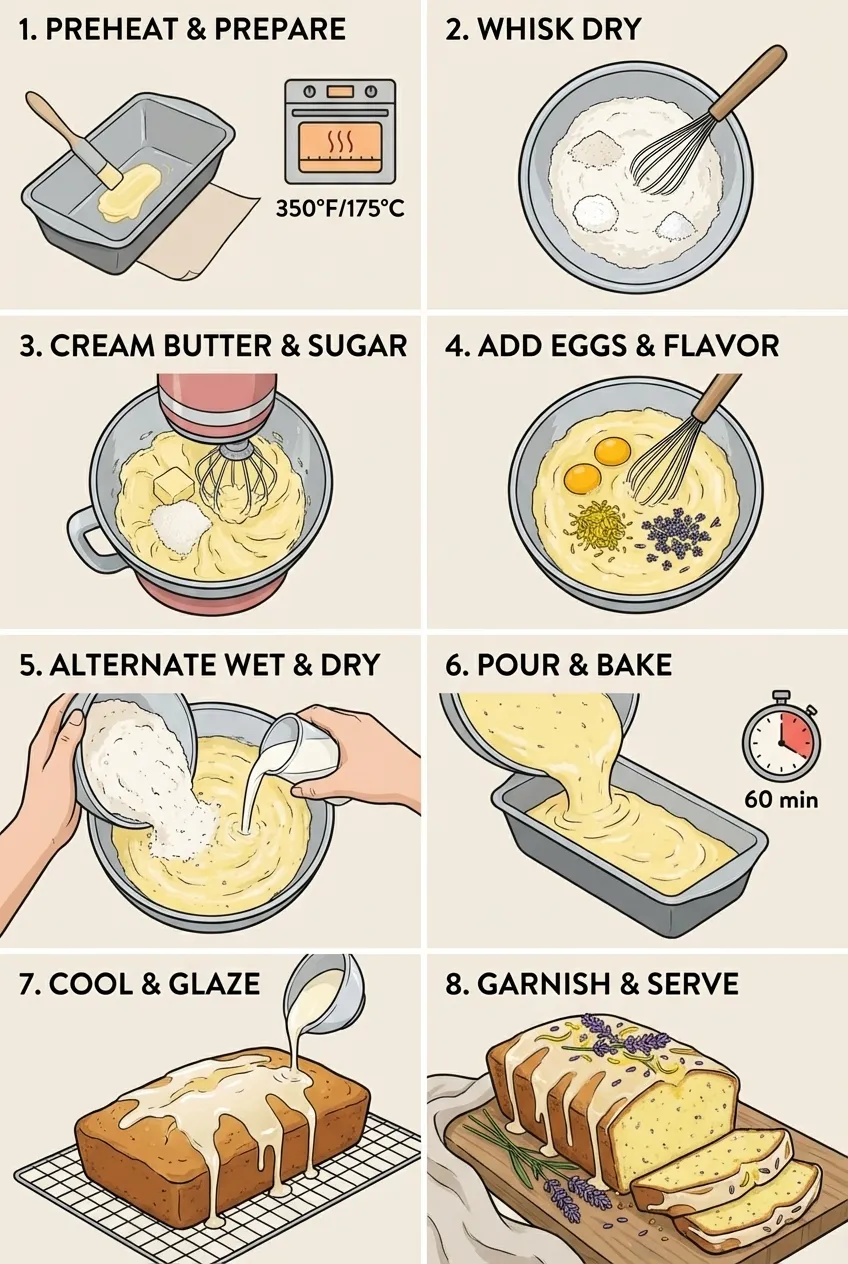
- Preheat and Prepare the Pan
Preheat your oven to 350°F (175°C). Grease a 9×5 inch loaf pan thoroughly with butter, or line it with parchment paper, leaving an overhang on the sides for easy removal. Setting up your pan first ensures the batter can be baked immediately once mixed.
- Whisk Dry Ingredients
In a medium bowl, whisk together the 240g (2 cups) all-purpose flour, 5g (1 teaspoon) baking powder, and 3g (1/2 teaspoon) salt. Whisking aerates the mixture and distributes the leavening evenly, which helps create a uniform, tender crumb in the finished cake.
- Cream Butter and Sugar
In a large bowl with a hand mixer or in the bowl of a stand mixer, beat the 227g (1 cup) softened butter and 300g (1 1/2 cups) sugar on medium speed. Continue for 3-4 minutes, until the mixture is pale, light, and fluffy. This step is essential for incorporating air, which gives the pound cake its structure.
- Add Eggs and Flavorings
Add the 4 large, room-temperature eggs one at a time, beating well after each addition until it is fully incorporated. This prevents the batter from curdling. Once the eggs are mixed in, stir in the 6g (2 tablespoons) lemon zest and 3g (1 tablespoon) lavender flowers until just combined.
- Alternate Wet and Dry
Reduce the mixer speed to low. Add the dry ingredients in three additions, alternating with the 120g (1/2 cup) milk in two additions, beginning and ending with the dry mixture. Mix only until the last streaks of flour disappear. Do not overmix, as this can result in a tough cake.
- Pour and Bake
Pour the finished batter into your prepared loaf pan and smooth the top with a spatula. Bake for 60 minutes, or until the top is golden brown and a wooden skewer or toothpick inserted into the center comes out clean. The cake will rise with a signature crack down the middle.
- Cool and Glaze
Let the cake cool in the pan on a wire rack for 10 minutes. Then, use the parchment overhangs to lift it out and let it cool completely on the rack. While it cools, whisk together the 120g (1 cup) powdered sugar and 30g (2 tablespoons) lemon juice in a small bowl until smooth. Drizzle the glaze over the cooled cake.
- Garnish and Serve
If you like, garnish the cake with a few extra lavender flowers or some fresh lemon zest while the glaze is still wet. Allow the glaze to set for about 15-20 minutes before slicing. This cake is delicious served at room temperature.
If you enjoy this dish, try our French Yogurt Cake for a perfect pairing or next-weeknight option.
Substitutions & Variations
- Different Herbs: Swap the lavender for 1 tablespoon of finely chopped culinary rosemary for an herbaceous, savory note that pairs beautifully with lemon.
- Add Moisture: For an even more moist and tangy crumb, replace the whole milk with an equal amount of full-fat Greek yogurt or sour cream.
- Citrus Twist: Instead of lemon, use the zest and juice of two oranges or three limes for a different citrus profile.
Make-Ahead, Storage & Reheat
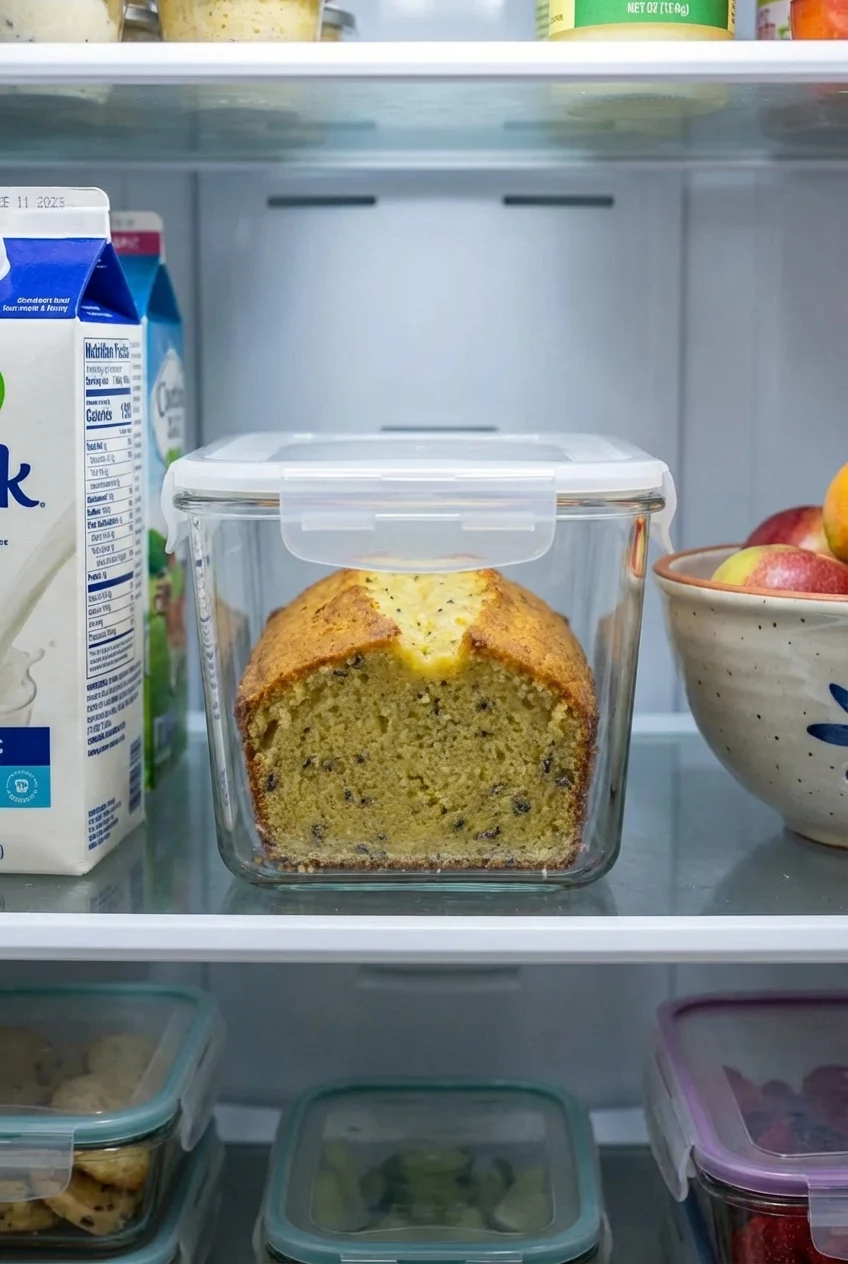
Store the pound cake in an airtight container at room temperature for up to 3 days. For longer storage, you can refrigerate it for up to one week. The un-glazed cake also freezes well for up to 3 months; wrap it tightly in plastic wrap and then foil. Thaw at room temperature before glazing and serving.
Nutrition
- Serving size: 1 slice (1/8 of cake)
- Calories: 350
- Protein: 5g
- Fat: 15g
- Carbohydrates: 50g
Per 100g: 300 calories, 4g protein, 13g fat, 43g carbohydrates. Estimates only.
FAQ
Why is my cake dense and heavy instead of dense yet fluffy like yours?
Over-mixing the batter after adding flour is a common cause, as it develops too much gluten. Mix just until the flour disappears for a tender crumb.
Does using room temperature ingredients really make that much difference?
Yes, it’s critical for the texture. Cold ingredients don’t emulsify properly, which can result in a greasy or coarse crumb instead of a uniform one.
What are the most common reasons a pound cake turns out dry or crumbly?
Usually this points to over-baking or using too much flour. A kitchen scale gives you an accurate flour measurement, preventing a dry, heavy outcome.
How do I know for sure when my pound cake is perfectly baked through?
A wooden skewer inserted in the center should come out with a few moist crumbs, not wet batter. The top will be golden brown and spring back when touched.
How does using sour cream or Greek yogurt change the final cake texture?
These ingredients add more fat and acid than milk, which results in a slightly denser, tangier, and more moist cake. It's a great choice for richness.
Is it better to freeze the pound cake whole or in individual slices?
For the best quality, freeze the cake whole and un-glazed. Slicing it after it has been frozen and thawed helps to preserve moisture in the crumb.
Can I bake this recipe in a bundt pan instead of a standard loaf pan?
Yes, a standard 10 or 12-cup bundt pan works well. The cake will be thinner, so start checking for doneness about 15-20 minutes sooner than stated.
What's the best way to make this pound cake gluten-free successfully?
Use a good quality 1-to-1 gluten-free flour blend that already contains xanthan gum. This helps mimic the structure that gluten provides for a better crumb.
Equipment
- 9×5 inch loaf pan
- Mixing bowls
- Hand mixer or stand mixer
- Whisk
- Spatula
- Wire rack
- Small bowl
Ingredients
- 240 g (2 cups) all-purpose flour
- 5 g (1 teaspoon) baking powder
- 3 g (1/2 teaspoon) salt
- 227 g (1 cup) unsalted butter softened
- 300 g (1 1/2 cups) sugar
- 200 g (4 large) eggs at room temperature
- 6 g (2 tablespoons) lemon zest from about 2 lemons
- 3 g (1 tablespoon) culinary grade dried lavender flowers
- 120 g (1/2 cup) whole milk
- For the Glaze
- 120 g (1 cup) powdered sugar
- 30 g (2 tablespoons) freshly squeezed lemon juice
Instructions
- Preheat your oven to 350°F (175°C) and grease or line a 9×5 inch loaf pan with parchment paper leaving an overhang.
- Whisk together the flour, baking powder, and salt in a medium bowl.
- Beat the softened butter and sugar on medium speed for 3 to 4 minutes until pale, light, and fluffy.
- Add the eggs one at a time, beating well after each addition, then stir in lemon zest and lavender flowers until just combined.
- Reduce mixer speed to low and alternately add the dry ingredients in three parts and the milk in two parts, beginning and ending with the dry ingredients; mix just until flour disappears.
- Pour the batter into the prepared pan and smooth the top; bake for 60 minutes or until golden brown and a toothpick comes out clean.
- Cool the cake in the pan on a wire rack for 10 minutes, then lift it out using the parchment and cool completely.
- Whisk powdered sugar and lemon juice until smooth and drizzle over the cooled cake.
- Optionally, garnish with extra lavender flowers or lemon zest and allow glaze to set 15-20 minutes before slicing.
