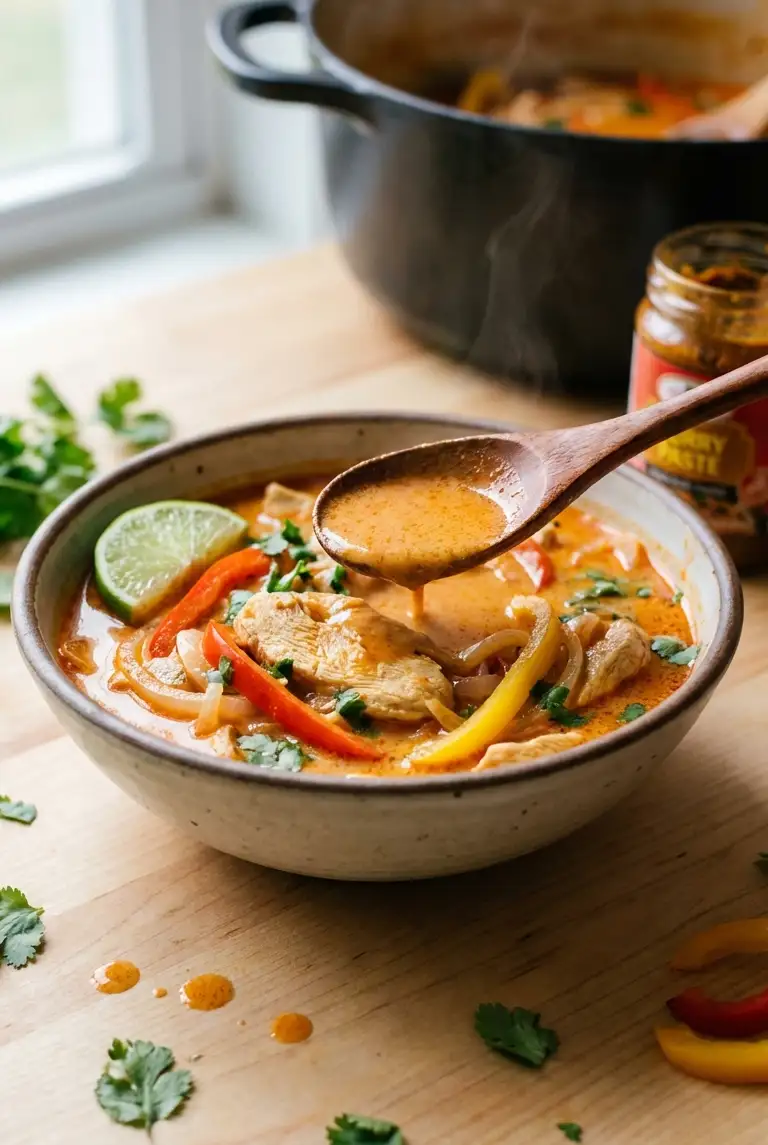
The difference between a flat coconut curry soup and a good one usually shows up right at the start. If the curry paste goes straight into the liquid and barely cooks, the broth tends to taste thin and a little raw. If you give that paste a short cook in the oil first, the whole pot deepens fast.
The other part that matters is the heat. This soup should sit at a gentle simmer, not a boil. Boiling tightens the chicken and can make the coconut milk look greasy instead of smooth.
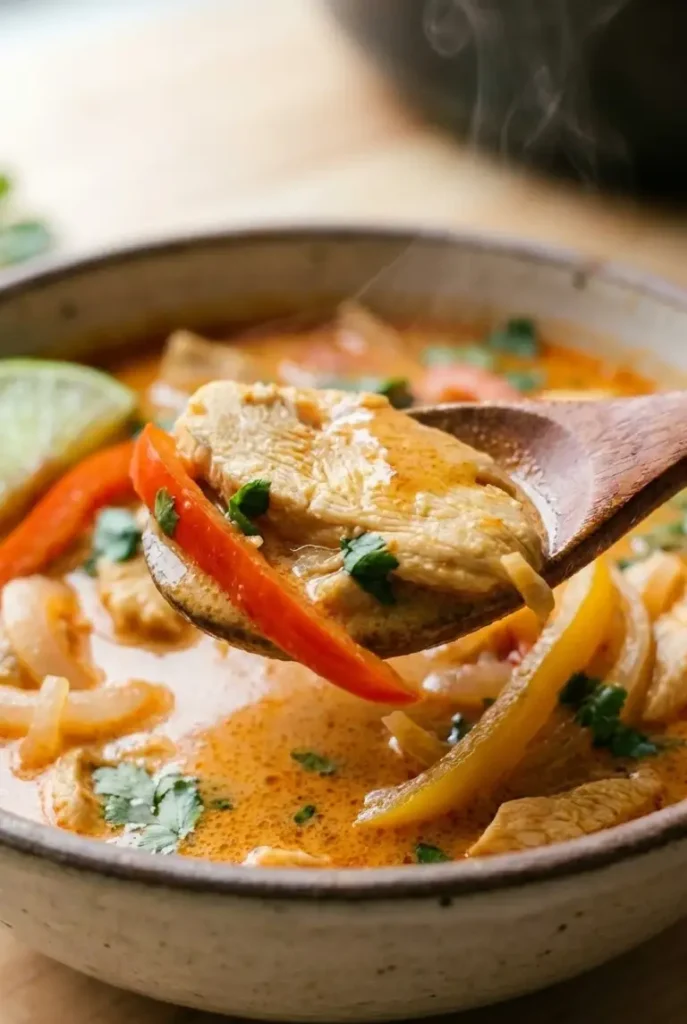
When it lands where it should, the broth has enough body to lightly coat the spoon without turning into stew, the chicken stays tender, the peppers keep some bite, and the lime at the end keeps the whole bowl from tasting heavy.
Why This Coconut Curry Soup Stays Balanced
- Cooking the curry paste in oil for a minute or so takes off the raw edge and gives the broth much more depth without needing a long simmer.
- Thinly sliced chicken cooks directly in the broth in just a few minutes, so the soup stays weeknight-friendly.
- Keeping the pot at a gentle simmer protects both the chicken and the coconut milk, so the broth stays smooth instead of greasy or split.
- Adding the peppers later helps them soften without losing all their bite.
Ingredients for Thai Coconut Curry Soup with Chicken
- 1 tablespoon neutral oil
- 3 cloves garlic, minced
- 2 to 3 tablespoons red curry paste
- 1 can full-fat coconut milk (400g)
- 2 cups chicken broth (480g)
- 1 tablespoon fish sauce
- 1 teaspoon brown sugar
- 1 pound boneless skinless chicken breast or thighs, thinly sliced (450g)
- 1 red bell pepper, thinly sliced (150g)
- 1 yellow bell pepper, thinly sliced (150g)
- 1 small onion, thinly sliced (110g)
- 1 tablespoon lime juice
- 1/4 cup chopped cilantro (15g)
- Salt, to taste
- Black pepper, to taste
Best coconut milk for a smooth broth
Use full-fat canned coconut milk. Light coconut milk gives you a broth that tastes noticeably thinner and less rounded.
Before opening, shake the can well. If the cream and liquid have separated, stir them together before adding them to the pot.
Choosing the red curry paste
Red curry paste brands vary a lot. Some are hotter, saltier, or more concentrated than others.
Start with 2 tablespoons if you don’t know the brand, then adjust next time. With a strong paste, that extra spoonful can swing the whole pot.
How to make Thai coconut curry soup
1. Slice the chicken and prep the vegetables
- Thinly slice the chicken across the grain. If it feels slippery, place it in the freezer for 10 to 15 minutes first so it firms up and slices more evenly.
- Slice the onion and bell peppers. Mince the garlic.
2. Bloom the curry paste
- Heat the oil in a soup pot or Dutch oven over medium heat. Add the onion and cook for 3 to 4 minutes, until slightly softened and translucent.
- Add the garlic and cook for 30 seconds, until fragrant and just barely golden at the edges.
- Stir in the red curry paste and cook for 60 to 90 seconds, stirring constantly, until it darkens slightly and smells noticeably more fragrant.
3. Build the broth
- Pour in the coconut milk and chicken broth, stirring well to dissolve the curry paste fully. Add the fish sauce and brown sugar.
- Bring the pot to a gentle simmer. You want small bubbles around the edges and an occasional bubble in the center, not a rolling boil.
4. Cook the chicken gently
- Add the sliced chicken and simmer for 4 to 5 minutes, stirring once or twice, until the pieces are opaque and gently firm.
- If you’re unsure, pull out one piece and cut it open before the rest overcooks.
5. Add the peppers
- Add the bell peppers and simmer for 3 to 4 minutes, until slightly softened but still with a little crunch.
- Taste the broth. If it needs more salt, add a small splash of fish sauce or a pinch of salt. Let it simmer for 1 to 2 minutes after adjusting so the flavor settles before tasting again.
6. Finish with lime and cilantro
- Turn off the heat and stir in the lime juice and cilantro. Lime tastes brightest when added off heat or right before serving.
- Serve hot.
If you’re building out a cold-weather dinner rotation, this Easy Chicken Noodle Soup From Scratch is another cozy, broth-forward favorite.
Tips for the best Thai coconut curry soup with chicken
- Keep the heat moderate. A hard boil can split the coconut milk and toughen the chicken.
- Use chicken thighs if you want a little more forgiveness. They stay tender more easily if the soup goes a minute too long.
- Do not overcook the peppers. Their slight bite gives the bowl better contrast against the rich broth.
- Taste at the end for balance, not just salt. If the broth tastes flat, it often needs lime more than anything else.
Thai coconut curry soup variations
Thai coconut curry soup with shrimp
Use 1 pound peeled raw shrimp (450g) instead of chicken. Add the shrimp during the last 3 to 4 minutes of cooking, just until they turn pink and curled. Simmering past that point turns them rubbery.
Thai coconut curry soup with rice noodles
Cook rice noodles separately, then divide them into bowls and ladle the soup over the top. If you simmer the noodles directly in the soup and store leftovers, they keep absorbing broth and turn too soft.
What to serve with Thai coconut curry soup
Steamed jasmine rice works well if you want to stretch the broth into a fuller meal. Rice noodles are the better choice if you want something lighter that still makes the bowl feel substantial.
For a simple side, serve it with cucumber salad, sautéed greens, or extra lime wedges and herbs at the table.
For another fast comfort-food bowl, try this Chicken Ramen with Creamy Garlic Sauce on a night when you want noodles instead.
How to store and reheat coconut curry soup
Store cooled soup in an airtight container in the refrigerator for up to 3 days.
Reheat over low heat until just steaming. If the broth looks slightly split, whisk it gently off heat and it will usually come back together well enough for serving.
If you plan to add rice noodles, store them separately.
FAQ about Thai coconut curry soup
Why did my coconut curry soup separate?
Usually because the heat was too high and the soup boiled too hard. Coconut milk holds together better at a gentle simmer than at a rolling boil.
Can I use frozen vegetables or frozen shrimp?
Yes. Frozen shrimp work well if thawed first for more even cooking, and frozen vegetables are fine too, though they soften faster than fresh peppers.
Can I add rice noodles directly to the soup?
You can if you are serving the whole pot right away. For leftovers, it is better to cook them separately so they do not keep absorbing broth.
How do I make it milder or spicier?
For a milder soup, start with less curry paste and adjust upward next time. For more heat, add more curry paste or finish bowls with chile oil or fresh chiles rather than only adding more fish sauce.
Nutrition
- Serving size: approximately 1/4 of the total recipe
- Calories: 452 kcal
- Protein: 31g
- Fat: 29g
- Carbohydrates: 16g
- Per 100g: Calories: 84 kcal, Protein: 6g, Fat: 5g, Carbohydrates: 3g.
These nutritional values are approximate and can vary based on the specific ingredients and brands used.
Thai Coconut Curry Soup with Chicken
Equipment
- Soup pot or Dutch oven
- Knife
- Cutting board
- Measuring spoons
- Can opener
- Stirring spoon
Ingredients
- 1 tablespoon neutral oil
- 3 cloves garlic, minced
- 2 to 3 tablespoons red curry paste
- 1 can full-fat coconut milk (400g)
- 2 cups chicken broth (480g)
- 1 tablespoon fish sauce
- 1 teaspoon brown sugar
- 1 pound boneless skinless chicken breast or thighs, thinly sliced (450g)
- 1 red bell pepper, thinly sliced (150g)
- 1 yellow bell pepper, thinly sliced (150g)
- 1 small onion, thinly sliced (110g)
- 1 tablespoon lime juice
- 1/4 cup chopped cilantro (15g)
- Salt, to taste
- Black pepper, to taste
Instructions
- Thinly slice chicken across the grain; chill for 10-15 minutes if slippery. Slice onion and bell peppers, mince garlic.
- Heat oil in soup pot over medium; cook onion 3-4 minutes until slightly softened and translucent.
- Add garlic; cook 30 seconds until fragrant and barely golden.
- Stir in red curry paste; cook 60-90 seconds stirring constantly until darkened and fragrant.
- Pour in coconut milk and chicken broth; stir to dissolve curry paste. Add fish sauce and brown sugar.
- Bring to a gentle simmer (small bubbles around edges, occasional bubble center).
- Add chicken; simmer 4-5 minutes stirring occasionally until opaque and gently firm.
- Add bell peppers; simmer 3-4 minutes until slightly softened but still crunchy.
- Adjust seasoning with salt or fish sauce; simmer 1-2 minutes to settle flavors.
- Turn off heat; stir in lime juice and chopped cilantro. Serve hot.
