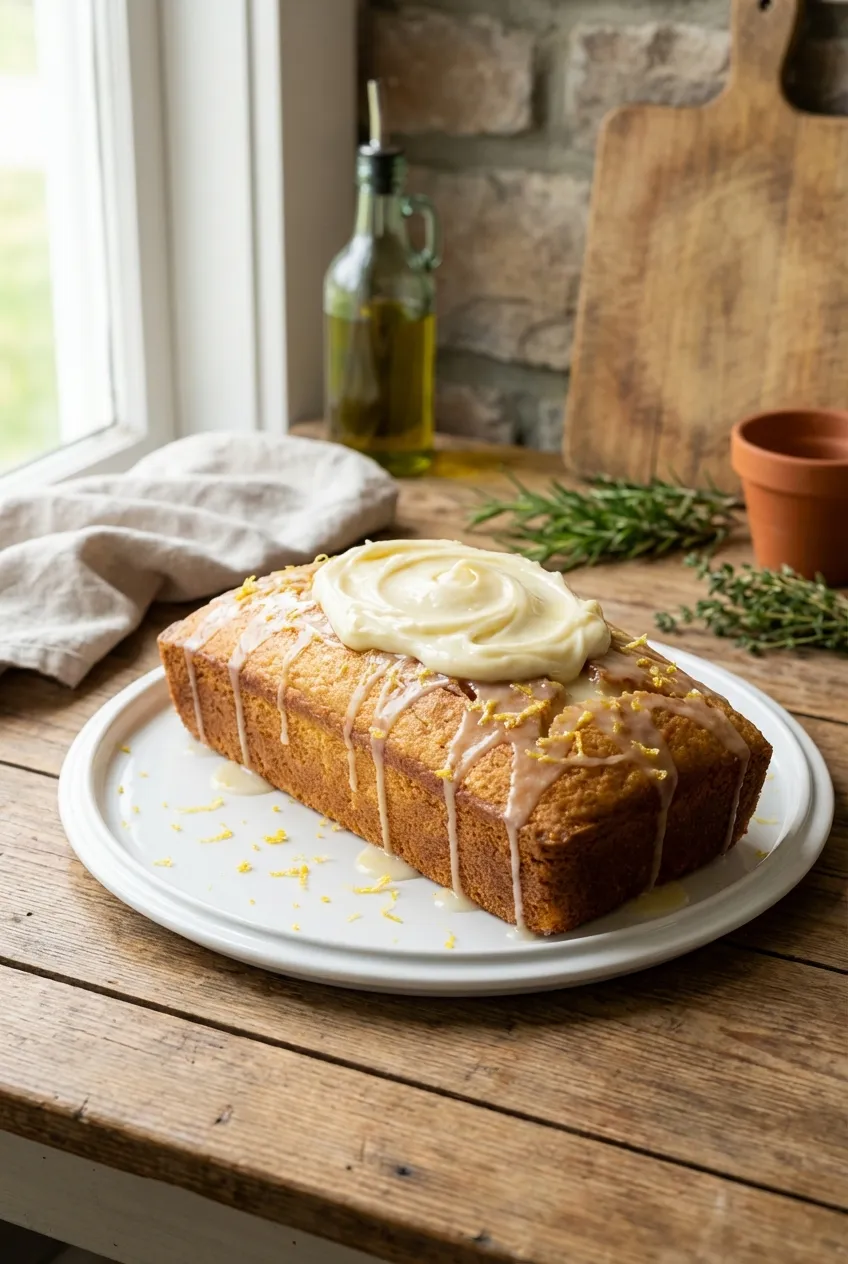
This Lemon Cream Cheese Pound Cake is a recipe I return to again and again, especially when I need a reliable, crowd-pleasing dessert. It’s a classic for a reason, with a bright lemon flavor that feels just right for sunny afternoons and family gatherings. The texture is what truly sets it apart—dense and buttery like a traditional pound cake, but with an incredible moistness from the cream cheese.
What makes this cake a standout is its tender, velvety crumb and the perfect balance of sweet and tart. We use fresh lemon zest and juice in the batter and finish it with a simple, sharp lemon glaze. It’s an elegant dessert that comes together with straightforward techniques, making it achievable for bakers of any level.
Achieving the Perfect Pound Cake Texture
The key to a truly great pound cake is a smooth, homogenous batter. Start with butter and cream cheese that are fully softened to room temperature—this is not a step to rush. When they are properly softened, they blend seamlessly with the sugar to create a light, aerated base. This process, called creaming, incorporates tiny air pockets that give the cake lift. When you add the flour, mix only until it disappears. Over-mixing develops gluten, which will result in a tough, chewy cake instead of the tender crumb we’re after.
Mastering the Lemon Glaze
A simple glaze adds a final layer of bright, citrusy flavor that cuts through the richness of the cake. For a perfectly smooth, glossy finish, I always sift my confectioners’ sugar to remove any lumps. Add the lemon juice one tablespoon at a time, whisking until you reach the right consistency. You’re looking for a glaze that is thick enough to coat the cake but still fluid enough to drizzle down the sides. If it’s too thick, add a few more drops of juice; if it’s too thin, whisk in a bit more sifted sugar.
Ensuring Even Baking
To get that beautiful golden-brown crust all the way around, proper oven conditions are essential. Always position your oven rack in the center to ensure even heat circulation. Bundt pans can be prone to uneven baking, so if you know your oven has hot spots, rotate the pan once about halfway through the cook time. The cake is done when a wooden skewer or toothpick inserted into the deepest part comes out with just a few moist crumbs attached, not wet batter. The internal temperature should register around 200-205°F (93-96°C).
Recipe Overview
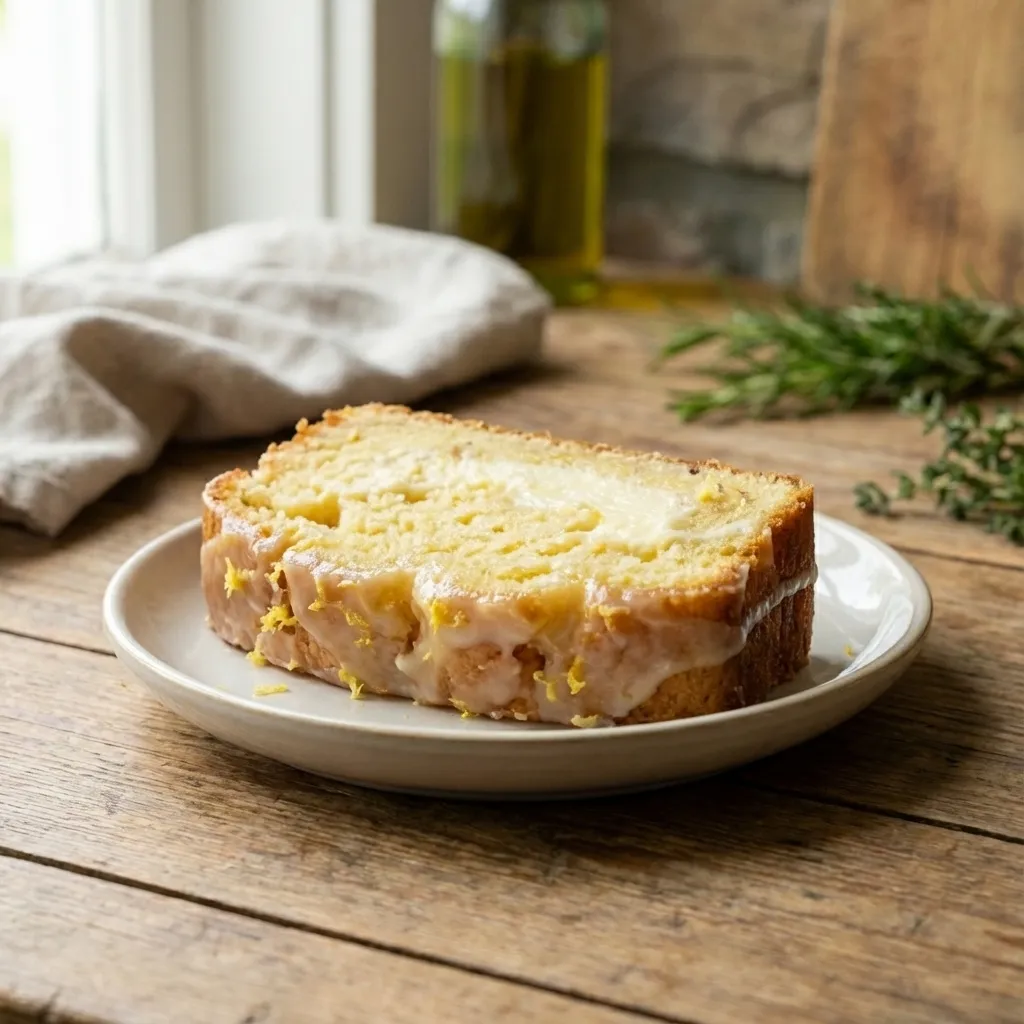
- Prep Time: 20 minutes
- Cook Time: 1 hour
- Total Time: 1 hour 20 minutes
- Servings: 10-12 slices
- Difficulty: Medium
Ingredients
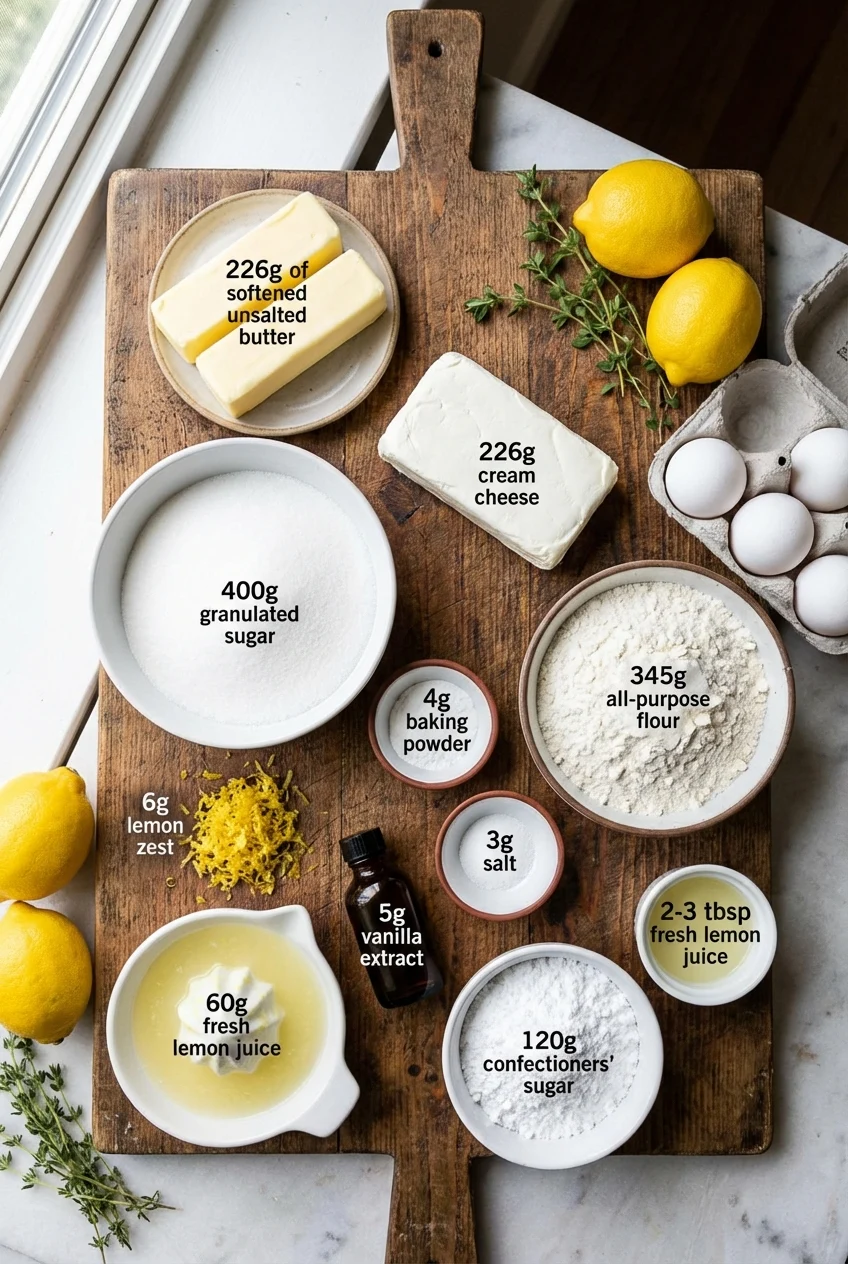
For the Cake
- 226g unsalted butter (1 cup), softened to room temperature
- 226g cream cheese (8 oz), softened to room temperature
- 400g granulated sugar (2 cups)
- 4 large eggs, room temperature
- 345g all-purpose flour (2 3/4 cups)
- 4g baking powder (1 tsp)
- 3g salt (1/2 tsp)
- 6g fresh lemon zest (1 tbsp)
- 60g fresh lemon juice (1/4 cup)
- 5g vanilla extract (1 tsp)
For the Lemon Glaze
- 120g confectioners’ sugar (1 cup)
- 2-3 tbsp fresh lemon juice
Step-By-Step Instructions
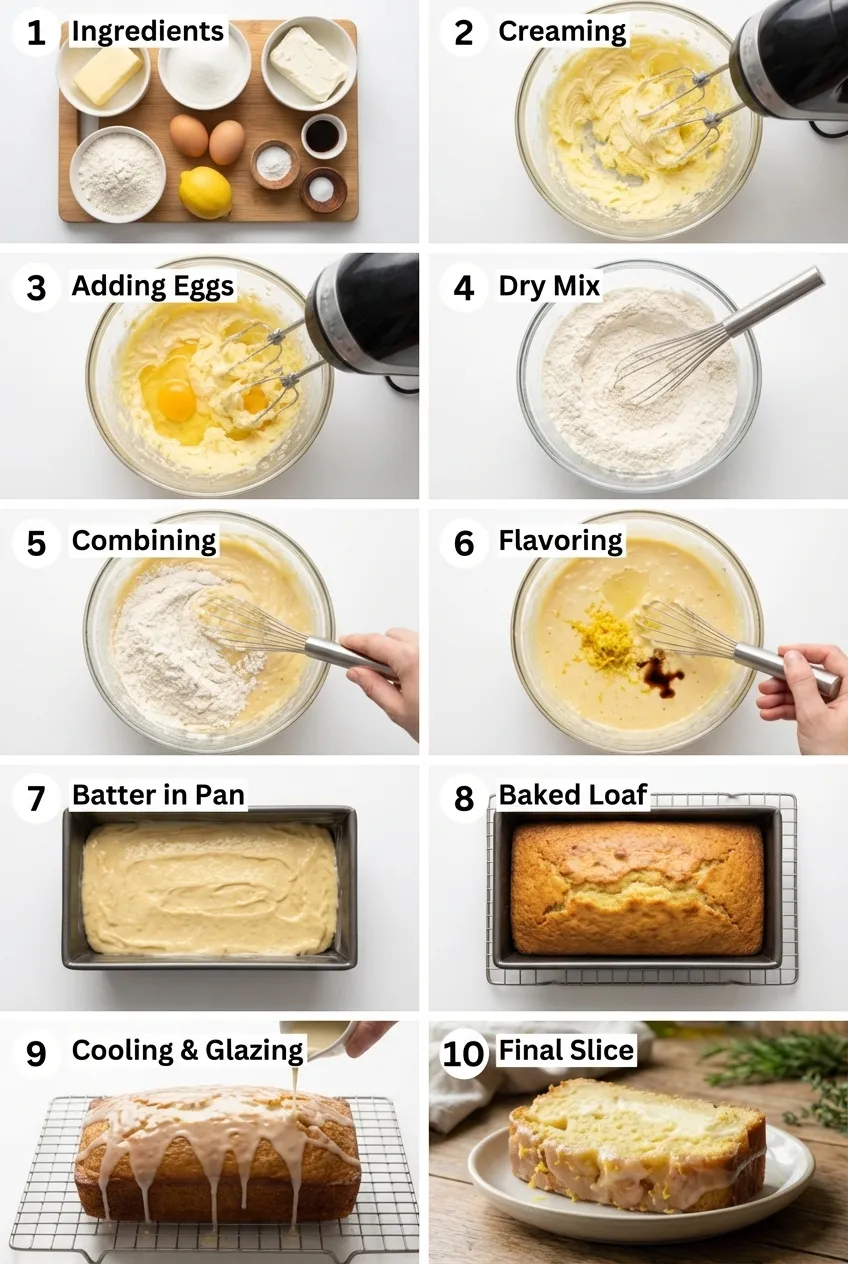
- Preheat and Prepare the Pan
Position a rack in the center of your oven and preheat to 325°F (165°C). Thoroughly grease and flour a 10-inch bundt pan, making sure to coat every nook and cranny to prevent the cake from sticking.
- Cream Butter, Cream Cheese, and Sugar
In a large mixing bowl or the bowl of a stand mixer, combine the softened butter, cream cheese, and granulated sugar. Beat on medium speed for 2-3 minutes, until the mixture is pale, light, and fluffy. This step incorporates air, which helps the cake rise.
- Add the Eggs
Add the eggs one at a time, beating well to fully incorporate each one before adding the next. Scrape down the sides and bottom of the bowl with a spatula as needed to ensure the batter is evenly mixed.
- Combine the Dry Ingredients
In a separate, medium bowl, whisk together the all-purpose flour, baking powder, and salt. Add the dry ingredients to the wet mixture in two or three additions, mixing on low speed only until the flour is just combined. Be careful not to over-mix.
- Add Flavorings
Stir in the fresh lemon zest, lemon juice, and vanilla extract until they are just distributed throughout the batter. The batter will be thick and smell brightly of citrus.
- Fill the Pan
Carefully spoon the thick batter into your prepared bundt pan. Use a spatula to spread it evenly and smooth the top.
- Bake the Cake
Bake for 60-70 minutes. The cake is done when it’s deep golden-brown and a wooden skewer or toothpick inserted into the center comes out clean or with a few moist crumbs attached.
- Cool the Cake
Let the cake cool in the pan on a wire rack for 10-15 minutes. This allows it to set up slightly before being inverted. Then, carefully invert the cake onto the wire rack to cool completely before glazing.
- Prepare the Glaze
While the cake cools, prepare the glaze. In a small bowl, whisk together the confectioners’ sugar and 2 tablespoons of lemon juice until smooth. If the glaze is too thick, add more lemon juice, a teaspoon at a time, until it’s thick but pourable.
- Glaze and Serve
Once the cake is completely cool to the touch, drizzle the lemon glaze over the top, allowing it to drip down the sides. Let the glaze set for about 15-20 minutes before slicing and serving.
If you enjoy this dish, try our Gateau au Yaourt for a perfect pairing or next-weeknight option.
Substitutions & Variations
- Citrus Swap: Substitute the lemon with an equal amount of lime or orange zest and juice for a different citrus profile.
- Poppy Seed Addition: Stir in 2 tablespoons of poppy seeds along with the dry ingredients for a classic pairing and a bit of texture.
- Fruity Swirl: Gently swirl 1/3 cup of raspberry or blueberry jam into the batter right before baking for a beautiful and delicious fruit ribbon.
- Nutty Note: Replace the vanilla extract with 1/2 teaspoon of almond extract for a subtle, nutty aroma that complements the lemon.
Make-Ahead, Storage & Reheat
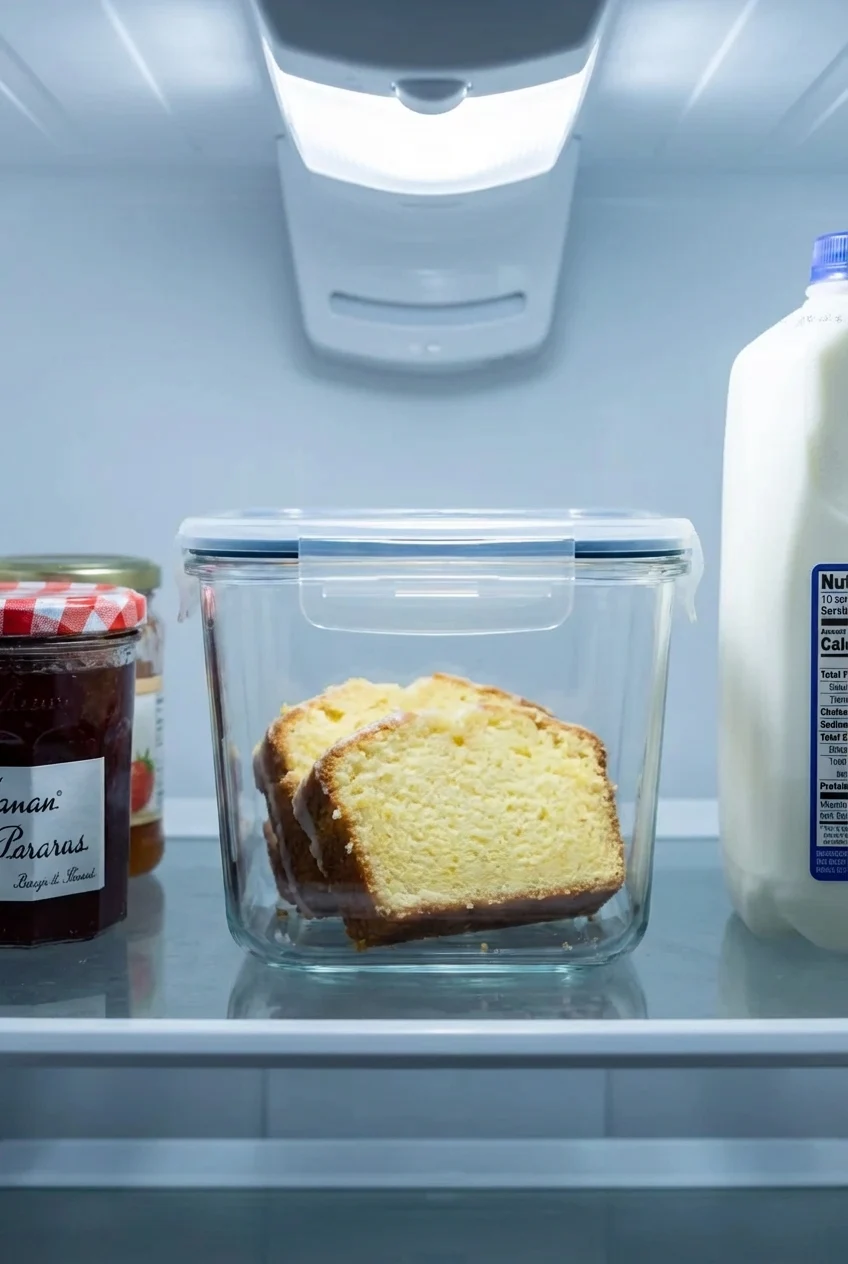
Store the pound cake in an airtight container at room temperature for up to 3 days. For longer storage, you can refrigerate it for up to one week. The cake is best enjoyed at room temperature, so allow chilled slices to sit out for about 20-30 minutes before serving.
Nutrition
- Serving Size: 1 slice
- Calories: 450
- Protein: 6g
- Fat: 22g
- Carbohydrates: 58g
- Estimates only.
FAQ
Does using room temperature ingredients really make that much difference?
Yes, it’s a critical step. Room temperature butter, eggs, and dairy form a stable emulsion, which traps air and creates a uniformly fine, even crumb.
What causes large holes or tunnels to form inside of my pound cake?
Tunnels are usually from overmixing the batter after the flour is added. This develops too much gluten, creating a tough structure with large air pockets.
Why does my cake sometimes have a dense, gummy layer at the bottom?
A gummy streak often means the batter was underbaked or the fats separated. Let ingredients come to room temperature so they emulsify properly.
Is it normal for my pound cake to have a signature large crack on top?
A crack on top is a classic sign of a well-made pound cake. It shows the crust set quickly while the inside continued to rise, giving it a beautiful lift.
Can I substitute cake flour for the all-purpose flour in this recipe?
You can, but expect a slightly different result. Cake flour has less protein, which will give you a finer, more tender crumb that's less traditionally dense.
How can I ensure my pound cake releases cleanly from a decorative pan?
Use solid vegetable shortening, not just butter or spray, to grease the pan. A pastry brush gets it into every detail, then flouring helps it slide out.
Besides a toothpick test, how do I know my pound cake is fully baked?
The cake should be golden brown and pull away slightly from the sides of the pan. Gently press the top—it should feel firm and spring back when touched.
What is the best method for freezing this pound cake for later enjoyment?
Let the cake cool completely, then wrap it tightly in two layers of plastic wrap and a final layer of foil. This prevents freezer burn and locks in moisture.
Equipment
- 1 10-inch bundt pan
- 1 Large mixing bowl
- 1 Stand mixer or hand mixer
- 1 Medium bowl
- 1 Small bowl
- Wire rack
- Wooden skewer or toothpick
- Spatula
- Pastry brush or paper towel
Ingredients
- 226 g (1 cup) unsalted butter softened to room temperature
- 226 g (8 oz) cream cheese softened to room temperature
- 400 g (2 cups) granulated sugar
- 4 large eggs room temperature
- 345 g (2 3/4 cups) all-purpose flour
- 4 g (1 tsp) baking powder
- 3 g (1/2 tsp) salt
- 6 g (1 tbsp) fresh lemon zest
- 60 g (1/4 cup) fresh lemon juice
- 5 g (1 tsp) vanilla extract
- For the Lemon Glaze
- 120 g (1 cup) confectioners’ sugar
- 2-3 tbsp fresh lemon juice
Instructions
- Position a rack in the center of your oven and preheat to 325°F (165°C). Thoroughly grease and flour a 10-inch bundt pan.
- In a large mixing bowl or stand mixer bowl, beat the softened butter, cream cheese, and granulated sugar on medium speed for 2-3 minutes until pale, light, and fluffy.
- Add the eggs one at a time, beating well after each addition and scraping down the bowl as needed to ensure even mixing.
- In a separate medium bowl, whisk together the all-purpose flour, baking powder, and salt.
- Add the dry ingredients to the wet mixture in two or three additions, mixing on low speed just until the flour disappears; avoid over-mixing.
- Stir in the fresh lemon zest, lemon juice, and vanilla extract until evenly distributed.
- Spoon the thick batter carefully into the prepared bundt pan and smooth the top with a spatula.
- Bake for 60-70 minutes until deep golden brown; a wooden skewer inserted in the center should come out clean or with a few moist crumbs.
- Let the cake cool in the pan on a wire rack for 10-15 minutes, then invert it onto the rack to cool completely.
- While the cake cools, whisk together the confectioners’ sugar and 2 tablespoons of lemon juice in a small bowl until smooth; add more lemon juice if needed for drizzling consistency.
- Drizzle the glaze over the cooled cake and let it set for 15-20 minutes before slicing and serving.
