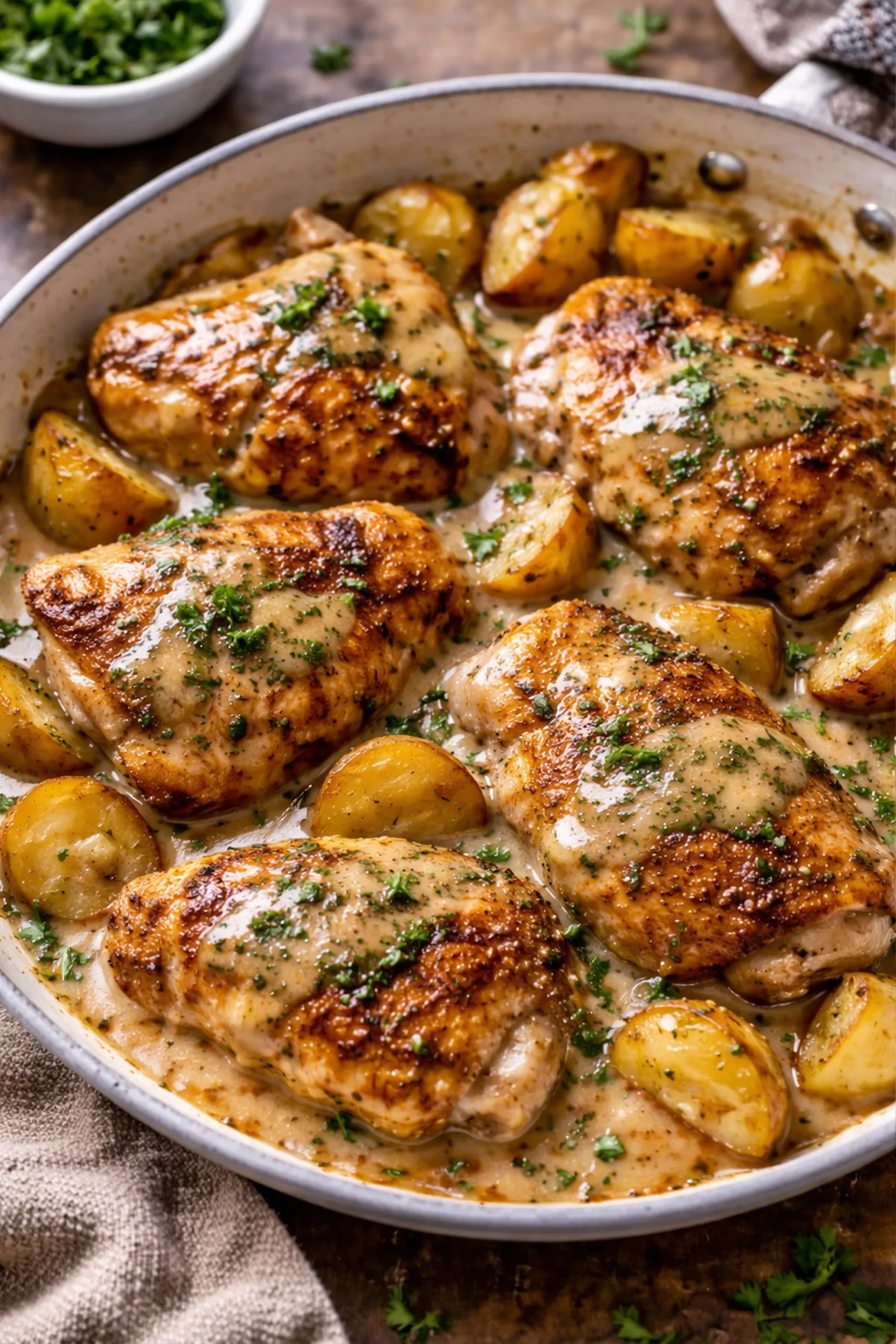
Chicken and potatoes with gravy sounds simple, but it goes wrong fast if the chicken goes into the sauce too early. I have made skillet versions where the gravy was fine, but the skin turned soft and the potatoes lost all their texture by the time dinner hit the table. This version works better because the chicken skin gets deeply golden first, and the potatoes roast separately until the edges are properly browned.
The result is the kind of chicken and potatoes with gravy I actually want to eat: crisp-skinned chicken thighs, roasted potatoes that stay fluffy inside, and an onion-thyme gravy that tastes like it came from the pan, not from a packet. It is cozy, practical, and much better than the softer, bland versions that end up tasting mostly like broth.
A Few Details That Make This Better
- Roasting the potatoes separately at 425°F gives them the dry heat they need to brown properly. If they go into the skillet too early with the chicken and gravy, they soften before the edges can crisp.
- Starting the chicken skin-side down in a moderately hot skillet renders the fat slowly. That helps the skin brown evenly and release from the pan without tearing.
- Cooking the flour in the drippings for 1 to 2 minutes gets rid of the raw flour taste and gives the gravy enough body to coat the back of a spoon.
- Returning the chicken to a gentle simmer instead of a boil keeps the meat tender and helps preserve the skin by keeping most of it above the gravy line.
Ingredients for Chicken and Potatoes with Pan Gravy
For the potatoes
- 2 pounds russet potatoes (900g), peeled and cut into 1 1/2-inch chunks
- 2 tablespoons olive oil
- 1 teaspoon kosher salt
- 1/2 teaspoon black pepper
For the chicken and gravy
- 2 cups chicken broth (480g)
- 6 bone-in, skin-on chicken thighs (900g)
- 1 teaspoon kosher salt
- 1/2 teaspoon black pepper
- 1 tablespoon olive oil
- 2 tablespoons unsalted butter (30g)
- 1 medium yellow onion, thinly sliced (150g)
- 3 garlic cloves, minced
- 1 teaspoon fresh thyme leaves, or 1/2 teaspoon dried thyme
- 2 tablespoons all-purpose flour (15g)
How to Make Chicken and Potatoes with Gravy
Step 1: Roast the Potatoes
- Heat the oven to 425°F.
- Toss the potatoes with olive oil, salt, and pepper on a large sheet pan. Spread them out so there is visible space between the chunks. If they are crowded, they steam instead of roast.
- Roast for 35 to 45 minutes, turning once halfway through, until the edges look rough, browned, and crisp and the centers yield easily when pierced with a knife.
Step 2: Sear the Chicken Thighs Skin-Side Down
- While the potatoes roast, pat the chicken very dry with paper towels. The skin should feel tacky-dry, not damp, before you season it with salt and pepper.
- Heat the olive oil in a large skillet over medium heat until it shimmers but does not smoke. Set the chicken in the skillet skin-side down. Press lightly for the first few seconds so the skin makes full contact with the pan.
- Cook for 10 to 14 minutes on the skin side, adjusting the heat as needed, until the skin is deep golden brown, not pale blond. The chicken should release from the skillet naturally when it is ready; if it sticks hard, give it another minute.
- Flip and cook the second side for 3 to 4 minutes. Transfer the chicken to a plate.
Step 3: Make the Gravy
- Pour off all but about 2 tablespoons of fat from the skillet. Add the butter and onion.
- Cook the onion for 4 to 5 minutes, stirring often, until it is softened and lightly golden at the edges. Add the garlic and thyme and cook for 30 to 60 seconds, just until fragrant. Do not let the garlic brown.
- Sprinkle in the flour and stir for 1 to 2 minutes until it looks paste-like and no longer smells raw.
- Slowly whisk in the chicken broth, scraping up the browned bits from the pan. Bring it to a simmer and cook for 3 to 5 minutes, whisking as needed, until the gravy is smooth and coats the back of a spoon.
Step 4: Finish the Chicken Gently in the Gravy
- Return the chicken thighs to the skillet, skin-side up. Nestle them into the gravy, but keep the skin above the gravy line as much as possible.
- Lower the heat and maintain a gentle bubble, not a boil, for 12 to 18 minutes, or until the chicken reaches an internal temperature of 175°F to 185°F for the best thigh texture. 165°F is the minimum safe temperature, but thighs usually eat better a little higher.
- Take the skillet off the heat and let it rest for 3 to 5 minutes so the gravy settles and thickens slightly.
Step 5: Serve Over Roasted or Mashed Potatoes
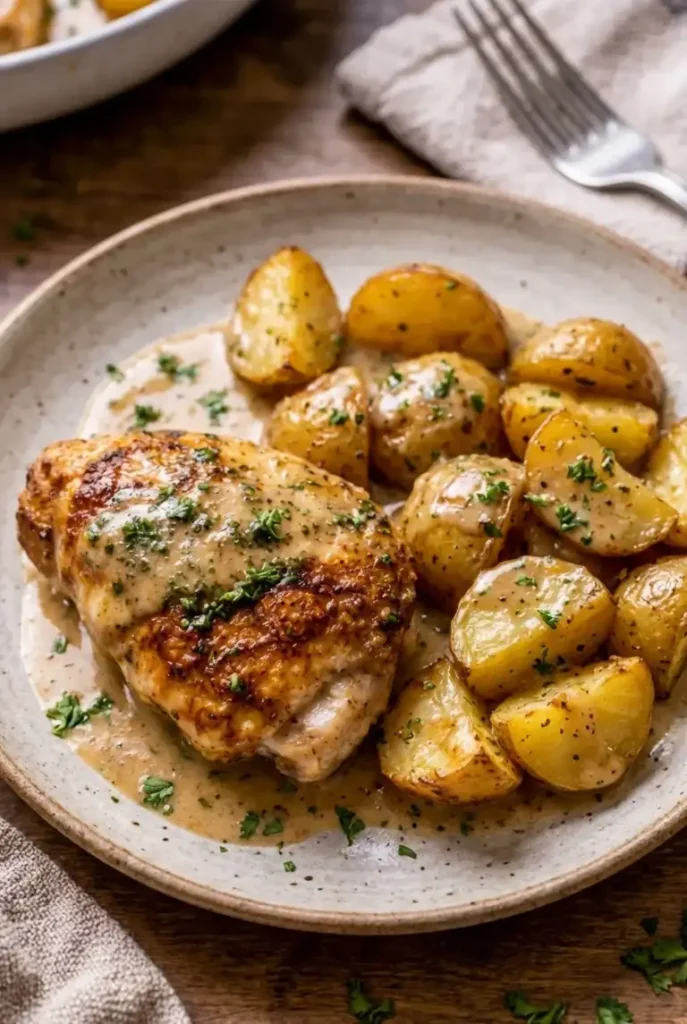
Serve the chicken over the roasted potatoes and spoon the gravy around and over the potatoes, keeping the top of the chicken skin exposed where possible.
If you love meals with a rich, spoonable gravy, my Crockpot Beef Tips and Gravy is another good cold-weather dinner to keep in rotation.
Tips for Crispy Chicken Skin and Golden Roasted Potatoes
- Dry the chicken thoroughly before it hits the skillet. Damp skin steams before it browns.
- Don’t rush the sear. Deep golden skin gives you better texture and better drippings for the gravy.
- Keep the potatoes spread out on the pan. Overcrowding is the fastest way to get soft, pale potatoes.
- Don’t cover the skillet after the chicken goes back in. Trapped steam softens the skin fast.
- Spoon gravy under and around the chicken, not heavily over the top, if you want to keep the skin from going soft.
Best Potatoes for Chicken and Potatoes
Russets work best here because they brown well and turn fluffy inside. Their rough surface also holds onto the gravy better than waxier potatoes.
Yukon Golds are a good second choice if you want a slightly denser texture and a more buttery interior. They won’t get quite as craggy on the edges, but they still roast well.
Avoid very small waxy potatoes unless that is what you have. They hold their shape, but they do not give the same crisp-edge, soft-center contrast that makes this dish work.
Easy Variations for Chicken and Potatoes with Gravy
Garlic Parmesan Cream Sauce Variation
To turn this into chicken and potatoes with garlic parmesan cream sauce, make the chicken and potatoes as written, but change the gravy step.
After cooking the onion and garlic, stir in the flour as usual. Add 1 cup chicken broth (240g) instead of 2 cups, then whisk in 1 cup heavy cream (240g). Simmer until slightly thickened, then stir in 1/2 cup finely grated Parmesan (50g) off the heat. Add the chicken back and finish gently as directed.
The sauce should be thick enough to lightly coat the chicken, with a sharper, saltier finish from the cheese. Taste before adding extra salt, since Parmesan can push it over quickly.
Mashed Potatoes With Chicken Gravy
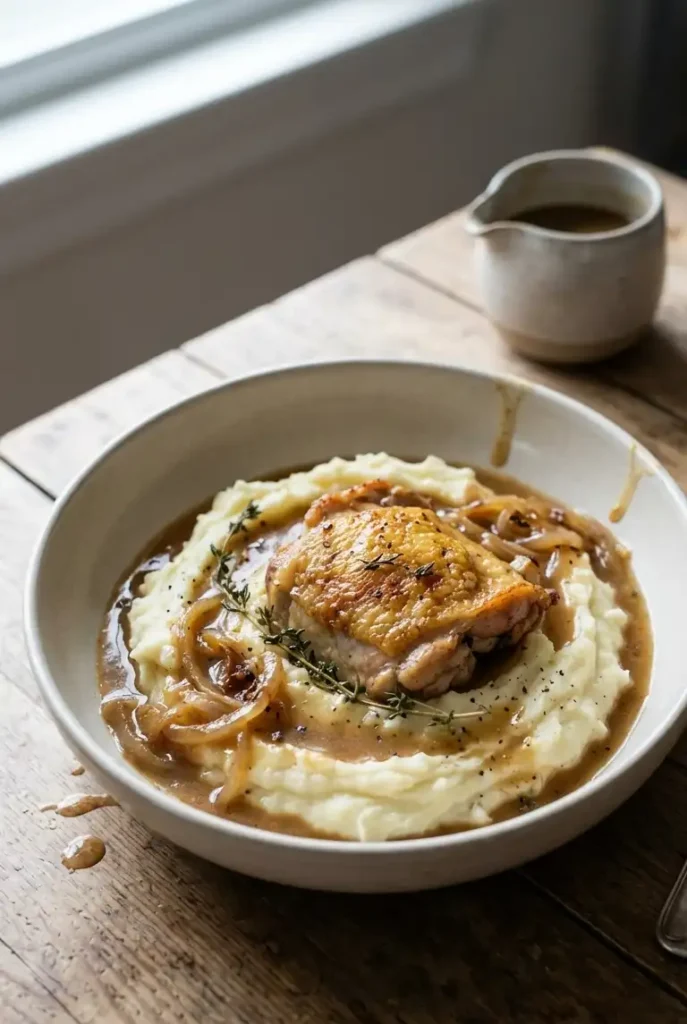
If you want mashed potatoes with chicken gravy instead of roasted potatoes, skip the sheet pan and serve the finished chicken and gravy over hot mashed potatoes.
Use about 2 pounds potatoes (900g) for the mash. Keep it fairly stiff, not loose, so the gravy sits on top instead of disappearing into the potatoes. This version is especially good if you want more sauce in each bite and don’t care about crisp potato edges.
For a creamier chicken skillet dinner, try my Marry Me Chicken next.
What to Serve with Chicken and Potatoes
This is already a full meal, but a simple green vegetable helps cut the richness.
Good options:
- Steamed green beans
- Roasted broccoli
- A sharp vinaigrette salad
- Buttered peas
Keep the side simple. The skillet already gives you browned chicken, potatoes, and sauce, so it doesn’t need another heavy starch.
How to Store and Reheat Leftovers
Store the chicken, potatoes, and gravy in an airtight container in the refrigerator for up to 4 days.
For the best texture, reheat the chicken and gravy in a covered skillet over low heat until hot, then uncover for the last few minutes. Reheat the potatoes in a 400°F oven or toaster oven so the edges firm up again.
Microwaving works, but the skin will soften and the potatoes lose some of their crisp edges.
Nutrition
- Serving size: approximately 1/6 of the total recipe
- Calories: 594 kcal
- Protein: 34g
- Fat: 33g
- Carbohydrates: 38g
- Per 100g: Calories: 144 kcal, Protein: 8g, Fat: 8g, Carbohydrates: 9g.
These values are approximate and will vary with ingredient brands and exact chicken thigh size.
Chicken and Potatoes with Gravy FAQs
Why did my gravy turn lumpy?
This usually happens when the broth goes in too quickly or the flour did not get fully mixed into the fat first. The best fix is to add the broth slowly while whisking the whole time. Before you add any liquid, make sure the flour has turned into a smooth paste in the pan.
How do I keep the chicken skin from going soft in the gravy?
Start by letting the skin get properly golden in the skillet. When you add the chicken back, keep it skin-side up and try not to let the skin sit down in the gravy. It also helps to leave the pan uncovered, since trapped steam softens the skin fast.
Can I use frozen potatoes?
You can, but they are less reliable. Frozen potatoes usually carry more surface moisture, so they do not brown as evenly and can go soft before the edges get properly crisp. Fresh potatoes are the better choice for this recipe.
Can I make this with boneless chicken thighs?
Yes, just shorten the time in the gravy. After searing, boneless thighs usually need about 6 to 10 minutes, depending on size. Pull them once they are cooked through, because they can dry out faster than bone-in thighs if they stay in the pan too long.
Equipment
- Large sheet pan
- Large skillet
- Tongs
- Paper towels
- Whisk
- Cutting board
- Chef’s knife
Ingredients
- 2 pounds russet potatoes (900g), peeled and cut into 1 1/2-inch chunks
- 2 tablespoons olive oil
- 1 teaspoon kosher salt
- 1/2 teaspoon black pepper
- 6 bone-in, skin-on chicken thighs (900g)
- 1 teaspoon kosher salt
- 1/2 teaspoon black pepper
- 1 tablespoon olive oil
- 2 tablespoons unsalted butter (30g)
- 1 medium yellow onion, thinly sliced (150g)
- 3 garlic cloves, minced
- 1 teaspoon fresh thyme leaves or 1/2 teaspoon dried thyme
- 2 tablespoons all-purpose flour (15g)
- 2 cups chicken broth (480g)
Instructions
- Preheat oven to 425°F. Toss potatoes with olive oil, salt, and pepper on a sheet pan; spread with space between pieces. Roast 35-45 minutes, turning once, until edges are browned and crisp.
- Pat chicken dry until tacky, season with salt and pepper. Heat olive oil in skillet over medium heat until shimmering. Place chicken skin-side down, press for full contact.
- Cook skin side for 10-14 minutes until deep golden brown and releases easily. Flip and cook other side 3-4 minutes. Remove chicken to plate.
- Pour off all but 2 tablespoons fat, add butter and onion. Cook onion 4-5 minutes until softened and golden at edges. Add garlic and thyme, cook 30-60 seconds until fragrant.
- Sprinkle flour, stir 1-2 minutes until paste-like with no raw smell. Slowly whisk in chicken broth, scraping browned bits. Simmer 3-5 minutes until gravy coats spoon.
- Return chicken skin-side up, nestle into gravy keeping skin mostly above liquid. Simmer gently (no boil) 12-18 minutes until 175-185°F internal temperature. Rest 3-5 minutes off heat.
- Serve chicken over roasted potatoes with gravy spooned around and over potatoes, keeping chicken skin exposed.
