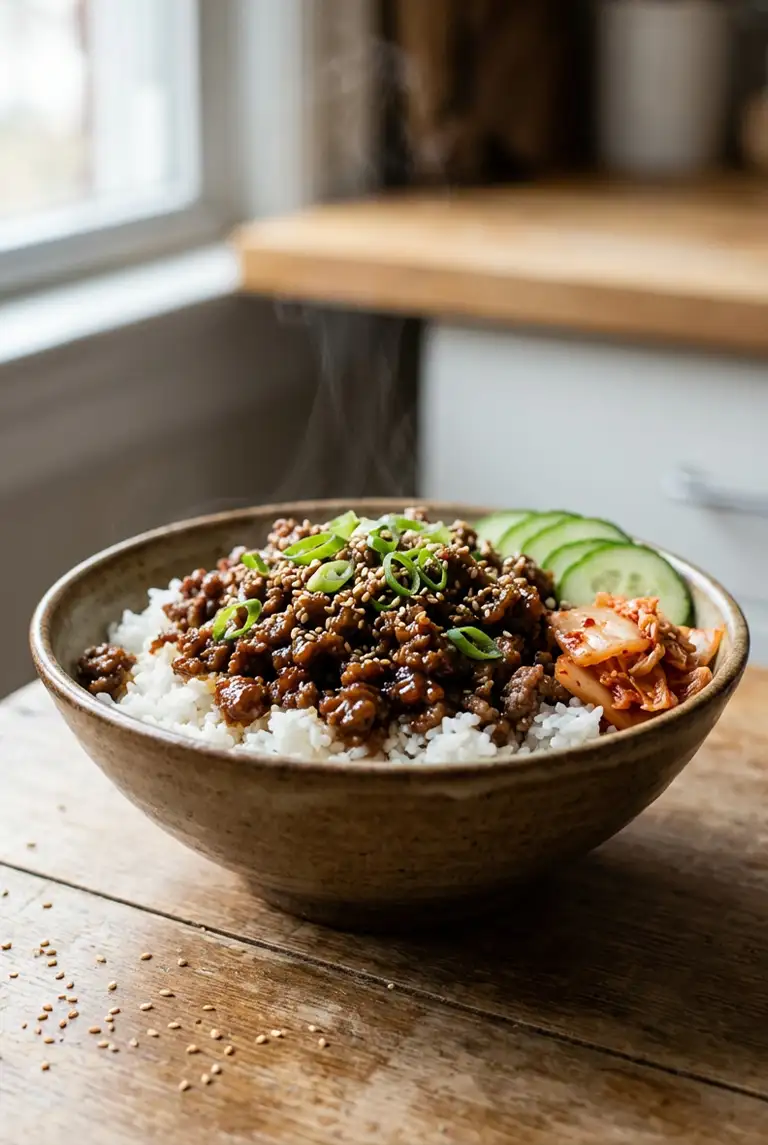
Korean ground beef bowls are easy to throw together, but they can taste pretty flat if the beef never gets a chance to brown. I have made versions where the sauce was fine, but the meat stayed gray and the whole bowl felt heavier than it should have. Now I let the skillet get fully hot, leave the beef alone for a minute or two, and only then start breaking it up. That one step makes the bowl taste fuller before the sauce even goes in.
This version is fast, but it doesn’t eat like a shortcut. The beef stays loose and tender, the sauce turns glossy instead of watery, and it settles into the hot rice without pooling at the bottom of the bowl. You get savory soy first, then a little sweetness, then the warmth of ginger and red pepper flakes. Scallions and sesame seeds add sharpness and texture so the bowl doesn’t feel heavy.
A Few Details That Make This Bowl Better
- Browning the beef first builds real depth. You get caramelized edges instead of soft crumbles just sitting in sauce.
- The sauce is reduced just enough to coat the meat. It should cling to the beef and lightly seep into the rice, not collect in a puddle.
- Garlic and ginger go in after browning, which keeps them fragrant instead of scorched.
- Sesame oil goes in at the end, off the heat, so its aroma stays intact.
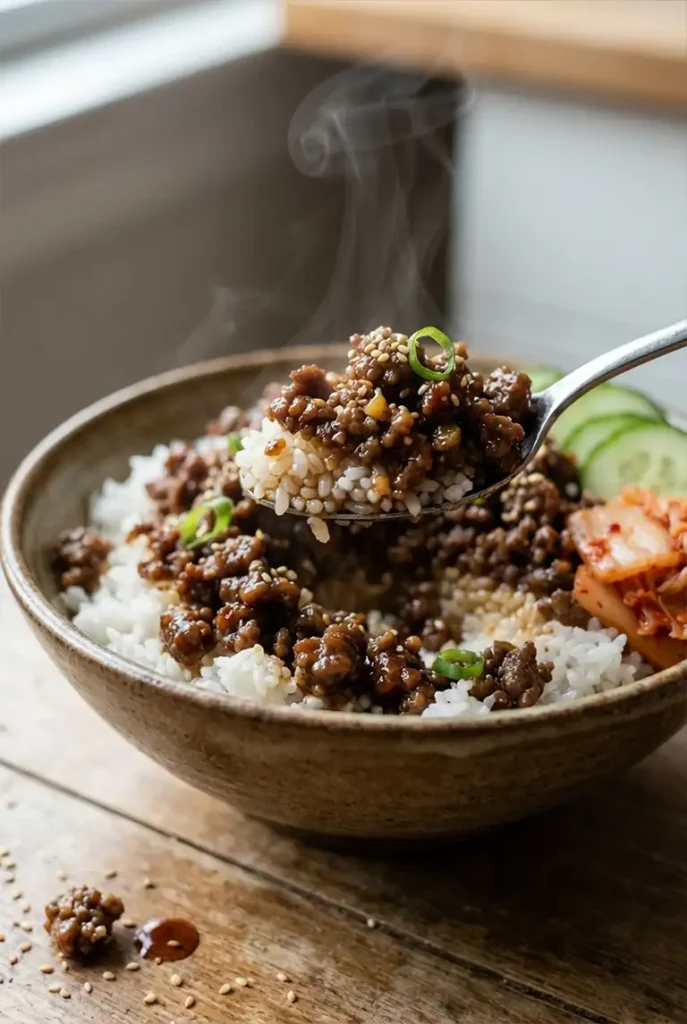
Ingredients You Need for Korean Ground Beef Bowls
- 1 pound ground beef (455g), preferably 85/15 or 90/10. Both work well, but fattier beef may need to be drained after browning.
- 4 cups cooked white rice (620g), hot for serving
- 3 green onions (45g), thinly sliced
- 1 tablespoon sesame seeds
Sauce Ingredients That Build Sweet-Savory Flavor
- 1/4 cup low-sodium soy sauce (60g)
- 2 tablespoons brown sugar (25g)
- 1 tablespoon rice vinegar
- 1 tablespoon sesame oil
- 3 cloves garlic, minced
- 2 teaspoons fresh ginger, grated
- 1/4 teaspoon red pepper flakes
- 1/4 teaspoon black pepper
Optional toppings:
- 1 cucumber (300g), thinly sliced
- kimchi (120g)
- fried eggs
- steamed broccoli
Editor’s Note: I usually buy my spices from a small specialty spice shop because the quality is more consistent than what I find at the grocery store. For this bowl, I like using fresh-tasting ground ginger and crushed red pepper flakes with a clean, steady heat.
How to Make a Korean Ground Beef Bowl
Brown the Beef
- Heat a large skillet over medium-high heat until fully hot. The beef should sizzle as soon as it hits the pan.
- Add the ground beef and spread it into an even layer. Let it cook undisturbed for 1 to 2 minutes so the underside can brown before you start breaking it up.
- Continue cooking, breaking the meat into small crumbles, until browned and no longer pink, 4 to 5 minutes more. If you’re using 80/20 beef, drain off most of the fat and leave about 1 tablespoon in the pan. With 90/10, you may not need to drain at all.
Simmer the Sauce
- Lower the heat to medium. Add the garlic and ginger to the beef and cook for 20 to 30 seconds, just until fragrant. Don’t let them brown deeply.
- Stir in the soy sauce, brown sugar, rice vinegar, red pepper flakes, and black pepper. Simmer for 2 to 3 minutes, stirring occasionally, until the liquid looks glossy and slightly reduced. If you drag a spatula across the pan, it should leave a brief trail before the sauce runs back in.
- Turn off the heat and stir in the sesame oil and most of the sliced green onions. The beef should look coated, not swimming in liquid.
Build the Bowls
- Divide the hot rice among bowls. Spoon the beef over the top so a little of the sauce loosens into the rice.
- Finish with the remaining green onions, sesame seeds, and any toppings you like. Cucumber adds cool crunch, kimchi adds acidity, and a fried egg adds richness.
If rice-bowl dinners are part of your weeknight rotation, this Healthy Street Corn Chicken Rice Bowl is another easy meal-prep-friendly option.
Tips for the Best Korean Ground Beef Bowl
When to Drain the Beef
If your beef renders a lot of fat, drain most of it after browning and before adding the aromatics. Leave a little behind so the sauce doesn’t taste thin. If you keep all the fat, the finished bowl can taste slick instead of balanced.
How to Balance Sweetness, Salt, and Heat
Taste the beef after the sauce reduces. It will taste a little stronger in the pan than it does over rice. If it tastes too salty, add a small splash of water or a bit more rice. If it tastes flat, add a few drops of rice vinegar. If you want more heat, increase the red pepper flakes rather than adding more soy.
How to Keep the Sauce from Getting Greasy or Watery
A watery sauce usually means the beef didn’t brown well or the sauce didn’t simmer long enough. A greasy sauce usually means too much rendered fat stayed in the pan. The finished beef should look shiny and lightly sauced, not oily and not sticky-sweet.
For a fresh, crunchy side to balance the rich beef, serve the bowls with this Black Bean and Corn Salad.
Korean Ground Beef Bowl Variations
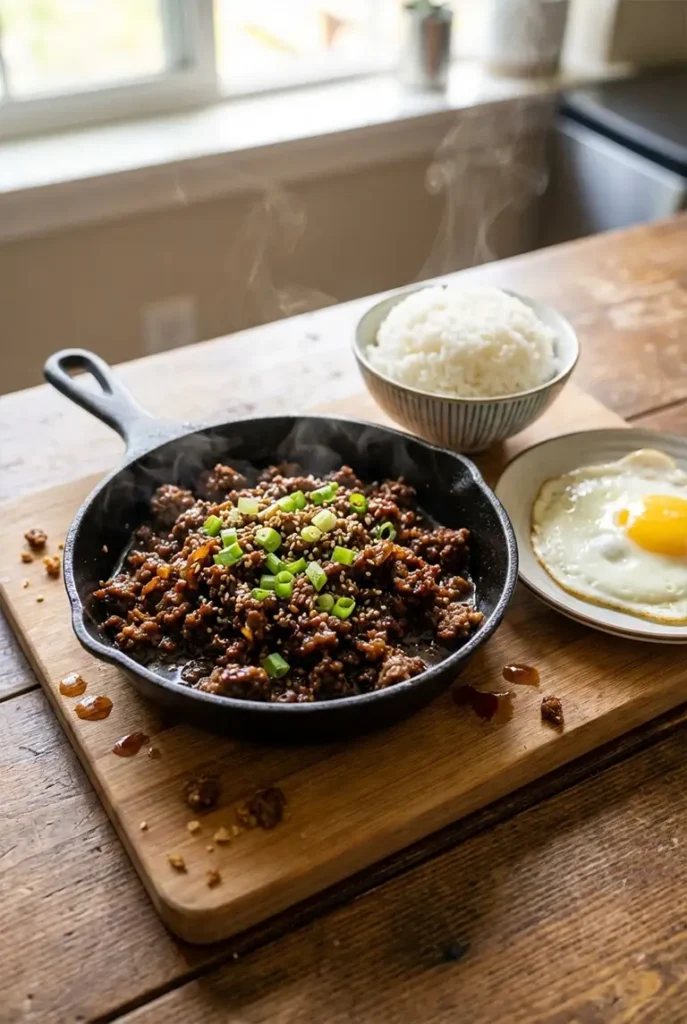
Korean Ground Beef Bowl with Egg
A fried egg fits best here. Cook it until the whites are set and the yolk is still runny. Put it on the bowl right before serving. Once the yolk breaks, it mixes with the sauce and softens the saltiness a bit, making the beef taste rounder and richer.
If you prefer, a soft-boiled egg works too, but a fried egg gives better contrast because of the lightly crisp edge.
Korean Ground Beef Bowl with Broccoli
Use either steamed or sautéed broccoli. Fresh broccoli gives the best texture. Cut 3 to 4 cups florets (300g to 360g) and steam or sauté until crisp-tender, about 4 to 5 minutes. It should still have some bite; avoid cooking it until it turns dull olive and soft.
If you want the broccoli to pick up more flavor, toss it with a spoonful of the finished pan sauce before adding it to the bowl.
How to Store, Reheat, and Meal Prep
Store the cooked beef in an airtight container in the refrigerator for up to 4 days. Keep rice and toppings separate if you can.
To reheat, add 1 to 2 teaspoons of water to the beef before microwaving or warming it in a skillet. That helps bring the sauce back to a glossy consistency instead of letting it dry out.
For meal prep, portion the beef with rice and keep crunchy toppings like cucumber or scallions separate until serving. If you’re adding an egg, cook that fresh.
Nutrition
- Serving size: approximately 1/4 of the total recipe
- Calories: 493 kcal
- Protein: 27g
- Fat: 21g
- Carbohydrates: 46g
- Per 100g: Calories: 165 kcal, Protein: 9g, Fat: 7g, Carbohydrates: 15g.
These nutritional values are approximate and can vary based on the specific ingredients and brands used.
Korean Ground Beef Bowl FAQ
Why is my Korean ground beef greasy?
Usually because the beef released more fat than the sauce could absorb. This happens most often with 80/20 beef. Brown the meat first, then drain off most of the rendered fat before adding the sauce ingredients.
How do I know when the sauce is reduced enough?
Look at the pan, not the clock. The sauce should be glossy, and the beef should look coated. If liquid is pooling around the crumbles, it needs another minute or two. If it looks thick and sticky, you’ve gone a little too far; add a small splash of water.
Can I use frozen broccoli or fresh broccoli in this bowl?
Yes. Fresh broccoli has better texture and stays firmer. Frozen broccoli is fine for convenience, but cook it just until heated through and tender. If it releases a lot of water, drain it well before adding it to the bowl so you don’t thin the sauce.
Is This the Same as Korean Ground Beef Bulgogi?
Not exactly. Traditional bulgogi is usually made with thin slices of beef, often marinated, then cooked quickly so the meat stays tender and browned around the edges. This recipe uses ground beef and a faster skillet method.
That said, the flavor profile is similar: soy, garlic, ginger, sweetness, and sesame. It’s fair to call this bulgogi-inspired, but not traditional bulgogi.
Easy Korean Ground Beef Bowl
Equipment
- Large skillet
- Spatula
- Cutting board
- Chef’s knife
- Measuring spoons
- Measuring cups
- Mixing bowl
Ingredients
- 1 pound ground beef (preferably 85/15 or 90/10)
- 4 cups cooked white rice (hot for serving, about 620g)
- 3 pieces green onions (thinly sliced, about 45g)
- 1 tablespoon sesame seeds
- 1/4 cup low-sodium soy sauce (60g)
- 2 tablespoons brown sugar (25g)
- 1 tablespoon rice vinegar
- 1 tablespoon sesame oil
- 3 cloves garlic minced
- 2 teaspoons fresh ginger grated
- 1/4 teaspoon red pepper flakes
- 1/4 teaspoon black pepper
Instructions
- Heat a large skillet over medium-high heat until fully hot; the beef should sizzle immediately.
- Add ground beef and spread evenly; cook undisturbed for 1 to 2 minutes to brown the underside.
- Break beef into small crumbles and continue cooking until browned and no longer pink, about 4 to 5 minutes; drain excess fat if needed.
- Lower heat to medium; add minced garlic and grated ginger and cook for 20 to 30 seconds until fragrant, avoiding browning.
- Stir in soy sauce, brown sugar, rice vinegar, red pepper flakes, and black pepper; simmer for 2 to 3 minutes until the sauce is glossy and slightly reduced.
- Turn off heat; stir in sesame oil and most sliced green onions so beef is coated but not swimming in liquid.
- Divide hot rice into bowls; spoon beef over rice letting sauce loosen into rice.
- Finish with remaining green onions, sesame seeds, and optional toppings such as cucumber, kimchi, fried eggs, or steamed broccoli.
