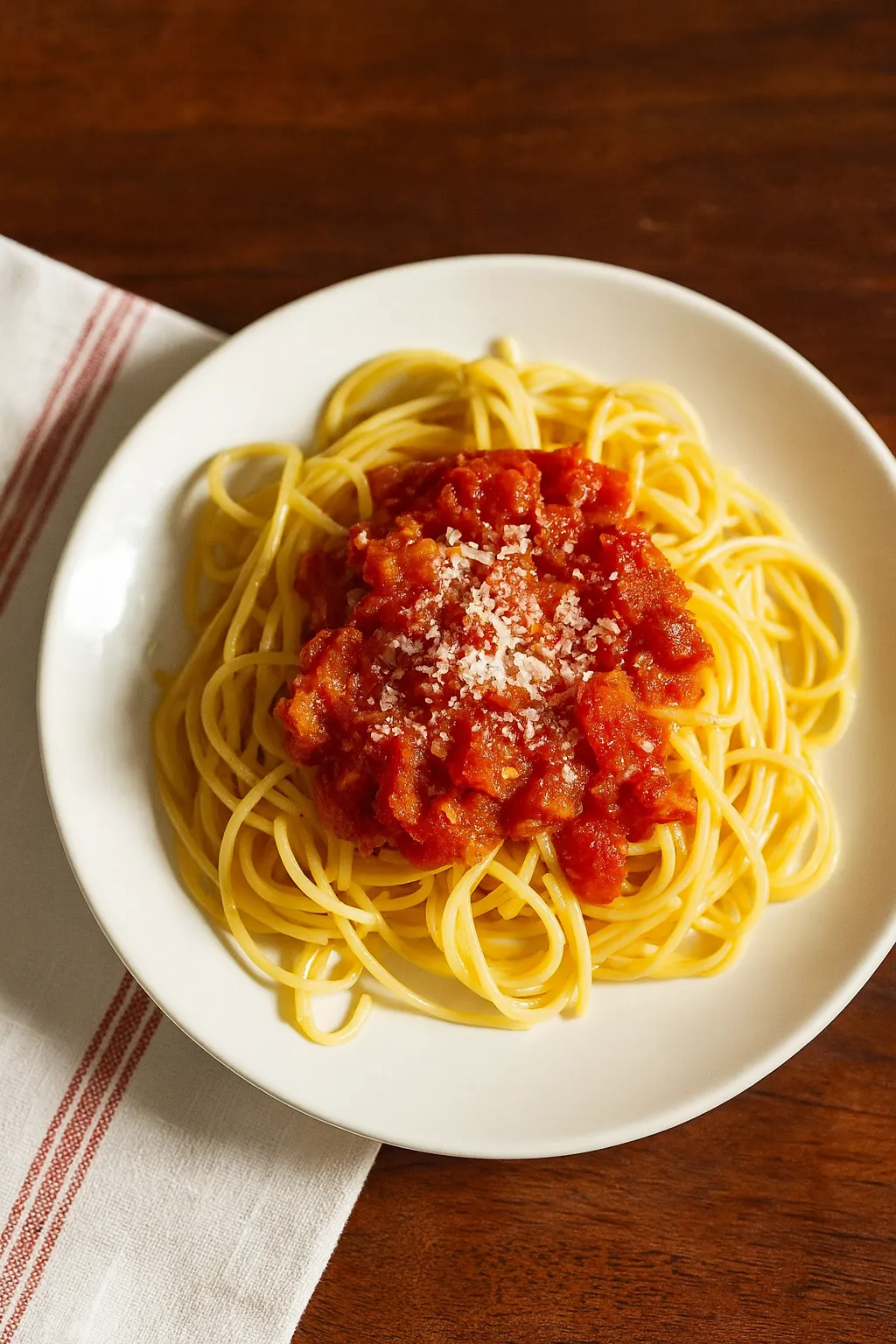
There’s a special kind of satisfaction that comes from making a pot of spaghetti sauce from scratch, especially when summer tomatoes are at their peak. I recently made a big batch of this when I found beautiful ripe tomatoes at the market, and it filled the whole house with the most incredible aroma. It’s a simple, foundational recipe that turns a handful of fresh ingredients into a truly memorable meal. Julia’s note: I prefer using Roma or San Marzano tomatoes for this, but any ripe, flavorful tomato will work beautifully.
This recipe shows you the classic Italian technique of blanching and peeling tomatoes, which creates a silky, uniform sauce. By simmering it gently, we concentrate the flavors without overcooking them, letting the natural sweetness of the tomatoes shine. It’s a straightforward process that delivers a sauce far superior to anything from a jar.
Choosing the Perfect Tomatoes
The quality of your sauce is directly tied to the quality of your tomatoes. For a rich, balanced flavor with natural sweetness, always choose ripe, in-season tomatoes. They should be firm but yield slightly to pressure and have a fragrant, earthy smell. While any good tomato will work, San Marzano tomatoes are the classic choice for Italian sauces. Their lower acidity, fewer seeds, and dense, fleshy pulp break down beautifully into a thick, vibrant sauce.
Enhancing Flavor with Fresh Basil
Fresh herbs are essential for an authentic taste, and knowing when to add them is key. For this sauce, fresh basil is stirred in during the final few minutes of cooking. This timing is intentional—it preserves the herb’s bright, slightly peppery flavor and fragrant aroma. If you add it too early, the delicate oils will break down and the flavor will fade into the background. For a different profile, a sprig of fresh oregano can be added with the tomatoes to infuse a deeper, more robust earthiness.
Achieving the Right Sauce Consistency
A great tomato sauce has a consistency that clings to pasta without being too watery or too thick. The 30-minute simmer time in this recipe is designed to evaporate excess water and concentrate the flavors. If your tomatoes are extra juicy and the sauce seems thin, simply let it simmer a little longer with the lid off. If you need to thicken it more quickly, a tablespoon of tomato paste can be stirred in. Avoid boiling the sauce, as high heat can scorch the bottom and give the fresh tomatoes a cooked, dull taste.
Recipe Overview
- Prep Time: 15 minutes
- Cook Time: 45 minutes
- Total Time: 1 hour
- Servings: 4 to 6
- Difficulty: Medium
Ingredients

- 907g (2 pounds) ripe fresh tomatoes
- 27g (2 tablespoons) extra virgin olive oil
- 150g (1 medium) onion, chopped
- 12g (4 cloves) garlic, minced
- 5g (1/4 cup) fresh basil leaves, chopped
- Salt, to taste
- Freshly ground black pepper, to taste
- 454g (1 pound) spaghetti
- 25g (1/4 cup) grated Parmesan cheese, for serving
Step-By-Step Instructions

- Prepare the Tomatoes
Wash and core the tomatoes. Use a small knife to score a shallow ‘X’ on the bottom of each one; this helps the skins peel easily after blanching. Bring a pot of water to a boil, then carefully lower the tomatoes in for 30 seconds. Immediately transfer them to a bowl of ice water to stop the cooking. The skins should now slip right off. Once peeled, dice the tomatoes.
- Sauté the Aromatics
In a large saucepan or stockpot, warm the olive oil over medium heat. Add the chopped onion and cook, stirring occasionally, until it becomes soft and translucent, about 5 minutes. Add the minced garlic and cook for one more minute until fragrant. Be careful not to let the garlic brown, as it can become bitter.
- Simmer the Sauce
Add the diced tomatoes to the saucepan, along with their juices. Season with salt and pepper. Bring the mixture to a gentle bubble, then reduce the heat to low. Let the sauce simmer for about 30 minutes, stirring every so often to prevent sticking. The sauce will thicken and the flavors will meld.
- Add Fresh Basil
During the last 5 minutes of simmering, stir in the chopped fresh basil. This step is crucial for preserving its bright, fresh flavor. Taste the sauce and adjust the salt and pepper if needed.
- Cook the Spaghetti
While the sauce finishes, bring a large pot of generously salted water to a boil. Add the spaghetti and cook according to package directions until al dente—firm to the bite. Drain the pasta well.
- Combine and Serve
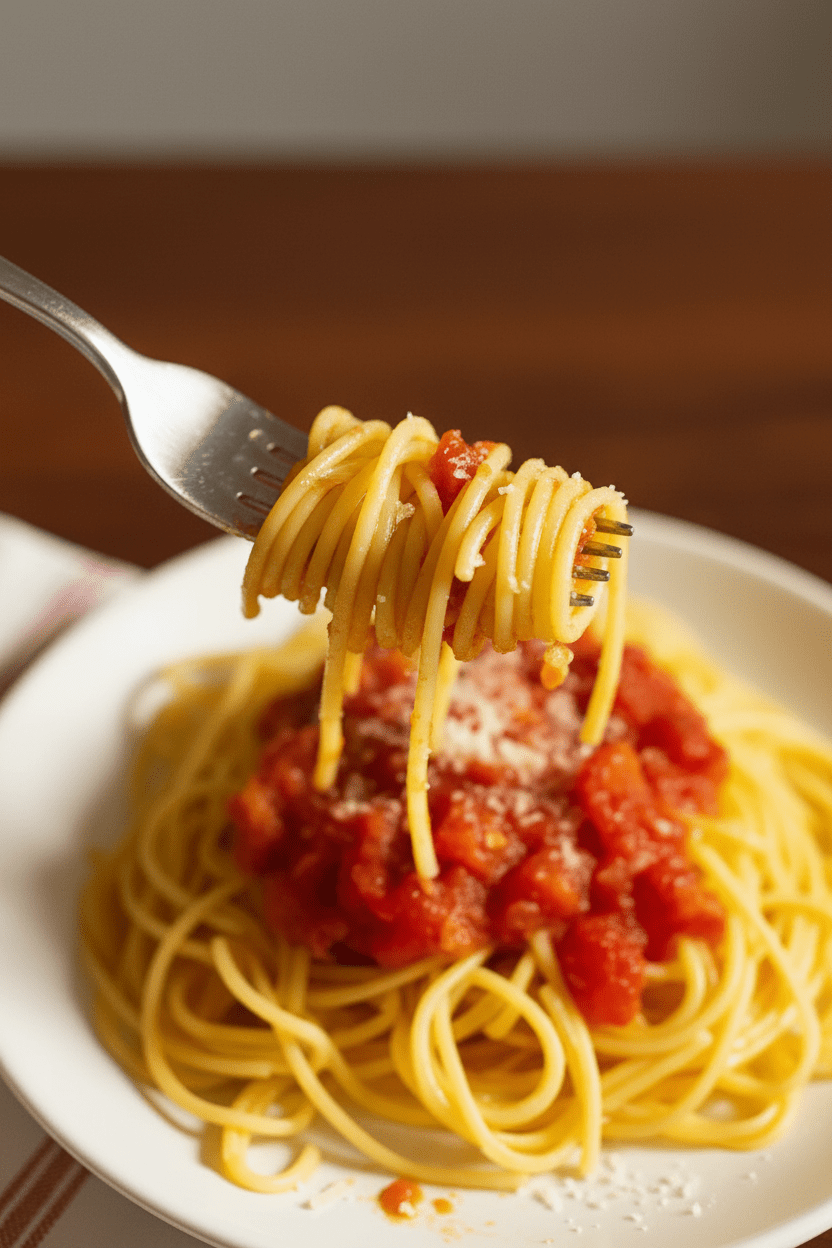
Add the drained spaghetti directly to the saucepan with the sauce. Toss everything together gently until the pasta is evenly coated. Serve immediately, topped with a generous sprinkle of freshly grated Parmesan cheese.
If you enjoy this dish, try our Mediterranean Salad for a perfect pairing or next-weeknight option.
Substitutions & Variations
- For a spicy kick, add 1/4 to 1/2 teaspoon of crushed red pepper flakes along with the garlic.
- For more depth, pour in a splash of dry red wine (about 1/4 cup) after sautéing the onions and let it cook off before adding tomatoes.
- Experiment with different tomato varieties. Heirloom tomatoes like Brandywine or Cherokee Purple will create a uniquely sweet and complex sauce.
Make-Ahead, Storage & Reheat

Store leftover sauce in an airtight container in the refrigerator for up to 3 days. Reheat gently in a saucepan over low heat. If the sauce has thickened, you can add a splash of water or pasta water to reach your desired consistency.
Nutrition
- Serving Suggestion: 1 plate of spaghetti with sauce (approx. 1/6 of recipe)
- Per Serving: 350 calories, 12g protein, 10g fat, 52g carbs
- Per 100g: 140 calories, 5g protein, 4g fat, 21g carbs
- Estimates only.
FAQ
How can I tell if a tomato is ripe enough for making a great sauce?
Look for a deep, consistent color and a firm but yielding texture. A ripe tomato feels heavy for its size and has a fragrant, earthy smell right at the stem.
What kind of fresh tomatoes should I choose for the most flavorful sauce?
Roma or plum tomatoes are excellent because their dense, meaty texture and lower water content create a naturally thick sauce. San Marzanos are also a top choice.
My fresh tomato sauce seems a little watery. How can I thicken it up?
The simplest fix is to let it simmer longer with the lid off. This allows excess water to evaporate and concentrate the flavors without adding other ingredients.
Why does my sauce taste bitter, and what's the best way to fix it?
Bitterness often comes from underripe tomatoes or scorched garlic. A tiny pinch of sugar can help balance the acidity, but use it sparingly to avoid a sweet taste.
Is it okay to use canned tomatoes instead of fresh for this recipe?
Yes, a 28-ounce can of whole peeled tomatoes works well. Crush them by hand for a better texture. The flavor will be more concentrated and slightly less bright.
What is the best way to get a much smoother sauce without a blender?
You can press the cooked sauce through a food mill or a fine-mesh sieve with a spoon. This method removes seeds and skins, creating a velvety texture efficiently.
Can I make a large batch of this sauce and freeze it for later use?
Absolutely. Let the sauce cool completely before storing it in airtight, freezer-safe containers. This prevents ice crystals from forming and preserves the best texture.
What is the proper way to store fresh tomatoes before I use them?
Keep them on the counter at room temperature, stem-side down, to prevent bruising. Refrigeration can make their texture mealy and dulls their natural flavor.
If I double the recipe, do I need to double the simmering time too?
Not necessarily. You will need a larger pot and a bit more simmering time for the flavors to meld, but just watch for the right consistency, not double the clock.
Authentic Italian Spaghetti Sauce with Fresh Tomatoes
Equipment
- Large saucepan or stockpot
- Large pot for boiling pasta
- Mixing bowl
- Small bowl
- Knife
- Cutting board
- Colander
- Tongs
Ingredients
- 907 g (2 pounds) Ripe fresh tomatoes
- 27 g (2 tablespoons) Extra virgin olive oil
- 150 g (1 medium) Onion, chopped
- 12 g (4 cloves) Garlic, minced
- 5 g (1/4 cup) Fresh basil leaves, chopped
- to taste Salt
- to taste Freshly ground black pepper
- 454 g (1 pound) Spaghetti
- 25 g (1/4 cup) Grated Parmesan cheese for serving
Instructions
- Wash and core the tomatoes. Score a shallow ‘X’ on the bottom of each tomato to help peel after blanching.
- Bring a pot of water to a boil, then blanch the tomatoes for 30 seconds. Transfer immediately to ice water and peel the skins off. Dice the peeled tomatoes.
- Heat the olive oil in a large saucepan over medium heat. Add the chopped onion and cook for about 5 minutes until soft and translucent.
- Add the minced garlic and cook for 1 minute without browning.
- Add the diced tomatoes and their juices to the pan. Season with salt and pepper.
- Bring to a gentle bubble, then reduce heat to low and simmer for 30 minutes, stirring occasionally.
- In the last 5 minutes of simmering, stir in the chopped fresh basil. Adjust salt and pepper to taste.
- Meanwhile, bring a large pot of salted water to a boil. Cook the spaghetti until al dente according to package instructions. Drain well.
- Add the drained spaghetti to the sauce and toss gently to coat evenly.
- Serve immediately, topped with grated Parmesan cheese.
