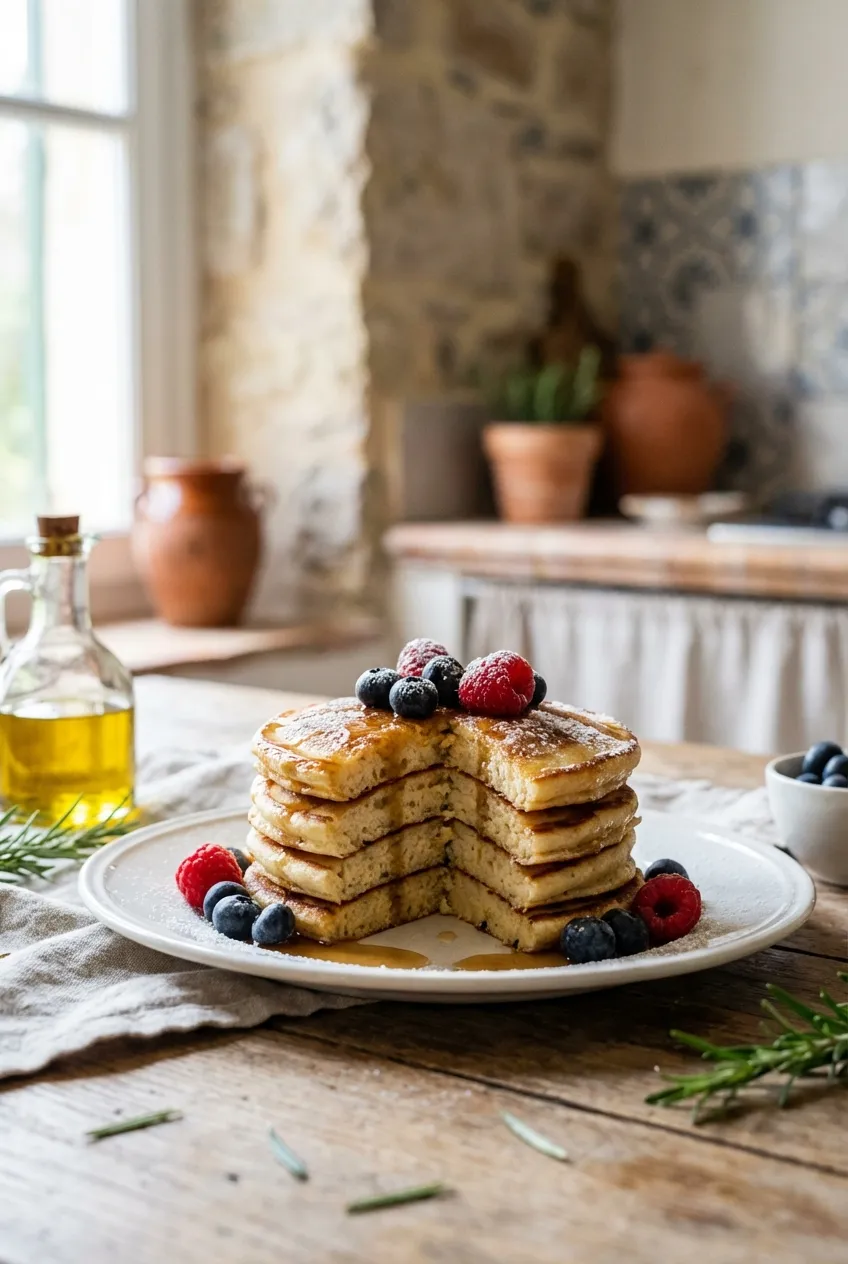
There is something uniquely satisfying about finding a delicious use for something you might otherwise throw away. That’s how I feel every time I make these Sourdough Discard Pancakes. Instead of tossing my unfed starter, I use it to create a stack of unbelievably light and tangy pancakes that my family loves for a weekend breakfast. It’s a simple trick that turns a byproduct of bread-making into the main event.
This recipe is incredibly straightforward, relying on pantry staples to transform the discard into a fluffy, flavorful batter. The sourdough adds a subtle, complex tang that you just don’t get from a standard recipe, balancing beautifully with sweet maple syrup. It’s a reliable, no-waste breakfast that feels both special and smart.
How to Get the Fluffiest Pancakes
To ensure your pancakes are as light and fluffy as possible, the key is to mix the batter just until the wet and dry ingredients are combined. A few small lumps are perfectly fine. Over-mixing develops gluten and deflates the air bubbles, which can result in tough, dense pancakes. After mixing, let the batter rest for at least 10 minutes. This short rest allows the flour to hydrate and gives the baking powder time to create carbon dioxide, which contributes to a much loftier texture when the batter hits the hot skillet.
Simple Ways to Customize Your Pancakes
While these pancakes are delicious on their own, they are also a wonderful base for other flavors. For a bit of warm spice, whisk a half-teaspoon of cinnamon or a pinch of nutmeg into the dry ingredients. To make them a bit more indulgent, gently fold in a handful of chocolate chips or fresh blueberries just before cooking. You can also adjust the sweetness by swapping the granulated sugar for an equal amount of maple syrup or honey, which will also add a little extra moisture and flavor.
Making the Most of Your Sourdough Discard
If you maintain a sourdough starter, saving the discard is an excellent way to reduce food waste and add flavor to your cooking. I keep a dedicated container in the refrigerator and add my unfed discard to it throughout the week. It will stay fresh for about a week, ready to be incorporated into recipes like this one. Using the discard adds that signature sourdough tang and complexity without requiring any of the time or attention of an active, fed starter. It’s an efficient way to get more from your baking routine.
Tips for Perfect, Evenly Cooked Pancakes
The secret to a uniform, golden-brown pancake is consistent heat management. Preheat your skillet over medium heat—not medium-high. A drop of water should sizzle and evaporate quickly, but the butter shouldn’t brown instantly. Use a seasoned cast-iron or non-stick pan for the best results, as this helps the pancakes release cleanly. Finally, be patient and wait for visual cues. Don’t flip until you see bubbles forming across the surface and the edges look slightly dry and set.
Recipe Overview
- Prep Time: 10 minutes
- Cook Time: 20 minutes
- Total Time: 30 minutes
- Servings: 4
- Difficulty: Easy
Ingredients
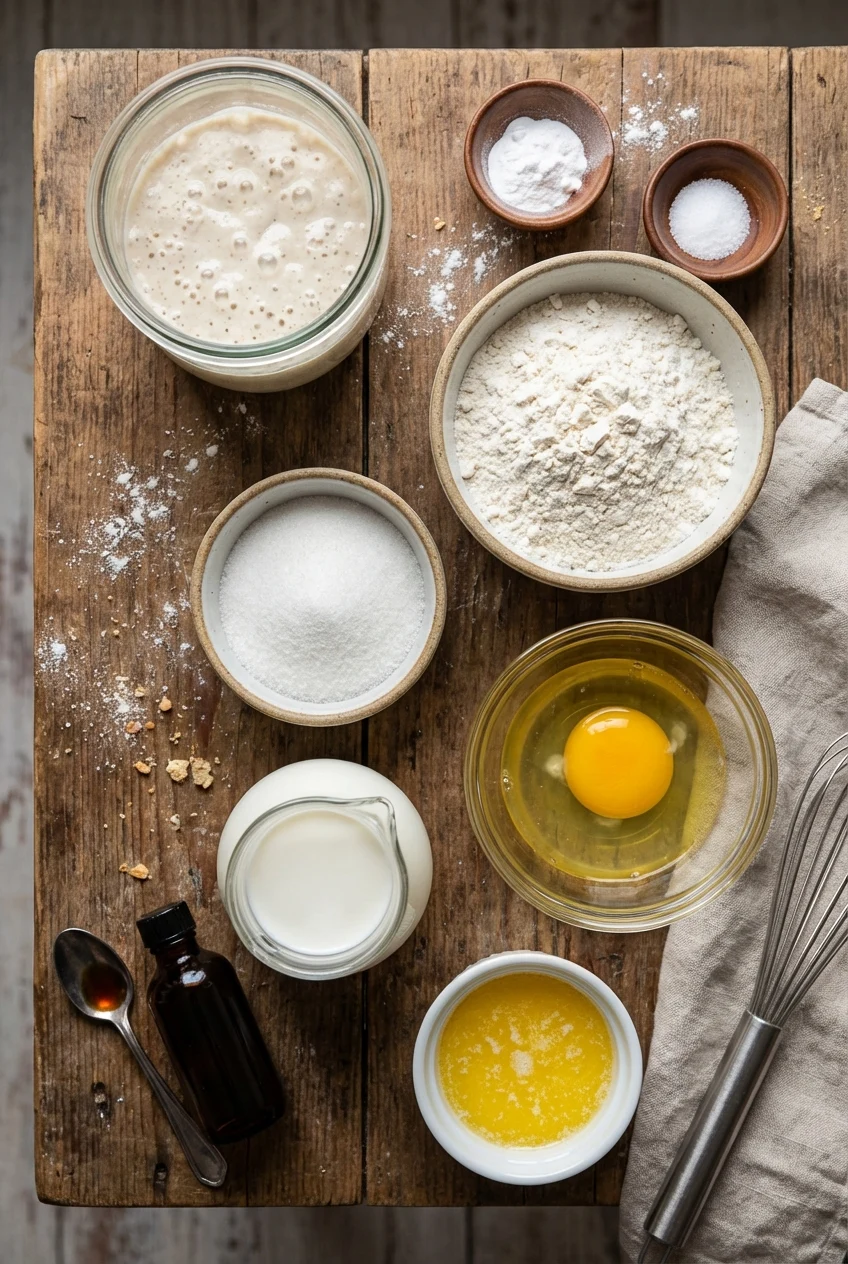
- 240g (1 cup) sourdough discard, unfed
- 120g (1 cup) all-purpose flour
- 2 teaspoons baking powder
- 25g (2 tablespoons) sugar
- 1 large egg, beaten
- 240g (1 cup) milk
- 28g (2 tablespoons) melted butter, plus more for the skillet
- 1 teaspoon vanilla extract
- 1/2 teaspoon salt
Step-By-Step Instructions
- Combine the Dry and Wet Ingredients
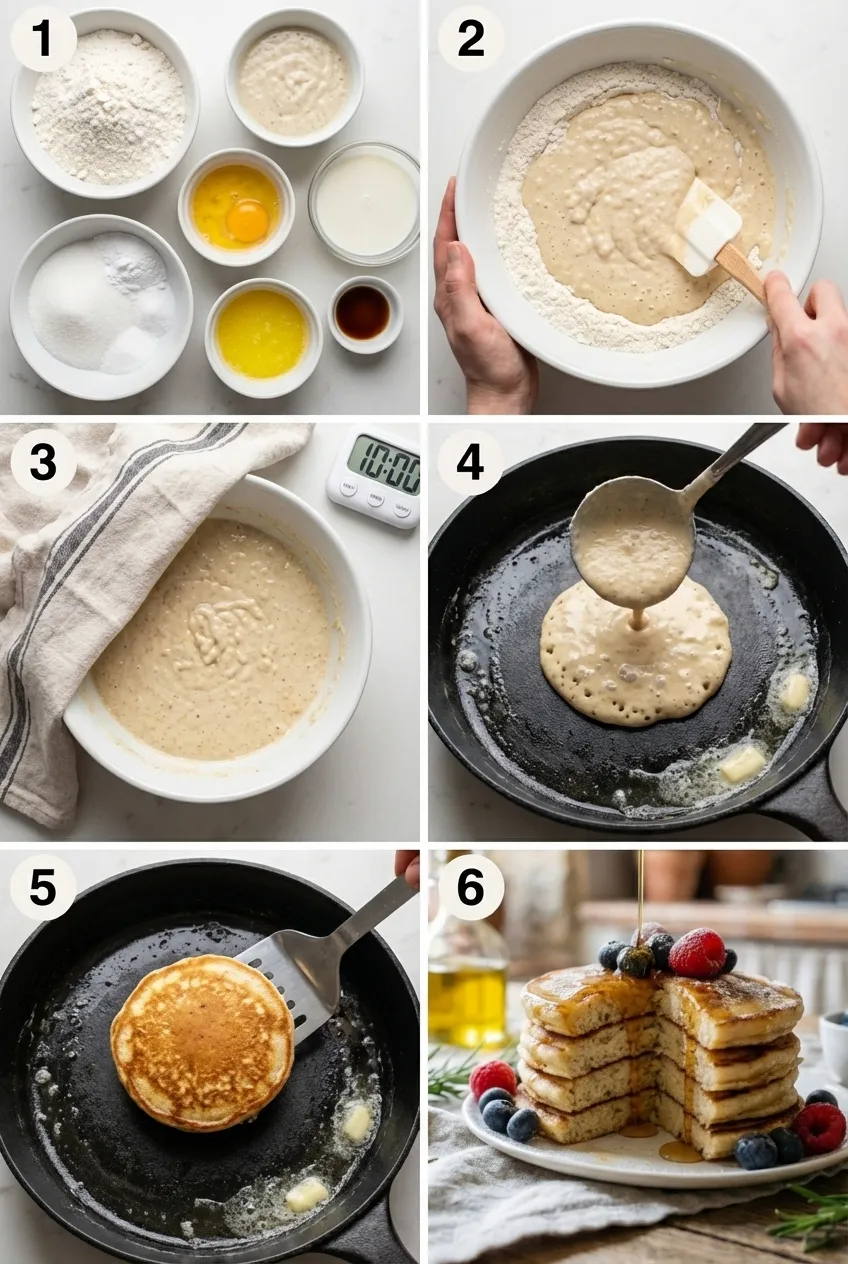
In a large mixing bowl, whisk together the all-purpose flour, baking powder, sugar, and salt. In a separate, medium bowl, combine the sourdough discard, beaten egg, milk, melted butter, and vanilla extract. Pour the wet mixture into the dry ingredients and mix with a spatula just until a smooth, slightly thick batter forms. Do not overmix. Let the batter rest for 10 minutes.
- Heat the Skillet
Place a large non-stick skillet or electric griddle over medium heat. Once it’s hot, add a small pat of butter and swirl to coat the surface. The butter should sizzle gently without browning too quickly; this indicates the pan is at the right temperature.
- Cook the Pancakes
Pour about 1/4 cup of batter onto the hot skillet for each pancake. Cook for 2-3 minutes, or until bubbles start to appear on the surface and the edges look set. Use a thin spatula to flip the pancake and cook for another 2 minutes on the second side, until golden brown.
- Continue in Batches
Transfer the cooked pancakes to a plate and continue the process with the remaining batter. Add a little more butter to the skillet between batches to prevent sticking and ensure even browning.
- Serve Immediately
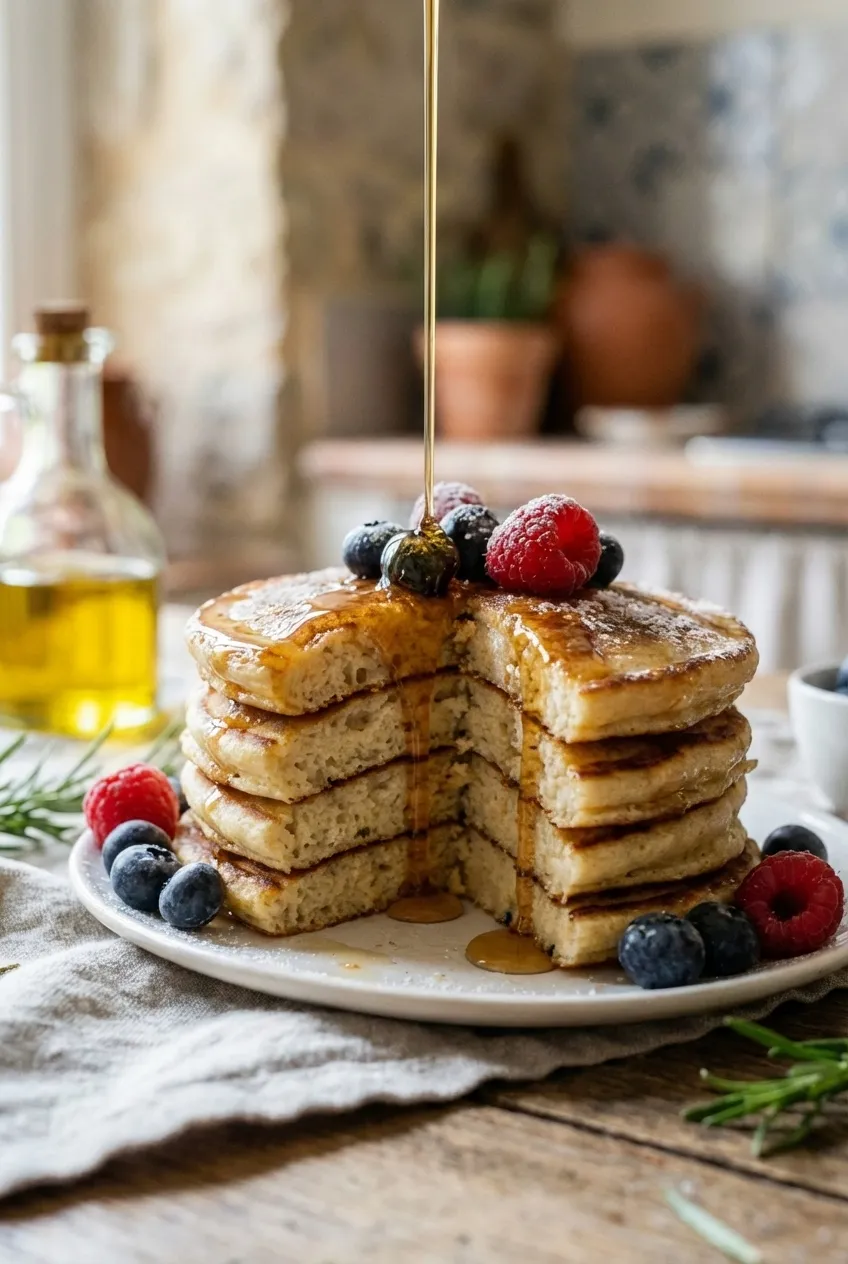
Serve the pancakes warm, topped with maple syrup, fresh berries, or a dusting of powdered sugar. They have wonderfully crisp edges and a soft, fluffy interior when fresh from the pan.
If you enjoy this dish, try our Homemade Cinnamon Rolls for a perfect pairing or next-weekend option.
Substitutions & Variations
- Add-Ins: Gently fold 1/2 cup of fresh blueberries, raspberries, or chocolate chips into the batter just before cooking.
- Dairy-Free Option: Substitute the milk with an equal amount of oat milk or almond milk, and use a neutral oil or dairy-free butter.
- Keep Them Warm: To serve everyone at once, place cooked pancakes on a baking sheet in a single layer in an oven set to 200°F (93°C).
Make-Ahead, Storage & Reheat
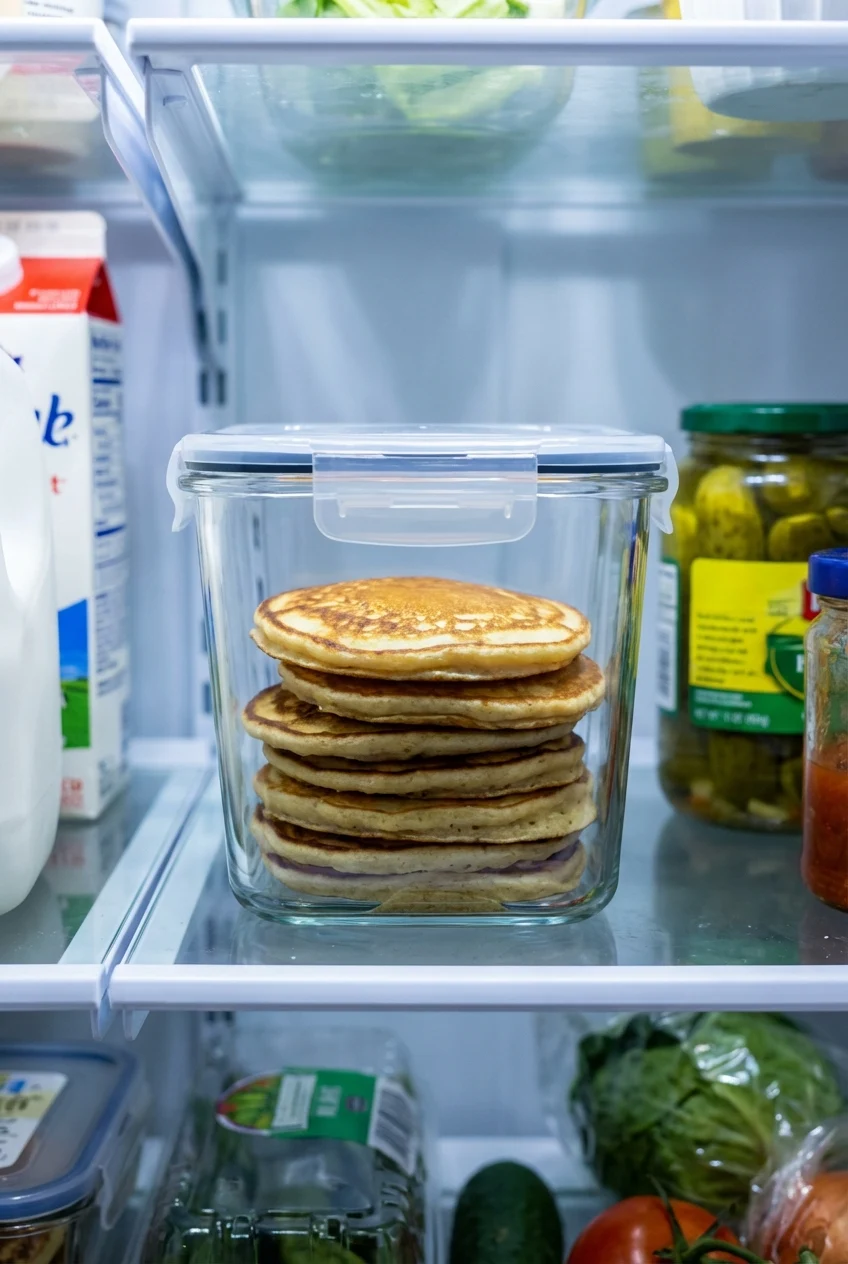
Store leftover pancakes in an airtight container in the refrigerator for up to 3 days. To reheat, warm them gently in a skillet over low heat, in a toaster, or in the microwave until heated through.
Nutrition
- Serving size: 1 pancake
- Per serving: 210 calories, 6g protein, 7g fat, 31g carbohydrates
- Per 100g: 186 calories, 5g protein, 6g fat, 27g carbohydrates
Estimates only.
FAQ
Why do my pancakes turn out dense and tough instead of light and fluffy?
This usually happens from overmixing the batter. Mix just until the wet and dry ingredients are combined; a few lumps are fine. Overmixing develops gluten, which makes pancakes chewy rather than tender.
My pancakes burn on the outside but stay raw in the middle. What’s wrong?
Your pan is likely too hot. Reduce the heat to medium-low for more even cooking. A single test pancake can help you find the right temperature before you cook the whole batch, ensuring they cook through.
Can I use buttermilk instead of regular milk for even fluffier pancakes?
Yes, you can. The acidity in buttermilk reacts with the leavening to create extra lift. Your pancakes will be noticeably fluffier and have a pleasant tang. Use the same amount of buttermilk as regular milk.
Is it really necessary to let the pancake batter rest before cooking?
Resting the batter for even 10-15 minutes helps. It allows the flour to fully absorb the liquid and gives the gluten a chance to relax. This simple step helps create a more tender, even-textured pancake.
How can I tell if my pancake batter has the right consistency to pour?
The batter should be thick but still pourable, like a slow-moving milkshake. It should mound slightly in the pan before spreading. If it's too thick, add milk one tablespoon at a time until it's right.
Can I prepare the pancake batter the night before I plan to use it?
You can, but expect a change in texture. The leavening agents will lose some power overnight, so the pancakes may be less fluffy. The flavor will also become tangier. Cook it straight from the fridge.
What is the best way to freeze and reheat pancakes for later meals?
Let pancakes cool completely, then stack them with parchment paper between each one. Place the stack in a freezer bag. Reheat them directly from frozen in a toaster or a dry skillet for the best texture.
Does separating the eggs make a real difference for pancake fluffiness?
It's a classic technique for a reason. Whipping egg whites and folding them in at the end traps more air, creating a very light, airy pancake. It adds an extra step but gives you a distinctly fluffier result.
Equipment
- 1 Large mixing bowl
- 1 Medium mixing bowl
- 1 Large non-stick skillet or electric griddle
- Spatula
- Whisk
Ingredients
- 240 g (1 cup) Sourdough discard unfed
- 120 g (1 cup) All-purpose flour
- 2 teaspoons Baking powder
- 25 g (2 tablespoons) Sugar granulated
- 1 large Egg beaten
- 240 g (1 cup) Milk
- 28 g (2 tablespoons) Butter melted, plus more for skillet
- 1 teaspoon Vanilla extract
- 1/2 teaspoon Salt
Instructions
- Whisk together flour, baking powder, sugar, and salt in a large bowl.
- In a separate medium bowl, combine sourdough discard, beaten egg, milk, melted butter, and vanilla extract.
- Pour wet ingredients into dry ingredients and mix gently with a spatula until a slightly thick batter forms with some small lumps; do not overmix.
- Let the batter rest for 10 minutes.
- Heat a large non-stick skillet or electric griddle over medium heat.
- Add a small pat of butter and swirl to coat the surface; the butter should sizzle gently without browning quickly.
- Pour about 1/4 cup of batter onto the skillet per pancake.
- Cook until bubbles form on the surface and edges look set, about 2-3 minutes.
- Flip the pancakes and cook another 2 minutes or until golden brown.
- Transfer cooked pancakes to a plate and repeat with the remaining batter, adding butter between batches as needed.
- Serve the pancakes warm with toppings like maple syrup, fresh berries, or powdered sugar.
