
There’s something so classic and comforting about a simple sugar cookie, and these heart-shaped versions are a favorite in my kitchen, especially around Valentine’s Day. They are straightforward enough for a weeknight baking project but special enough for sharing with people you care about. My take: The key is not to over-bake them; pulling them out when the edges are just barely golden gives you that perfect soft center.
This recipe is one I turn to for its reliability. The dough is a dream to work with, holding its shape beautifully without any complicated steps or long chill times. It produces a wonderfully tender cookie with a clean, buttery flavor that’s a perfect canvas for decorating or enjoying plain with a cup of coffee.
Tips for Perfectly Shaped Cookies
To get clean, sharp edges on your cookies, the temperature of your dough is key. If the dough becomes too soft and sticky while you are rolling and cutting, don’t hesitate to chill it in the refrigerator for about 30 minutes. This firms up the butter, making the dough easier to handle and ensuring your heart shapes don’t spread too much in the oven. Also, rolling the dough to a consistent 1/4-inch thickness helps every cookie bake evenly, so none are too brown or too soft.
How to Get That Perfect Soft-Yet-Crisp Texture
The ideal sugar cookie has lightly crisp edges that give way to a soft, tender center. The secret to achieving this balance is watching the bake time carefully. Bake them just until the edges are a light golden brown, which should be between 12 and 15 minutes. The cookies will look slightly underdone in the middle, but they will continue to bake from the residual heat of the pan as they cool. This carryover cooking is what sets the center without drying it out, creating that perfect texture.
Simple Ways to Enhance Your Cookie Flavor
While a classic vanilla sugar cookie is always a winner, you can easily introduce new layers of flavor. For a warm, nutty aroma that pairs beautifully with the buttery base, try swapping the vanilla extract for an equal amount of almond extract. For a brighter, fresher taste, add the finely grated zest of one lemon or orange to the creamed butter and sugar mixture. Even a simple dusting of colorful sprinkles on the unbaked cookies adds a festive crunch and visual appeal without much extra effort.
Recipe Overview

- Prep Time: 20 minutes
- Cook Time: 15 minutes
- Total Time: 35 minutes
- Servings: 24 cookies
- Difficulty: Easy
Ingredients
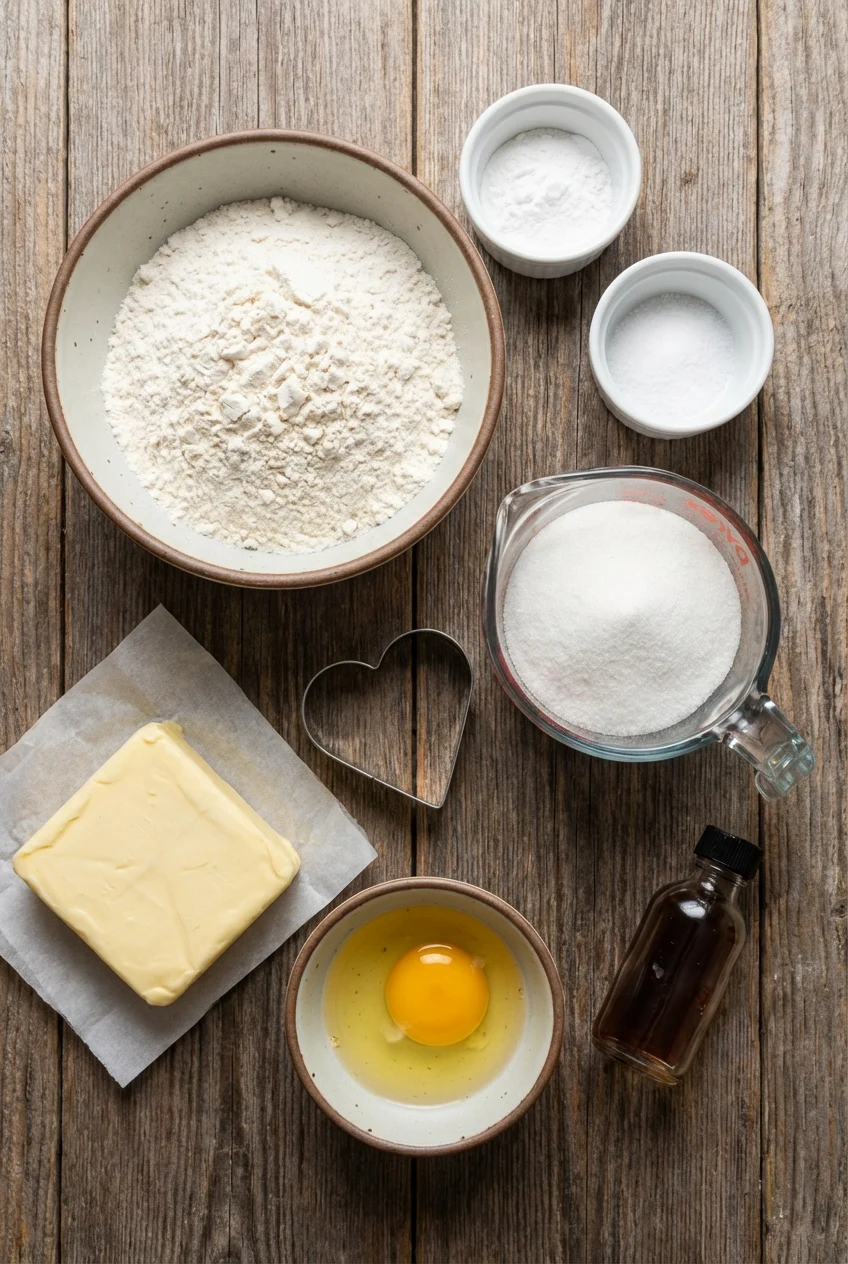
- 315g (2 1/2 cups) all-purpose flour
- 4g (1 teaspoon) baking powder
- 3g (1/2 teaspoon) salt
- 227g (1 cup) unsalted butter, softened
- 200g (1 cup) granulated sugar
- 50g (1) large egg
- 5g (1 teaspoon) vanilla extract
Step-By-Step Instructions
- Preheat and Prepare
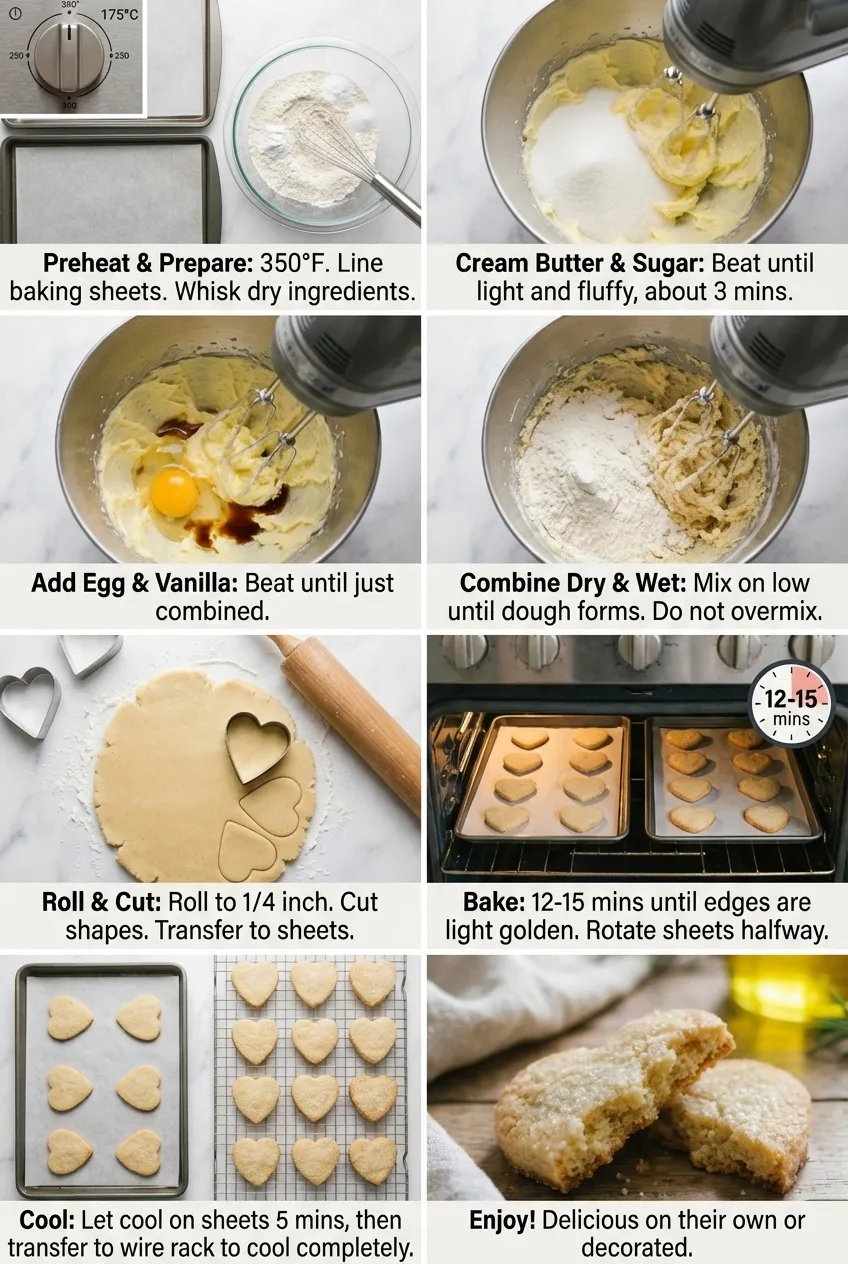
Preheat your oven to 350°F / 175°C. Line two baking sheets with parchment paper to prevent sticking and ensure even browning. In a medium mixing bowl, whisk together the all-purpose flour, baking powder, and salt. This step aerates the flour and distributes the leavening evenly.
- Cream Butter and Sugar
In a large bowl, use a hand mixer or stand mixer to beat the softened butter and granulated sugar together on medium speed. Continue for about 3 minutes, until the mixture is light, pale, and fluffy. This process incorporates air, which is essential for a tender cookie. Add the egg and vanilla extract, and beat just until they are well combined.
- Combine Dry and Wet Ingredients
Add the dry ingredient mixture to the wet ingredients in two or three additions. Mix on low speed only until the dough starts to come together into a cohesive mass. Be careful not to over-mix here; stopping as soon as the flour disappears will keep the cookies tender by preventing too much gluten from developing.
- Roll and Cut Cookies
Turn the dough out onto a lightly floured surface and roll it to a uniform 1/4-inch thickness. Use a heart-shaped cookie cutter to cut out the cookies. Gently transfer them to your prepared baking sheets, leaving about an inch of space between each one to allow for slight spreading.
- Bake Cookies
Bake in the preheated oven for 12-15 minutes. The cookies are done when the edges are just beginning to turn a light golden brown. For the most even results, rotate the baking sheets from top to bottom and front to back halfway through the baking time.
- Cool and Enjoy
Let the cookies cool on the baking sheets for 5 minutes. This allows them to set up and become firm enough to move. Then, transfer them to a wire rack to cool completely. They are delicious on their own or ready to be decorated once cooled.
If you enjoy this dish, try our Cinnamon Sugar Cookies for a perfect pairing or next-weeknight option.
Substitutions & Variations
- Almond Flavor: For a nutty, marzipan-like flavor, replace the vanilla extract with an equal amount of almond extract.
- Citrus Zest: Add 1 teaspoon of finely grated lemon or orange zest along with the sugar for a bright, fresh aroma and taste.
- Festive Sprinkles: For a simple decoration, gently press colorful sprinkles onto the tops of the cut-out cookies before baking.
Make-Ahead, Storage & Reheat
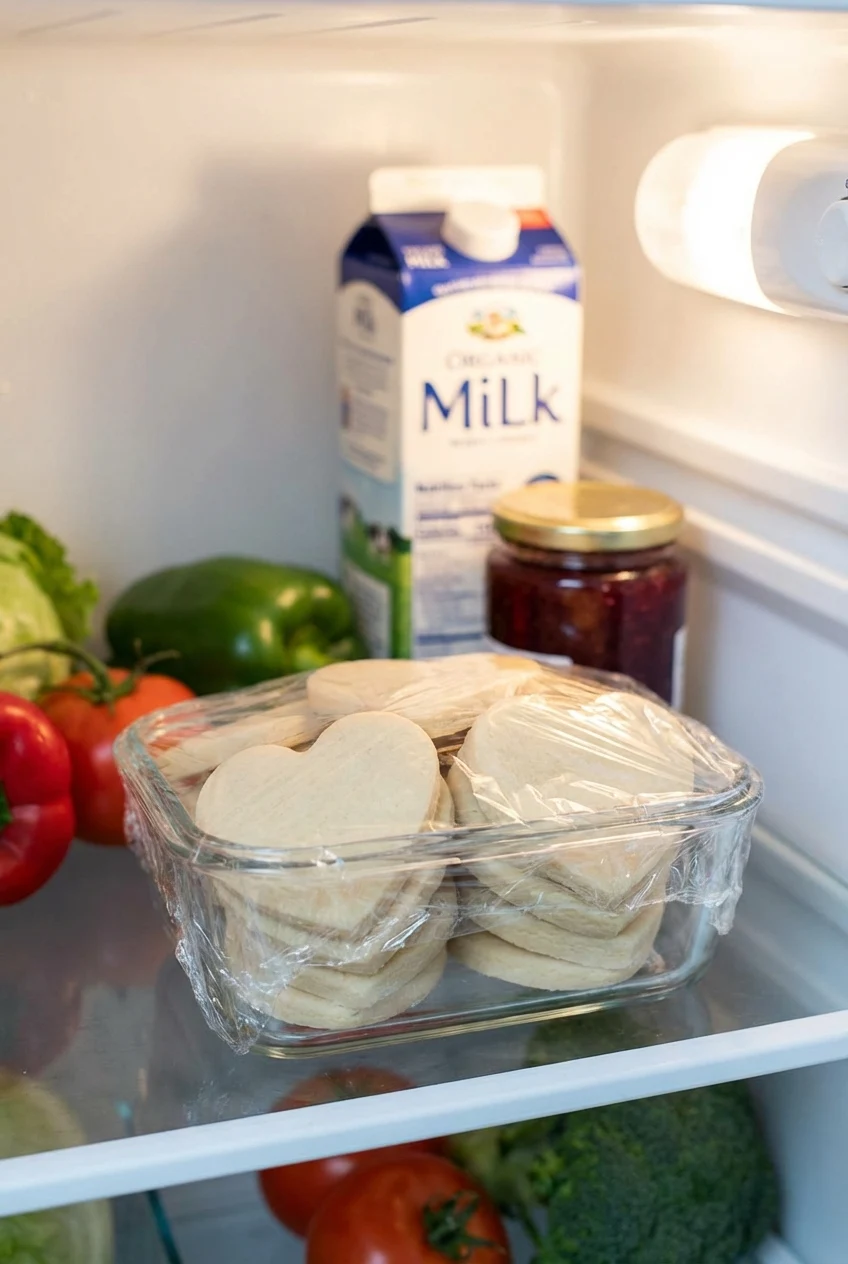
Store cooled cookies in an airtight container at room temperature for up to one week. For longer storage, you can freeze the baked cookies for up to three months. The cookie dough can also be made ahead, wrapped tightly in plastic wrap, and refrigerated for up to 2 days before rolling and baking.
Nutrition
- Serving Suggestion: 1 cookie
- Calories: 100 kcal
- Protein: 1 g
- Fat: 5 g
- Carbohydrates: 13 g
- Per 100g: 500 kcal, 5g protein, 25g fat, 65g carbs. Estimates only.
FAQ
Why did my cookies spread out so much and lose their defined shape?
Spreading usually means the butter was too soft or the dough got too warm. Chill the cut-out cookies on the baking sheet for 10-15 minutes right before baking. This solidifies the fat, which is key for helping the cookies maintain their shape.
Can I refrigerate the cookie dough for longer than thirty minutes?
Absolutely. You can wrap the dough tightly and keep it in the fridge for up to two days. A longer chill hydrates the flour, improving flavor and texture. Let it soften on the counter for 15-20 minutes before you try to roll it out.
How do I get my cutout cookies to have very sharp, defined edges?
The best trick is to freeze the cut-out cookies on the baking sheet for 10-15 minutes right before baking. This extreme chill helps the fat stay solid for longer in the oven’s heat, which gives you the sharpest, most defined edges.
Does using a silicone mat instead of parchment paper affect the shape?
Yes, it makes a difference. Parchment paper has more grip, which helps the cookie bottoms hold their shape and spread less. Silicone mats are slicker, so cookies tend to spread more. For the best shape retention, parchment is the better choice.
Is it okay to use salted butter instead of the unsalted kind?
Yes, but you should reduce the added salt in the recipe to about 1/4 teaspoon. This adjustment accounts for the salt already in the butter, ensuring the final flavor of your cookies stays balanced and not overly salty.
What should I do if my cookie dough feels too sticky or greasy?
Greasy dough often means the butter was too soft. Sticky dough can mean it’s too warm. The best first step is to chill it for at least 30-60 minutes. This solidifies the butter, making the dough much easier to roll out and handle.
How thick should I roll the dough for cookies that hold their shape?
Aim to roll your dough to an even 1/4-inch thickness. If it’s too thin, the cookies can become fragile and overbake. If it’s too thick, they may puff up and not bake evenly in the center. Consistency here is key to a uniform batch.
Can I freeze the baked cookies to save them for a later date?
Yes, they freeze beautifully. Let the cookies cool completely, then place them in an airtight container, using parchment paper to separate the layers. They will keep well for up to three months. Just thaw them at room temperature when ready to enjoy.
Equipment
- 1 Medium mixing bowl
- 1 Large mixing bowl
- Hand mixer or stand mixer
- 2 Baking sheets
- Parchment paper
- Heart-shaped cookie cutter
- Wire cooling rack
- Rolling pin
Ingredients
- 315 g (2 1/2 cups) All-purpose flour
- 4 g (1 teaspoon) Baking powder
- 3 g (1/2 teaspoon) Salt
- 227 g (1 cup) Unsalted butter softened
- 200 g (1 cup) Granulated sugar
- 50 g (1 large) Egg
- 5 g (1 teaspoon) Vanilla extract
Instructions
- Preheat your oven to 350°F (175°C). Line two baking sheets with parchment paper.
- In a medium bowl, whisk together the flour, baking powder, and salt to aerate and combine evenly.
- In a large bowl, beat the softened butter and sugar on medium speed until light, pale, and fluffy, about 3 minutes.
- Add the egg and vanilla extract; beat just until combined.
- Add the dry ingredients to the wet in two or three additions, mixing on low speed until just combined.
- Turn dough onto a floured surface and roll to a uniform 1/4-inch thickness.
- Cut out cookies with a heart-shaped cutter and transfer to prepared baking sheets with about 1 inch space between.
- Bake for 12 to 15 minutes until edges are lightly golden. Rotate trays halfway through baking.
- Cool on baking sheets for 5 minutes, then transfer to a wire rack to cool completely.
