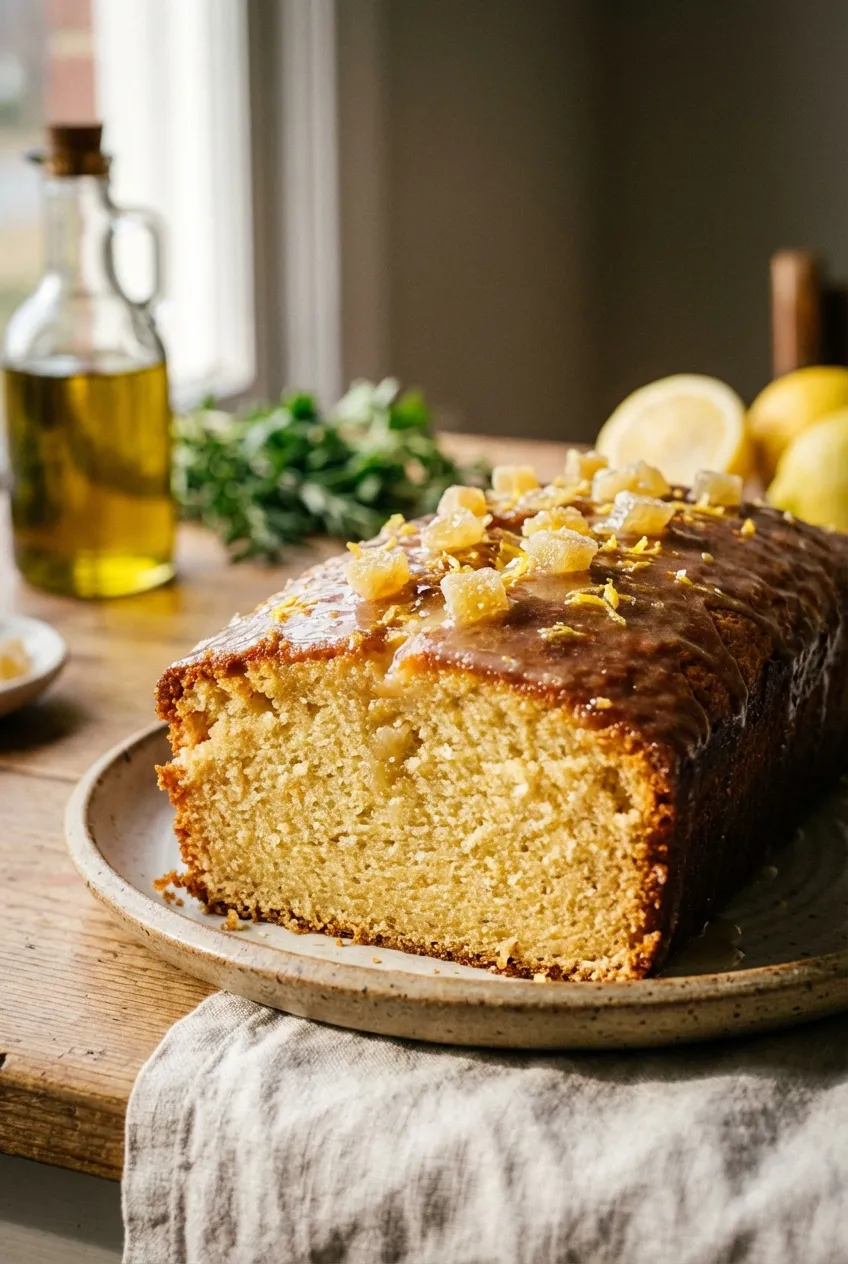
I find myself turning to this Lemon Ginger Tea Cake whenever I need a simple, comforting bake. I recently made it for a friend who stopped by for coffee, and it was the perfect bright spot on a gray afternoon. Its moist, tender crumb and the lively combination of zesty lemon and warm ginger make it a truly special, yet incredibly easy, treat.
This recipe is built for reliability. Using common pantry ingredients and straightforward techniques, it delivers a beautiful cake that’s just as fitting for a quiet morning as it is for a special brunch. The simple lemon glaze adds a final touch of sweetness and tang that ties everything together.
Achieving the Perfect Cake Texture
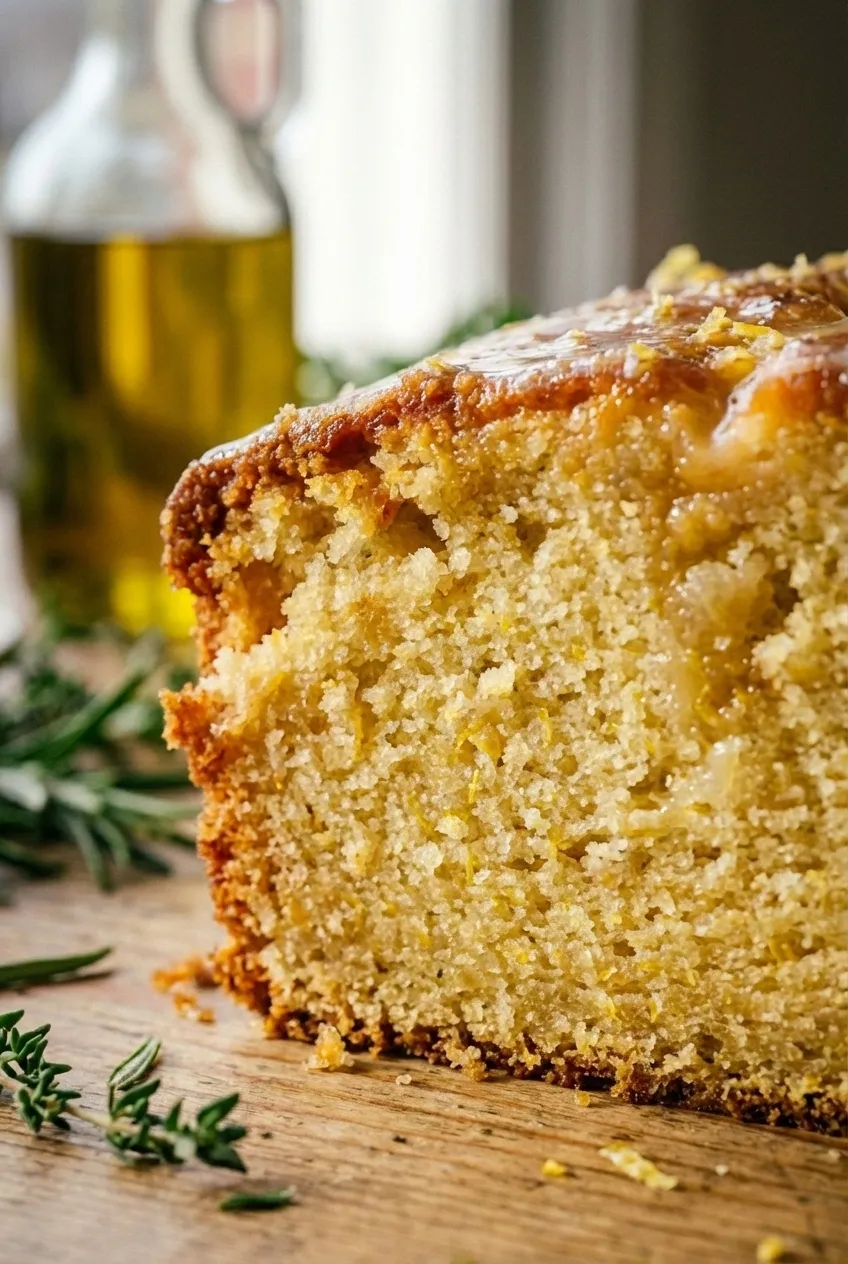
The key to a moist, fluffy crumb lies in your initial prep. Ensure your butter is properly softened—not melted or cold—so it can cream effectively with the sugar, creating tiny air pockets that give the cake lift. Having your eggs at room temperature is just as crucial. Cold eggs can cause the creamed butter to seize and curdle, disrupting the smooth emulsion needed for a uniform batter. This careful temperature management is what allows the fats and liquids to combine seamlessly, resulting in a cake that’s wonderfully tender and never dense.
Mastering the Art of Glazing
A beautiful glaze is the simplest way to finish this cake. For a perfectly smooth, pourable consistency, always sift your powdered sugar before mixing. This removes any small lumps that can make the glaze gritty. Start by whisking the sifted sugar with the lemon juice until just combined. From there, you can adjust it to your liking. If it seems too thick, add more lemon juice, a half-teaspoon at a time. If it’s too thin, whisk in more sifted powdered sugar until you reach a consistency that drizzles slowly from a spoon.
The Impact of Fresh Ingredients
While dried spices have their place, this cake truly shines because of fresh lemon and ginger. Freshly grated lemon zest contains essential oils that provide a bright, powerful citrus aroma and flavor that you simply can’t get from an extract. Similarly, freshly grated ginger root offers a pungent, warm spice that is much more nuanced than dried ginger powder. For the best results, use a microplane to grate both finely. This ensures their vibrant flavors are evenly distributed throughout every bite of the cake.
Recipe Overview
- Prep Time: 15 minutes
- Cook Time: 45 minutes
- Total Time: 1 hour
- Servings: 8 servings
- Difficulty: Easy
Ingredients
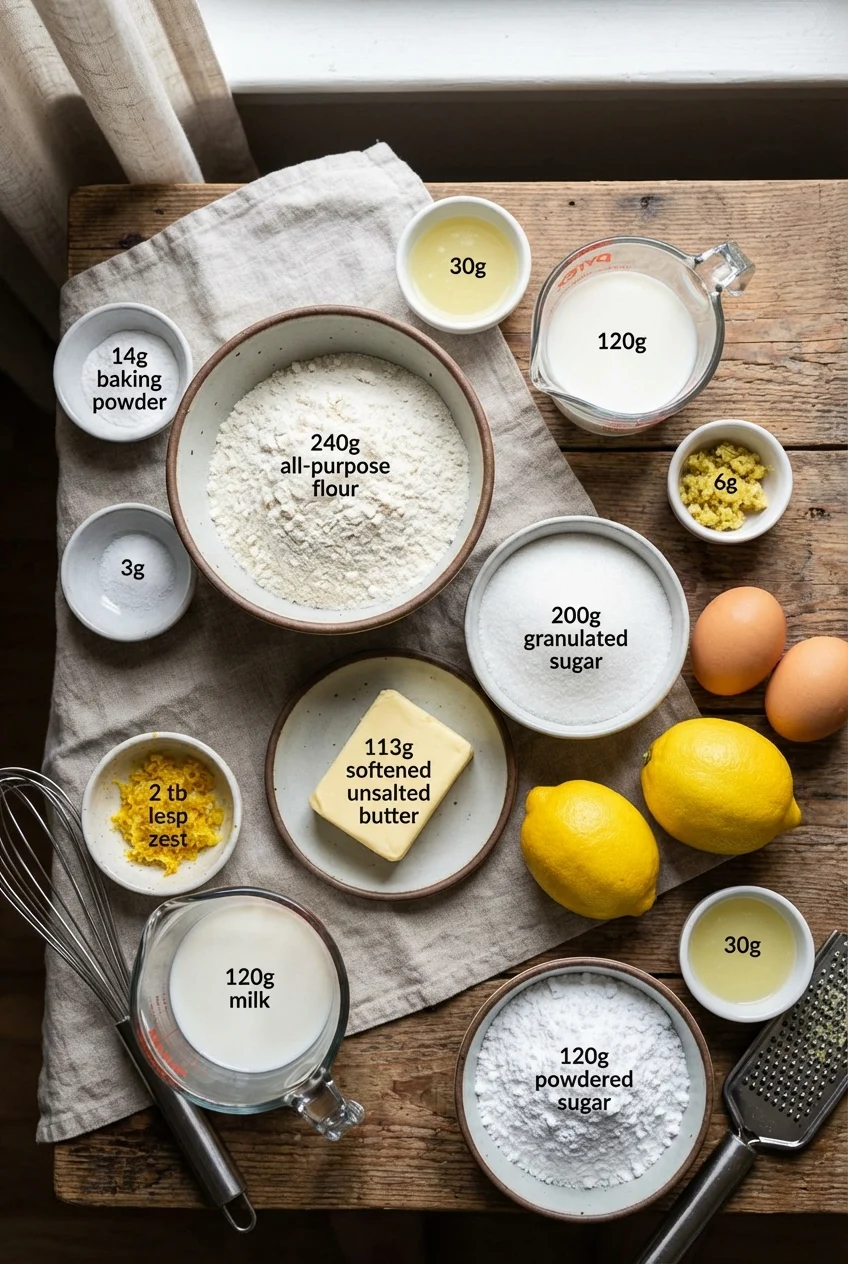
For the Cake
- 240g all-purpose flour (2 cups)
- 14g baking powder (1 tablespoon)
- 3g salt (1/2 teaspoon)
- 113g unsalted butter (1/2 cup), softened
- 200g granulated sugar (1 cup)
- 2 large eggs, room temperature
- 2 tablespoons lemon zest (from 2 lemons)
- 6g fresh ginger (1 tablespoon), grated
- 120g milk (1/2 cup)
- 30g fresh lemon juice (2 tablespoons)
For the Lemon Glaze
- 120g powdered sugar (1 cup)
- 30g lemon juice (2 tablespoons)
Step-By-Step Instructions
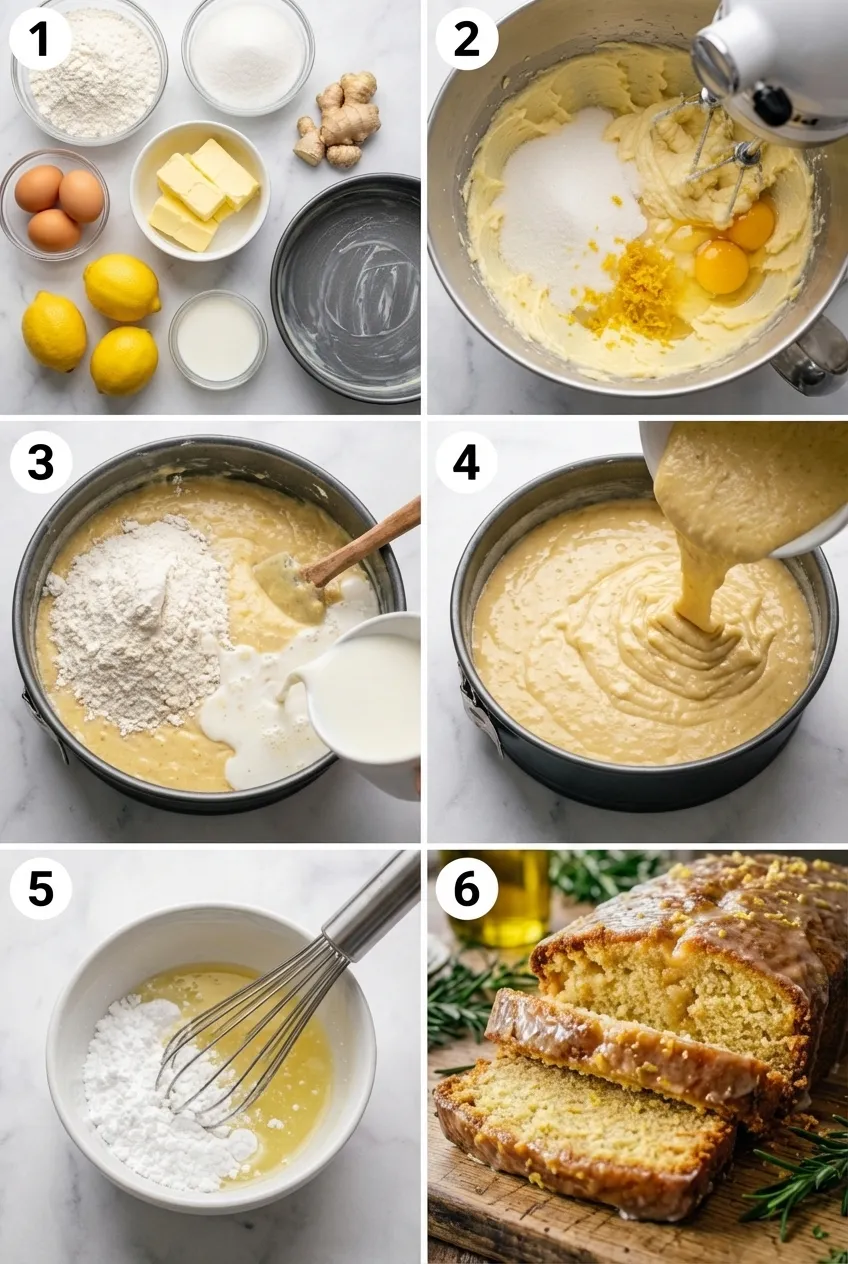
- Preheat and Prepare
Position a rack in the center of your oven and preheat to 350°F (175°C). Grease and flour a 9-inch round cake pan. In a medium bowl, whisk together the all-purpose flour, baking powder, and salt. Set this aside for later.
- Cream the Butter and Sugar
In a separate large bowl, use a hand mixer or stand mixer to beat the softened butter and granulated sugar on medium speed until light and fluffy, about 3–4 minutes. Add the eggs one at a time, mixing well after each addition until fully incorporated. Stir in the lemon zest and grated ginger.
- Combine Wet and Dry Ingredients
Add the dry ingredients in three additions, alternating with the milk in two additions. Begin and end with the dry ingredients. Mix on low speed just until the flour disappears—overmixing can develop gluten and make the cake tough. Gently stir in the 2 tablespoons of lemon juice.
- Bake the Cake
Pour the batter into your prepared cake pan and smooth the top with a spatula. Bake for 45 minutes, or until the top is golden brown and a toothpick inserted into the center comes out with moist crumbs attached, but no wet batter. The cake should spring back when lightly touched.
- Prepare the Lemon Glaze
While the cake cools in its pan for about 15 minutes, prepare the glaze. In a small bowl, whisk the powdered sugar and 2 tablespoons of lemon juice until completely smooth. The glaze should be pourable but still thick enough to coat the back of a spoon.
- Glaze the Cake
Once the cake has cooled slightly, carefully invert it onto a wire rack to cool to room temperature. Place the cooled cake on a serving platter. Drizzle the lemon glaze over the top, allowing it to drip down the sides.
- Serve and Enjoy
Let the glaze set for about 10 minutes before slicing. This cake is wonderful on its own or served alongside a cup of tea or coffee.
If you enjoy this dish, try our French Yogurt Cake for a perfect pairing or next-weeknight option.
Substitutions & Variations
- Lime Ginger Cake: Swap the lemon zest and juice for an equal amount of fresh lime zest and juice for a different citrusy kick.
- Add Candied Ginger: For a more intense ginger flavor and a chewy texture, fold 1/3 cup of finely chopped candied ginger into the batter.
- Vanilla Bean: Add 1 teaspoon of vanilla extract or the seeds from half a vanilla bean along with the eggs for a warmer, more complex flavor profile.
Make-Ahead, Storage & Reheat
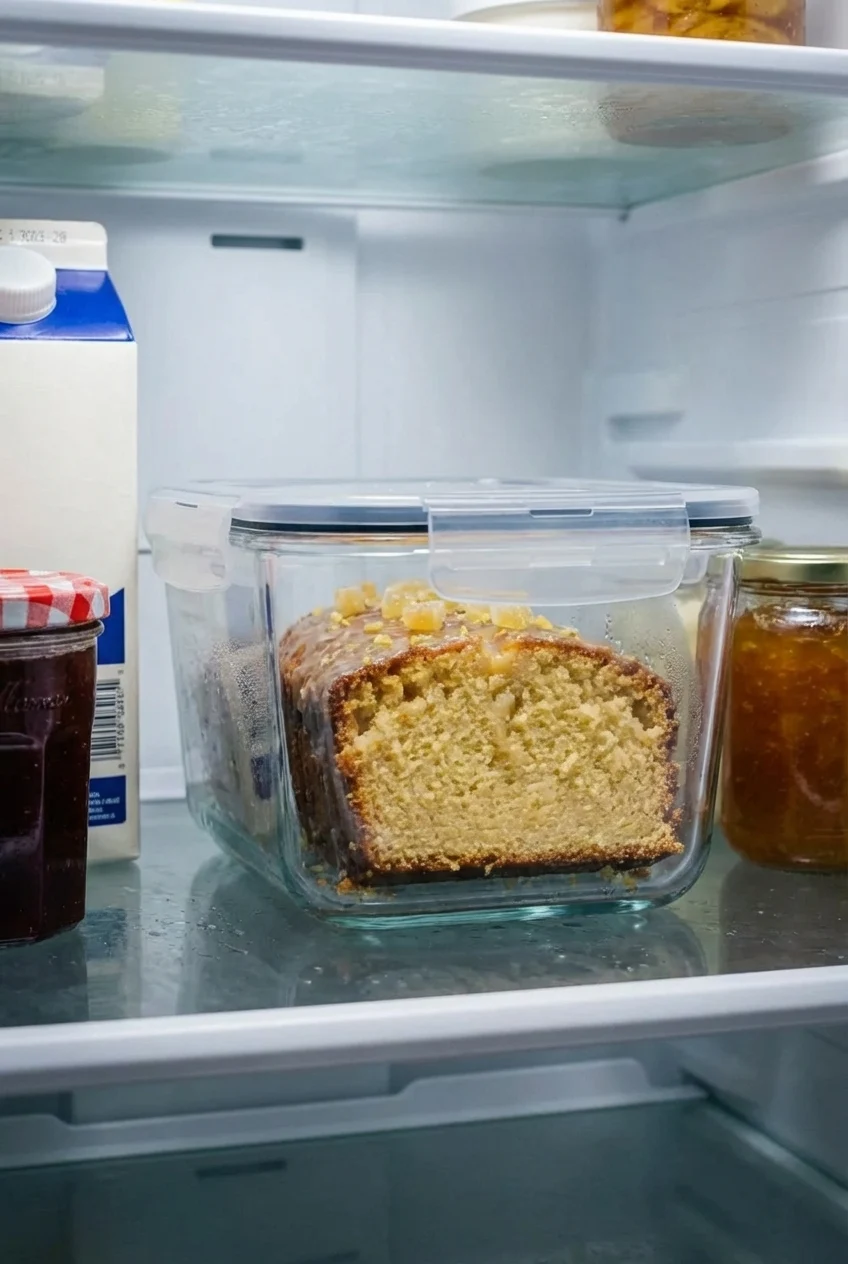
Store leftover cake in an airtight container at room temperature for up to 3 days. For longer storage, you can refrigerate it for up to one week. The cake is best enjoyed at room temperature, so allow chilled slices to sit out for 20 minutes before serving.
Nutrition
- Serving: 1 slice
- Calories: 250
- Protein: 4g
- Fat: 10g
- Carbohydrates: 38g
Per 100g: 310 calories, 5g protein, 12g fat, 47g carbohydrates. Estimates only.
FAQ
Why is my cake dense instead of light and fluffy like it should be?
This often points to the creaming step. Properly creaming the butter and sugar whips air into the batter, which is essential for a light, well-risen cake.
What causes a cake to sink in the middle as it cools after baking?
Sinking often means the cake was slightly underbaked. The center's structure wasn't set enough to hold its shape. Also, try to avoid opening the oven door too early.
Do room temperature eggs and butter really make a big difference?
Yes, it’s a crucial step. Cold ingredients don’t combine smoothly. Room temperature butter and eggs emulsify properly, creating a uniform, tender crumb.
What’s the secret to a tender crumb instead of a tough, rubbery one?
The key is gentle mixing once the flour is added. Overworking the batter develops gluten, which is great for bread but makes cake tough. Mix only until combined.
How can I make this gluten-free without it becoming too crumbly?
Use a high-quality 1-to-1 gluten-free flour blend that includes xanthan gum. This binder is key for providing structure and moisture, preventing a dry, crumbly result.
My cake has a dome. How can I get a flatter top for even layers?
Doming is caused by the edges setting faster than the center. You can use cake strips or bake at a slightly lower temperature to promote more even baking from the start.
Does this cake freeze well, and how should I prep it for the freezer?
Yes, it freezes beautifully. Let the cake cool completely, then wrap it tightly in two layers of plastic wrap and a final layer of foil to prevent freezer burn.
Can I bake this cake ahead of time, and what is the best way to store it?
Absolutely. Store the cooled cake in an airtight container at room temperature for up to three days. For longer storage, you can refrigerate it for up to one week.
Equipment
- 9-inch round cake pan
- Oven
- Medium mixing bowl
- Large mixing bowl
- Hand mixer or stand mixer
- Small bowl
- Whisk
- Wire rack
- Spatula
Ingredients
- 240 g all-purpose flour
- 14 g baking powder
- 3 g salt
- 113 g unsalted butter softened
- 200 g granulated sugar
- 2 large eggs room temperature
- 2 tbsp lemon zest (from 2 lemons)
- 6 g fresh ginger grated
- 120 g milk
- 30 g fresh lemon juice
- For the Lemon Glaze
- 120 g powdered sugar
- 30 g lemon juice
Instructions
- Preheat the oven to 350°F (175°C) and grease and flour a 9-inch round cake pan. In a medium bowl, whisk together the flour, baking powder, and salt.
- In a large bowl, beat the softened butter and granulated sugar on medium speed until light and fluffy, about 3 to 4 minutes. Add eggs one at a time, mixing well after each.
- Stir in the lemon zest and grated ginger.
- Add the dry ingredients in three additions, alternating with milk in two additions, beginning and ending with dry ingredients. Mix on low speed until just combined.
- Gently stir in 2 tablespoons of fresh lemon juice.
- Pour the batter into the prepared pan and smooth the top. Bake for 45 minutes or until a toothpick inserted in the center comes out with moist crumbs.
- Cool the cake in the pan for 15 minutes. Meanwhile, whisk together the sifted powdered sugar and 2 tablespoons lemon juice until smooth for the glaze.
- Invert the cake onto a wire rack to cool completely. Drizzle the lemon glaze over the cake and allow it to set for about 10 minutes before slicing.
- Serve the cake on its own or with tea or coffee.
