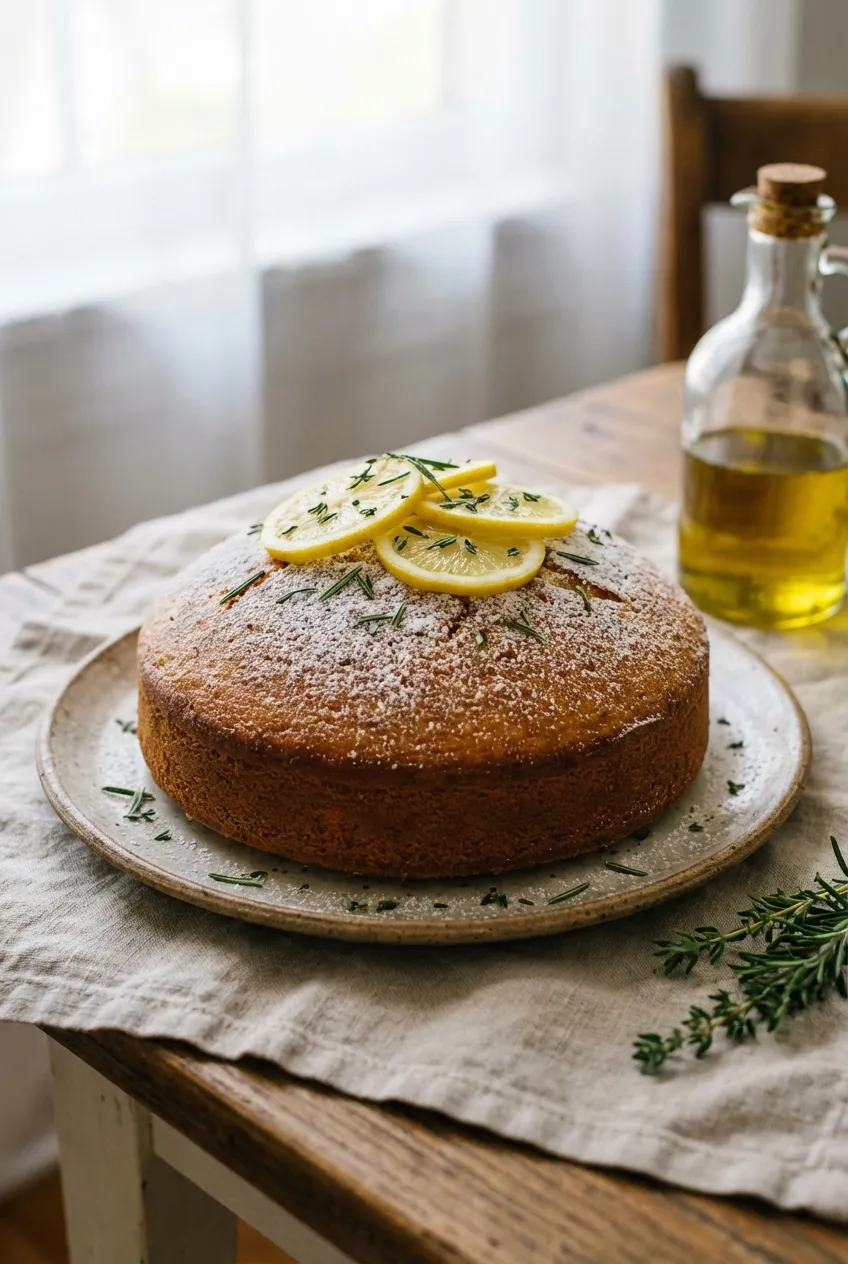
This lemon olive oil cake is one of those recipes I turn to year-round for its simple, elegant charm. I first developed a version of it back in my restaurant days for a spring menu, and it was an instant hit for its bright flavor and incredibly moist texture. It’s wonderfully unfussy—no special decorating skills required—and it fills the kitchen with the most amazing, sunny aroma as it bakes.
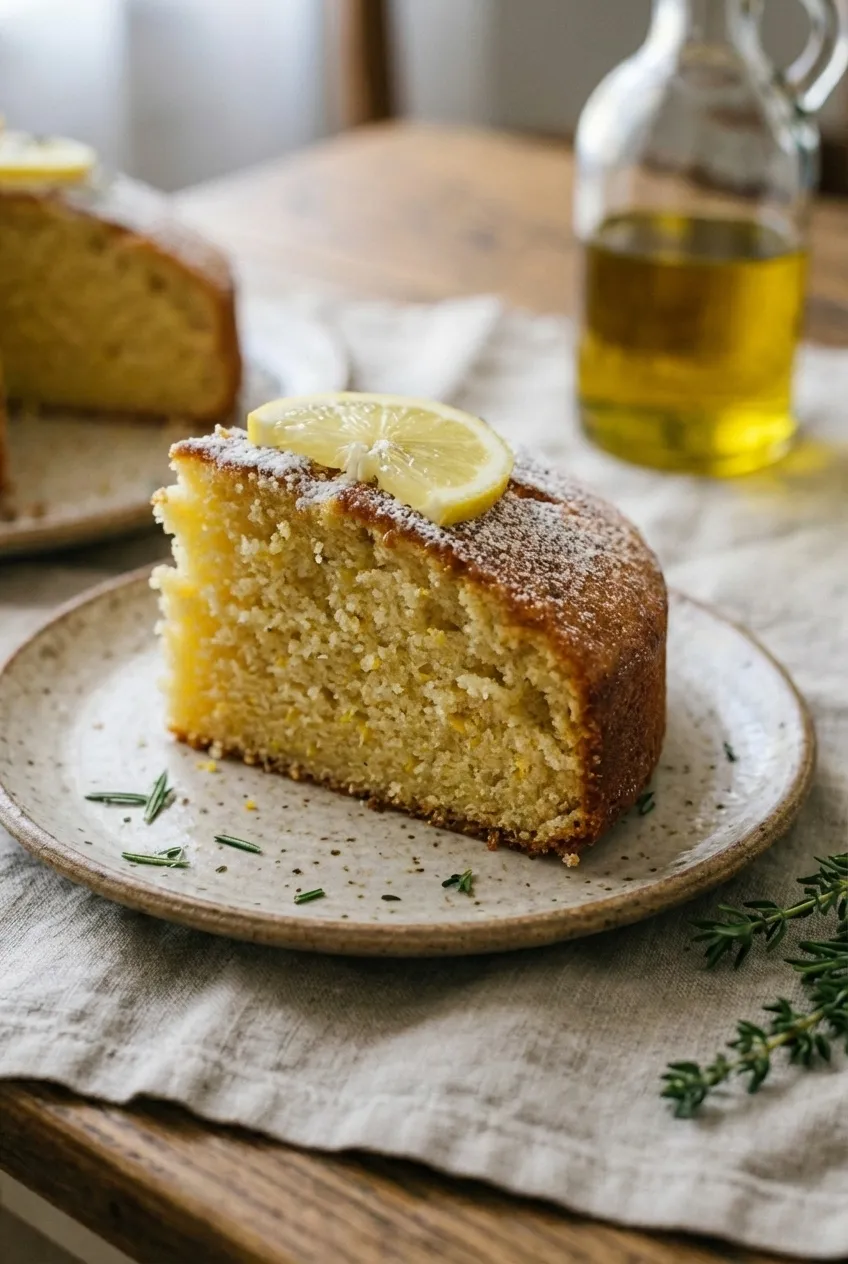
What makes this cake a standout is its texture. Using a quality extra virgin olive oil instead of butter yields a wonderfully tender crumb that stays fresh for days. The combination of bright lemon and fruity olive oil is a classic pairing that feels both rustic and sophisticated. It’s the perfect dessert for an afternoon coffee, a holiday brunch, or a simple weeknight treat.
Mastering Moisture in Olive Oil Cakes
The key to a perpetually moist olive oil cake lies in a few simple techniques. First, choose a good quality extra virgin olive oil; its flavor is prominent, so use one you enjoy. Bringing your eggs and milk to room temperature helps them emulsify into the batter more easily, creating a uniform, stable crumb that traps moisture. Finally, allowing the cake to cool completely before slicing is crucial. This lets the structure set and prevents steam—and therefore moisture—from escaping too quickly.
Zesting Technique for Maximum Flavor
To get the most vibrant lemon flavor, how you zest is as important as the zest itself. I recommend using a microplane, which creates fine, delicate strands that melt into the batter. This tool efficiently removes only the yellow part of the peel, which is full of fragrant essential oils. Be sure to avoid grating into the white pith underneath, as it contains bitter compounds that can overpower the cake’s bright, sunny notes. Rubbing the zest directly into the sugar before mixing further helps release those oils.
Achieving the Perfect Cake Texture
A tender crumb is the goal here, and the best way to achieve it is by avoiding over-mixing the batter. Once you combine the wet and dry ingredients, you’re developing gluten in the flour. Mixing just until the last streaks of flour disappear keeps gluten development to a minimum, resulting in a soft, delicate cake rather than a tough or chewy one. The finished batter should be smooth and pourable, but not worked until it becomes elastic or gummy.
The Role of Acid in Baking
In this recipe, lemon juice does more than just add flavor. As an acid, it reacts with the baking powder (a base) to create carbon dioxide bubbles. This chemical reaction gives the cake its lift and contributes to a light, airy texture. The acidity also cuts through the richness of the olive oil and sugar, creating a beautifully balanced flavor profile that is tangy and bright without being overly sweet. This balance is what makes each bite so satisfying.
Recipe Overview
- Prep Time: 15 minutes
- Cook Time: 35 minutes
- Total Time: 50 minutes
- Servings: 8 servings
- Difficulty: Easy
Ingredients
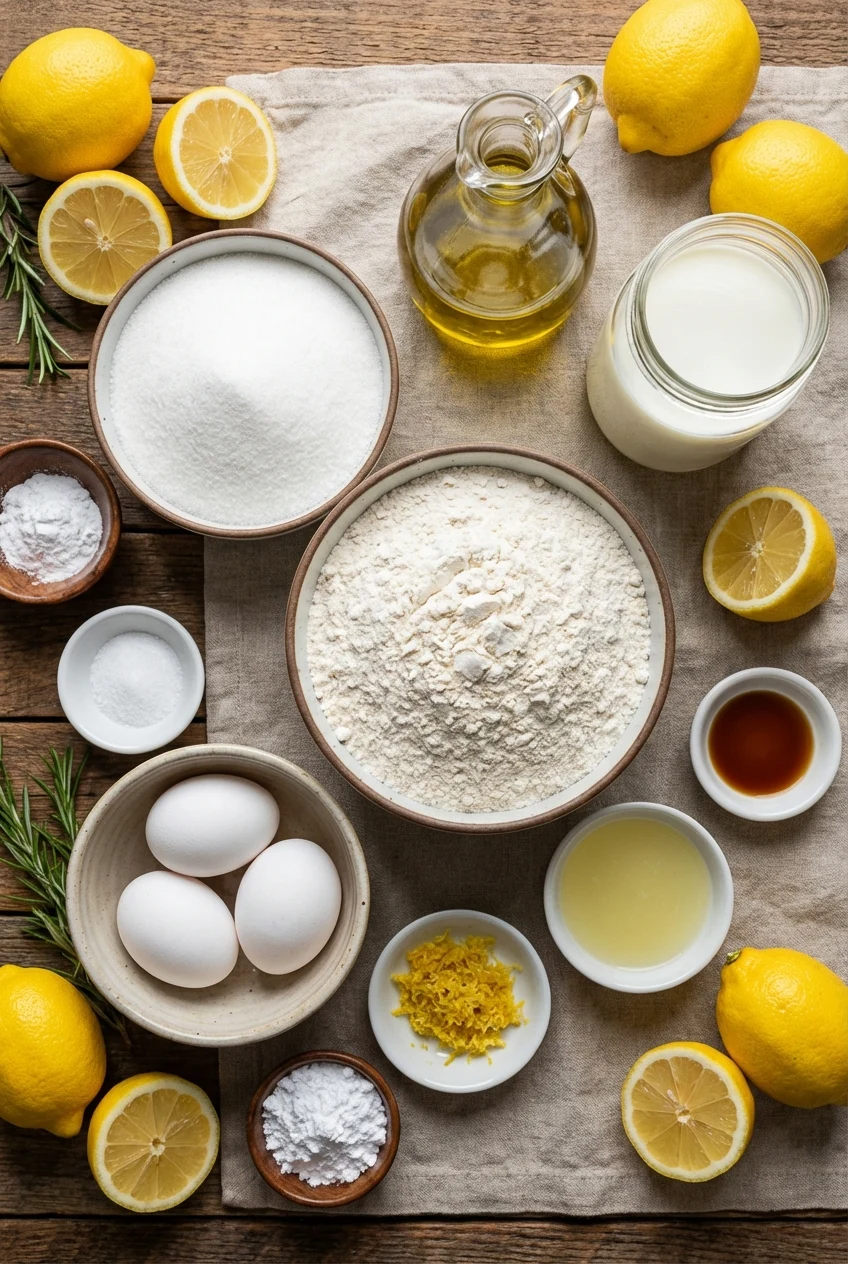
- 180g (1 1/2 cups) all-purpose flour
- 200g (1 cup) granulated sugar
- 7g (1 1/2 teaspoons) baking powder
- 3g (1/2 teaspoon) salt
- 6g (2 tablespoons) lemon zest, from about 2 lemons
- 180g (3/4 cup) extra virgin olive oil
- 180g (3/4 cup) whole milk, at room temperature
- 150g (3 large) eggs, at room temperature
- 30g (2 tablespoons) fresh lemon juice
- 5g (1 teaspoon) vanilla extract
- 10g (about 1 tablespoon) powdered sugar, for dusting (optional)
Step-By-Step Instructions
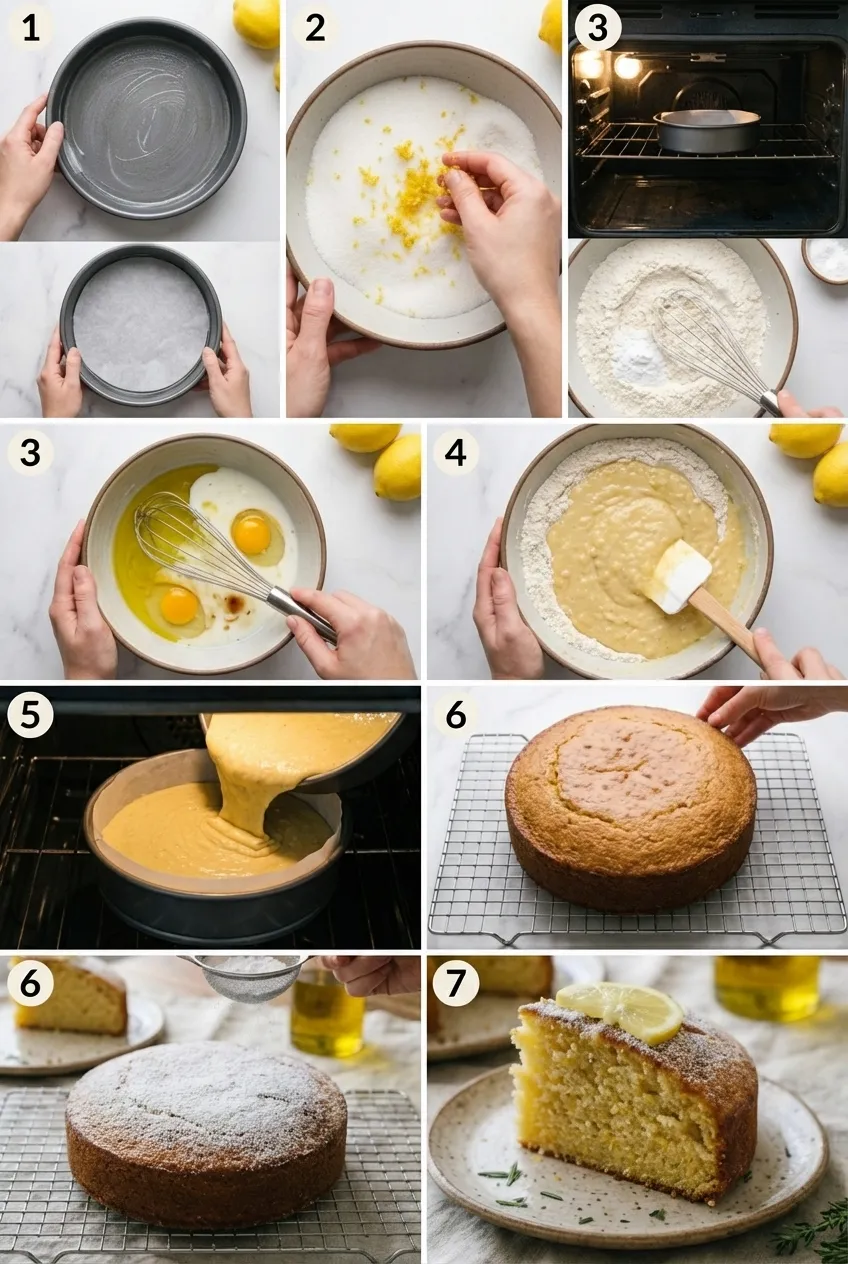
Prepare the Oven and Pan
Preheat your oven to 350°F / 175°C. Grease a 9-inch round cake pan and line the bottom with parchment paper. This dual-layer of protection ensures your cake releases cleanly without any sticking.
Mix Dry Ingredients
In a large mixing bowl, combine the granulated sugar and lemon zest. Use your fingertips to rub them together until the mixture is fragrant and resembles damp sand. This infuses the sugar with lemon oil for a more intense flavor. Whisk in the all-purpose flour, baking powder, and salt until evenly combined.
Combine Wet Ingredients
In a separate medium bowl, whisk together the extra virgin olive oil, whole milk, room-temperature eggs, fresh lemon juice, and vanilla extract. Keep whisking until the mixture is smooth and fully emulsified.
Create the Batter
Pour the wet ingredients into the dry mixture. Use a spatula to fold everything together gently until just combined. A few small lumps are okay; the goal is to avoid over-mixing, which can make the cake tough.
Bake the Cake
Pour the batter into your prepared cake pan and use the spatula to smooth the top. Bake for 35 minutes, or until the top is golden brown and a wooden skewer inserted into the center comes out clean. The cake should spring back lightly when touched.
Cool the Cake
Let the cake cool in its pan on a wire rack for 10 minutes. Then, carefully run a knife around the edge and invert the cake onto the rack. Peel off the parchment paper and allow it to cool completely to room temperature before serving.
Finish and Serve
Just before serving, use a fine-mesh sieve to dust the top of the cooled cake with powdered sugar. Slice into wedges and serve.
If you enjoy this dish, try our Triple Chocolate Mousse Layered Dessert for a perfect pairing or next-weeknight option.
Substitutions & Variations
- Gluten-Free Flour: Swap the all-purpose flour with a 1-to-1 gluten-free baking blend for a gluten-free version. Texture may be slightly denser.
- Citrus Swap: Substitute the lemon zest and juice with an equal amount of orange or grapefruit zest and juice for a different citrus profile.
- Add Poppy Seeds: Whisk 2 tablespoons of poppy seeds into the dry ingredients for a classic pairing with lemon and a bit of added texture.
Make-Ahead, Storage & Reheat
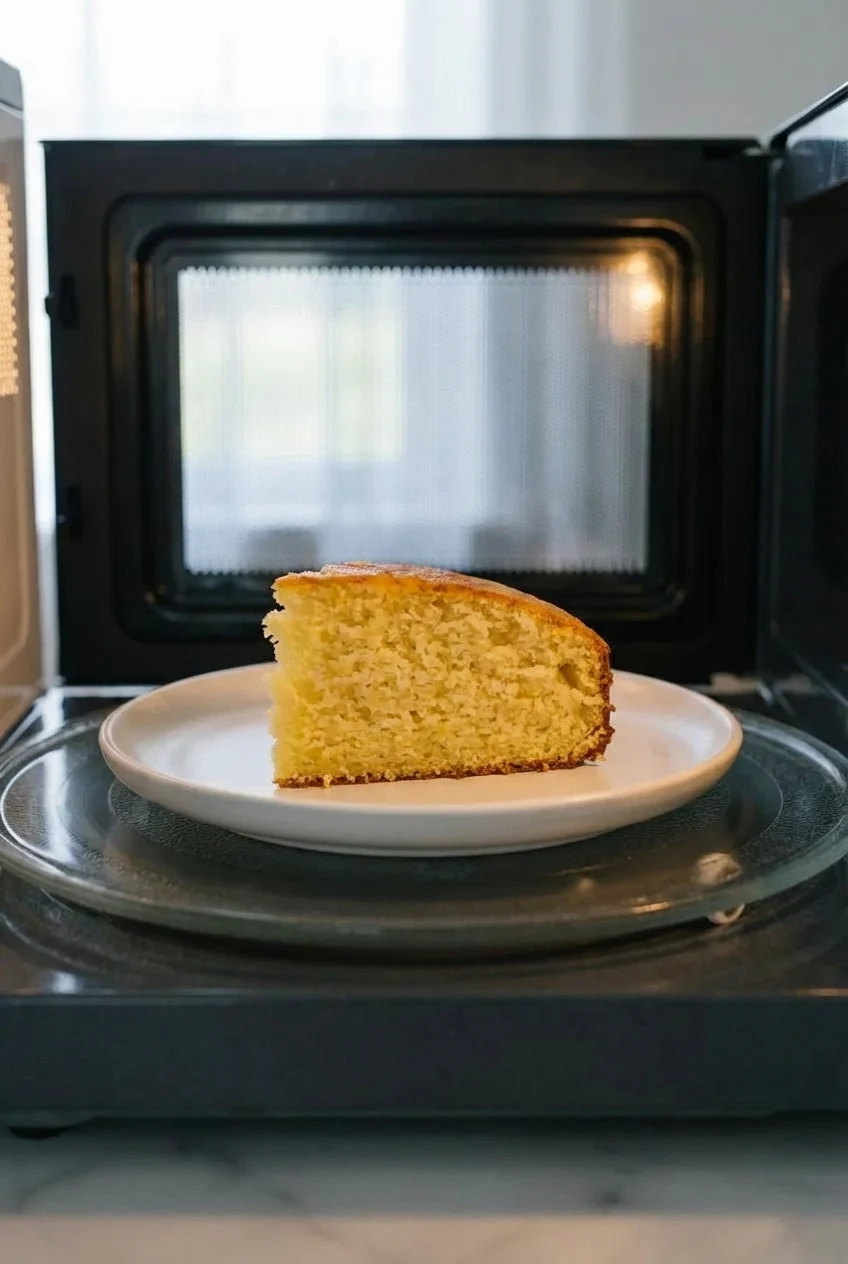
This cake stores beautifully. Keep it in an airtight container at room temperature for up to 3 days. The olive oil helps it stay moist. For longer storage, you can refrigerate it for up to a week. Serve at room temperature or warm a slice in the microwave for 10-15 seconds.
Nutrition
- Serving: 1 slice
- Calories: 280 kcal
- Carbohydrates: 32g
- Protein: 4g
- Fat: 16g
Estimates only.
FAQ
Why does my olive oil cake sometimes come out with a greasy top layer?
This happens when the oil and batter don't emulsify properly. Add the oil in a slow, steady stream while mixing so it gets fully incorporated for a uniform crumb.
What makes an olive oil cake taste bitter and how can I prevent it?
A strong, peppery olive oil is the usual cause. Choose a smoother, fruitier EVOO for baking. Also, be sure to only zest the yellow part of the lemon, as the white pith is bitter.
My olive oil cake turned out a bit dry. What is the most common cause?
Overbaking is the main reason for a dry cake, as it cooks out moisture. Check for doneness a few minutes early. Also, measure your flour correctly to avoid a dense, thirsty crumb.
Besides a clean skewer, how can I tell if my cake is perfectly baked?
Look for golden-brown edges pulling away from the pan’s sides. The center should feel firm and spring back when you lightly press it, ensuring it isn't dense or gummy inside.
Why is my cake soggy in the middle but cooked around the edges?
This usually points to an underbaked center. Your oven might run hot, browning the outside too fast. Room temperature ingredients also help the cake bake more evenly.
Could I add yogurt or sour cream to make the cake even more moist?
Yes, you can substitute some of the liquid with full-fat plain yogurt or sour cream. This adds acidity and fat, which tenderizes the crumb for a richer, softer texture.
Can I use a light olive oil, or does it have to be extra virgin?
Extra virgin olive oil gives this cake its signature fruity flavor. A light or refined olive oil will work, but the taste will be much more neutral and less distinctive.
Does this olive oil cake freeze well for making it ahead of time?
It freezes beautifully. Let it cool completely, then wrap it tightly in plastic wrap and foil. It will keep for up to two months and thaws well at room temperature.
Equipment
- 9-inch round cake pan
- Parchment paper
- Large mixing bowl
- Medium mixing bowl
- Whisk
- Spatula
- Fine-mesh sieve
- Wire rack
- Knife
Ingredients
- 180 g (1 1/2 cups) all-purpose flour
- 200 g (1 cup) granulated sugar
- 7 g (1 1/2 teaspoons) baking powder
- 3 g (1/2 teaspoon) salt
- 6 g (2 tablespoons) lemon zest from about 2 lemons
- 180 g (3/4 cup) extra virgin olive oil
- 180 g (3/4 cup) whole milk at room temperature
- 150 g (3 large) eggs at room temperature
- 30 g (2 tablespoons) fresh lemon juice
- 5 g (1 teaspoon) vanilla extract
- 10 g (about 1 tablespoon) powdered sugar for dusting (optional)
Instructions
- Preheat your oven to 350°F / 175°C and grease a 9-inch round cake pan; line the bottom with parchment paper.
- Rub the granulated sugar and lemon zest together in a large bowl until fragrant and damp; whisk in the flour, baking powder, and salt until combined.
- In a medium bowl, whisk together the olive oil, room temperature milk, eggs, lemon juice, and vanilla extract until smooth and emulsified.
- Pour the wet ingredients into the dry ingredients and gently fold together with a spatula until just combined, leaving small lumps.
- Pour the batter into the prepared pan and smooth the top with the spatula; bake for 35 minutes until golden and a skewer comes out clean.
- Cool the cake in the pan on a wire rack for 10 minutes; carefully run a knife around the edges, invert onto the rack, peel off parchment, and cool completely.
- Before serving, dust the top with powdered sugar using a fine-mesh sieve and slice into wedges.
