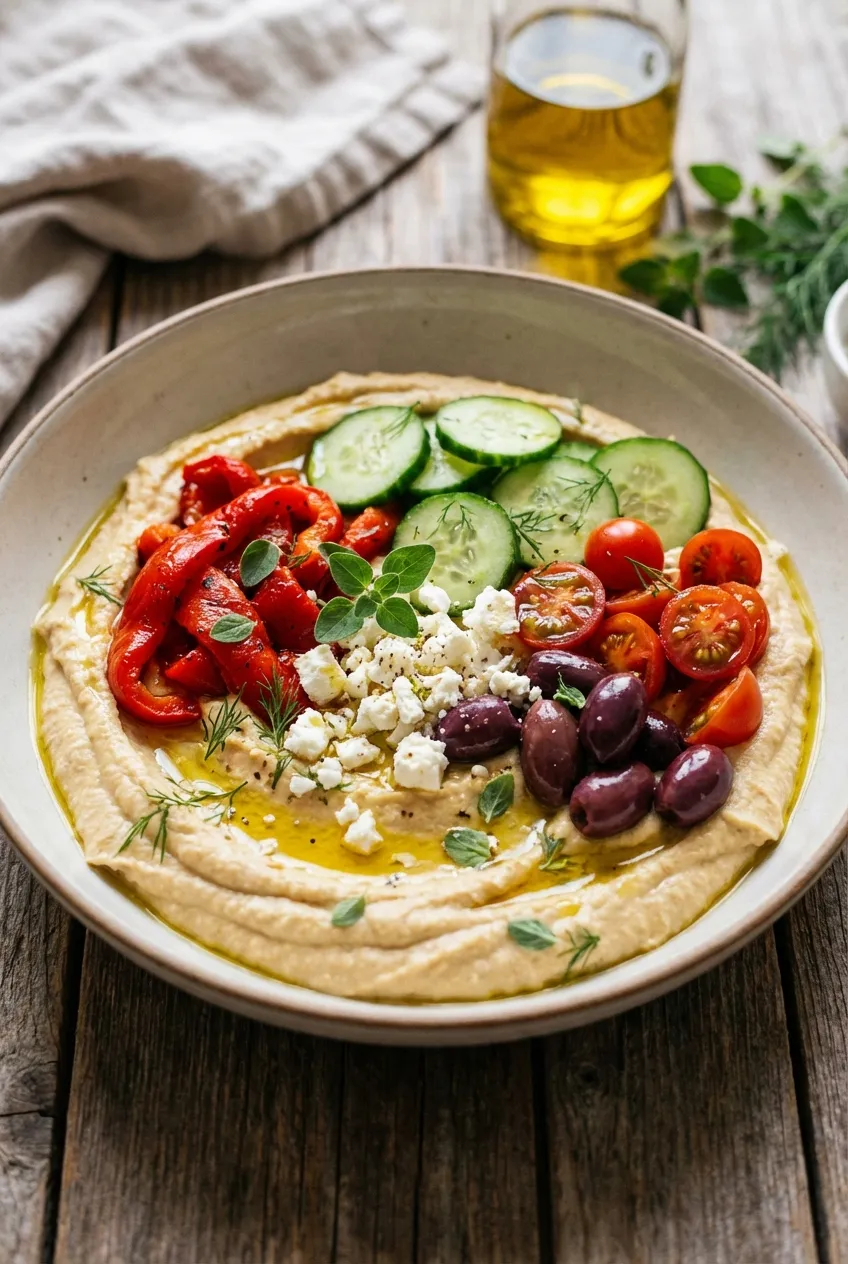
I find myself turning to this Loaded Greek Hummus Bowl whenever I need a quick, satisfying lunch that doesn’t involve turning on the stove. It’s my go-to on warm days or busy weeknights when I want something fresh and flavorful without the fuss. The combination of creamy hummus with crisp, bright toppings is just so refreshing.
This recipe is incredibly reliable and comes together in about 15 minutes. You start with a simple, silky homemade hummus and then pile on all the best Greek-inspired toppings: crunchy cucumber, juicy tomatoes, briny olives, and salty feta. It’s a complete, no-cook meal that’s as vibrant as it is delicious.
The Secret to Creamy Hummus
The key to exceptionally smooth hummus is in the blending process. Using a food processor or a high-powered blender is essential for breaking down the chickpeas into a silky purée. Start by combining the chickpeas, tahini, lemon juice, garlic, olive oil, and salt. As you blend, be sure to stop and scrape down the sides of the bowl a few times. This ensures everything is evenly incorporated and prevents any chunky bits from being left behind. The final texture should be light, airy, and completely smooth. If your hummus seems too thick, you can add a tablespoon of cold water while blending to help it loosen up.
Mastering Mediterranean Flavors
A truly great hummus bowl is all about balance. The rich, nutty flavor of the tahini and earthy chickpeas needs the bright acidity of fresh lemon juice to cut through the fat and lighten the dish. Don’t be tempted to use bottled lemon juice; the flavor of freshly squeezed is much brighter and more authentic. The garlic adds a pungent kick, while the toppings provide a mix of textures and tastes—salty feta, briny olives, and fresh vegetables. Each component should be distinct yet work together harmoniously for that classic Mediterranean profile.
Layering Your Bowl for Maximum Flavor
Assembling the bowl is more than just piling ingredients on top of each other; it’s about creating balanced bites. Start by spreading a generous layer of hummus across the bottom of the bowl, making a slight well in the center with the back of a spoon. This creates a foundation that holds the toppings. Arrange the cucumber, tomatoes, peppers, and olives in distinct sections on top. This not only looks beautiful but also allows you to get a little of everything in each spoonful. Finish by crumbling the feta over the entire bowl, drizzling with olive oil, and sprinkling with fresh parsley for a final burst of color and freshness.
Recipe Overview
- Prep Time: 15 minutes
- Cook Time: 0 minutes
- Total Time: 15 minutes
- Servings: 4 bowls
- Difficulty: Easy
Ingredients
For the Hummus
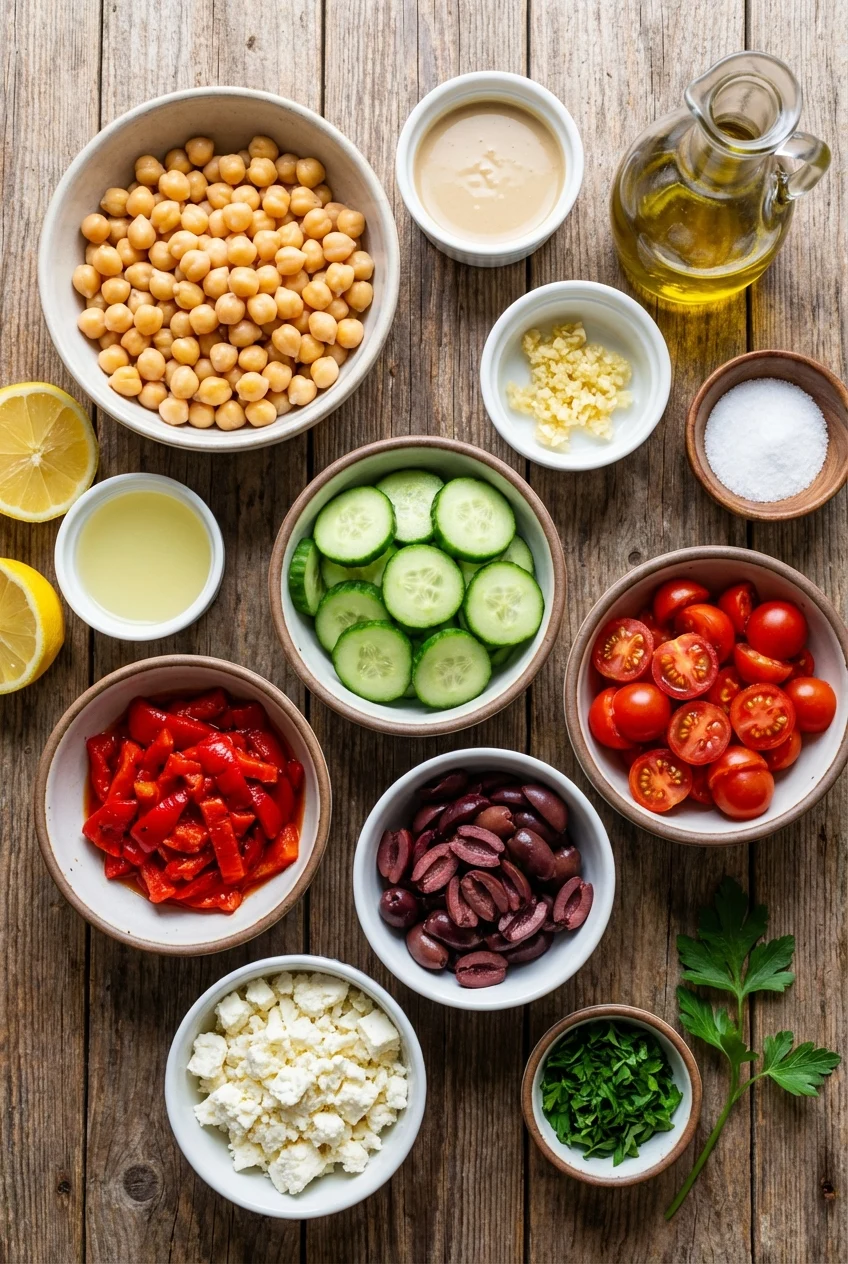
- 400g (1 15-ounce can) canned chickpeas, drained and rinsed
- 60g (1/4 cup) tahini
- 30g (2 tablespoons) freshly squeezed lemon juice
- 6g (2 cloves) garlic, minced
- 30g (2 tablespoons) olive oil
- 3g (1/2 teaspoon) salt
For the Toppings
- 200g (1 medium) cucumber, sliced
- 150g (1 cup) cherry tomatoes, halved
- 75g (1/2 cup) roasted red peppers, chopped
- 50g (1/3 cup) kalamata olives, pitted and sliced
- 75g (1/2 cup) feta cheese, crumbled
- 15g (1 tablespoon) fresh parsley, chopped
- 15g (1 tablespoon) olive oil, for drizzling
Step-By-Step Instructions
- Prepare the Hummus.
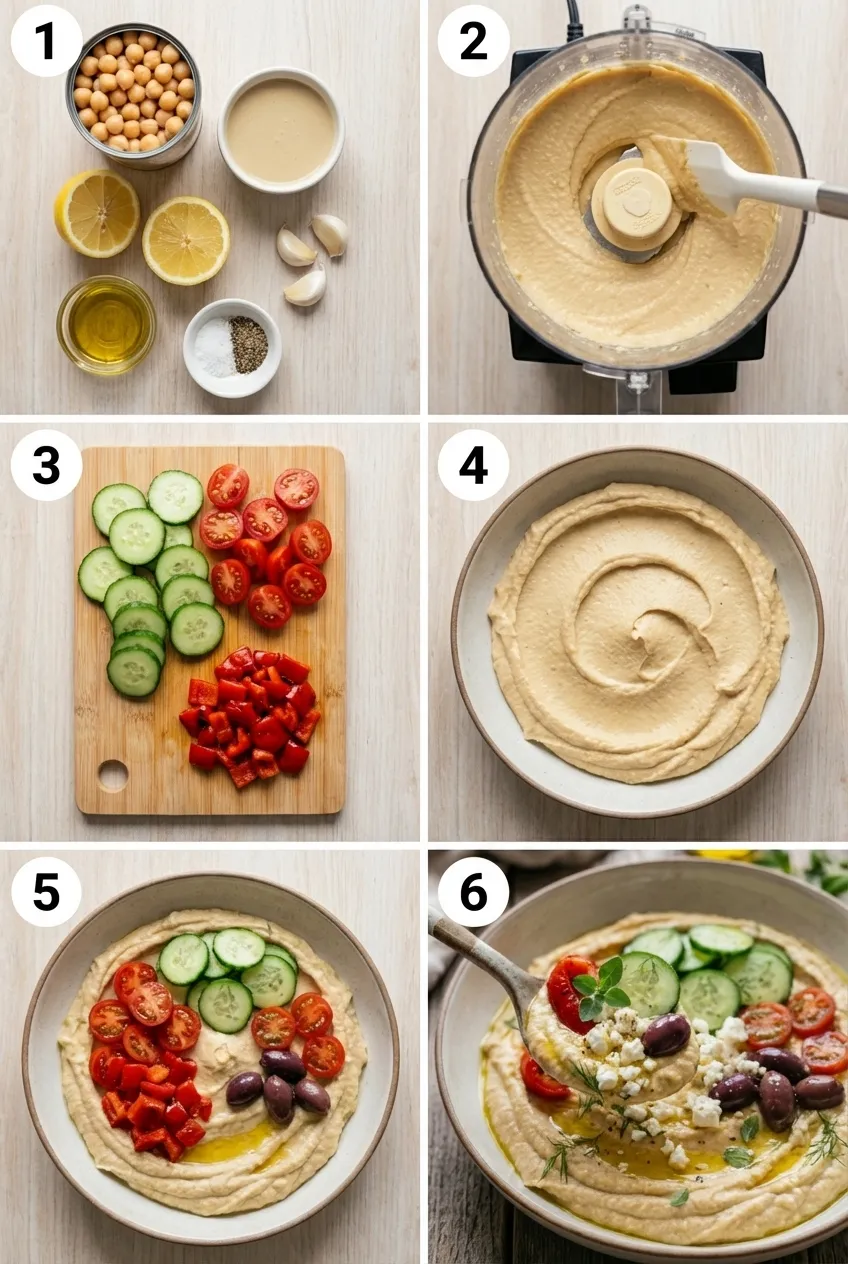
In a food processor, combine the chickpeas, tahini, lemon juice, minced garlic, 2 tablespoons of olive oil, and salt. Blend for 2-3 minutes, scraping down the sides as needed, until the mixture is completely smooth and creamy. Taste and adjust salt if necessary.
- Chop the Vegetables.
While the hummus blends, prepare your toppings. Slice the cucumber into thin rounds and cut the cherry tomatoes in half. Dice the roasted red peppers into small, even pieces. This ensures you get a good mix of flavors in every bite.
- Assemble the Bowl.
Divide the hummus and spread it evenly across the bottom of four bowls. Artfully arrange the sliced cucumbers, halved tomatoes, chopped roasted red peppers, and sliced kalamata olives over the hummus. Sprinkle the crumbled feta cheese evenly over the top.
- Garnish and Serve.
Drizzle the remaining tablespoon of olive oil over the assembled bowls. Finish with a sprinkle of freshly chopped parsley for a burst of color and fresh flavor. Serve immediately with warm pita bread or crunchy vegetables for dipping.
If you enjoy this dish, try our Baked Chicken Veggie Meal Prep for a perfect pairing or next-weeknight option.
Substitutions & Variations
- Add Spice. For a little heat, sprinkle a pinch of red pepper flakes or a dash of smoked paprika over the finished bowl.
- Boost the Flavor. Add 1/2 teaspoon of ground cumin to the hummus for a warmer, earthier flavor.
- Swap the Herbs. If you don’t have parsley, fresh dill or mint would also be delicious and add a different layer of freshness.
- Make it Dairy-Free. Omit the feta cheese or use a plant-based feta alternative to make this bowl dairy-free and vegan.
Make-Ahead, Storage & Reheat
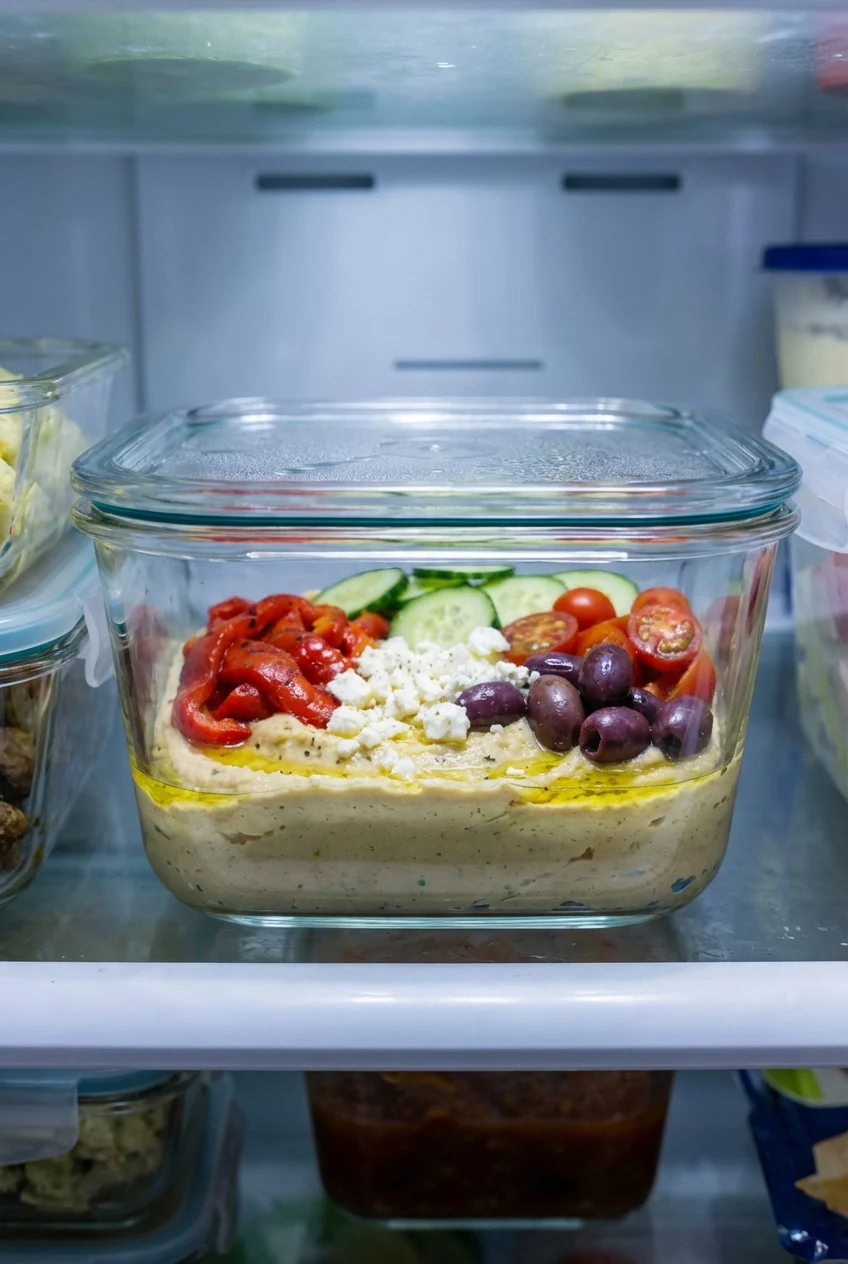
The hummus can be made up to 3 days in advance and stored in an airtight container in the refrigerator. The vegetables can also be chopped and stored separately. When ready to serve, simply assemble the bowls with the fresh toppings. Store any fully assembled leftovers in an airtight container in the refrigerator for up to 2 days, though the vegetables will soften slightly.
Nutrition
- Serving Size: 1 bowl (1/4 of total recipe)
- Calories: 350 kcal
- Protein: 10g
- Fat: 22g
- Carbohydrates: 28g
- Note: Estimates only.
FAQ
My hummus came out grainy. What went wrong and how can I fix this?
Graininess usually comes from chickpea skins. Blending for longer, up to 5-7 minutes, helps break them down. Adding ice water also creates a creamier emulsion.
Is using ice water really necessary for making creamy hummus at home?
Yes, it makes a significant difference. Cold water helps the tahini whip into a lighter, fluffier emulsion, which gives the final hummus its signature creamy texture.
How much do the quality of my chickpeas and tahini matter for results?
They matter quite a bit. A high-quality, runny tahini will blend smoother and taste less bitter. For chickpeas, using a good brand ensures a tender starting point.
What is the best way to adjust the hummus if it’s too thick or thin?
If it’s too thick, blend in more ice water one tablespoon at a time. If it's too thin, add a bit more tahini or a few more chickpeas to help thicken it back up.
Can I use a high-powered blender instead of a food processor for this?
A food processor is generally better because its wide base allows the thick mixture to circulate. A blender can work, but you may need to add more liquid to get it going.
Does the hummus taste better if I let it rest in the refrigerator?
Yes, letting it rest for a few hours or overnight allows the flavors to meld and deepen. The texture will also firm up, so let it sit out for a bit before serving.
Is it possible to make a large batch of this hummus and freeze some?
Yes, hummus freezes well. Store it in an airtight container with a thin layer of olive oil on top to prevent drying. Thaw it in the fridge and stir well before serving.
Should I serve this hummus bowl warm, chilled, or at room temperature?
Room temperature is usually best for flavor and texture. If it's coming straight from the fridge, let it sit out for about 20-30 minutes so it's not overly cold.
Equipment
- Food processor or high-powered blender
- Cutting board
- Chef’s knife
- Mixing bowl
- Spoon
Ingredients
- 400 g (1 15-ounce can) Canned chickpeas drained and rinsed
- 60 g (1/4 cup) Tahini
- 30 g (2 tbsp) Freshly squeezed lemon juice
- 6 g (2 cloves) Garlic minced
- 30 g (2 tbsp) Olive oil divided
- 3 g (1/2 tsp) Salt
- For the Toppings
- 200 g (1 medium) Cucumber sliced
- 150 g (1 cup) Cherry tomatoes halved
- 75 g (1/2 cup) Roasted red peppers chopped
- 50 g (1/3 cup) Kalamata olives pitted and sliced
- 75 g (1/2 cup) Feta cheese crumbled
- 15 g (1 tbsp) Fresh parsley chopped
- 15 g (1 tbsp) Olive oil for drizzling
Instructions
- Combine chickpeas, tahini, lemon juice, minced garlic, 2 tablespoons of olive oil, and salt in a food processor.
- Blend for 2-3 minutes, scraping down the sides as needed until the mixture is smooth and creamy.
- Taste and adjust salt if necessary.
- Slice the cucumber into thin rounds and halve the cherry tomatoes.
- Chop roasted red peppers into small pieces and slice kalamata olives.
- Divide the hummus evenly across the bottom of four bowls, creating a slight well in the center.
- Arrange cucumber, tomatoes, roasted red peppers, and olives on top of the hummus in distinct sections.
- Sprinkle crumbled feta cheese evenly over the bowl.
- Drizzle the remaining tablespoon of olive oil over the bowls.
- Garnish with freshly chopped parsley and serve immediately.
