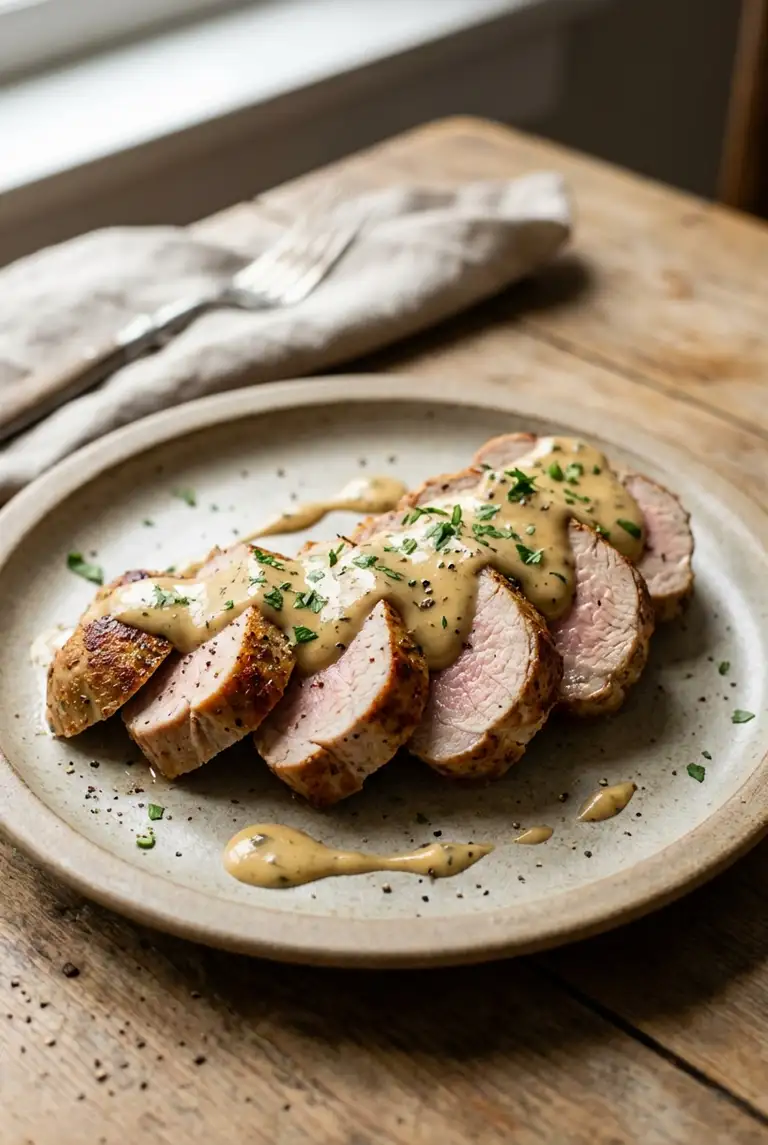
Pork tenderloin looks easy until you overcook it once or twice. It cooks fast, and the gap between juicy and dry is smaller than it seems. After testing this a few times, the most reliable move was pulling it at 140–145°F and letting it rest while the sauce finished. That kept the center tender instead of letting it turn firm and dry.
The other thing that mattered was the pan sauce. If the wine went in and the cream followed too quickly, the sauce tasted thin and a little sharp. Reducing the wine first fixed that. When the timing is right, you get thick slices of pork with browned edges and a sauce that stays on the meat instead of turning thin on the plate. The Dijon cuts through the cream, the shallot adds sweetness, and the thyme keeps the sauce from tasting flat.
A Few Details That Matter Here
- Searing the pork first builds a browned crust and leaves fond in the pan, which gives the sauce more depth than making the cream sauce separately.
- Reducing the wine before adding cream keeps the sauce from tasting watery or harsh.
- Dijon cuts through the cream, so the sauce stays balanced instead of feeling too heavy.
- Resting the pork while the sauce finishes keeps the meat juicy and gives the sauce time to tighten.
Ingredients for Pork Tenderloin with Mustard Cream Sauce
- 1 pork tenderloin (680g)
- 1 teaspoon kosher salt
- 1/2 teaspoon black pepper
- 1 tablespoon olive oil (15g)
- 1 tablespoon unsalted butter (15g)
- 1 shallot, finely chopped (40g)
- 2 garlic cloves, minced (10g)
- 1/2 cup dry white wine (120g)
- 1 cup heavy cream (240g)
- 2 tablespoons Dijon mustard (30g)
- 1 teaspoon fresh thyme leaves, or 1/2 teaspoon dried thyme
- 1 tablespoon chopped parsley (5g), for finishing
How to Make Pork Tenderloin with Dijon Cream Sauce
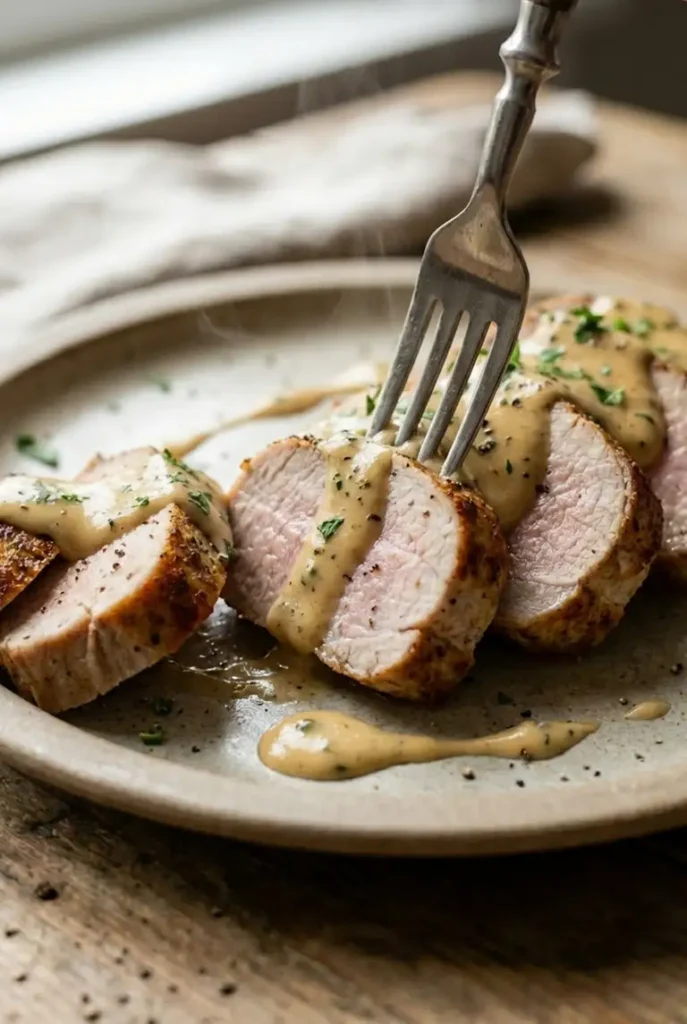
Step 1: Dry and season the pork tenderloin
- Pat the pork fully dry with paper towels until the towel no longer picks up visible moisture. Wet pork steams before it browns, and that costs you crust.
- Season all over with salt and pepper. If one end is much thinner than the rest, tuck it under a bit so the tenderloin cooks more evenly.
Step 2: Sear until deep golden brown
- Heat the olive oil in a large skillet over medium-high heat. When the oil shimmers and moves quickly across the pan, add the pork. It should sizzle immediately.
- Sear for 2 to 3 minutes per side, turning as needed, until the outside is deep golden brown, not pale blond. Don’t force it when turning; it should release easily when the crust is formed.
- Lower the heat if the pan starts smoking heavily. Start checking the internal temperature early. Pull the pork when the thickest part reaches 140–145°F. Transfer to a plate and rest for 5 to 10 minutes.
Step 3: Cook the shallots and garlic without burning them
- Reduce the heat to medium. Add the butter, then the shallot. Cook for 2 to 3 minutes, stirring, until soft and lightly golden.
- Add the garlic and thyme. Cook just until fragrant, about 20–30 seconds. Don’t let the garlic darken or the sauce can pick up bitterness.
Step 4: Deglaze the pan and reduce the wine
Pour in the white wine and scrape up the browned bits from the bottom of the skillet. Simmer for 2 to 4 minutes, until the wine looks slightly syrupy rather than watery.
This step is what keeps the finished sauce from tasting loose or sharp.
Step 5: Stir in cream and Dijon for a velvety sauce
- Lower the heat to medium-low. Stir in the heavy cream and Dijon mustard until smooth. Let the sauce come to a gentle simmer, never a rolling boil.
- Cook for 3 to 5 minutes, stirring often, until the sauce thickens enough that it leaves a clear line on the back of a spoon or briefly exposes the pan when you drag a spatula through it. Taste and adjust salt if needed.
A quick note on Dijon: some jars are sharper and saltier than others, so I usually start a little under the full amount and adjust at the end.
Step 6: Rest, slice, and spoon over the sauce
- Slice the rested pork into thick medallions. Spoon the warm sauce over the top just before serving.
- Avoid simmering the sliced pork in the sauce for long. It overcooks fast.
- Scatter parsley over the top and serve right away.
My Best Tips for a Juicy Pork Tenderloin and Smooth Pan Sauce
Best internal temperature for pork tenderloin
For this skillet pork tenderloin, I pull it at 140–145°F and let carryover heat finish the job during the rest. If you wait for it to hit final temperature in the pan, it usually overshoots.
How to tell when the Dijon cream sauce is thick enough
You want a sauce that drapes over the pork, not one that floods the plate. It should lightly cling to a spoon and hold a track for a second when stirred. If it still looks loose, give it another minute or two at a gentle simmer.
Wine substitutions for the pan sauce
A dry white wine works best here, something plain and crisp rather than sweet. If you don’t cook with wine, use chicken broth with a small squeeze of lemon at the end to replace some of that acidity.
Variations
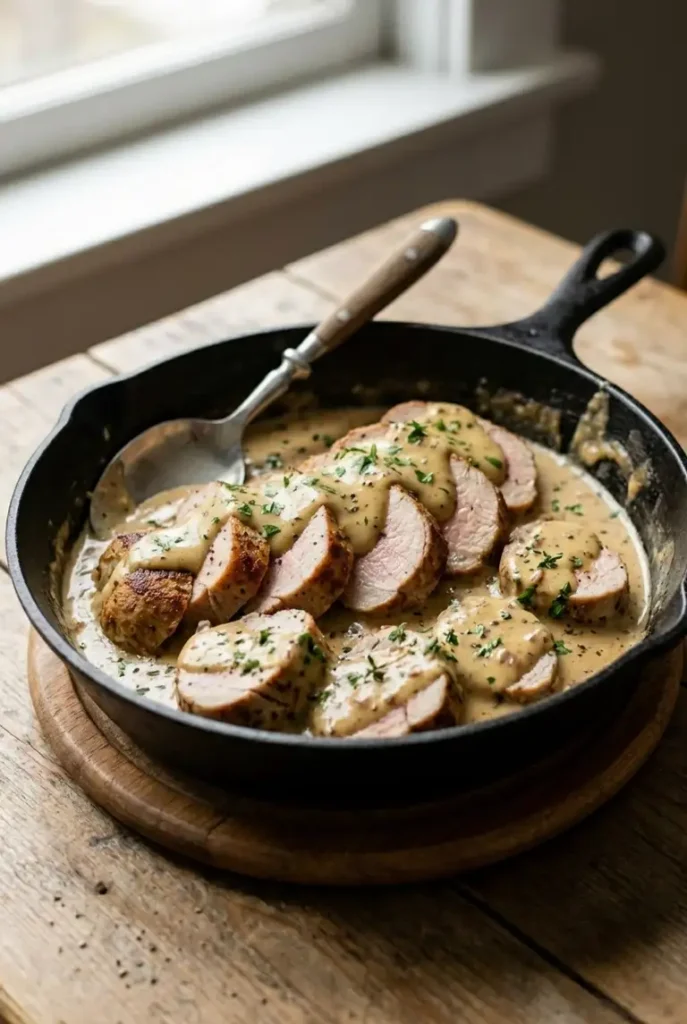
Pan-fried pork tenderloin with mustard sauce
This is the base recipe as written: fully stovetop, fast, with a browned crust and a quick pan sauce built in the same skillet.
Roasted pork tenderloin with Dijon cream sauce
If you prefer the oven, sear the pork first, then transfer it to a 400°F oven and roast until it reaches 140–145°F, usually 10 to 15 minutes depending on thickness.
Make the sauce on the stovetop while the pork rests. This works especially well if your tenderloin is thick or you want a little more control over the final stage of cooking.
What to Serve with Pork Tenderloin and Dijon Cream Sauce
Mashed potatoes, roasted potatoes, buttered noodles, or simple green beans all work well. The sauce is rich, so simpler sides make more sense than heavily seasoned ones.
For a side that catches the Dijon cream sauce without competing with it, this Creamy Garlic Butter One Pan Orzo is a good pairing.
For another dinner built around a pan sauce, try this Chicken and Potatoes with Pan Gravy next.
If pork is already in your weeknight rotation, this Slow Cooker Brown Sugar Balsamic Pork gives you a completely different flavor profile.
How to Store and Reheat Leftovers
Store leftover pork and sauce in an airtight container in the refrigerator for up to 3 days.
Reheat gently in a skillet over low heat or in short microwave bursts. Add a small splash of cream, milk, or broth if the sauce has tightened in the fridge. Don’t reheat it hard or the sauce can separate and the pork can turn firm.
Nutrition
- Serving size: approximately 1/4 of the total recipe
- Calories: 474 kcal
- Protein: 31g
- Fat: 36g
- Carbohydrates: 5g
Per 100g: Calories: 182 kcal, Protein: 12g, Fat: 14g, Carbohydrates: 2g.
These nutritional values are approximate and can vary based on the specific ingredients and brands used.
FAQ
Why did my Dijon cream sauce separate or look oily?
Usually the wine needed a little more time to reduce, or the sauce got too hot after the cream went in. Keep it at a gentle simmer and stir regularly. If it starts to look split, lower the heat and whisk in a small spoonful of cream.
Can I make this pork tenderloin without white wine?
Yes. Use chicken broth instead. The sauce will be a little less sharp and more straightforward, but still balanced. A small squeeze of lemon at the end helps cut the richness.
Can I use pork loin or pork chops instead of pork tenderloin?
You can use pork chops with only minor adjustments; just cook them to temperature and continue with the sauce as written.
Pork loin is different. It’s larger, takes longer, and won’t cook evenly with this exact skillet timing. If using pork loin, roast it separately and make the sauce in a skillet.
Can I use the oven instead of cooking the tenderloin fully on the stovetop?
Yes. Sear it on the stove, then finish in a 400°F oven until it reaches 140–145°F. That’s a good option if the tenderloin is thick or if you want a little less active time at the stove.
Equipment
- Large skillet
- Tongs
- Cutting board
- Chef’s knife
- Paper towels
- Small bowl
- Meat thermometer
Ingredients
- 1 whole Pork tenderloin (680g)
- 1 tsp Kosher salt
- 1/2 tsp Black pepper
- 1 Tbsp Olive oil (15g)
- 1 Tbsp Unsalted butter (15g)
- 1 whole Shallot finely chopped (40g)
- 2 cloves Garlic minced (10g)
- 1/2 cup Dry white wine (120g)
- 1 cup Heavy cream (240g)
- 2 Tbsp Dijon mustard (30g)
- 1 tsp Fresh thyme leaves or 1/2 tsp dried thyme
- 1 Tbsp Chopped parsley (5g), for finishing
Instructions
- Pat the pork tenderloin fully dry with paper towels; season evenly with kosher salt and black pepper. If one end is thinner, tuck it under for even cooking.
- Heat olive oil in a large skillet over medium-high heat until shimmering. Add pork and sear 2 to 3 minutes per side until deep golden brown. Lower heat if pan smokes. Pull pork when internal temp reaches 140–145°F and transfer to plate to rest 5 to 10 minutes.
- Reduce heat to medium; add unsalted butter and shallot. Cook 2 to 3 minutes until soft and lightly golden, stirring. Add garlic and thyme and cook 20 to 30 seconds until fragrant; do not brown garlic.
- Pour in white wine; scrape browned bits from pan. Simmer for 2 to 4 minutes until wine is slightly syrupy.
- Lower heat to medium-low; stir in heavy cream and Dijon mustard until smooth. Bring to gentle simmer (not a boil) and cook 3 to 5 minutes until sauce thickens and leaves a clear line on spoon. Adjust salt if needed.
- Slice rested pork into thick medallions. Spoon warm sauce over pork and sprinkle with chopped parsley. Serve immediately; avoid simmering pork in sauce to prevent overcooking.
