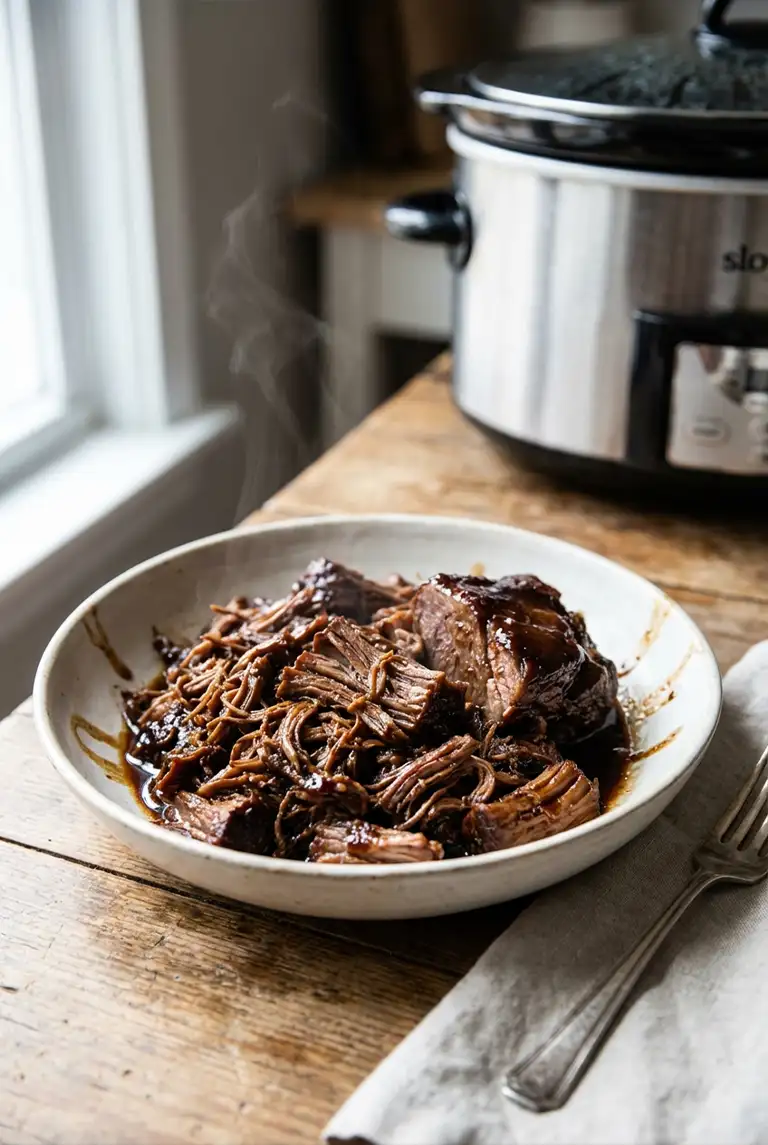
This is the kind of slow cooker pork that gets better once you finish it properly at the end. At the start, the sauce tastes sharp and a little sweet, and it does not seem especially impressive. But after hours in the slow cooker, the balsamic softens, the garlic mellows, and the pork gives the sauce enough richness to turn it into something deeper and more balanced.
I like to shred the pork while it is still warm, then toss it back with just enough reduced sauce to coat the meat. That gives you tender strands, a few larger pieces for texture, and a glaze that actually clings instead of pooling at the bottom.
Why This Recipe Works
- Pork shoulder has enough fat and connective tissue to stay moist over a long cook. As it breaks down, it gives the sauce body and keeps the shredded meat from turning dry.
- The sauce uses balsamic vinegar, soy sauce, garlic, and brown sugar in a ratio that cooks down into balance. The sugar rounds out the vinegar, while soy brings salt and savoriness so the glaze doesn’t taste one-note sweet.
- Reducing the cooking liquid separately after the pork is done gives you control. Instead of a thin crockpot sauce, you can simmer it until it actually coats the meat.
- Adding the glaze back gradually keeps the pork coated rather than flooded. With shredded meat, that distinction matters; it goes from juicy to soupy fast.
Ingredients for Slow Cooker Balsamic Pork
- 1 boneless pork shoulder or pork butt roast (1360g to 1815g)
- 1 teaspoon kosher salt
- 1/2 teaspoon black pepper
- 1 teaspoon garlic powder
- 1 tablespoon olive oil
- 1 cup balsamic vinegar (240g)
- 1/2 cup low-sodium soy sauce (120g)
- 1/2 cup packed brown sugar (110g)
- 4 cloves garlic, minced
- 2 tablespoons tomato paste (30g)
- 1 tablespoon Worcestershire sauce
- 1/2 teaspoon red pepper flakes, optional
Best Cut for Slow Cooker Balsamic Pork Roast
Can You Use Pork Butt, Shoulder, or a Pork Roast?
Pork shoulder or pork butt is the best choice here. It has enough fat and internal marbling to hold up over 6 to 8 hours in the slow cooker without drying out.
If your package says “pork roast,” check the cut. A shoulder roast works well. A pork loin roast is much leaner and won’t shred the same way. Tenderloin is not a good substitute for this method; it cooks too quickly and dries out before the sauce has time to mellow.
Trim only the thick, waxy cap of exterior fat. Leave the interior marbling alone. That’s what keeps the finished pork soft instead of stringy.
How to Make Brown Sugar Balsamic Pork in the Slow Cooker
Do You Need to Sear the Pork First?
No, not for this recipe. You can sear it if you want extra browned flavor, but it’s not necessary. The sauce brings enough depth that skipping the skillet is a reasonable trade-off on a busy day.
Low vs. High: Best Slow Cooker Setting for Pork Shoulder
Low is better if you have the time. It gives the connective tissue longer to soften and usually gives you a more even texture. High works, but start checking earlier so the outer layers don’t overcook while the center catches up.
- Pat the pork dry with paper towels until the surface no longer looks damp. Trim off any thick, waxy exterior fat. Season all over with salt, pepper, and garlic powder.
- In a bowl or large measuring cup, whisk together the balsamic vinegar, soy sauce, brown sugar, minced garlic, tomato paste, Worcestershire sauce, and red pepper flakes, if using. Whisk until the brown sugar is mostly dissolved and no dry clumps remain.
- In a bowl or large measuring cup, whisk together the balsamic vinegar, soy sauce, brown sugar, minced garlic, tomato paste, Worcestershire sauce, and red pepper flakes, if using. I like a free-flowing brown sugar here because it dissolves faster and makes the sauce easier to mix evenly. Whisk until the sugar is mostly dissolved and no dry clumps remain.
- Place the pork in the slow cooker. Pour the sauce around and over it. The liquid should come partway up the sides of the pork, not fully cover it.
- Cover and cook on LOW for 6 to 8 hours or on HIGH for 4 to 5 hours.
- Start checking at 6 hours on LOW or 4 hours on HIGH. The pork is ready when a fork twists easily in the thickest part without springy resistance. If it still feels tight, keep cooking in 30- to 45-minute increments.
How to Know When the Pork Is Ready to Shred
- When it’s done, the roast will look slightly collapsed and the muscle lines will start separating on their own. Lift one side with tongs; it should feel very soft, not firm.
- Transfer it to a cutting board or rimmed baking sheet and let it rest for 5 to 10 minutes before shredding.
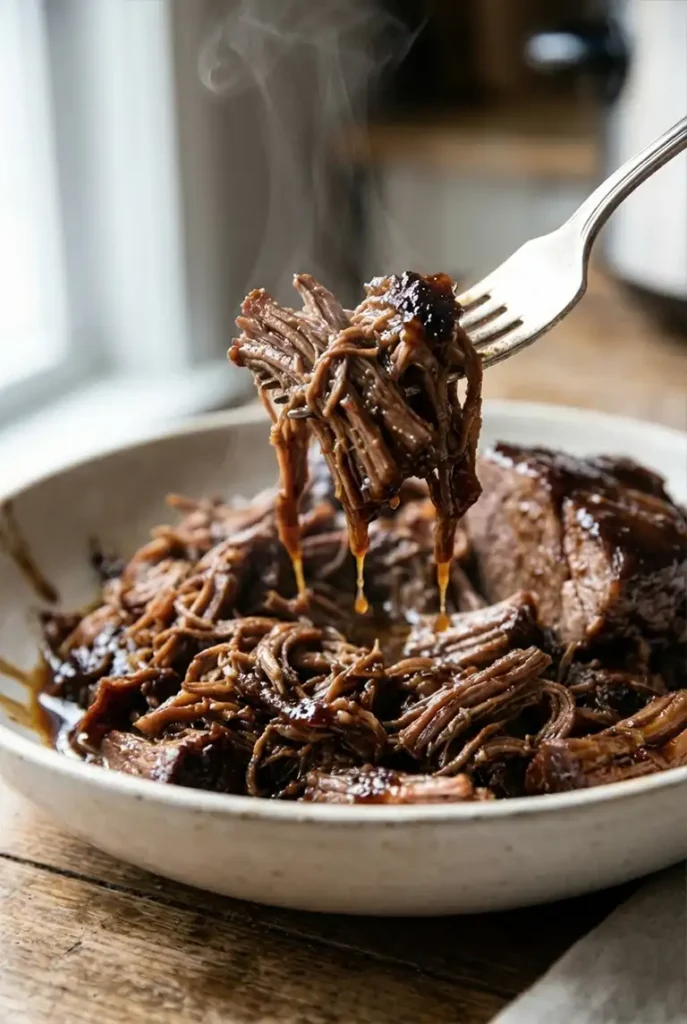
- Shred with two forks, but don’t reduce it to fine threads. Leave some larger tender chunks for better texture. The best final texture is juicy and strandy, with some larger tender chunks mixed in.
How to Thicken the Balsamic Sauce Into a Glaze
- Pour the cooking liquid into a saucepan. Let it settle for a minute, then skim visible fat from the top for a cleaner glaze.
- Bring the sauce to a simmer over medium heat and cook for 8 to 15 minutes, stirring occasionally, until it coats the back of a spoon and leaves a clear line when you run a finger through it. It should look glossy, not watery.
- Add the shredded pork back to the slow cooker or a large bowl and spoon in the glaze gradually. Toss until the pork is coated and glossy, not soupy. You may not need every drop.
Serving Ideas for Balsamic Pulled Pork
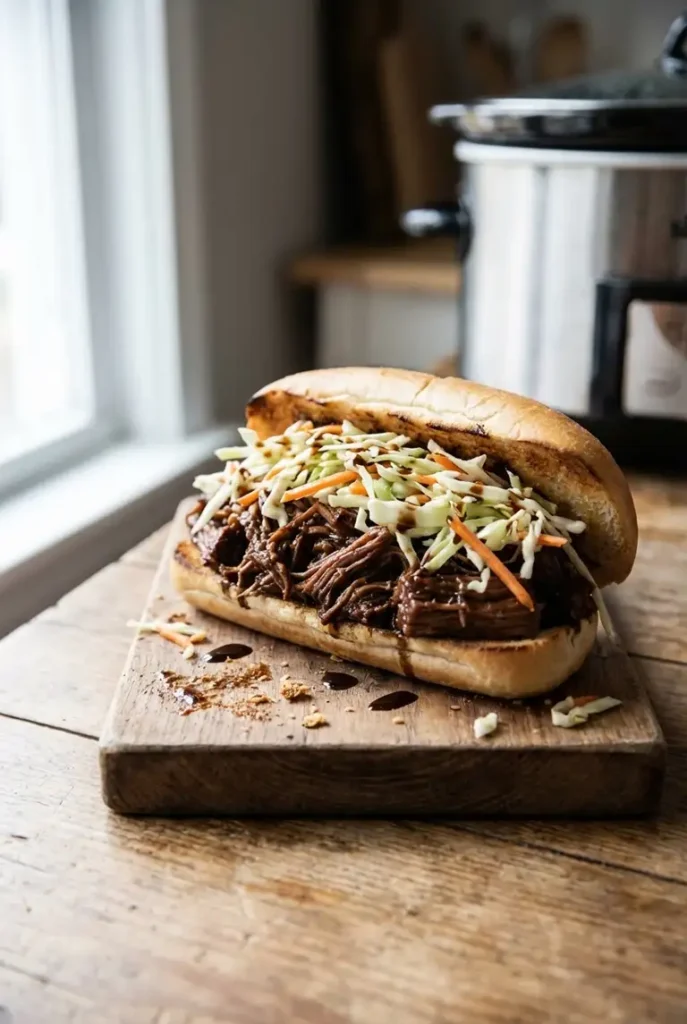
This works best with sides that can stand up to the glaze.
- Spoon it over mashed potatoes or buttered rice.
- Pile it into toasted sandwich rolls.
- Serve it with roasted green beans or a sharp slaw to cut the richness.
If you’re serving this as a sandwich, a slice of warm Sourdough Discard Focaccia makes a great base for the extra balsamic glaze.
For a full dinner plate, pair the pork with Creamy Garlic Butter One Pan Orzo to balance the tangy sauce with something rich and mild.
If you want the same flavor profile in another easy dinner, my Crockpot Balsamic Chicken uses the same sweet-sharp balsamic idea in a lighter format.
Honey Balsamic Version
Replace 2 tablespoons of the brown sugar with 2 tablespoons honey. The sauce comes out a little rounder and less molasses-heavy. Keep the rest of the recipe the same.
Balsamic Pork Roast Style Instead of Shredded
If you want more of a slow cooker balsamic pork roast presentation, cook the pork until tender but not falling apart, then cut or pull it into large chunks instead of fine shreds. Spoon the reduced glaze over the top before serving. This works especially well with mashed potatoes or polenta.
Storage, Reheating, and Freezing Tips
- Store cooled pork with some of the glaze in an airtight container in the refrigerator for up to 4 days.
- Reheat gently on the stove or in the microwave with a spoonful of water or extra sauce so the sugars don’t tighten and make the meat sticky.
- Freeze for up to 3 months in a sealed container or freezer bag. Thaw overnight in the refrigerator before reheating.
Nutrition
- Serving size: approximately 1/6 of the total recipe
- Calories: 467 kcal
- Protein: 42g
- Fat: 22g
- Carbohydrates: 20g
- Per 100g: Calories: 164 kcal, Protein: 15g, Fat: 8g, Carbohydrates: 7g.
Estimates only.
Slow Cooker Balsamic Pork FAQs
Can I skip searing the pork first?
Yes. The recipe still works without it, and the pork will still turn tender enough to shred. But if you have the extra 10 minutes, searing is worth it because it gives the finished meat a deeper flavor and helps the sauce taste less flat.
Why is the sauce so thin when the pork is done?
That is normal. Pork releases a lot of liquid in the slow cooker, so the sauce always needs a few minutes on the stove at the end. Simmer it until it thickens enough to coat a spoon, then add it back a little at a time so the pork stays glazed instead of sitting in a puddle.
Can I use pork loin instead of pork shoulder?
You can, but the result will be different. Pork loin is much leaner, so it will not stay as juicy and it will not shred the same way. This recipe works best with pork shoulder or pork butt because the fat and connective tissue break down slowly and give you that softer texture.
Can I make this slow cooker balsamic pork ahead of time?
Yes, and it reheats well. Store the shredded pork and reduced sauce together so the meat does not dry out in the fridge. When you reheat it, warm it gently and add a splash of water only if it looks too thick.
Slow Cooker Brown Sugar Balsamic Pork
Equipment
- Slow cooker
- Large bowl
- Whisk
- Cutting board
- Tongs
- Saucepan
- Forks
Ingredients
- 1 piece Boneless pork shoulder or pork butt roast (1360g to 1815g)
- 1 teaspoon Kosher salt
- 1/2 teaspoon Black pepper
- 1 teaspoon Garlic powder
- 1 tablespoon Olive oil
- 240 g (1 cup) Balsamic vinegar
- 120 g (1/2 cup) Low-sodium soy sauce
- 110 g (1/2 cup packed) Brown sugar
- 4 cloves Garlic minced (12g)
- 2 tablespoons Tomato paste (30g)
- 1 tablespoon Worcestershire sauce
- 1/2 teaspoon Red pepper flakes optional
Instructions
- Pat the pork dry with paper towels until no longer damp. Trim off thick, waxy exterior fat. Season all over with kosher salt, black pepper, and garlic powder.
- In a bowl or large measuring cup, whisk together balsamic vinegar, soy sauce, brown sugar, minced garlic, tomato paste, Worcestershire sauce, and red pepper flakes if using. Whisk until brown sugar is mostly dissolved with no dry clumps.
- Place the pork in the slow cooker. Pour the sauce around and over the pork so liquid comes partway up the sides but does not cover it.
- Cover and cook on LOW for 6 to 8 hours or on HIGH for 4 to 5 hours.
- Check pork at 6 hours LOW or 4 hours HIGH. The pork is ready when a fork twists easily with no springy resistance. If tight, continue cooking in 30- to 45-minute increments.
- When done, pork will look slightly collapsed and muscle lines will begin separating. Transfer to a cutting board and rest for 5 to 10 minutes.
- Shred pork with two forks, leaving some larger tender chunks. Do not shred into fine threads; aim for juicy and strandy texture.
- Pour cooking liquid into a saucepan. Let settle, then skim off visible fat for a cleaner glaze.
- Simmer sauce over medium heat for 8 to 15 minutes, stirring occasionally, until it coats the back of a spoon and leaves a clear line when you run a finger through it. Sauce should look glossy, not watery.
- Add shredded pork back to slow cooker or large bowl. Gradually spoon in the glaze and toss until pork is coated and glossy but not soupy. Use as much glaze as needed.
