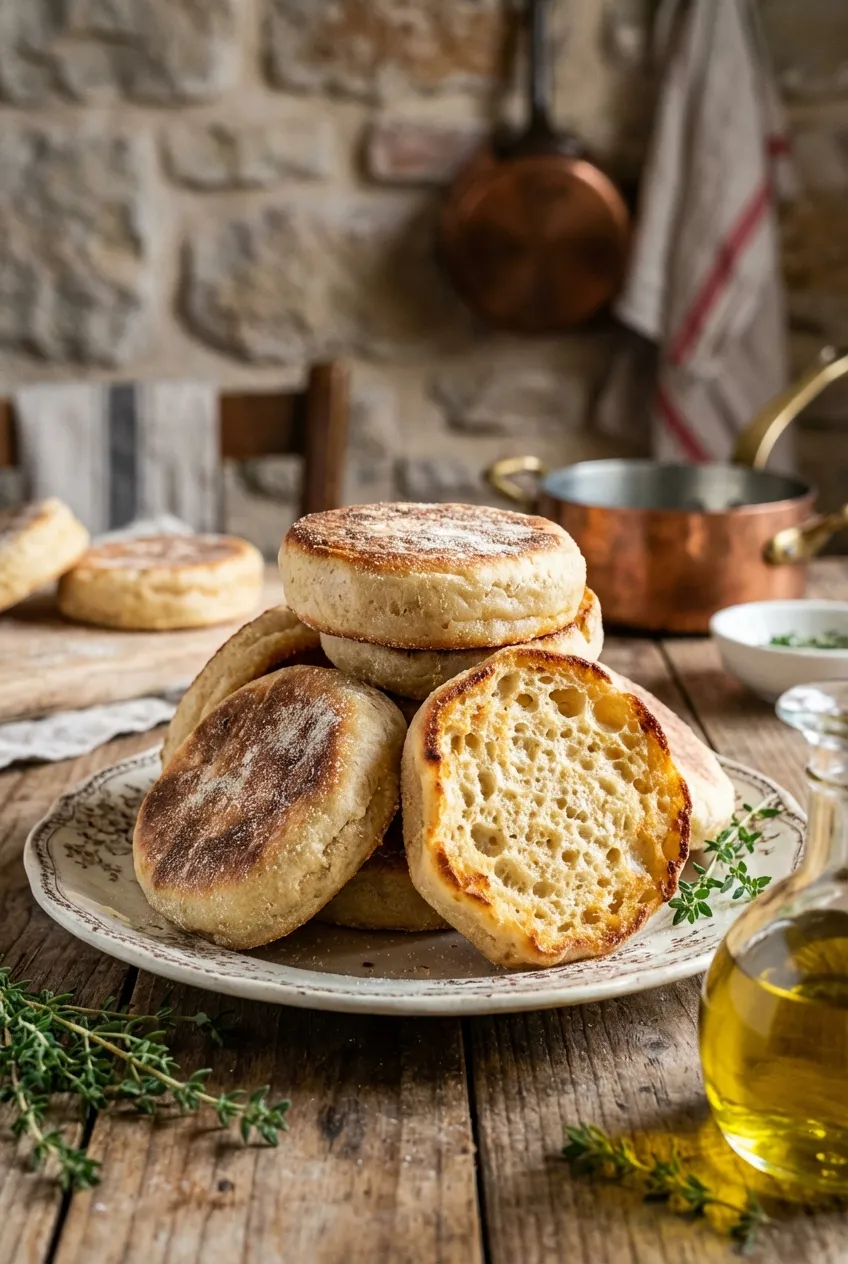
I love finding practical ways to use up sourdough discard, and these English muffins have become a weekend staple in my kitchen. There’s something deeply satisfying about transforming what would be waste into a warm, chewy breakfast, especially on a cool autumn morning. This recipe is straightforward and reliable, giving you those classic nooks and crannies perfect for holding melted butter.
What makes this recipe so dependable is the combination of discard for flavor and instant yeast for a consistent rise. It’s the best of both worlds. The dough is soft and easy to handle, and cooking them on a skillet gives them that signature crisp exterior and tender interior. They’re a wonderful project for any home baker looking to add a new skill to their repertoire.
Mastering Your Sourdough Discard
The character of your sourdough discard plays a big role in the final muffin. A starter with higher hydration (more water than flour by weight) will yield a stickier dough and a more open, tender crumb. A stiffer, lower-hydration starter will create a dough that’s easier to handle but may result in a slightly denser muffin. For the best flavor, use discard that is no more than a week old and has been stored in the refrigerator. A lively, well-maintained starter, even when unfed, contributes a mild tang that deepens the flavor without making the muffins overtly sour. Regular feedings when you are activating your starter ensure it stays healthy and ready to contribute great flavor to recipes like this.
Perfecting the Griddle Technique
The key to a perfectly cooked English muffin—golden-brown outside, fully baked inside—is careful heat management. A cast-iron skillet is ideal for its even heat retention. Preheat your skillet over medium-low heat; too high, and the exterior will burn before the center cooks through. You’ll know the temperature is right when a drop of water sizzles gently, not aggressively. Cooking them for 6–8 minutes per side is a reliable window, but always watch for visual cues. The muffins should rise and feel firm to the touch. Using ring molds helps them keep a uniform shape, but they cook just as well without them.
Creative Flavor Additions
While classic English muffins are fantastic on their own, the dough is a wonderful canvas for other flavors. For a savory twist, try kneading in 1 tablespoon of finely chopped fresh herbs like rosemary or thyme along with the flour. For extra texture and nutty flavor, sprinkle the tops with sesame seeds or poppy seeds just before cooking. You could even add a teaspoon of cinnamon and a tablespoon of raisins to the dry ingredients for a sweet variation perfect for toasting. These additions are simple but effectively customize the muffins to your taste.
Recipe Overview
- Prep Time: 15 mins
- Cook Time: 20 mins
- Total Time: 1 hr 15 mins (including resting time)
- Servings: makes 12 muffins
- Difficulty: Medium
Ingredients

- 240g (1 cup) unfed sourdough starter discard
- 240g (2 cups) all-purpose flour
- 240g (1 cup) warm milk
- 28g (2 tbsp) unsalted butter, melted
- 12g (1 tbsp) sugar
- 9g (1 tbsp) instant yeast
- 5g (1 tsp) salt
- Cornmeal, for dusting
Step-By-Step Instructions
- Prepare the Dough
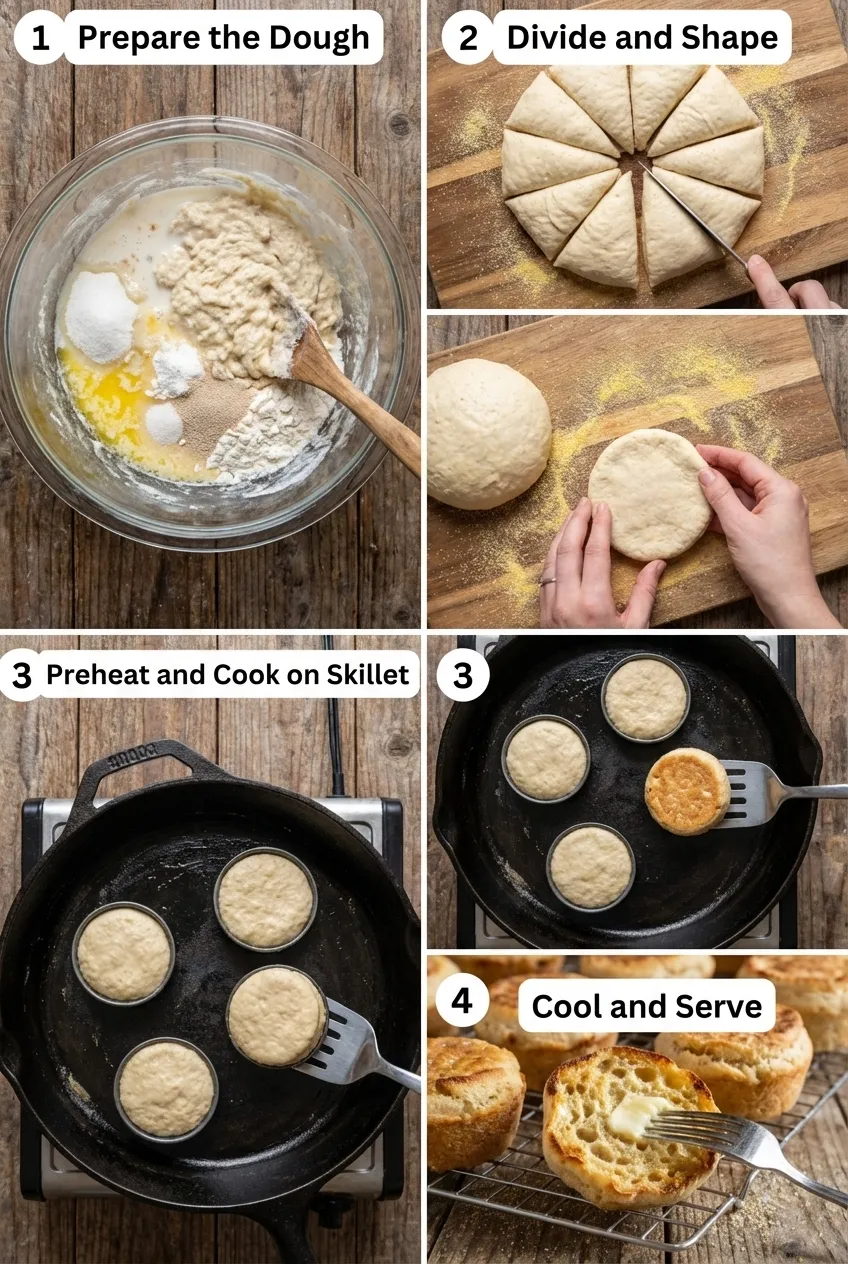
In a large bowl, whisk together the sourdough discard, warm milk, and melted butter until combined. Add the all-purpose flour, sugar, salt, and instant yeast. Mix until a sticky dough forms, then knead on a lightly floured surface for 5 minutes until it becomes smooth and elastic. Cover the bowl and let the dough rise in a warm place for 1 hour, or until it has doubled in size.
- Divide and Shape
Turn the risen dough out onto a surface lightly dusted with flour and knead it gently a few times. Divide the dough into 12 equal pieces, which should be about 70 grams each. Shape each piece into a flat, round disk. Place the rounds on a baking sheet generously dusted with cornmeal, cover them loosely, and let them rest for 30 minutes.
- Preheat and Cook on Skillet
Heat a large skillet or griddle over medium-low heat. If you are using ring molds, lightly grease them and place them in the skillet to heat up. Place the dough rounds into the skillet (or inside the molds). Cook for 6–8 minutes on the first side, until the bottom is golden brown. Flip carefully and cook for another 6–8 minutes on the second side until cooked through.
- Cool and Serve
Remove the finished English muffins from the skillet and transfer them to a wire rack to cool completely. Once cooled, split them with a fork to preserve the interior texture. Serve with your favorite toppings.
If you enjoy this dish, try our Homemade Cookies from Scratch for a perfect pairing or next-weeknight option.
Substitutions & Variations
- Dairy-Free Version: Swap the whole milk with an equal amount of unsweetened almond milk or oat milk and use a plant-based butter.
- Ring Mold Alternative: If you don’t have English muffin rings, the metal rings from wide-mouth mason jar lids work well as a substitute.
- Flour Swap: For a heartier texture, replace up to half of the all-purpose flour with whole wheat flour.
Make-Ahead, Storage & Reheat

Store cooled English muffins in an airtight container at room temperature for up to 3 days. For longer storage, freeze them in a freezer-safe bag for up to 2 months. To reheat, split and toast them directly from the freezer or from room temperature until warm and crisp.
Nutrition
- Serving Size: 1 muffin
- Per Serving: 200 calories, 4g protein, 5g fat, 36g carbohydrates
- Per 100g: 220 calories, 5g protein, 6g fat, 40g carbohydrates
- Estimates only.
FAQ
Why is the dough for these English muffins so wet and sticky to handle?
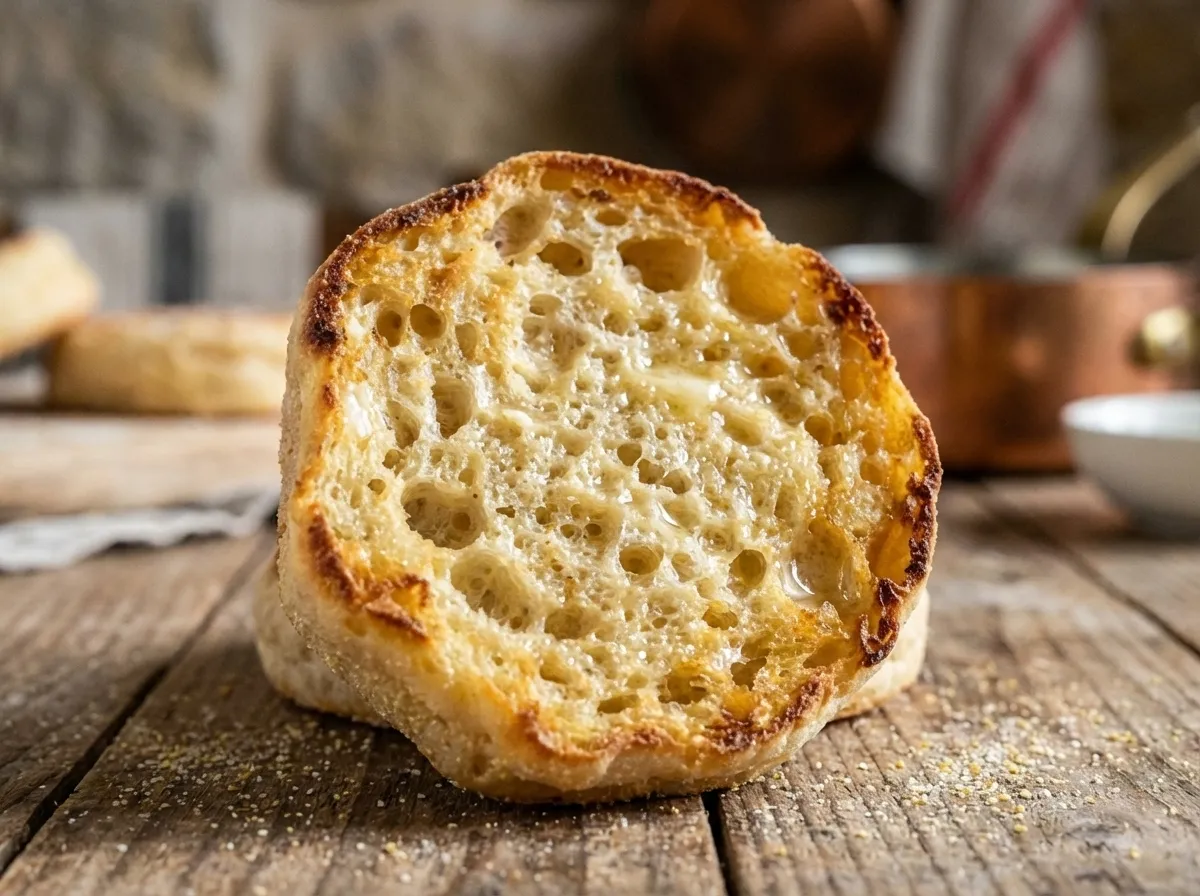
This is a high-hydration dough, which is intentional. That stickiness is what creates a light, airy crumb with plenty of nooks and crannies once the muffins are cooked.
My muffins are burning on the outside but still raw inside. What's wrong?
Your griddle is likely too hot. Lower the heat to medium-low. This allows the muffins to cook through to the center slowly without scorching the top and bottom surfaces.
How can I tell if my sourdough discard is too old to use for this recipe?
Your discard should smell pleasantly sour, not sharp or funky. If it has a layer of dark liquid (hooch), you can stir it in or pour it off for a milder flavor.
Can I make these muffins with active starter instead of using discard?
Yes, you can. Your dough will likely rise faster, so watch it closely. Using active starter also adds a more pronounced tang, giving the muffins a stronger sourdough flavor.
My finished English muffins have a dense or slightly gummy texture. Why?
Gummy texture often means they were undercooked. Cook on a lower heat for a bit longer to ensure the center is fully cooked before the outside gets too dark.
What is the best technique for splitting muffins to get nooks and crannies?
Use a fork to gently pry the muffin apart around its equator. A knife will slice through the delicate air pockets, which ruins the texture you worked to create.
Can I double this recipe, and what is the best way to freeze the extras?
This recipe scales well. Let the cooked muffins cool completely before freezing in an airtight bag. Reheat by splitting and toasting them directly from the freezer.
What should I do if my dough isn’t rising much after the first hour?
Sourdough discard works slowly. Find a warmer spot in your kitchen and give it more time. The discard needs a cozy environment to get the fermentation process going.
Sourdough Discard English Muffins
Equipment
- Large mixing bowl
- Large skillet or griddle
- Ring molds (optional)
- Baking sheet
- Wire rack
- Measuring cups and spoons
Ingredients
- 240 g (1 cup) Unfed sourdough starter discard
- 240 g (2 cups) All-purpose flour
- 240 g (1 cup) Warm milk
- 28 g (2 tbsp) Unsalted butter melted
- 12 g (1 tbsp) Sugar
- 9 g (1 tbsp) Instant yeast
- 5 g (1 tsp) Salt
- Cornmeal for dusting
Instructions
- In a large bowl, whisk together the sourdough discard, warm milk, and melted butter until combined.
- Add the all-purpose flour, sugar, salt, and instant yeast and mix until a sticky dough forms.
- Knead the dough on a lightly floured surface for 5 minutes until smooth and elastic.
- Cover the bowl and let the dough rise in a warm place for 1 hour, or until doubled in size.
- Turn the risen dough onto a lightly floured surface and knead gently a few times.
- Divide the dough into 12 equal pieces, about 70 grams each, and shape each into a flat, round disk.
- Place the rounds on a baking sheet generously dusted with cornmeal, cover loosely, and let rest for 30 minutes.
- Heat a large skillet or griddle over medium-low heat and grease ring molds if using.
- Place dough rounds into the skillet or molds and cook 6–8 minutes on the first side until golden brown.
- Flip carefully and cook another 6–8 minutes on the second side until cooked through.
- Remove muffins to a wire rack to cool completely, then split with a fork to preserve the interior texture.
- Serve with your favorite toppings.
