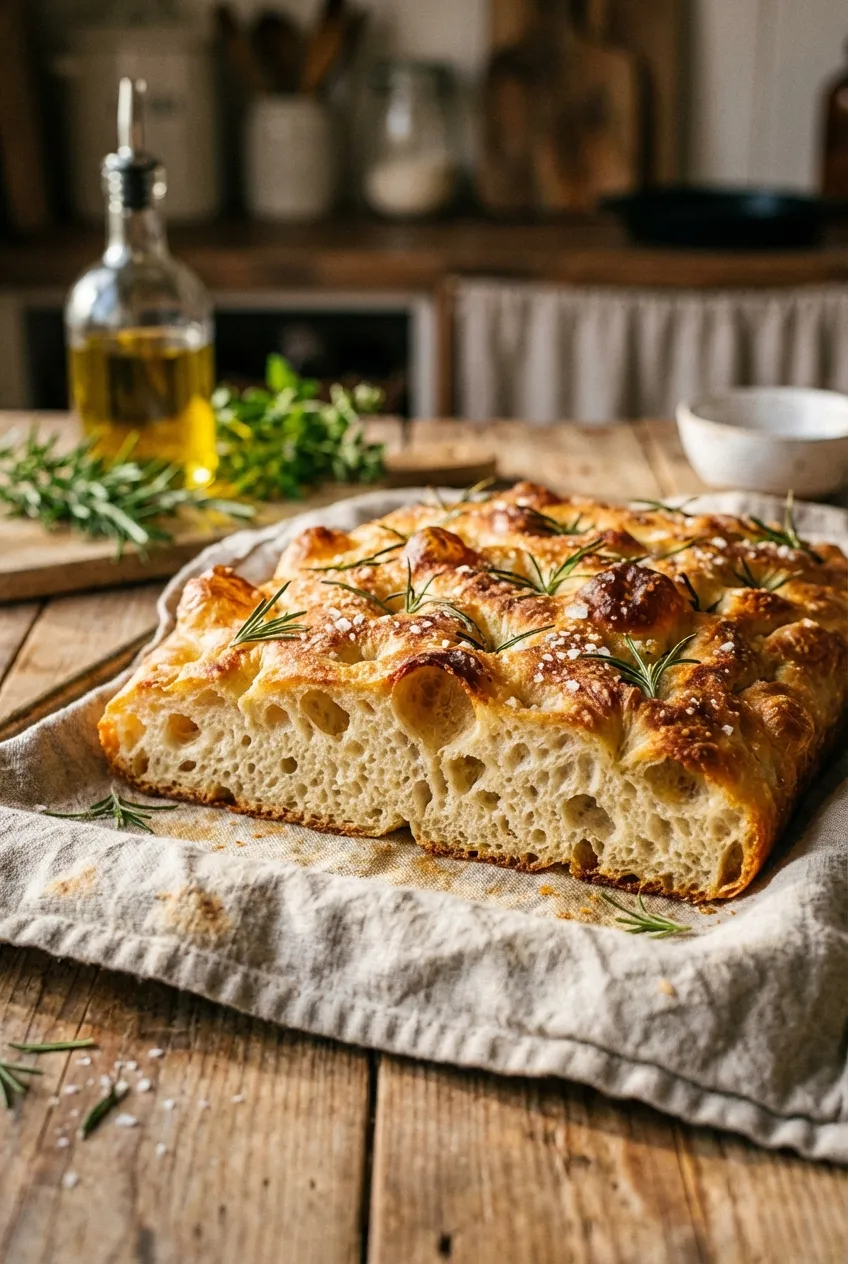
I always feel a little pang of guilt when I have to toss sourdough discard, so recipes that put it to good use are staples in my kitchen. This Sourdough Discard Focaccia is one of my favorites for its simplicity and incredible flavor. It’s a wonderful project for a slow weekend afternoon, filling the house with the comforting aroma of baking bread.
This recipe delivers a rustic, chewy focaccia with an open crumb and a crisp, golden crust, all without requiring a fed, active starter. The discard adds a subtle tang that deepens the flavor, while a generous amount of olive oil and fresh rosemary makes it completely irresistible.
Mastering the Perfect Texture
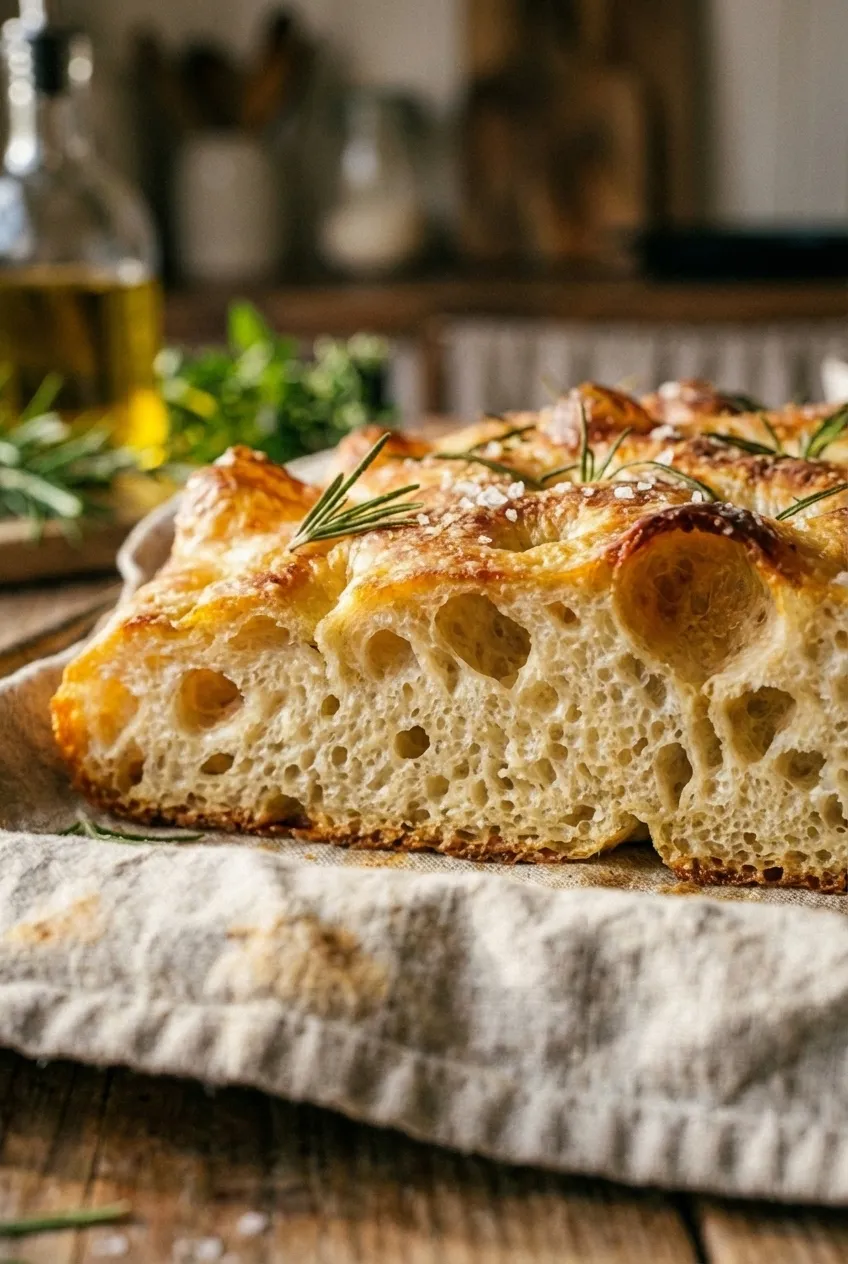
Achieving that classic airy, open crumb in focaccia is all about proper hydration and patience. This dough is relatively high in hydration, which means it’s a bit sticky, but that water content is what creates steam during baking, leading to those beautiful, irregular holes. Don’t be tempted to add too much extra flour. The key is giving the dough enough time to rise. The long, slow proofing—four hours in total—allows the yeast and the wild yeasts in the discard to fully develop, creating the gas bubbles that give the finished bread its light, chewy structure.
Infusing with Aromatics
The right toppings are what transform a simple flatbread into a memorable focaccia. Here, we use fresh rosemary and coarse sea salt, a classic combination for good reason. The resinous, piney notes of the rosemary infuse the olive oil as it bakes, flavoring the crust from the top down. To get the most from your herbs, don’t just sprinkle them on top. After dimpling the dough, gently press the chopped rosemary into the surface. This small step helps prevent the herbs from burning and ensures their aromatic oils penetrate deeper into the bread.
Troubleshooting Common Issues
If your focaccia turns out dense or doesn’t rise well, a couple of factors could be at play. First, check your yeast. Before mixing the dough, make sure your yeast bubbles and becomes foamy in the lukewarm water; this confirms it’s active. Second, room temperature plays a huge role in proofing. If your kitchen is cool, the dough will take much longer to double in size. Find a consistently warm, draft-free spot for it to rise, like inside an off oven with the light on. An under-proofed dough won’t have the necessary gas built up to create an airy crumb.
Recipe Overview
- Prep Time: 20 minutes
- Cook Time: 25 minutes
- Total Time: 5 hours
- Servings: 8 servings
- Difficulty: Medium
Ingredients

- 240g (1 cup) unfed sourdough starter discard
- 240g (2 cups) all-purpose flour
- 180g (3/4 cup) lukewarm water
- 60g (1/4 cup) olive oil, divided
- 9g (1 1/2 teaspoons) salt
- 3g (1 teaspoon) active dry yeast
- 6g (2 tablespoons) fresh, chopped rosemary
- 10g (1 tablespoon) coarse sea salt, for topping
Step-By-Step Instructions
- Activate the Yeast
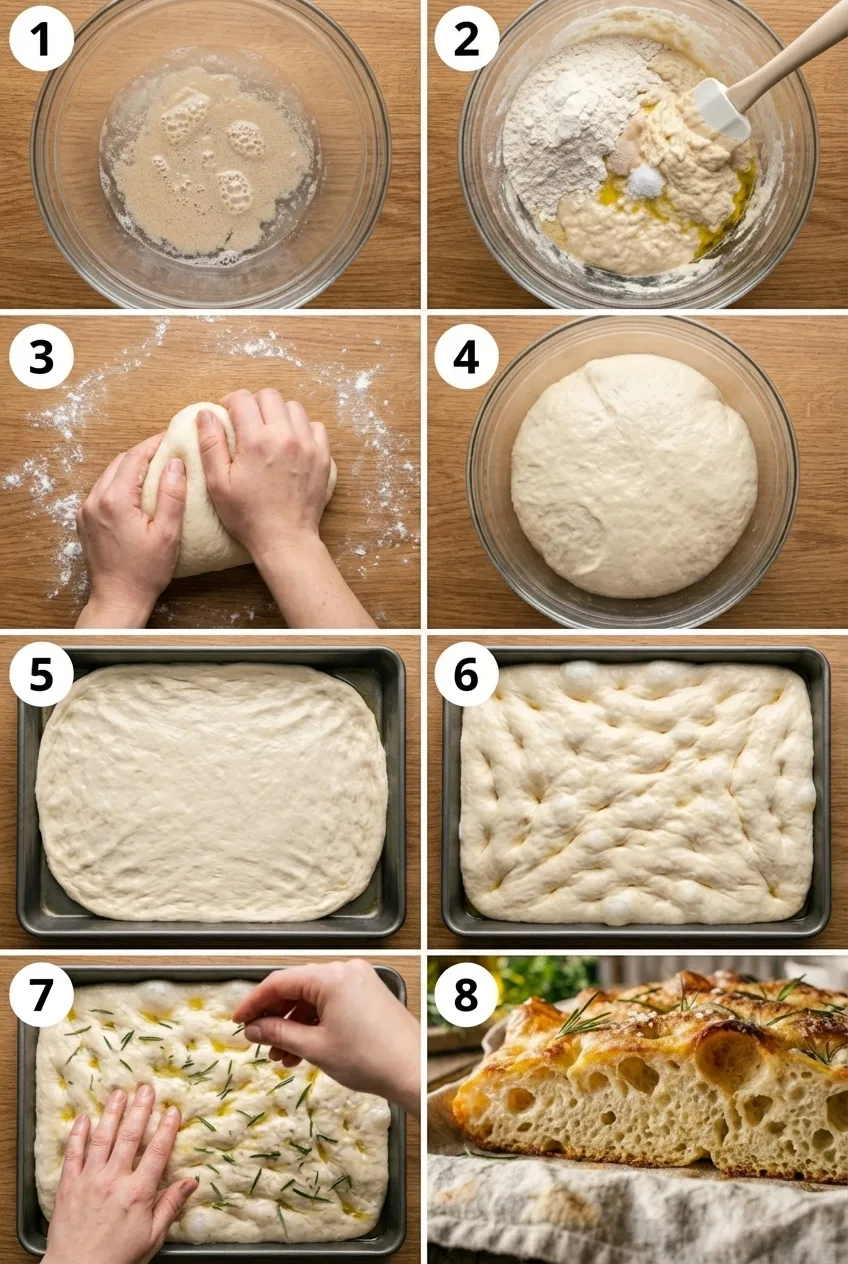
In a large mixing bowl, combine the lukewarm water with the active dry yeast. Let it stand for about 5 minutes. You’re looking for it to become bubbly or foamy, which is the signal that your yeast is alive and ready to work.
- Mix the Dough
Add the sourdough discard, all-purpose flour, and salt to the yeast mixture. Stir with a spoon or spatula until a shaggy, rough dough forms. Drizzle in half of the olive oil (30g or 2 tablespoons) and knead the dough directly in the bowl or on a lightly floured surface for about 5 minutes, until it becomes smooth and elastic.
- First Rise
Cover the bowl with plastic wrap or a clean kitchen towel. Place it in a warm, draft-free spot for 3 hours. The dough should double in size and look soft and full of air.
- Prepare Baking Tray
Pour half of the remaining olive oil (15g or 1 tablespoon) onto a baking tray (a 9×13 inch pan works well). Tilt the pan to coat the bottom evenly. Gently transfer the risen dough to the tray and carefully stretch it toward the edges. It may not reach the corners perfectly, and that’s okay.
- Second Rise
Cover the tray with a damp cloth and let the dough rise again for 1 more hour. During this time, the dough will puff up again and fill out the pan more.
- Preheat Oven
About 30 minutes before baking, position a rack in the middle of your oven and preheat it to 425°F (220°C). A fully preheated oven ensures the focaccia gets a strong initial burst of heat, creating a crisp crust.
- Prepare for Baking
Uncover the dough. Coat your fingers in a little olive oil and press down firmly to create dimples all over the surface. Drizzle the last of the olive oil (15g or 1 tablespoon) over the top, then sprinkle evenly with the chopped fresh rosemary and coarse sea salt.
- Bake
Place the focaccia in the preheated oven and bake for 25 minutes. The top should be a deep golden brown and the edges should be crisp. Let it cool in the pan for a few minutes before slicing and serving.
If you enjoy this dish, try our Leftover Vegetable Frittata for a perfect companion to your meal.
Substitutions & Variations
- Instead of rosemary, try using 2 tablespoons of fresh thyme or 1 tablespoon of finely chopped fresh sage for a different herbal aroma.
- For a Mediterranean twist, press 1/2 cup of halved Kalamata olives or oil-packed sun-dried tomatoes into the dough before the final bake.
- If you prefer a softer crust, you can bake at a slightly lower temperature, 400°F (200°C), for the same amount of time.
Make-Ahead, Storage & Reheat

Store any leftover focaccia in an airtight container at room temperature for up to 3 days. To restore its texture, reheat slices in a 350°F (175°C) oven for 5-7 minutes, which will refresh the crumb and re-crisp the crust.
Nutrition
- Serving: Per slice
- Calories: 180
- Protein: 5g
- Fat: 9g
- Carbohydrates: 18g
- Estimates only.
FAQ
Why is my focaccia dense and heavy instead of having an airy crumb?
This usually happens from under-proofing the dough. Let it rise until it's very puffy and jiggly, as this creates the air pockets needed for a light texture.
What is the best way to get a really crispy bottom crust on focaccia?
Use a generous amount of olive oil in the bottom of your baking pan. The hot oil essentially fries the dough as it bakes, which is the secret to a golden, crisp base.
My finished focaccia tastes great but feels a little too greasy. Why?
This can happen if too much oil pools on top before baking. Use plenty of oil in the pan for the crust, but only lightly drizzle the top so it bakes in, not on.
What are the main reasons my focaccia dough isn’t rising properly?
The most common issues are expired yeast or water that was too hot. Yeast is a living thing, and high heat will kill it. Also, a cold room will slow the process down.
How can I reheat leftover focaccia so it tastes fresh and not soggy?
Skip the microwave. Place slices in a 350°F oven for 5-7 minutes. This method gently warms the inside while re-crisping the crust, restoring its original texture.
Is it possible to prepare the dough a day or two before I plan to bake?
Absolutely. After the first mix, you can let the dough rise slowly in the fridge for up to 48 hours. This cold fermentation develops deeper flavor and saves time.
Can I freeze baked focaccia, and how should I do it for best results?
Yes, it freezes well. Let it cool completely, then wrap it tightly in plastic wrap and foil to prevent freezer burn. Reheat directly from frozen in the oven.
Does using bread flour instead of all-purpose really change the texture?
It creates a subtle difference. Bread flour has more protein, which will give you a slightly chewier, more elastic crumb. All-purpose results in a softer, more tender bite.
Equipment
- Large mixing bowl
- Clean kitchen towel or plastic wrap
- 9×13 inch baking tray
- Oven
Ingredients
- 240 g (1 cup) Unfed sourdough starter discard
- 240 g (2 cups) All-purpose flour
- 180 g (3/4 cup) Lukewarm water
- 60 g (1/4 cup) Olive oil divided
- 9 g (1 1/2 teaspoons) Salt
- 3 g (1 teaspoon) Active dry yeast
- 6 g (2 tablespoons) Fresh, chopped rosemary
- 10 g (1 tablespoon) Coarse sea salt for topping
Instructions
- Combine lukewarm water and active dry yeast in a large mixing bowl; let stand for about 5 minutes until bubbly or foamy.
- Add sourdough discard, all-purpose flour, and salt to the yeast mixture; stir until a shaggy dough forms.
- Drizzle in half of the olive oil and knead the dough in the bowl or on a lightly floured surface for about 5 minutes until smooth and elastic.
- Cover the bowl with plastic wrap or a clean towel and place in a warm, draft-free spot for 3 hours until doubled in size.
- Pour half of the remaining olive oil onto a 9×13 inch baking tray and tilt to coat the bottom evenly.
- Transfer the risen dough to the tray and gently stretch it toward the edges, allowing it to fill most of the pan.
- Cover the tray with a damp cloth and let the dough rise again for 1 hour until puffed up.
- Preheat the oven to 425°F (220°C) with a rack in the middle about 30 minutes before baking.
- Uncover the dough and coat your fingers with olive oil; press firmly to create dimples all over the surface.
- Drizzle the last of the olive oil over the top, then evenly sprinkle with chopped rosemary and coarse sea salt.
- Bake the focaccia for 25 minutes until deep golden brown on top and crisp on the edges.
- Let the focaccia cool in the pan for a few minutes before slicing and serving.
