

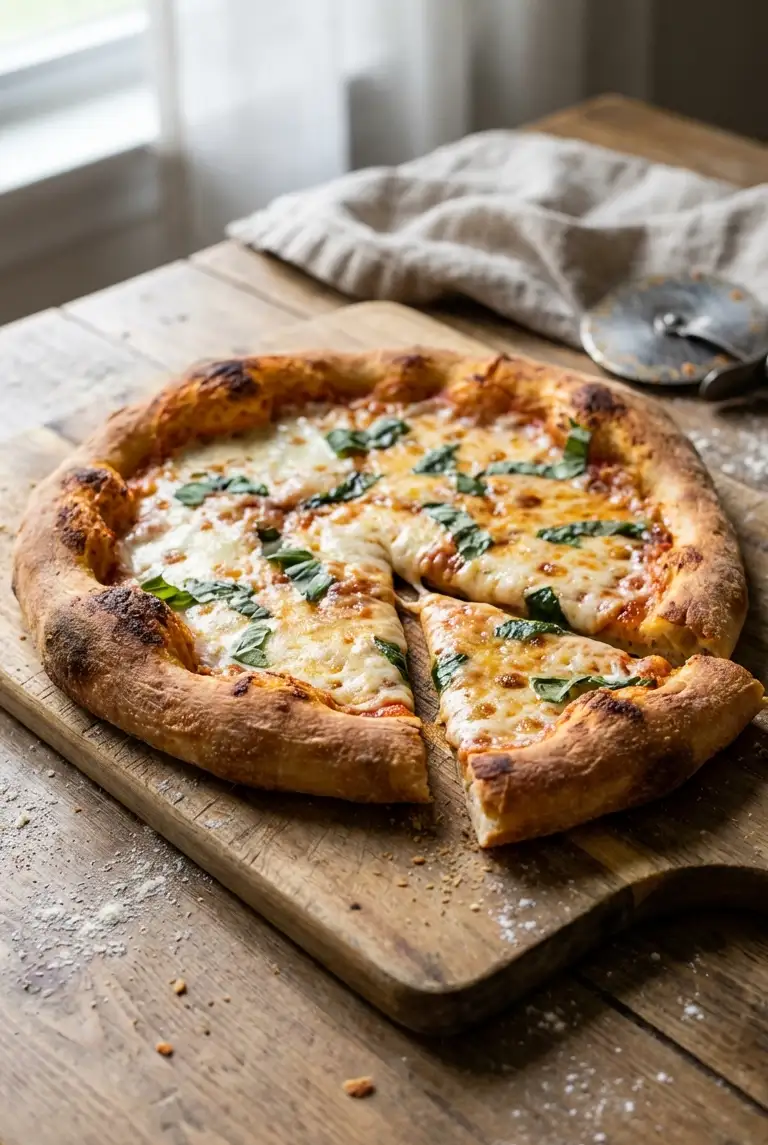
The first time I made this dough, I treated it like regular pizza dough and kept adding flour until it felt dry enough to handle. That was the mistake. This dough should stay a little tacky. If you over-flour it, you lose the chewy center, and the rim bakes up flatter and duller.
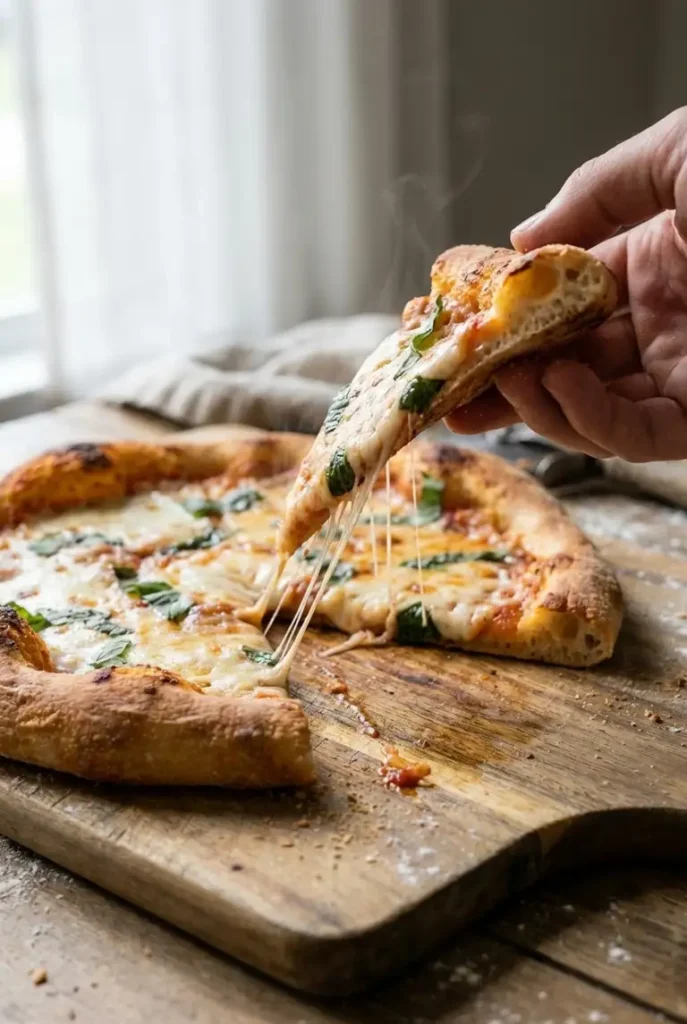
When it is mixed and rested properly, it stretches thin without tearing, the bottom browns properly, and the edge puffs into a lightly blistered rim with some crackle on the outside and chew underneath. This version works well when you want pizza the same day but still want more flavor than a standard quick dough. The sourdough discard adds mild tang and depth, while the yeast gives you the lift and oven spring that discard alone usually will not.
Why This Sourdough Discard Pizza Dough Works
- The sourdough discard adds acidity and depth, so the crust tastes like wheat and fermentation instead of just salt and flour.
- A modest amount of yeast gives a reliable rise in about 1 hour, which matters if your discard is unfed or straight from the fridge.
- The dough is soft enough to stretch into a thin center, but not so wet that it bakes up floppy if you keep the toppings light.
- Baking on a fully preheated surface gives you a firm, browned underside instead of the pale, soft bottom you get when the oven is hot but the pan or stone is not.
Sourdough Discard Pizza Dough Ingredients
Makes 2 medium pizzas.
- 1 cup sourdough discard (240g)
- 2 1/4 teaspoons active dry yeast
- 3/4 cup warm water (180g)
- 1 tablespoon olive oil (15g)
- 1 teaspoon sugar
- 1 1/2 teaspoons salt
- 3 to 3 1/2 cups all-purpose flour (360g to 420g)
For topping and baking:
- pizza sauce, as needed
- shredded mozzarella, as needed
- extra olive oil, for brushing
- cornmeal or flour, for shaping
How to Make Sourdough Discard Pizza Dough with Yeast
1. Mix the dough
- In a large bowl, stir together the sourdough discard, warm water, yeast, sugar, olive oil, and salt. Add 3 cups flour and mix until a rough dough forms.
- At first it will look shaggy and uneven. Keep mixing or kneading until it becomes smooth and slightly tacky, not wet enough to stick heavily to clean fingers.
- If using a stand mixer, the dough should clear the sides but may still lightly stick to the bottom. Add more flour a tablespoon or two at a time only if it is genuinely loose and sticky like batter.
- Knead by hand for 8 to 10 minutes or in a mixer for 5 to 6 minutes, until the dough is elastic and springs back slowly when pressed.
2. Let it rise
- Form the dough into a ball and place it in a lightly oiled bowl. Cover and let rise in a warm spot for 45 minutes to 1 hour, until slightly puffy and roughly doubled.
- If your kitchen is cool, it may take a little longer. The dough should feel softer after the rise and look a bit aerated, not dense.
3. Preheat the oven properly
- Set a pizza stone, baking steel, or inverted heavy sheet pan in the oven and preheat to 500°F for at least 30 minutes.
- That extra preheat matters. A hot oven alone will not give you a crisp bottom if the baking surface is still catching up. For more tips on preheating, launching, and baking at high heat, see my guide to Homemade Pizza on a Pizza Stone.
4. Divide and rest if needed
- Turn the dough out onto a lightly floured surface and divide it into 2 pieces. Shape each into a ball.
- Let the dough rest for 10 minutes if it feels tight.
- After this short rest, it should feel more relaxed and easier to stretch. If it snaps back, let it rest another 10 minutes before shaping again.
5. Stretch the dough
- Press one dough ball gently from the center outward, leaving the outer edge a little thicker. Avoid flattening the rim completely.
- Stretch to about 12 inches for a thicker crust or 14 inches for a thinner crust. If the dough resists, stop and let it rest before continuing. Don’t force it or you’ll tear the gluten and end up patching holes.
- Transfer to parchment if that helps you launch it more easily.
6. Top lightly
- Brush the outer rim with a little olive oil if you want more color. Add only a thin layer of sauce and moderate cheese. Too much sauce or heavy toppings will steam the center and leave it gummy.
- A good test: once topped, the dough should still feel light when you lift the edge slightly. It should not sag heavily under the weight.
7. Bake
- Bake for 10 to 14 minutes, depending on thickness and your oven, until the rim is deep golden with some darker spotting and the cheese is fully melted with browned patches.
- Lift the edge with tongs or a spatula. The bottom should be browned and firm, not blond and soft.
- Let the pizza sit for 1 to 2 minutes before slicing so the cheese sets slightly and excess steam escapes.
- Repeat with the second dough ball.
What the dough should look and feel like after mixing
This is where most people either save the crust or ruin it.
A good dough for this recipe feels soft and a bit tacky, but not sticky enough to smear across your hands. If you press a fingertip into it, it should leave a light dent and pull away mostly clean.
It should not feel dry, chalky, or stiff. A stiff dough is easier to handle on the counter, but it usually bakes up dense and less chewy.
Discard hydration can shift things slightly. A looser discard may mean you need a little more flour. A thicker discard may need less. Go by feel more than by the last tablespoon.
How to stretch pizza dough without tearing it
Use your fingertips first, not a rolling pin. Press from the center outward and leave the rim alone as much as possible.
Once the disk is wide enough, pick it up and let gravity help. Rotate as you stretch.
If you get a thin spot, lay the dough back down and work around it instead of pulling directly on it. If it keeps shrinking, the gluten is still tight. Rest it and come back in 10 minutes.
For this dough, thin and medium crust work better than a heavily loaded deep-pan style pizza.
How to get a crispy sourdough discard pizza crust
The usual reasons pizza stays soft on the bottom are simple: the baking surface was not hot enough, the dough was overloaded, or the crust was left too thick in the center.
Use these fixes:
- Preheat your stone, steel, or sheet pan for at least 30 minutes
- Stretch the center thin enough that it doesn’t stay doughy
- Use sauce sparingly
- Don’t bury it under wet vegetables or too much cheese
- Bake until the underside is actually browned, not just until the top looks done
If you like a firmer, crispier base, bake the shaped dough with sauce only for 2 to 3 minutes, then add cheese and finish baking.
Can you make this dough ahead of time?
Yes. It handles well that way.
Refrigerating the dough
After kneading, place the dough in a lightly oiled container, cover, and refrigerate for up to 24 hours. It will continue to rise slowly and develop a little more flavor.
Before shaping, let it sit at room temperature for 30 to 45 minutes so it relaxes. Cold dough fights back and is harder to stretch thin.
Freezing the dough
After the initial mix and a short rest, divide the dough into balls, lightly oil them, and freeze in airtight containers or bags for up to 2 months.
Thaw overnight in the fridge, then bring to room temperature for 30 to 45 minutes before stretching. If you try to shape it while still cold, the dough will tighten and tear more easily.
Sourdough Discard Pizza Dough Variations
Using 00 flour instead of all-purpose flour
You can swap in 00 flour for all or part of the all-purpose flour. The dough usually feels a bit silkier and stretches well, with a slightly more delicate chew once baked.
Start with a little less flour, or hold back a splash of water at first, then adjust as needed. Different 00 flours absorb differently, so watch the texture instead of forcing the full amount.
Sourdough Discard Pizza Dough Without Yeast
You can make pizza dough without commercial yeast, but it is a different recipe and a slower process. For that version, you need active, bubbly starter or discard that still has enough strength to raise the dough over several hours.
If you use inactive discard without yeast, don’t expect the same rise or texture. The quick version here relies on yeast for lift and predictability. The discard contributes flavor more than leavening.
Troubleshooting sourdough discard pizza dough
The dough is too sticky
That usually means one of two things: your discard is looser than average, or the dough just hasn’t been kneaded enough yet.
First knead a little longer. If it still clings heavily to your hands and the bowl, add flour a tablespoon at a time.
The dough won’t stretch
It’s too tight. Let it rest for 10 minutes and try again. Gluten relaxes with time; it doesn’t respond well to force.
The crust is pale underneath
Your baking surface probably wasn’t hot enough, or the pizza was built too heavily. Keep toppings lighter and give the stone or pan a full preheat.
The center is soft and floppy
Usually that comes from too much sauce, too much cheese, or too thick a center. Stretch thinner and top more lightly next time.
Frequently Asked Questions
Why is my sourdough discard pizza dough so sticky?
Because discard varies. Some is thin and pourable, some is thick.
Start with the lower flour amount, knead fully, then add more only if the dough is still sticking hard to your fingers and the work surface. Slight tackiness is correct here.
Do I really need yeast if I’m using sourdough discard?
For this recipe, yes. The discard adds flavor, but the yeast gives you a reliable rise in about an hour. Without yeast, you need active starter and a much longer fermentation.
Can I use frozen or cold discard straight from the fridge?
Cold fridge discard is fine. It may slow the rise a little, but the dough still works. Frozen discard should be thawed first so it mixes evenly.
Why didn’t my crust get crispy on the bottom?
Most often, the stone or pan wasn’t fully preheated, or the pizza had too much topping moisture. Bake on a thoroughly heated surface and keep the sauce and cheese in a restrained layer.
If you still have extra starter after pizza night, these Sourdough Discard English Muffins are another easy way to use it up.
Nutrition
- Serving size: approximately 1/4 of the total recipe
- Calories: 361 kcal
- Protein: 10g
- Fat: 4g
- Carbohydrates: 69g
- Per 100g: Calories: 239 kcal, Protein: 6.6g, Fat: 2.6g, Carbohydrates: 45.7g.
These nutritional values are approximate and can vary based on the specific ingredients and brands used.
Sourdough Discard Pizza Dough with Yeast
Equipment
- Large bowl
- Stand mixer (optional)
- Pizza stone or baking steel or inverted sheet pan
- Parchment paper
- Tongs or spatula
Ingredients
- 1 cup sourdough discard (240g)
- 2 1/4 teaspoons active dry yeast
- 3/4 cup warm water (180g)
- 1 tablespoon olive oil (15g)
- 1 teaspoon sugar
- 1 1/2 teaspoons salt
- 3 to 3 1/2 cups all-purpose flour (360g to 420g)
- Pizza sauce as needed
- Shredded mozzarella as needed
- Extra olive oil for brushing
- Cornmeal or flour for shaping
Instructions
- Mix sourdough discard, warm water, yeast, sugar, olive oil, and salt in a large bowl. Add 3 cups flour and mix until a rough dough forms; dough should be smooth and slightly tacky.
- Knead dough by hand for 8 to 10 minutes or with a stand mixer for 5 to 6 minutes until elastic and springs back slowly when pressed.
- Form dough into a ball, place in lightly oiled bowl, cover and let rise in warm spot for 45 minutes to 1 hour until slightly puffy and doubled.
- Preheat oven to 500°F with a pizza stone, baking steel, or inverted heavy sheet pan for at least 30 minutes.
- Turn dough onto a lightly floured surface, divide into 2 balls, rest 10 minutes if needed until more relaxed.
- Stretch dough gently from center outward leaving rim thicker, aiming for 12 inches (thicker crust) or 14 inches (thinner crust). Transfer to parchment if desired.
- Brush rim lightly with olive oil, top with thin layer of sauce and moderate cheese. Avoid heavy toppings to prevent sogginess.
- Bake 10 to 14 minutes until rim is deep golden with darker spots and cheese is melted and browned; bottom should be browned and firm.
- Let pizza rest 1 to 2 minutes before slicing; repeat with second dough ball.