

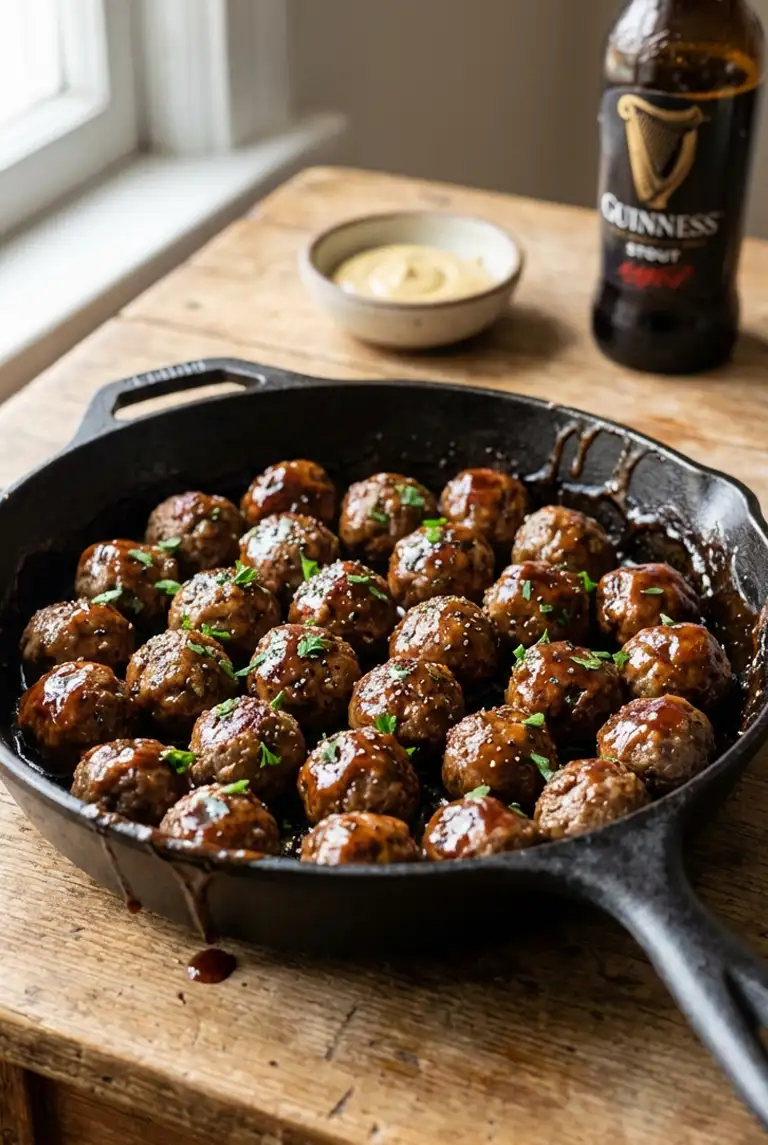
The trick with these meatballs is not the meatball part. It’s the glaze. The first time I pushed the Guinness too far, the sauce went from dark and balanced to slightly sharp and sticky in a way that overwhelmed the beef. The sweet spot is shorter than you think: reduce it until it thickens enough to leave a trail in the pan, then get the meatballs back in before it turns heavy.
When it’s right, the sauce clings in a thin, dark coat instead of puddling under the meatballs. The beef stays tender, the edges get browned and a little chewy, and the glaze brings bitterness, malt, sweetness, and that mustard-Worcestershire edge without tasting greasy or flat.
Why These Guinness Glazed Meatballs Work
- The onion is grated or minced very fine, so it melts into the meat mixture instead of leaving wet chunks that can make the meatballs split.
- A quick pan sear builds browned bits in the skillet, which gives the Guinness sauce more depth once you deglaze.
- Brown sugar, Dijon, and Worcestershire soften the bitter edge of the stout without turning the glaze sugary.
- The sauce is reduced before the meatballs go back in, so it coats them properly instead of steaming them in thin liquid.
Ingredients for Guinness Glazed Meatballs
For the meatballs
- 1 lb ground beef, 80/20 preferred (455g)
- 1/2 cup plain breadcrumbs (50g)
- 1/4 cup whole milk (60g)
- 1 small onion, very finely minced or grated (70g)
- 1 large egg (50g)
- 2 cloves garlic, minced (10g)
- 1 tbsp Worcestershire sauce (15g)
- 1 tbsp chopped parsley
- 1 tsp kosher salt
- 1/2 tsp black pepper
- 1 tbsp neutral oil, for searing
For the Guinness glaze
- 3/4 cup Guinness stout, preferably Draught or Extra Stout (180g)
- 2 tbsp brown sugar (25g)
- 1 tbsp Dijon mustard (15g)
- 1 tbsp Worcestershire sauce (15g)
- 1 tbsp tomato paste (15g)
- 1 tbsp unsalted butter (15g)
Best ground beef for tender meatballs
Use 80/20 ground beef if you can. Leaner beef will still work, but the texture is firmer, and the glaze won’t have the same richness once the meatballs go back into the pan.
Which Guinness works best for the glaze
Standard Guinness Draught gives the most balanced result here. Extra Stout works too, but it finishes a little more bitter, so watch the reduction closely.
I’d skip anything heavily hopped or flavored. It muddies the sauce and pushes the bitter notes too far forward.
How to Make Guinness Glazed Meatballs
1. Mix and shape the meatballs
- In a large bowl, combine the breadcrumbs and milk. Let them sit for 2 minutes so the crumbs soften.
- Add the beef, onion, egg, garlic, Worcestershire, parsley, salt, and pepper. Mix gently until the breadcrumbs disappear into the meat and the mixture just holds together when pressed. Don’t knead it or compact it.
- Lightly wet or oil your hands and shape into 1- to 1 1/4-inch meatballs. You should get about 16 to 20 meatballs.
2. Sear the meatballs
- Heat the oil in a large skillet over medium to medium-high heat. The oil should shimmer but not smoke.
- Add the meatballs in a single layer, working in batches if needed. Sear for 6 to 8 minutes, turning every couple of minutes, until browned on several sides. They do not need to be fully cooked yet.
- The meatballs should release fairly easily when a crust has formed. If they stick hard, give them another 30 to 60 seconds before turning.
- Transfer them to a plate.
3. Build the Guinness sauce
- If the skillet has more than a thin film of grease, spoon off the excess.
- Lower the heat to medium. Add the Guinness, brown sugar, Dijon, Worcestershire, and tomato paste. The Guinness will foam briefly at first. Scrape the bottom of the skillet until the browned bits dissolve into the liquid.
- Let the sauce simmer for 4 to 6 minutes, stirring now and then, until the bubbles are small and steady and the sauce leaves a trail for a second or two when you drag a spoon through it.
4. Finish the meatballs in the glaze
- Return the meatballs and any juices to the skillet. Reduce the heat so the sauce barely bubbles.
- Cook for 5 to 7 minutes, turning the meatballs once or twice, until they are cooked through and reach an internal temperature of 160°F.
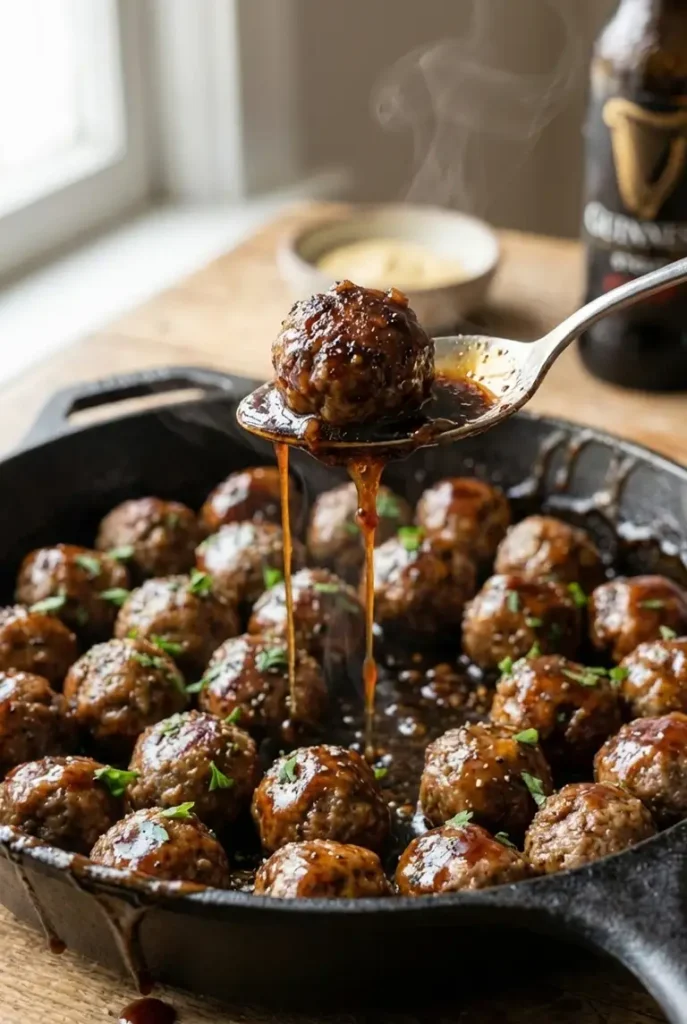
- Stir in the butter and let it melt into the sauce. The finished glaze should coat each meatball in a shiny layer, not run thinly across the pan.
- Let the skillet sit for 2 minutes before serving so the glaze tightens slightly.
Tips for Juicy Meatballs and a Thick Guinness Glaze
Why your glaze turned bitter, thin, or greasy
If the glaze tastes bitter, it usually reduced too far before the meatballs went back in, or you used a more aggressive stout. Pull it from the heat when it still looks a little loose; it will tighten more once the butter goes in and the meatballs finish cooking.
If it’s thin, the sauce simply needs another minute or two at a steady simmer before the meatballs are added.
If it looks greasy, there was too much fat left in the skillet after searing. Drain it down to a thin film before adding the Guinness.
How to keep meatballs tender instead of dense
The biggest texture mistake is overmixing. Once the meat mixture looks evenly combined, stop. A gentle mix gives you meatballs that stay soft in the center instead of tight and springy.
Also, keep the onion very fine. Big onion pieces create weak spots, which makes the meatballs harder to shape and more likely to crack in the pan.
If you love a good meatball dinner, my Sesame Ginger Chicken Meatballs are another fast skillet-friendly option with a completely different sweet-savory profile.
Irish-Inspired Guinness Meatballs Variation
For a more Irish-style version, add 1 tsp chopped fresh thyme to the meatball mixture and finish the skillet with extra parsley.
Serve the meatballs over mashed potatoes or alongside buttered cabbage rather than as an appetizer. That turns them into more of a pub-style dinner, and the stout glaze softens a bit once it hits the potatoes.
To round out an Irish-inspired comfort food menu, serve these alongside the flavors in my Shepherd’s Pie with Cheddar for another hearty, cold-weather favorite.
What to Serve with Guinness Glazed Meatballs
Serve them for dinner or as a party appetizer
For dinner:
- Mashed potatoes
- Buttered egg noodles
- Roasted carrots
- Cabbage or Brussels sprouts
- Thick slices of bread to catch the extra sauce
For a party:
- Serve them straight from a warm skillet or slow cooker with toothpicks
- Keep a little extra glaze underneath so they stay glossy
- Pair with mustardy potato salad, roasted potatoes, or a simple slaw
These are rich, so they do better with plain or sharp sides than with anything sweet.
How to Store, Reheat, and Freeze
Store cooled meatballs and sauce in the fridge for up to 4 days.
Reheat gently in a covered skillet over low heat with a small splash of water or broth if the glaze has tightened too much.
To freeze, cool completely and pack in an airtight container for up to 2 months. Thaw overnight in the fridge before reheating.
You can also make the meatballs ahead, refrigerate them uncooked for up to 24 hours, and sear them just before serving.
Guinness Glazed Meatballs FAQ
Why did my Guinness glaze turn bitter?
Usually because it reduced too long or the heat stayed too high. Guinness starts off sharp, then rounds out as it cooks with the sugar, mustard, and Worcestershire. Push it too far and the bitter edge comes back stronger.
How do I keep the meatballs from falling apart in the skillet?
Make sure the onion is very fine, not chunky. Also, don’t move the meatballs too early. Once the underside browns properly, they release much more easily.
Can I use frozen meatballs or make these ahead for a party?
Yes. Frozen cooked meatballs work for a party version. Make the glaze first, then warm the meatballs in it until heated through. For the best texture, homemade is better, but frozen is a practical shortcut.
What can I use instead of Guinness in the glaze?
Another stout is the closest substitute. If you want to skip alcohol entirely, use beef broth with 1 tsp molasses for some of that dark, slightly bitter depth. It won’t taste exactly the same, but it works.
Nutrition
- Serving size: approximately 1/4 of the total recipe
- Calories: 474 kcal
- Protein: 24g
- Fat: 31g
- Carbohydrates: 19g
- Per 100g: Calories: 214 kcal, Protein: 11g, Fat: 14g, Carbohydrates: 9g.
These nutritional values are approximate and can vary based on the specific ingredients and brands used.
Guinness Glazed Meatballs
Equipment
- Large bowl
- Large skillet
- Tongs
- Plate
- Spoon
Ingredients
- 1 lb ground beef (80/20 preferred, 455g)
- 1/2 cup plain breadcrumbs (50g)
- 1/4 cup whole milk (60g)
- 1 small onion very finely minced or grated (70g)
- 1 large egg (50g)
- 2 cloves garlic minced (10g)
- 1 tbsp Worcestershire sauce (15g)
- 1 tbsp chopped parsley
- 1 tsp kosher salt
- 1/2 tsp black pepper
- 1 tbsp neutral oil for searing
- 3/4 cup Guinness stout (preferably Draught or Extra Stout, 180g)
- 2 tbsp brown sugar (25g)
- 1 tbsp Dijon mustard (15g)
- 1 tbsp Worcestershire sauce (15g)
- 1 tbsp tomato paste (15g)
- 1 tbsp unsalted butter (15g)
Instructions
- In a large bowl, combine breadcrumbs and milk; let sit 2 minutes to soften.
- Add ground beef, minced onion, egg, garlic, Worcestershire sauce, parsley, salt, and pepper; mix gently until just combined without overworking.
- Wet or oil hands lightly and shape mixture into 16 to 20 meatballs about 1 to 1 1/4 inches in diameter.
- Heat oil in a large skillet over medium to medium-high heat until shimmering but not smoking.
- Add meatballs in a single layer (work in batches if needed); sear 6 to 8 minutes, turning every couple minutes until browned on several sides but not fully cooked.
- Transfer meatballs to a plate.
- If needed, spoon off excess grease from skillet, then reduce heat to medium.
- Add Guinness stout, brown sugar, Dijon mustard, Worcestershire sauce, and tomato paste; scrape bottom to deglaze.
- Let sauce simmer 4 to 6 minutes until bubbles are small and steady and sauce thickens enough to coat spoon with a trail.
- Return meatballs and juices to skillet; reduce heat to barely bubbling.
- Cook 5 to 7 minutes, turning meatballs once or twice, until cooked through and internal temperature reaches 160°F.
- Stir in butter and let melt into sauce, coating meatballs with a shiny glaze.
- Let skillet sit 2 minutes before serving for glaze to tighten slightly.