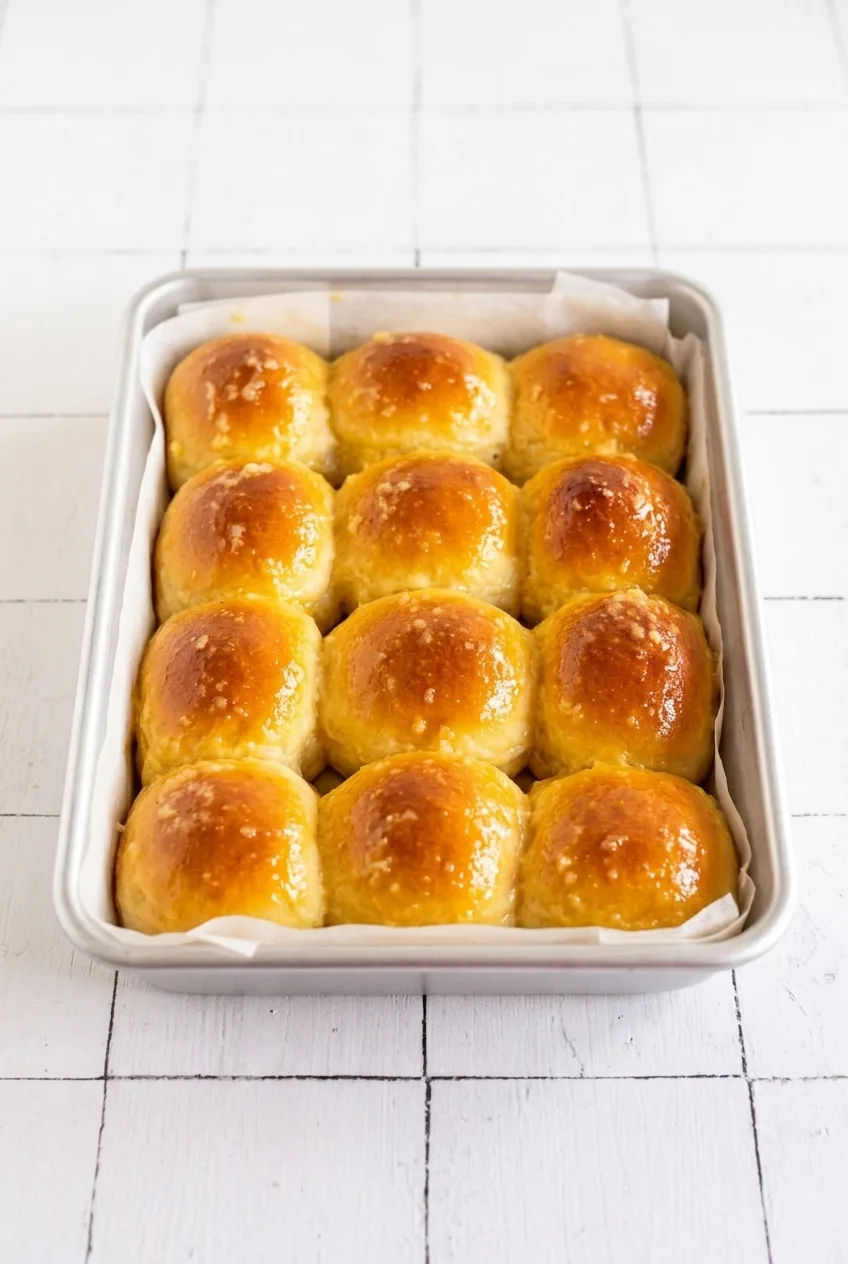
Garlic Butter Dinner Rolls
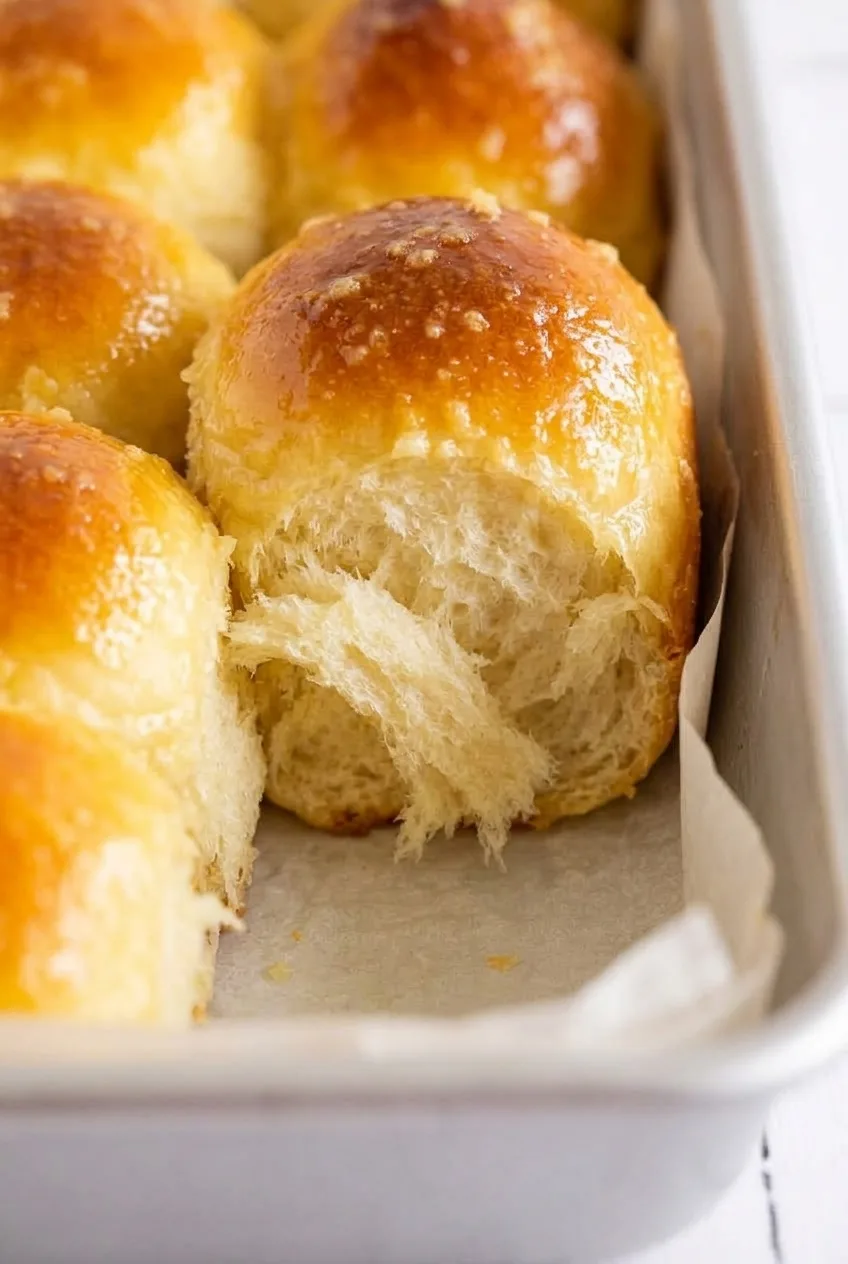
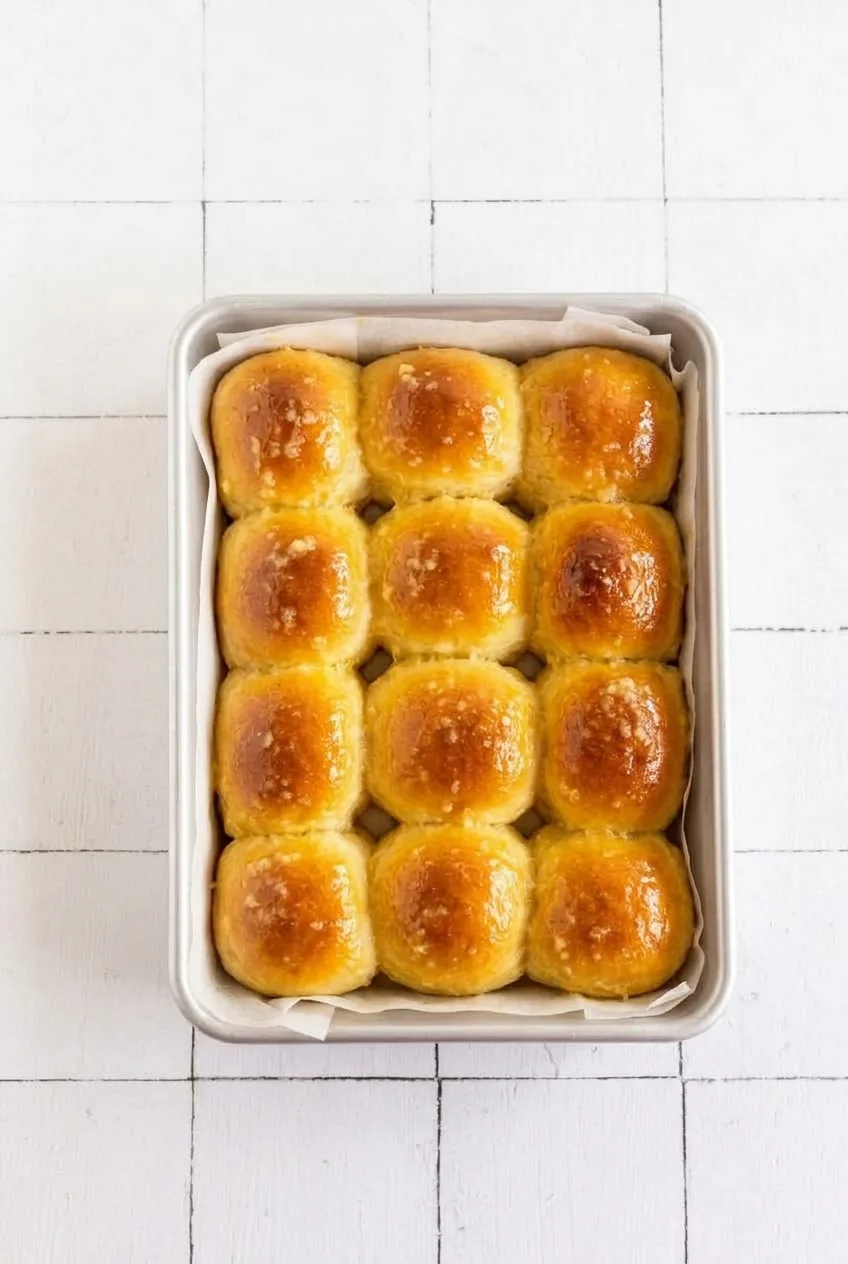
These soft yeast rolls bake close together in a 9-by-13-inch pan, so their golden tops stay rounded while their sides form tender pull-apart seams. The dough rises twice, then a light egg wash helps the tops brown. After baking, warm garlic butter adds the defining flavor and leaves small pieces of garlic on the glossy rolls.
Makes 12 rolls. Allow about 30 minutes of active preparation and 22 to 26 minutes of baking, or roughly 2½ to 3 hours total. Rise times depend on the warmth of the kitchen, so follow the dough cues as well as the clock.
Ingredients for Garlic Butter Dinner Rolls
For the dough
- 3/4 cup whole milk, lukewarm (180g)
- 1/4 cup warm water (60g)
- 2 tablespoons granulated sugar (25g)
- 2 1/4 teaspoons active dry yeast (7g)
- 1 large egg
- 4 tablespoons unsalted butter, softened (55g)
- 3 1/2 cups all-purpose flour (420g), plus more only as needed
- 1 teaspoon fine salt
For the egg wash and garlic butter
- 1 large egg beaten with 1 tablespoon water
- 4 tablespoons unsalted butter (55g)
- 3 garlic cloves, very finely minced
- 1/4 teaspoon fine salt
Optional: A light sprinkle of flaky sea salt or up to 1 tablespoon finely chopped parsley for finishing.
How to Make Garlic Butter Dinner Rolls
- Activate the yeast: Combine the milk, water, sugar, and yeast in a large bowl. The liquids should be lukewarm, about 105°F to 110°F (40°C to 45°C), not hot. Let stand for 5 to 10 minutes, until foamy. Mix in the egg and softened butter.
- Mix and knead: Add the flour and salt and mix until a shaggy dough forms. Knead with a dough hook for 8 to 10 minutes or by hand for 10 to 12 minutes. The dough should be smooth, elastic, and slightly tacky. Gently stretch a small piece; it should form a thin membrane before tearing. Add flour only if the dough is too sticky to handle—too much can make the rolls dry.
- Let the dough rise: Place it in a lightly buttered or oiled bowl and cover. Let rise in a warm, draft-free spot until doubled and airy, about 60 to 90 minutes.
- Shape the rolls: Lightly butter or spray a 9-by-13-inch metal pan, then line it with parchment, leaving a little overhang. Gently deflate the dough and divide it into 12 equal pieces. Pinch the seams underneath each piece and roll lightly on an unfloured surface to make a smooth ball with a taut top.
- Proof in the pan: Arrange the rolls in a 3-by-4 grid with small gaps between them. Cover loosely and let rise until puffy and touching, about 35 to 50 minutes. A gentle fingertip press should spring back slowly and leave a faint dimple. Preheat the oven to 350°F (175°C) during the last 15 to 20 minutes of the rise.
- Egg-wash and bake: Gently brush the tops with a thin layer of egg wash, without letting it pool between the rolls. Bake uncovered for 22 to 26 minutes, starting to check at 20 minutes. The domes should be deep golden brown and hold their rounded shape; the joined seams should be set but pale and soft. Tent loosely with foil if the tops brown before the rolls are baked through. Rotate the pan near the end only if your oven browns unevenly.
- Make the garlic butter: While the rolls bake, melt the remaining 4 tablespoons butter in a small saucepan over low heat. Add the garlic and 1/4 teaspoon salt. Cook for 2 to 3 minutes, until the garlic is fragrant and softened but not browned.
- Brush and serve: Brush the hot rolls with all the warm garlic butter, spreading the garlic pieces across the tops and letting some butter settle into the seams. Add flaky salt or parsley, if using. Rest in the pan for 5 to 10 minutes, then serve warm.
Why the Rolls Should Touch
The small gaps give the dough room to expand during the second rise. Once the rolls touch, their joined sides bake up pale and tender instead of forming crust all around. Keep the 9-by-13-inch pan rather than moving them to a large sheet pan if you want soft pull-apart rolls.
Pan material affects timing: a dark nonstick pan may brown the bottoms sooner, while a glass dish may need a little longer. Start checking at 20 minutes and use the golden, set tops as the main guide.
Serving Garlic Butter Dinner Rolls
Serve the rolls from the parchment-lined pan and pull them apart at the soft seams. They work alongside Baked Mac and Cheese with Bacon and Caramelized Onions or Classic Green Bean Casserole with Crispy Onions.
Storage, Reheating, and Make-Ahead
Cool leftover rolls completely, then store airtight at room temperature for up to 3 days. Sealing them while hot can leave the tops damp. To reheat, wrap them in foil and warm at 300°F (150°C) for about 10 minutes, or until warmed through.
For next-day serving, bake the rolls ahead, cool completely, and store well wrapped before reheating. You can also freeze shaped, unbaked rolls on a baking sheet until firm, then transfer them to a freezer bag. Place them in the prepared pan to thaw and rise before egg-washing and baking. Allow several hours, and wait until they are puffy and touching rather than relying on a fixed thaw time.
Nutrition
Approximate nutrition per roll, based on 12 rolls: 230 calories, 6g protein, 9g fat, and 30g carbohydrates. Approximate values per 100g of baked rolls: 340 calories, 8g protein, 14g fat, and 45g carbohydrates. Values vary with the amount of egg wash used and moisture lost during baking.
Equipment
- Large mixing bowl
- Stand mixer with dough hook
- 9-by-13-inch metal pan
- Parchment paper
- Pastry brush
- Small saucepan
Ingredients
For the Dough
- 3/4 cup whole milk, lukewarm (180g)
- 1/4 cup warm water (60g)
- 2 tablespoons granulated sugar (25g)
- 2 1/4 teaspoons active dry yeast (7g)
- 1 large egg
- 4 tablespoons unsalted butter, softened (55g)
- 3 1/2 cups all-purpose flour (420g), plus more as needed
- 1 teaspoon fine salt
For the Egg Wash and Garlic Butter
- 1 large egg, beaten with 1 tablespoon water
- 4 tablespoons unsalted butter (55g)
- 3 garlic cloves, very finely minced
- 1/4 teaspoon fine salt
- Flaky sea salt, optional
- Up to 1 tablespoon finely chopped parsley, optional
Instructions
- Combine the lukewarm milk, warm water, sugar, and yeast in a large bowl. Let stand for 5 to 10 minutes, until foamy.
- Mix the egg and softened butter into the yeast mixture.
- Add the flour and salt and mix until a shaggy dough forms.
- Knead with a dough hook for 8 to 10 minutes or by hand for 10 to 12 minutes, until the dough is smooth, elastic, and slightly tacky.
- Place the dough in a lightly buttered or oiled bowl, cover, and let rise in a warm spot for 60 to 90 minutes, until doubled and airy.
- Lightly butter or spray a 9-by-13-inch metal pan and line it with parchment paper, leaving overhang on the sides.
- Gently deflate the dough and divide it into 12 equal pieces. Shape each piece into a smooth ball with the seams pinched underneath.
- Arrange the rolls in a 3-by-4 grid in the prepared pan, leaving small gaps between them. Cover loosely and let rise for 35 to 50 minutes, until puffy and touching.
- Preheat the oven to 350°F (175°C) during the last 15 to 20 minutes of the second rise.
- Brush the roll tops lightly with the egg wash, taking care not to let it pool between the rolls.
- Bake for 22 to 26 minutes, checking at 20 minutes, until the tops are deep golden brown and the seams are set. Tent loosely with foil if the tops brown too quickly.
- While the rolls bake, melt the remaining butter in a small saucepan over low heat. Add the garlic and 1/4 teaspoon salt and cook for 2 to 3 minutes, until fragrant and softened but not browned.
- Brush the hot rolls with all of the warm garlic butter. Finish with flaky salt or parsley, if desired.
- Rest the rolls in the pan for 5 to 10 minutes before serving warm.
Tips
- Use liquids at 105°F to 110°F (40°C to 45°C) so the yeast activates without being damaged.
- Add extra flour only if the dough is too sticky to handle; too much flour can make the rolls dry.
- The dough is sufficiently kneaded when a small piece stretches into a thin membrane before tearing.
- Keep the rolls in a 9-by-13-inch pan so they touch and develop soft pull-apart seams.
- Check the rolls at 20 minutes, especially when using a dark nonstick pan or glass baking dish.
- Tent the pan loosely with foil if the tops brown before the rolls are fully baked.
