

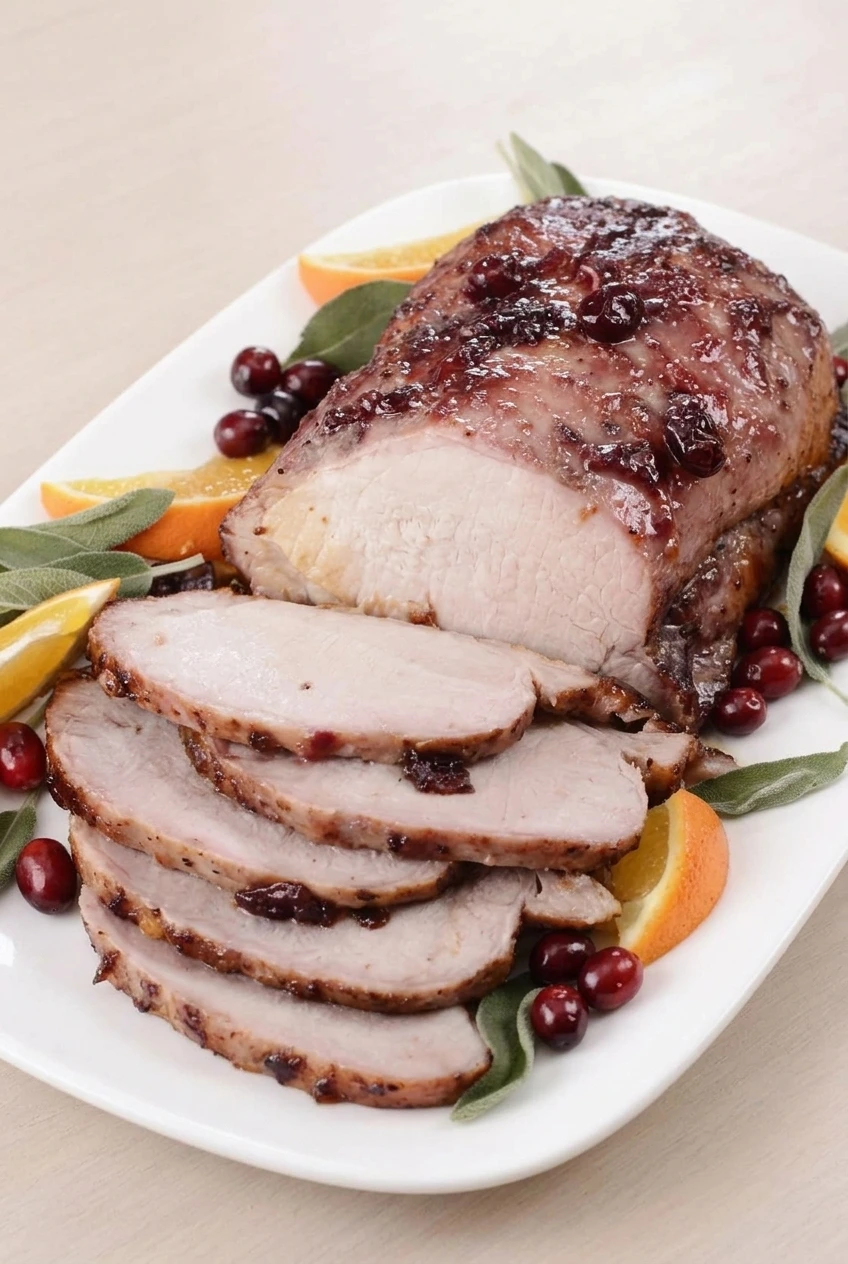
Cranberry Orange Glazed Pork Tenderloin
This pork tenderloin stays intact as it browns in a skillet and finishes in the oven, giving it a roast-like shape for serving. A pan glaze of orange juice, dried cranberries, Dijon, brown sugar, and rosemary coats the pork without exposing the sugary sauce to searing heat.
Slice one end of the rested tenderloin into thick portions and fan them beside the remaining roast. Because thickness affects oven time, use an instant-read thermometer to decide when the pork is done.
Ingredients for Cranberry Orange Glazed Pork Tenderloin
- 1 pork tenderloin, about 1 1/2 pounds (680g)
- 3/4 teaspoon kosher salt, or to taste
- 1/4 teaspoon black pepper
- 1 tablespoon avocado oil or extra-virgin olive oil, as needed
- 3/4 cup orange juice, fresh or bottled
- 1/3 cup dried cranberries (45g)
- 1 tablespoon light or dark brown sugar
- 1 teaspoon Dijon mustard
- 1 teaspoon finely chopped fresh rosemary
- 1 tablespoon cold unsalted butter
Optional platter garnish: 4–6 thin orange slices, a small handful of fresh cranberries, and a few fresh sage leaves. The fresh cranberries are garnish; use dried cranberries in the glaze.
How to Make Cranberry Orange Glazed Pork Tenderloin
- Season the pork: Preheat the oven to 400°F (205°C). Pat the tenderloin dry, trim away any silver skin, and season all over with salt and pepper. Lightly coat it with oil.
- Sear: Heat a large oven-safe skillet over medium-high heat. Add the pork and sear for about 6–8 minutes total, turning to brown several sides. Leave enough room in the skillet for the tenderloin to brown without crowding; avoid letting the oil smoke heavily or the pan bits burn.
- Finish in the oven: Transfer the skillet to the oven, or move the pork to a rimmed sheet pan if the skillet is not oven-safe. Roast uncovered. Begin checking the thickest part with an instant-read thermometer after about 8 minutes, then continue in short intervals until it reaches 145°F (65°C). The oven finish usually takes about 10–15 minutes, depending on thickness.
- Rest: Move the pork to a cutting board and rest for 5–10 minutes while making the glaze; it must rest at least 3 minutes before slicing. Tent loosely if needed, and save any juices that collect.
- Reduce the glaze: Set the skillet over medium heat. Add the orange juice, dried cranberries, brown sugar, Dijon, and rosemary. Scrape up the browned bits, leaving behind anything blackened. Simmer for 5–8 minutes, stirring as it thickens, until the glaze lightly coats a spoon but remains pourable.
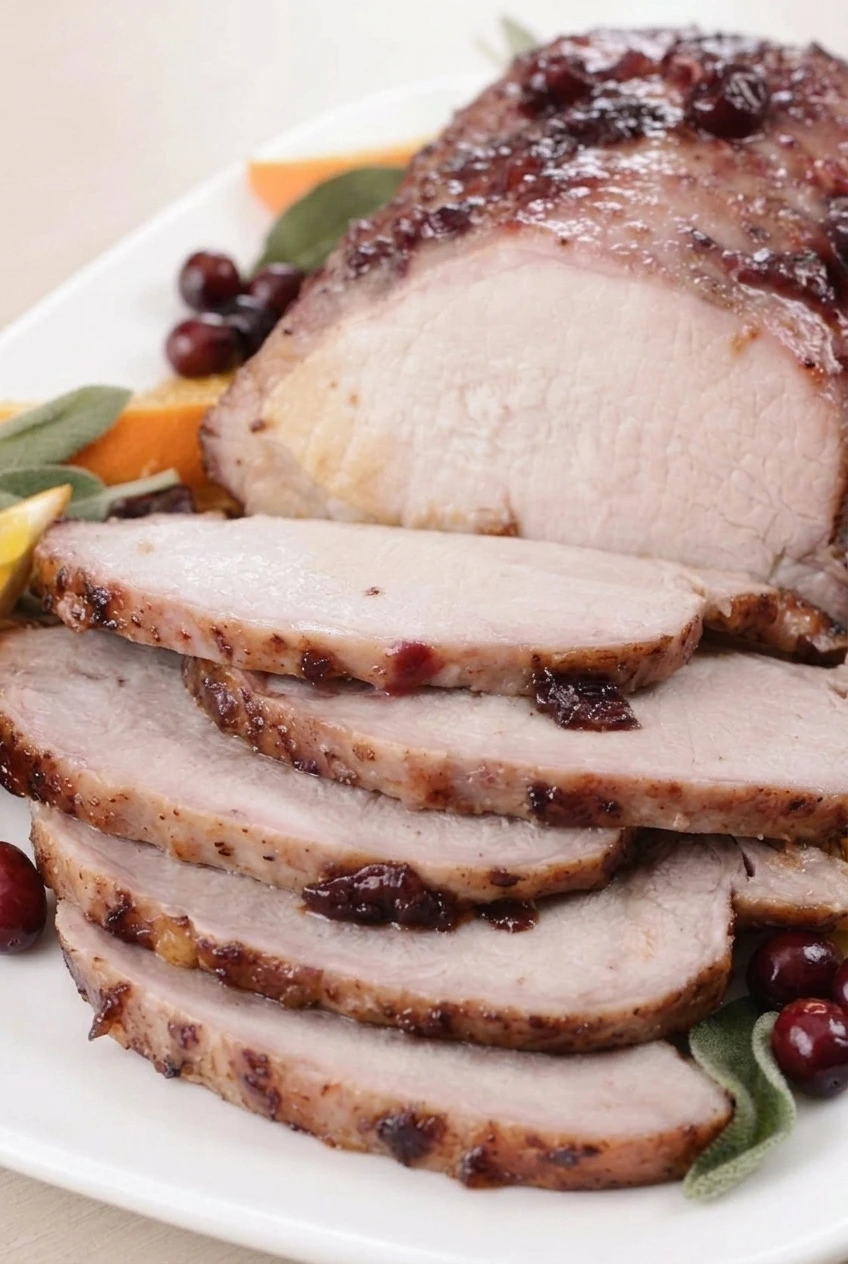
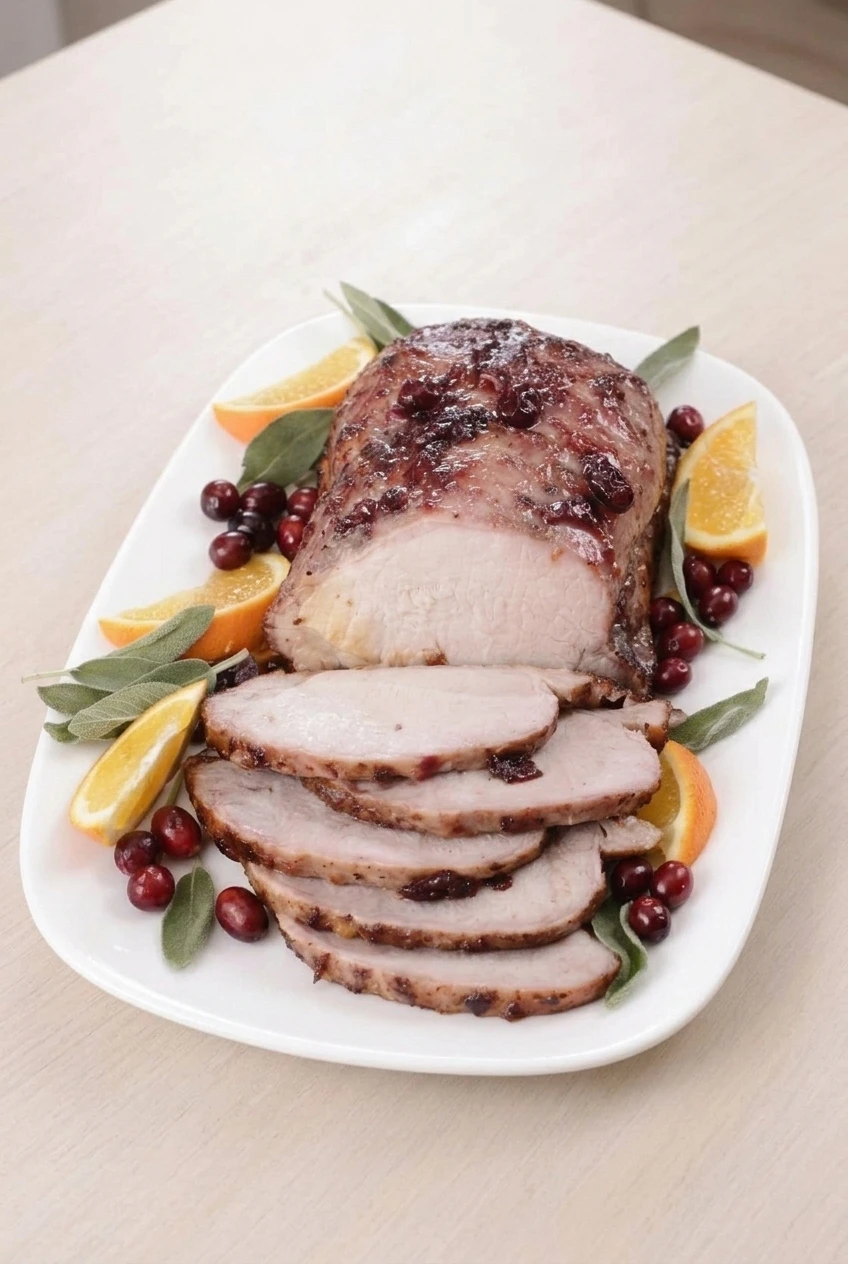
- Finish and serve: Remove the skillet from the heat and whisk in the cold butter until melted, then stir in the pork’s resting juices. Cut several thick slices from one end of the tenderloin and fan them beside the remaining roast. Spoon the glaze, including the softened cranberries, over the pork and some cut surfaces. Add the optional garnish if desired.
How to Tell When the Pork Is Done
Insert the thermometer into the thickest part of the intact tenderloin. Use the 145°F reading and at least a 3-minute rest rather than oven time alone: a thicker or colder tenderloin may need longer than the suggested range. Resting before slicing also helps keep more of the juices in the pork.
How to Keep the Glaze Glossy
Make the glaze after searing so its sugar does not scorch in the hot skillet. Let it simmer steadily until it lightly coats a spoon; if it still looks watery, give it more time to reduce. Whisk in the butter off the heat for a shiny, pourable finish, then add the pork’s resting juices.
Serving Cranberry Orange Pork Tenderloin
Serve with garlic mashed potatoes or a fresh green salad. For another pork dinner with a mustard sauce, try Honey Mustard Pork Chops with Creamy Dijon Sauce.
How to Store and Reheat
Refrigerate leftover pork and sauce in a covered container within 2 hours and use within 3–4 days. Reheat gently, covered, with a spoonful of sauce or other moisture, just until hot. The glaze can also be prepared separately ahead of time and reheated gently.
Freezing guidance for this glaze is limited. If freezing leftovers, pack them promptly in an airtight container, thaw in the refrigerator, and expect some change in the sauce’s texture.
Nutrition
Approximate nutrition per serving, based on 4 servings: 330 calories, 37g protein, 13g fat, and 18g carbohydrates. Per 100g: about 180 calories, 21g protein, 7g fat, and 10g carbohydrates. Values vary with trimming and cooking yield.
Cranberry Orange Glazed Pork Tenderloin
Equipment
- Oven-safe skillet
- Rimmed sheet pan
- Instant-read thermometer
- Cutting board
Ingredients
For the Pork
- 1 pork tenderloin, about 1 1/2 pounds (680g)
- 3/4 teaspoon kosher salt, or to taste
- 1/4 teaspoon black pepper
- 1 tablespoon avocado oil or extra-virgin olive oil, as needed
For the Glaze
- 3/4 cup orange juice, fresh or bottled
- 1/3 cup dried cranberries (45g)
- 1 tablespoon light or dark brown sugar
- 1 teaspoon Dijon mustard
- 1 teaspoon finely chopped fresh rosemary
- 1 tablespoon cold unsalted butter
Optional Garnish
- 4–6 thin orange slices
- A small handful of fresh cranberries
- A few fresh sage leaves
Instructions
- Preheat the oven to 400°F (205°C).
- Pat the pork tenderloin dry, trim away any silver skin, and season it all over with salt and pepper. Lightly coat it with oil.
- Heat a large oven-safe skillet over medium-high heat. Add the pork and sear for 6–8 minutes total, turning to brown several sides. Avoid crowding the skillet or letting the oil smoke heavily.
- Transfer the skillet to the oven. If it is not oven-safe, move the pork to a rimmed sheet pan. Roast uncovered.
- Begin checking the thickest part of the pork with an instant-read thermometer after about 8 minutes. Continue roasting in short intervals until it reaches 145°F (65°C), usually about 10–15 minutes in the oven.
- Move the pork to a cutting board and rest for 5–10 minutes while making the glaze. Save any juices that collect.
- Set the skillet over medium heat. Add the orange juice, dried cranberries, brown sugar, Dijon, and rosemary. Scrape up the browned bits, leaving behind anything blackened.
- Simmer for 5–8 minutes, stirring, until the glaze lightly coats a spoon but remains pourable.
- Remove the skillet from the heat and whisk in the cold butter until melted. Stir in the pork’s resting juices.
- Cut several thick slices from one end of the tenderloin and fan them beside the remaining roast. Spoon the glaze and softened cranberries over the pork and cut surfaces. Garnish if desired.
Tips
- Use an instant-read thermometer in the thickest part of the intact tenderloin; do not rely on oven time alone.
- Leave enough room in the skillet for the pork to brown without crowding.
- Make the glaze after searing to keep its sugar from scorching.
- If the glaze looks watery, simmer it longer until it lightly coats a spoon.
- Whisk in the butter off the heat for a glossy, pourable glaze.