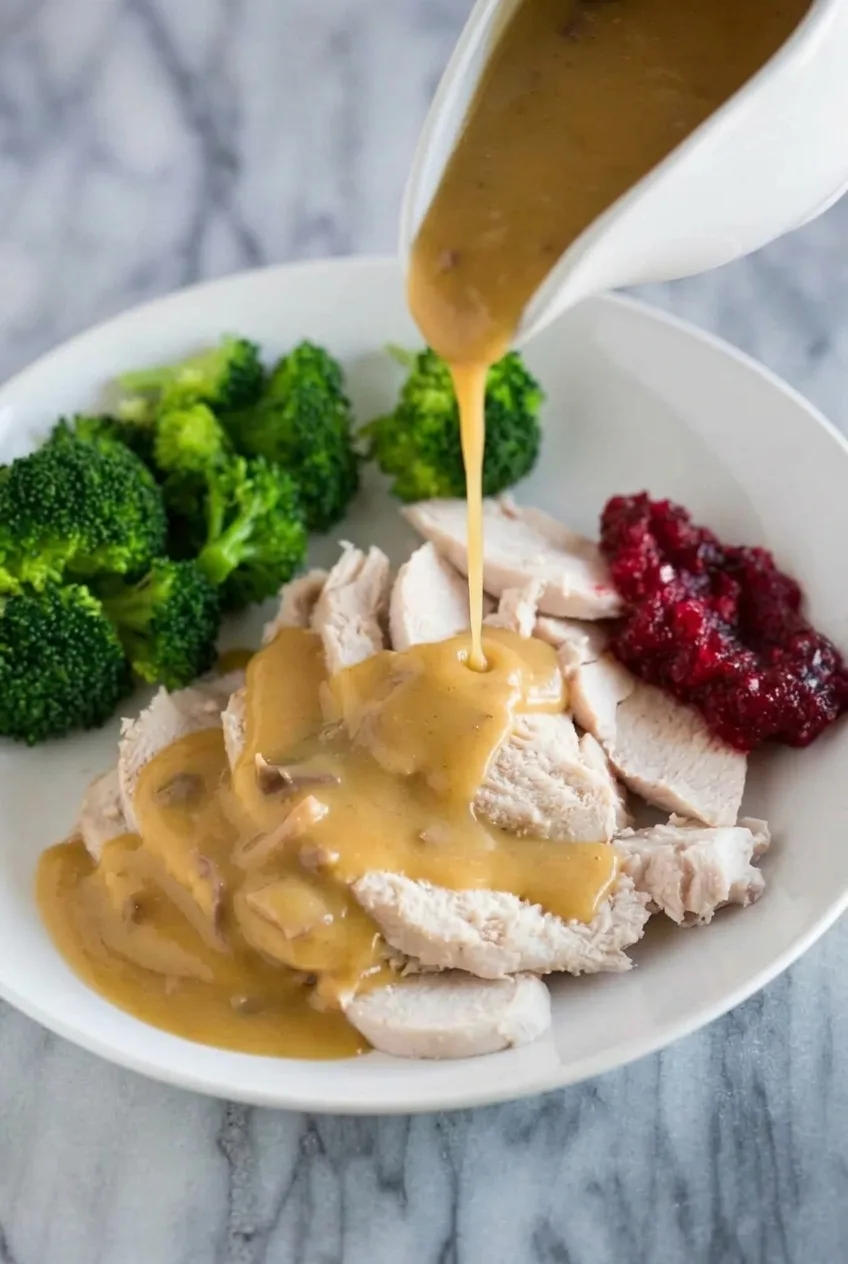
Turkey Gravy from Drippings
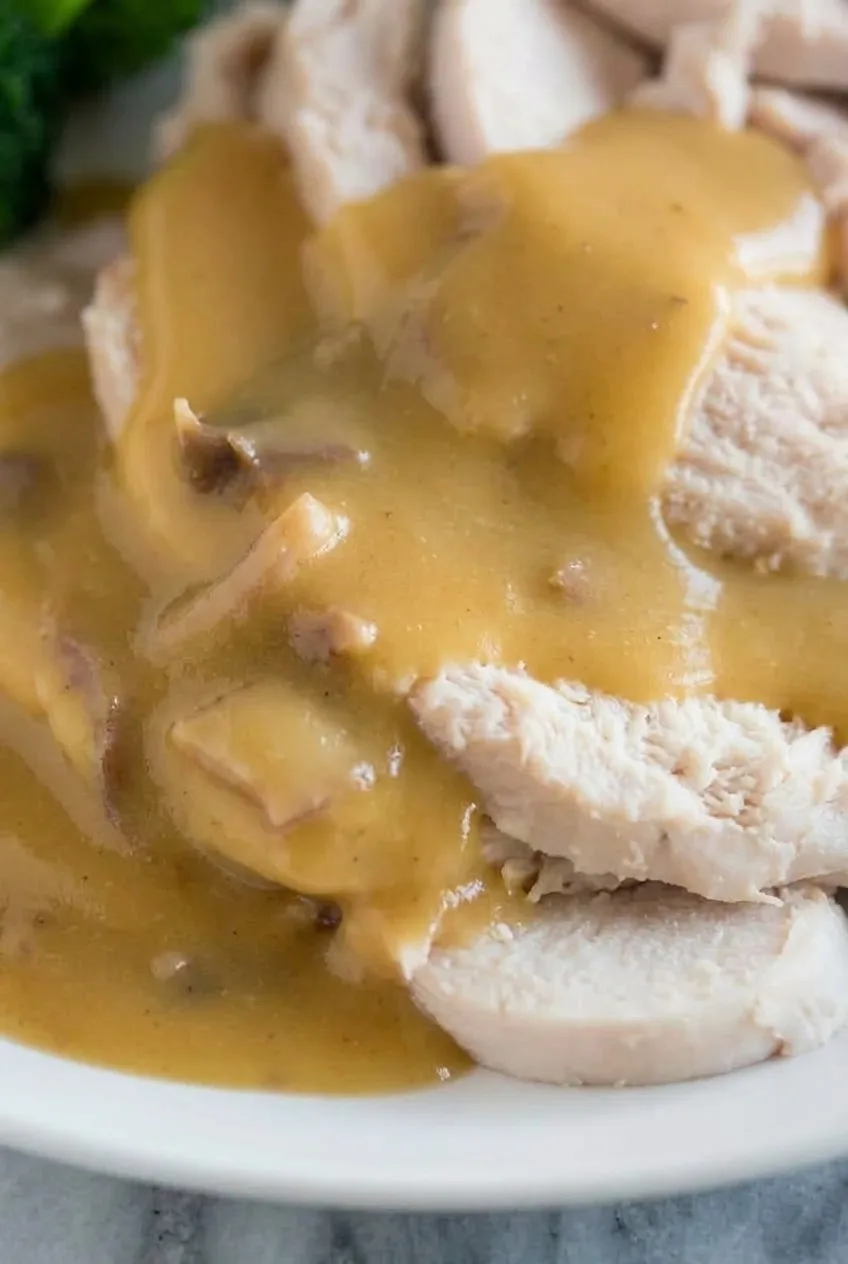
Turkey pan drippings make a savory, golden-brown gravy that coats sliced meat without running off the plate. The browned bits left in the roasting pan add flavor, while a measured turkey-fat-and-flour roux gives the sauce its smooth, pourable body.
Make the gravy on the stovetop while the turkey rests. Because drippings vary in volume and saltiness, measure the defatted juices and add stock to reach the starting liquid amount. Hold back extra stock for thinning, and taste before adding salt.
Ingredients for Turkey Gravy from Drippings
- About 1 to 1 1/2 cups turkey pan drippings, before separating the fat
- 1/4 cup rendered turkey fat from the drippings; add up to 2 tablespoons unsalted butter if needed to reach 1/4 cup total fat
- 1/4 cup all-purpose flour (30g)
- 1 to 2 cups unsalted or low-sodium turkey or chicken stock, as needed
- 1/4 teaspoon freshly ground black pepper, plus more to taste
- Kosher salt, only if needed after tasting
Yield: About 2 1/2 to 3 cups, or 8 to 10 servings. Time: 5 minutes prep, 10 to 15 minutes cooking; 15 to 20 minutes total.
Liquid measure: Start with 2 cups of defatted drippings and stock combined, not 2 cups of stock plus the drippings. Keep up to 1 additional cup of stock nearby to thin or extend the gravy.
How to Make Turkey Gravy from Drippings
- Collect the drippings: Transfer the roasted turkey to rest. Pour the pan drippings through a fine-mesh strainer into a fat separator or heat-safe measuring cup. Loosen any browned bits in the roasting pan with a splash of stock or water and scrape them into the strainer. Leave burned black residue behind.
- Measure the fat and liquid: Let the drippings stand briefly so the fat rises. Reserve 1/4 cup turkey fat, adding unsalted butter if needed to make up the difference. Measure the defatted juices and add stock to make 2 cups total liquid. Set aside up to 1 additional cup of stock.
- Cook the roux: Heat the measured fat in a 2- to 3-quart saucepan over medium heat. Whisk in the flour and cook, whisking constantly, for 2 to 3 minutes, until the paste is smooth, pale golden, and lightly toasted-smelling.
- Add the liquid gradually: Whisk a small splash of the drippings-and-stock mixture into the roux until smooth. Add more in several small additions, whisking out the thick paste each time, then slowly whisk in the remaining liquid.
- Simmer and adjust: Bring to a gentle simmer, reduce the heat to medium-low, and cook uncovered for 5 to 8 minutes. Whisk frequently, reaching into the pan corners. Start checking after 5 minutes: the gravy should coat the back of a spoon and fall from it in a smooth ribbon. If it is too thick, whisk in reserved stock 1 to 2 tablespoons at a time. Stop when it is slightly looser than you want at the table; it thickens as it stands.
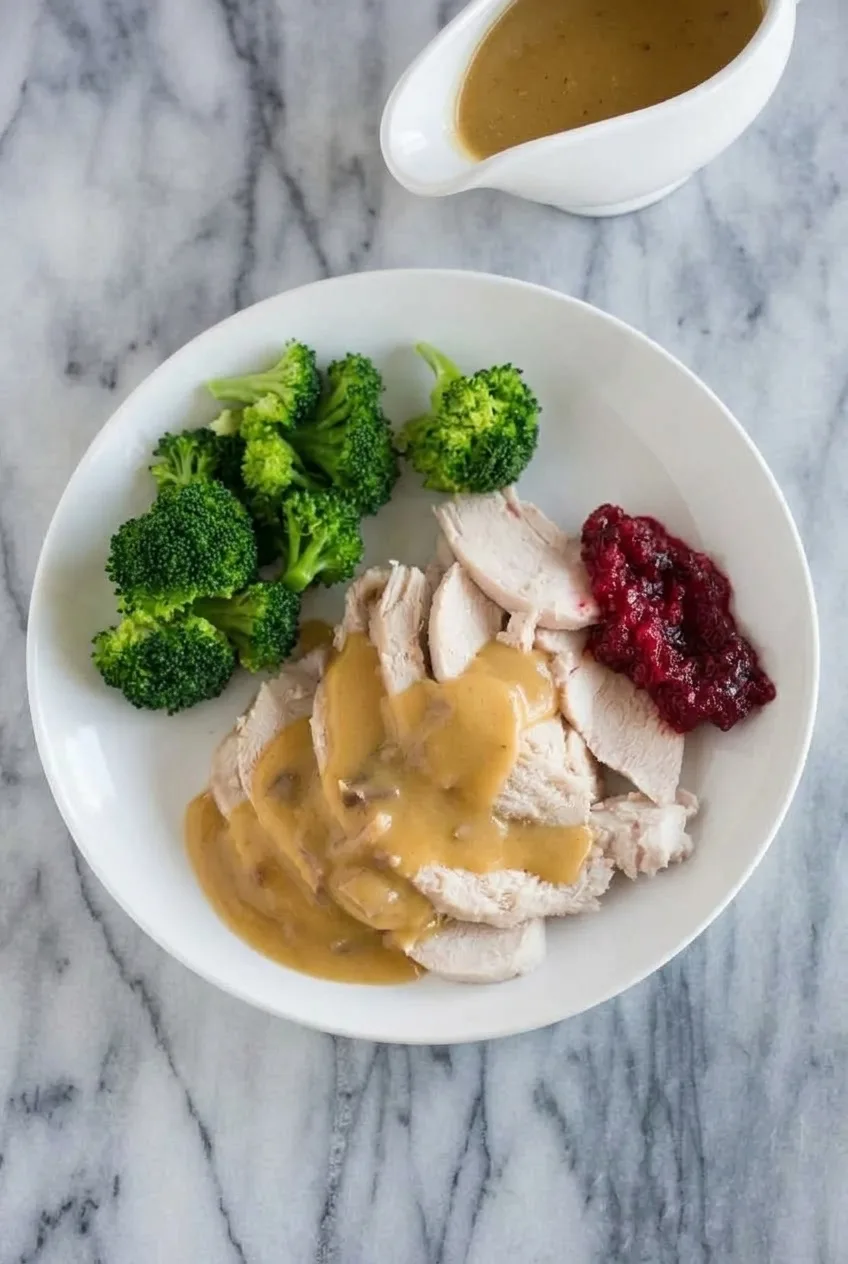
- Season and serve: Stir in the pepper and taste before adding salt, especially if the turkey was brined or heavily seasoned. Let stand for 2 to 3 minutes, whisk again, and pour into a warmed white gravy boat. Serve over sliced roast turkey.
How to Fix the Gravy’s Consistency
- Too thick: Whisk in unsalted stock or water a little at a time until the gravy pours easily.
- Too thin: Let it finish simmering first. If it still does not coat a spoon, mix 1 tablespoon cornstarch with 1 tablespoon cold water. Whisk a little of the slurry into the simmering gravy, allowing it to thicken before adding more.
- Lumpy: Whisk vigorously, then strain the gravy if lumps remain.
- Greasy: Use only the measured 1/4 cup fat for the roux and keep excess fat out of the defatted juices. If fat collects on the finished gravy, skim it from the surface.
- Too salty: A little unsalted stock may help, though it will also thin the gravy. This is why it is best to use unsalted or low-sodium stock and wait until the end to add salt.
Optional Giblet Gravy
For a heartier gravy, simmer the turkey neck, heart, and gizzard separately until tender. Chop the cooked meat and stir up to 1/2 cup into the finished gravy. The giblet cooking liquid can replace some of the stock. Omit the liver for a milder flavor.
Serving, Storing, and Reheating
Serve the gravy warm over turkey, mashed potatoes, or stuffing. Homemade Cranberry Sauce with Orange makes a sweet-tart side for the meal.
Cool leftovers promptly and refrigerate in an airtight container for 3 to 4 days. Reheat gently in a small saucepan over low to medium-low heat, whisking often. Add a splash of stock or water if the chilled gravy is too thick.
To freeze, cool the gravy and seal it in a freezer-safe container for up to 2 months. Thaw overnight in the refrigerator, then reheat gently, whisking until smooth.
Nutrition
Approximate nutrition per serving, based on 10 servings: 70 calories, 1g protein, 6g fat, and 3g carbohydrates. Approximate values per 100g: 100 calories, 1g protein, 9g fat, and 4g carbohydrates. Values vary with the drippings, stock, and amount of butter used.
Equipment
- Fine-mesh strainer
- Fat separator or heat-safe measuring cup
- 2- to 3-quart saucepan
- Whisk
- Measuring cups
Ingredients
For the Gravy
- 1 to 1 1/2 cups turkey pan drippings, before separating the fat
- 1/4 cup rendered turkey fat from the drippings
- Up to 2 tablespoons unsalted butter, if needed
- 1/4 cup all-purpose flour (30 g)
- 1 to 2 cups unsalted or low-sodium turkey or chicken stock, as needed
- 1/4 teaspoon freshly ground black pepper, plus more to taste
- Kosher salt, if needed
Instructions
- Transfer the roasted turkey to rest. Pour the pan drippings through a fine-mesh strainer into a fat separator or heat-safe measuring cup.
- Loosen browned bits from the roasting pan with a splash of stock or water, scrape them into the strainer, and leave behind any burned black residue.
- Let the drippings stand briefly so the fat rises. Reserve 1/4 cup turkey fat, adding unsalted butter if needed to reach 1/4 cup.
- Measure the defatted drippings and add stock to make 2 cups total liquid. Reserve up to 1 additional cup stock for thinning.
- Heat the measured fat in a 2- to 3-quart saucepan over medium heat. Whisk in the flour and cook for 2 to 3 minutes, whisking constantly, until smooth and pale golden.
- Whisk a small splash of the drippings-and-stock mixture into the roux until smooth. Continue adding the liquid in small additions, whisking smooth after each addition, then slowly whisk in the remaining liquid.
- Bring the gravy to a gentle simmer, reduce the heat to medium-low, and cook uncovered for 5 to 8 minutes, whisking frequently.
- Check the consistency after 5 minutes. When the gravy coats the back of a spoon and falls in a smooth ribbon, remove it from the heat. Whisk in reserved stock 1 to 2 tablespoons at a time if it is too thick.
- Stir in the pepper and taste before adding salt. Let stand for 2 to 3 minutes, whisk again, and serve warm.
Tips
- Start with 2 cups total liquid made from defatted drippings and stock combined.
- Use only 1/4 cup fat for the roux to prevent greasy gravy.
- Add the liquid gradually to the roux to avoid lumps.
- Stop cooking when the gravy is slightly looser than desired because it thickens as it stands.
- Taste before salting, especially when the turkey was brined or heavily seasoned.
- Strain the finished gravy if lumps remain after whisking.
Variations
- Giblet Gravy: Simmer turkey neck, heart, and gizzard until tender, chop the meat, and stir up to 1/2 cup into the finished gravy. Use the giblet cooking liquid in place of some stock, and omit the liver for a milder flavor.
