

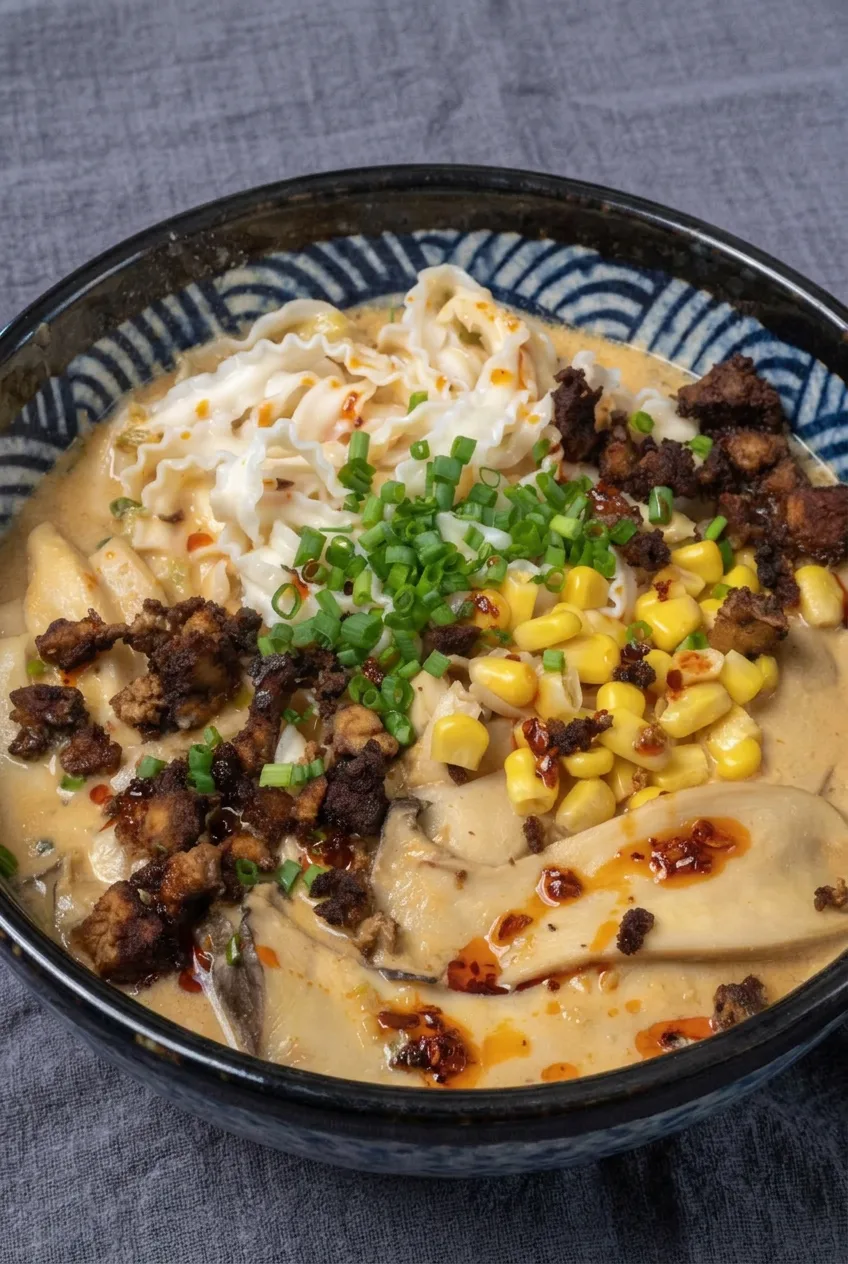
Creamy Spicy Ramen
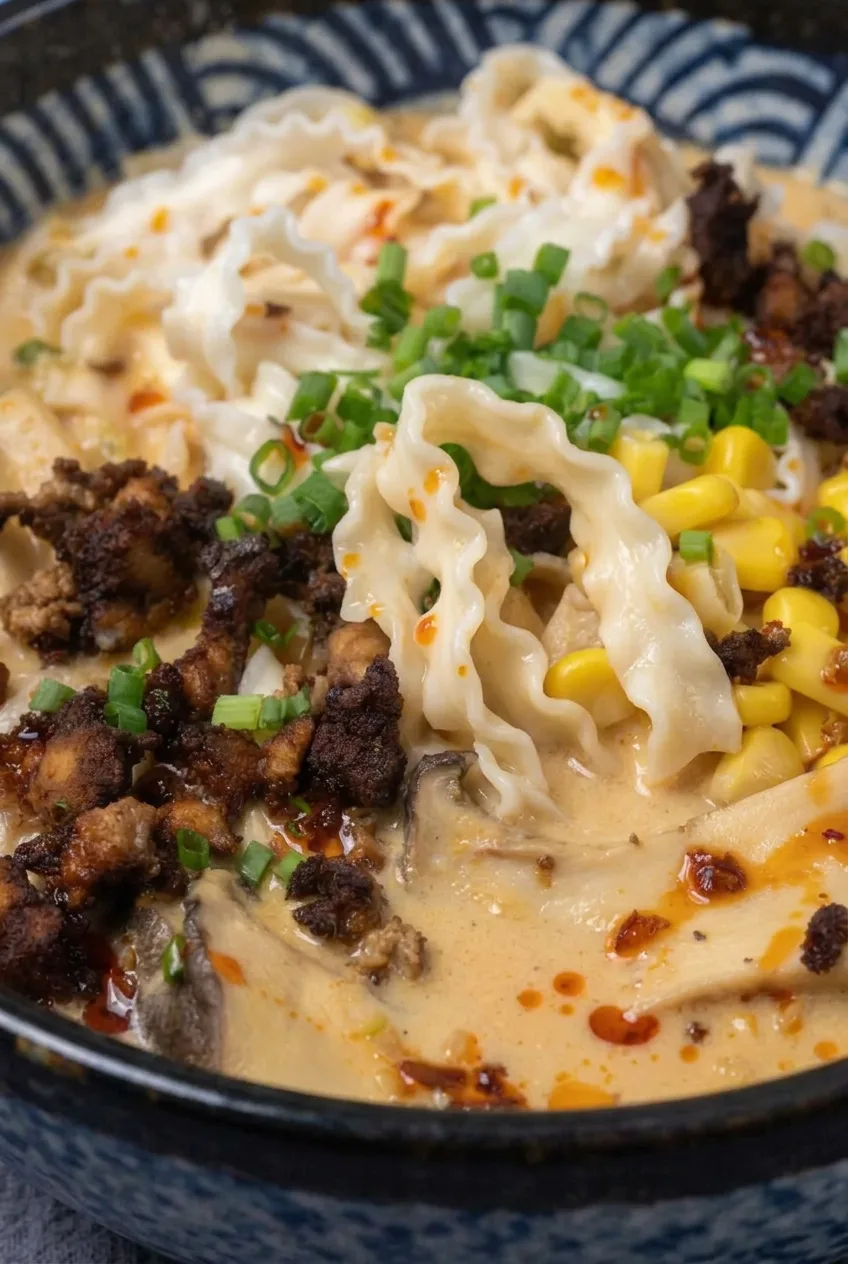
Wavy noodles sit in a pale-orange soy-milk-and-miso broth, topped with browned pork, mushrooms, corn, scallions, and chili oil. Doubanjiang gives the soup savory heat; the chili oil adds a little more heat at the table without turning the whole broth red.
This version is deliberately brothy rather than sauce-coated. Cook the noodles in a separate pot and add them just before serving so they keep their bite and the broth stays smooth and pourable. It makes two generous bowls in about 30 minutes.
Ingredients for Creamy Spicy Ramen
- 2 teaspoons neutral cooking oil
- 8 ounces ground pork (about 225g)
- 4 ounces cremini or white mushrooms, sliced (about 115g)
- 3 garlic cloves, minced
- 2 teaspoons grated fresh ginger
- 3 green onions, sliced, whites and greens separated
- 2 teaspoons doubanjiang (fermented chili bean paste), plus more to taste
- 1 1/2 cups low-sodium chicken broth
- 1 tablespoon white miso
- 2 cups unsweetened, unflavored soy milk
- 2 blocks dry wavy ramen noodles, about 6 ounces total (170g); discard the seasoning packets
- 1/2 cup sweet corn kernels, thawed if frozen
- 2 teaspoons chili crisp or chili oil, plus more to taste
Optional: Up to 1 teaspoon low-sodium soy sauce, added only after tasting the broth. The doubanjiang and miso may provide enough salt.
How to Make Creamy Spicy Ramen
- Prepare the toppings: Slice the mushrooms and green onions, keeping the onion whites separate from the greens. Mince the garlic, grate the ginger, and have the corn and chili oil ready.
- Brown the pork: Heat the oil in a 3- to 4-quart pot or deep saucepan over medium-high heat. Use a pot wide enough that the pork can brown rather than steam. Add the pork, break it into small crumbles, and cook uncovered for 5 to 7 minutes, turning occasionally, until fully cooked with dark browned edges. Ground pork should reach 160°F (70°C) if checked with a thermometer. Transfer it to a plate, leaving a little rendered fat in the pot.
- Cook the mushrooms and aromatics: Reduce the heat to medium. Add the mushrooms and cook for about 4 minutes, stirring, until softened. Set aside a few slices for topping. Add the green onion whites, garlic, and ginger; stir briefly until fragrant but not browned. Stir in the doubanjiang.
- Make the broth: Pour in the chicken broth and scrape up the browned bits from the pot. In a small bowl, whisk the miso with a little warm broth until smooth, then stir it into the pot. Add the soy milk and reduce the heat to low or medium-low. Heat uncovered for 4 to 5 minutes, until steaming with only occasional gentle bubbles; do not let it boil vigorously. Taste before adding optional soy sauce or more doubanjiang.
- Cook the noodles separately: While the broth heats, bring a second pot of water to a boil. Add the ramen without its seasoning packets. Start checking about 1 minute before the package time ends; drain without rinsing when the noodles separate easily but still have a little bite.
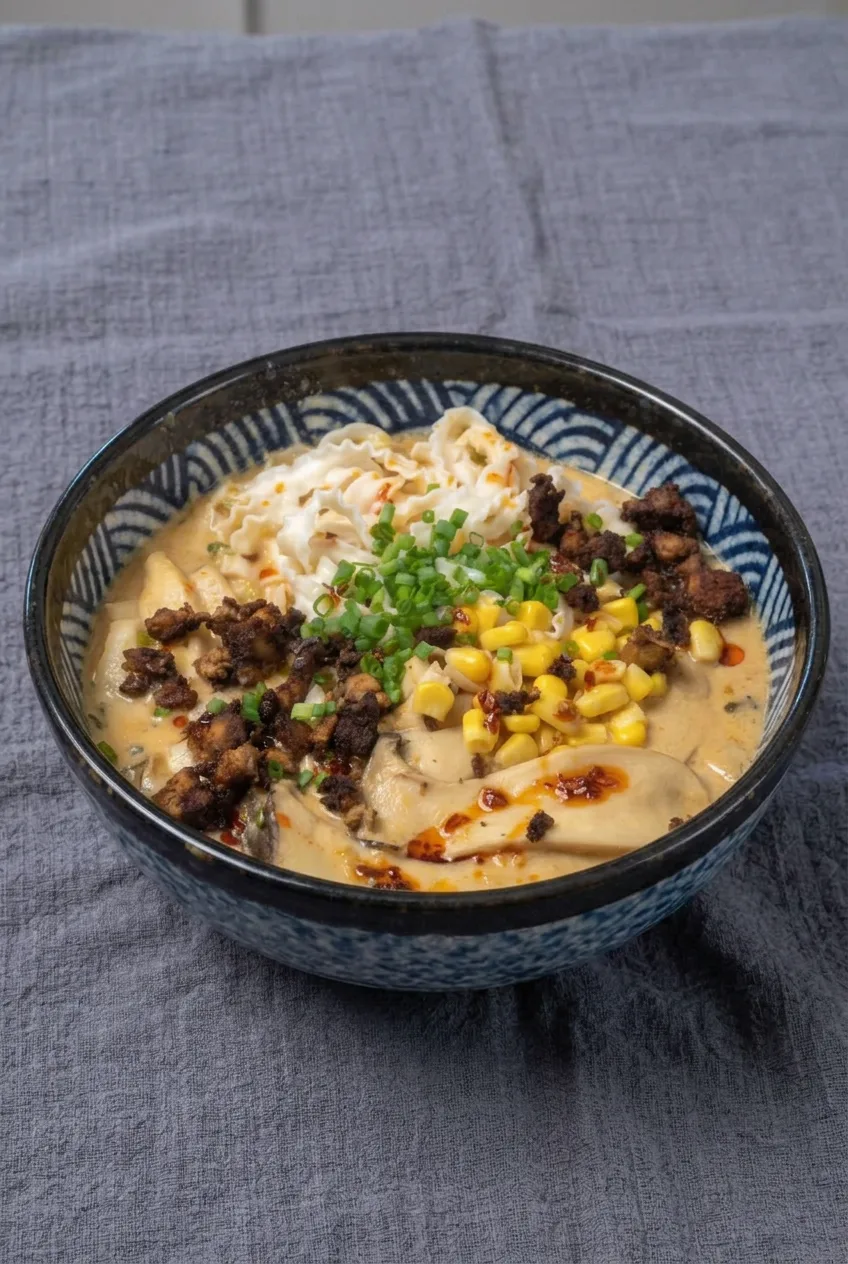
- Assemble the bowls: Warm the corn briefly in the hot broth, then spoon it out for topping. Divide the noodles between two deep bowls. Ladle the broth and mushrooms around them, leaving some wavy noodles above the surface. Arrange the pork, reserved mushroom slices, and corn in separate clusters. Add the green onion greens and drizzle chili crisp or oil over the broth. Serve immediately.
How to Keep the Broth Creamy
Whisking miso with warm broth helps it dissolve evenly. Once the soy milk is added, gentle heat keeps the soup smooth: it should steam, not boil hard. The 3 1/2 cups of broth and soy milk should remain pourable, with liquid visible around the noodles.
Plain unsweetened oat milk can replace soy milk, but its flavor and texture may differ. Heat it gently, too.
How to Keep the Noodles from Getting Soggy
Hot broth continues to soften ramen noodles. Stop cooking while they still have a little bite, and keep them out of the broth if serving is delayed. For a less-brothy noodle dish, see these garlic butter ramen noodles.
Adjusting the Spice and Salt
Doubanjiang seasons the broth, while chili crisp or oil adds finishing heat. Brands vary in saltiness and heat, so start with the listed amounts and taste the broth before adding soy sauce. Offer extra chili oil at the table rather than stirring it all into the pot.
Storing and Reheating
Refrigerate the broth and pork toppings in airtight containers, separate from cooked noodles, for up to 3 days. Reheat the broth and toppings gently on the stovetop over medium-low heat until hot, without a hard boil. Cook fresh noodles while they reheat when possible; noodles stored in broth will be softer.
If freezing, freeze the broth without noodles for up to 2 months. Thaw it in the refrigerator before gently reheating, and cook fresh noodles for serving.
Nutrition
Approximate nutrition per generous bowl, based on 2 servings: 930 calories, 39g protein, 53g fat, and 75g carbohydrates. Approximate values per 100g of prepared ramen: 110 calories, 5g protein, 6g fat, and 9g carbohydrates. Values vary with the pork, soy milk, chili oil, noodle brand, and amount of water the noodles absorb.
Equipment
- 3- to 4-quart pot
- Pot for noodles
- Small bowl
- Whisk
- Meat thermometer
Ingredients
For the Broth and Toppings
- 2 teaspoons neutral cooking oil
- 8 ounces ground pork (about 225g)
- 4 ounces cremini or white mushrooms, sliced (about 115g)
- 3 garlic cloves, minced
- 2 teaspoons grated fresh ginger
- 3 green onions, sliced, whites and greens separated
- 2 teaspoons doubanjiang (fermented chili bean paste), plus more to taste
- 1 1/2 cups low-sodium chicken broth
- 1 tablespoon white miso
- 2 cups unsweetened, unflavored soy milk
- 1/2 cup sweet corn kernels, thawed if frozen
- 2 teaspoons chili crisp or chili oil, plus more to taste
- Optional: up to 1 teaspoon low-sodium soy sauce, to taste
For the Noodles
- 2 blocks dry wavy ramen noodles, about 6 ounces total (170g); discard the seasoning packets
Instructions
- Slice the mushrooms and green onions, keeping the onion whites separate from the greens. Mince the garlic and grate the ginger.
- Heat the oil in a 3- to 4-quart pot over medium-high heat. Add the pork, break it into small crumbles, and cook uncovered for 5 to 7 minutes, turning occasionally, until fully cooked and browned. Check that it reaches 160°F (70°C). Transfer the pork to a plate, leaving a little rendered fat in the pot.
- Reduce the heat to medium. Add the mushrooms and cook for about 4 minutes, stirring, until softened. Set aside a few slices for topping.
- Add the green onion whites, garlic, and ginger. Stir briefly until fragrant but not browned, then stir in the doubanjiang.
- Pour in the chicken broth and scrape up the browned bits. Whisk the miso with a little warm broth in a small bowl until smooth, then stir it into the pot.
- Add the soy milk and reduce the heat to low or medium-low. Heat uncovered for 4 to 5 minutes, until steaming with only occasional gentle bubbles. Taste before adding optional soy sauce or more doubanjiang.
- While the broth heats, bring a second pot of water to a boil. Cook the ramen without its seasoning packets, starting to check about 1 minute before the package time ends. Drain without rinsing when the noodles separate easily but still have a little bite.
- Warm the corn briefly in the hot broth, then spoon it out for topping.
- Divide the noodles between two deep bowls. Ladle the broth and mushrooms around them, then arrange the pork, reserved mushroom slices, and corn in separate clusters.
- Top with the green onion greens and drizzle with chili crisp or chili oil. Serve immediately.
Tips
- Cook the noodles separately and add them just before serving to keep them from getting soggy.
- Whisk the miso with warm broth before adding it so it dissolves smoothly.
- Keep the soy milk broth at a gentle heat; do not let it boil vigorously.
- Taste the broth before adding soy sauce because the miso and doubanjiang may provide enough salt.
- Serve extra chili oil at the table so each person can adjust the heat.
Variations
- Oat Milk Ramen: Replace the soy milk with plain, unsweetened oat milk and heat it gently.