

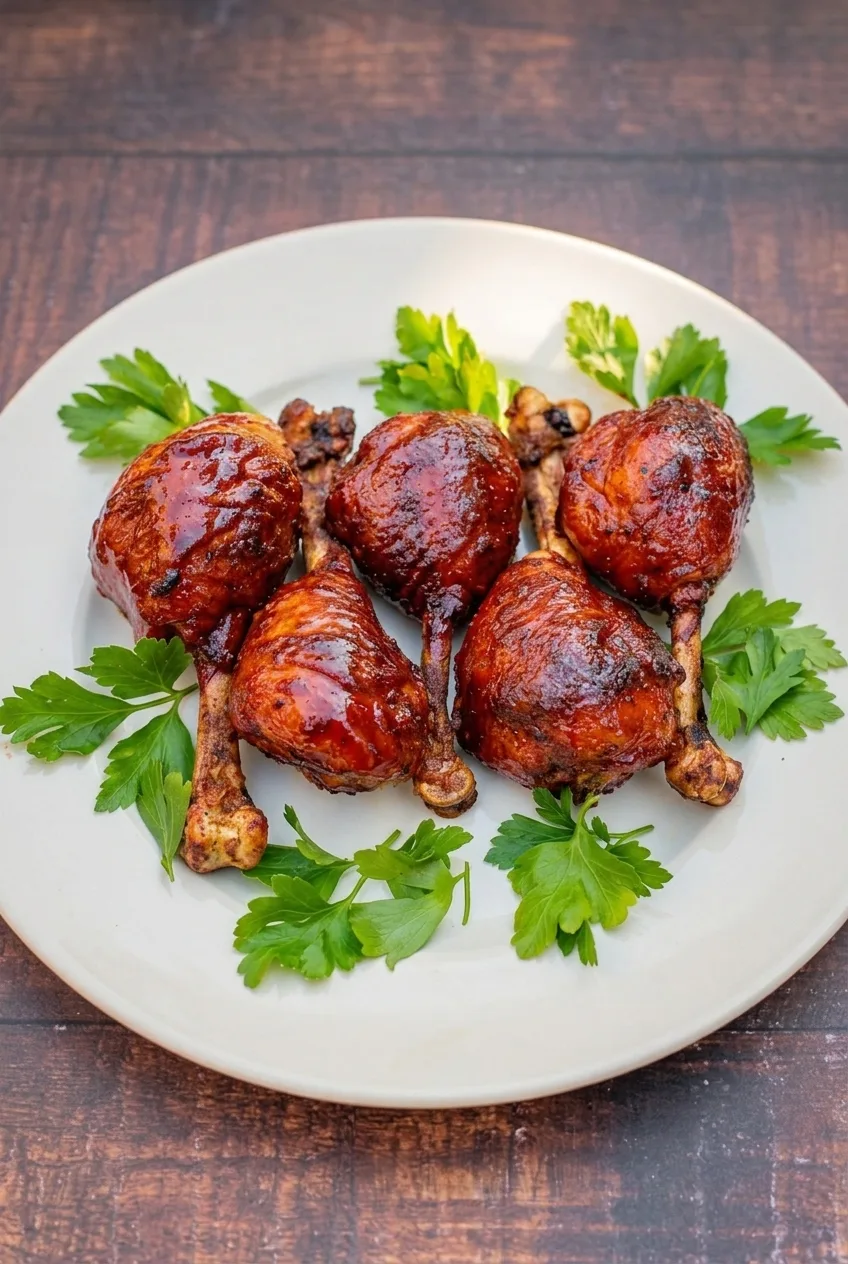
Chicken Lollipop Drumsticks
Chicken lollipop drumsticks are whole, skin-on legs trimmed to leave an exposed bone handle and a rounded meaty end. They bake with a paprika-garlic seasoning, then get a late coat of barbecue sauce that turns glossy without spending the entire cook time in the oven. Frenching the drumsticks takes the most hands-on work; once they are baking, a thermometer is more reliable than the clock for judging doneness.
Yield: 8 drumsticks; 4 main-course servings or about 8 appetizer portions. Prep: 25–30 minutes. Cook: about 35–45 minutes, depending on size. Total: about 1 hour 10 minutes to 1 hour 25 minutes, including resting.
Ingredients for Chicken Lollipop Drumsticks
- 8 medium skin-on chicken drumsticks, about 2 1/2–3 pounds total (about 1,250g)
- 1 tablespoon olive oil or neutral cooking oil, plus a little for the rack
- 1 teaspoon smoked paprika
- 1 teaspoon garlic powder
- 1/2 teaspoon onion powder
- 1 teaspoon fine salt
- 1/2 teaspoon freshly ground black pepper
- 3/4 cup reddish-brown barbecue sauce (about 180g)
- A small handful of fresh flat-leaf parsley sprigs, about 1/4 cup loosely packed
How to Bake Chicken Lollipop Drumsticks
- Preheat and prepare the pan: Set an oven rack in the middle position and preheat to 400°F (205°C). Line a rimmed baking sheet with foil and set a lightly oiled oven-safe wire rack on top.
- French the drumsticks: Pat the chicken dry. Just below the meaty portion of each drumstick, cut all the way around the narrow shaft through the skin and tendons, but not the bone. Grip the tissue at the narrow end with a paper towel and pull it away. Push the remaining meat toward the thick end, then snip away any dangling tendons, cartilage, or loose skin from the exposed handle.
- Season: Rub the meaty ends with the tablespoon of oil. Mix the paprika, garlic powder, onion powder, salt, and pepper, then coat the chicken evenly. Arrange the drumsticks on the rack with space between the meaty ends. Leave the barbecue sauce off for now.
- Bake until browned: Bake uncovered for about 25–35 minutes, turning once halfway through. Start checking the thickest part of the gathered meat at about 25 minutes, without touching bone with the thermometer tip. Glaze when the skin is browned and the chicken is nearing doneness, roughly 155°F (70°C) to 165°F (75°C).
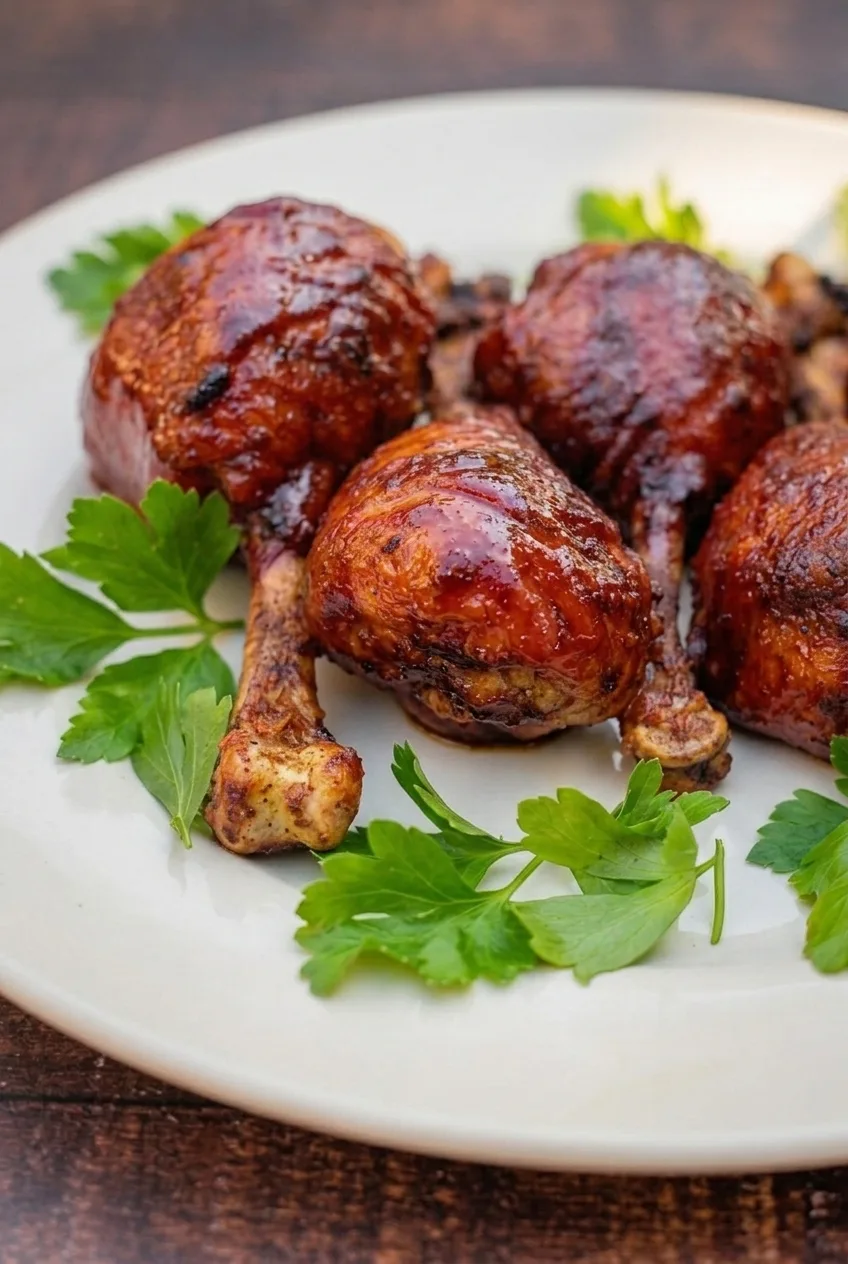
- Glaze and finish: Brush the meaty ends generously with barbecue sauce. Bake another 8–12 minutes, watching for a glossy, set coating rather than wet or blackened sauce. The thickest meat must reach at least 165°F; for more tender dark meat, aim for about 175°F (80°C). Continue baking as needed, particularly for large drumsticks.
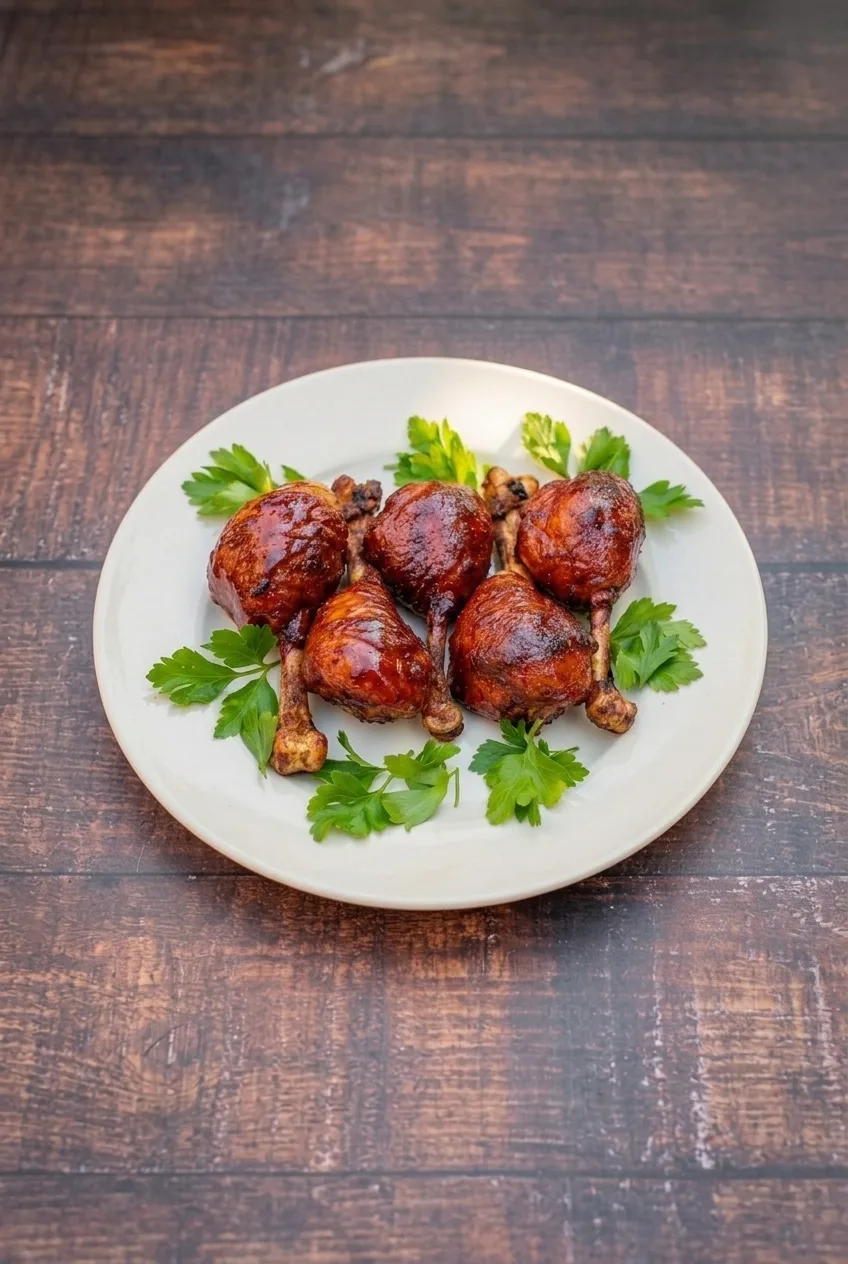
- Rest and serve: Rest for 5–10 minutes so the hot glaze can settle. Remove any foil used to protect the bones, then cluster the drumsticks on a plate with their handles visible and arrange the parsley sprigs around them.
How to French Chicken Drumsticks
Sharp kitchen shears make it easier to cut through the ring of skin and tendons around the narrow shaft. If the tissue will not pull free, look for strands still attached to the bone and snip them individually. A paper towel helps grip slippery skin and cartilage. The finished handle should have no dangling tissue, but the bone does not need to be uniformly white.
When to Add the Barbecue Glaze
Baking with the dry seasoning first gives the skin time to brown before the sugary sauce goes on. During the final bake, the glaze should deepen to a reddish-brown shine and cling to the chicken rather than pool on it. Sauces vary in sweetness, so check frequently if yours darkens quickly.
Browned bone handles are fine. If the tips become excessively dark, loosely cover just those tips with small pieces of foil during cooking and remove the foil before serving.
Serving and Make-Ahead Notes
Serve the drumsticks as handheld appetizers with extra barbecue sauce in a separate bowl, or plan on two per person with rice and vegetables for dinner. Do not serve sauce that has contacted raw chicken.
You can French the raw drumsticks ahead of time and keep them refrigerated until ready to season and bake. For a different oven-roasted glaze, see these honey mustard chicken drumsticks.
Storing and Reheating Leftovers
Refrigerate cooked leftovers promptly in an airtight container and use within 3–4 days. Reheat in an oven or air fryer until hot throughout, watching the glaze so it does not burn. The coating will remain sticky rather than turn crisp.
Nutrition
Approximate nutrition per main-course serving of 2 drumsticks, excluding bones: 440 calories, 40g protein, 21g fat, and 20g carbohydrates. Per 100g of edible cooked chicken and glaze: approximately 225 calories, 20g protein, 11g fat, and 10g carbohydrates. Values vary with drumstick size, edible yield, and barbecue sauce.
Equipment
- Oven
- Rimmed baking sheet
- Oven-safe wire rack
- Kitchen shears
- Instant-read thermometer
- Pastry brush
Ingredients
For the Chicken
- 8 medium skin-on chicken drumsticks, about 2 1/2–3 pounds total (about 1,250 g)
- 1 tablespoon olive oil or neutral cooking oil, plus a little for the rack
- 1 teaspoon smoked paprika
- 1 teaspoon garlic powder
- 1/2 teaspoon onion powder
- 1 teaspoon fine salt
- 1/2 teaspoon freshly ground black pepper
- 3/4 cup reddish-brown barbecue sauce (about 180 g)
For Serving
- A small handful of fresh flat-leaf parsley sprigs, about 1/4 cup loosely packed
Instructions
- Position an oven rack in the middle and preheat the oven to 400°F (205°C). Line a rimmed baking sheet with foil and set a lightly oiled oven-safe wire rack on top.
- Pat the chicken dry. Just below the meaty portion of each drumstick, cut around the narrow shaft through the skin and tendons without cutting the bone.
- Grip the tissue at the narrow end with a paper towel and pull it away. Push the remaining meat toward the thick end, then snip away dangling tendons, cartilage, or loose skin.
- Rub the meaty ends with the tablespoon of oil. Mix the paprika, garlic powder, onion powder, salt, and pepper, then coat the chicken evenly.
- Arrange the drumsticks on the rack with space between the meaty ends. Bake uncovered for about 25–35 minutes, turning once halfway through.
- Starting at about 25 minutes, check the thickest part of the gathered meat with a thermometer, avoiding the bone. When browned and nearing doneness, roughly 155°F (70°C) to 165°F (75°C), brush the meaty ends generously with barbecue sauce.
- Bake for another 8–12 minutes, until the glaze is glossy and set and the thickest meat reaches at least 165°F (75°C). For more tender dark meat, aim for about 175°F (80°C). Continue baking as needed for large drumsticks.
- Rest for 5–10 minutes. Remove any foil used to protect the bone tips, then arrange the drumsticks with the handles visible and parsley around them.
Tips
- Use sharp kitchen shears to cut through the skin and tendons around the narrow shaft.
- If tissue will not pull free, use a paper towel for grip and snip any remaining strands individually.
- Add the barbecue sauce near the end of baking so it has time to glaze without burning.
- Check the thickest gathered meat with a thermometer, keeping the tip away from the bone.
- Loosely cover bone tips with small pieces of foil if they become excessively dark.