

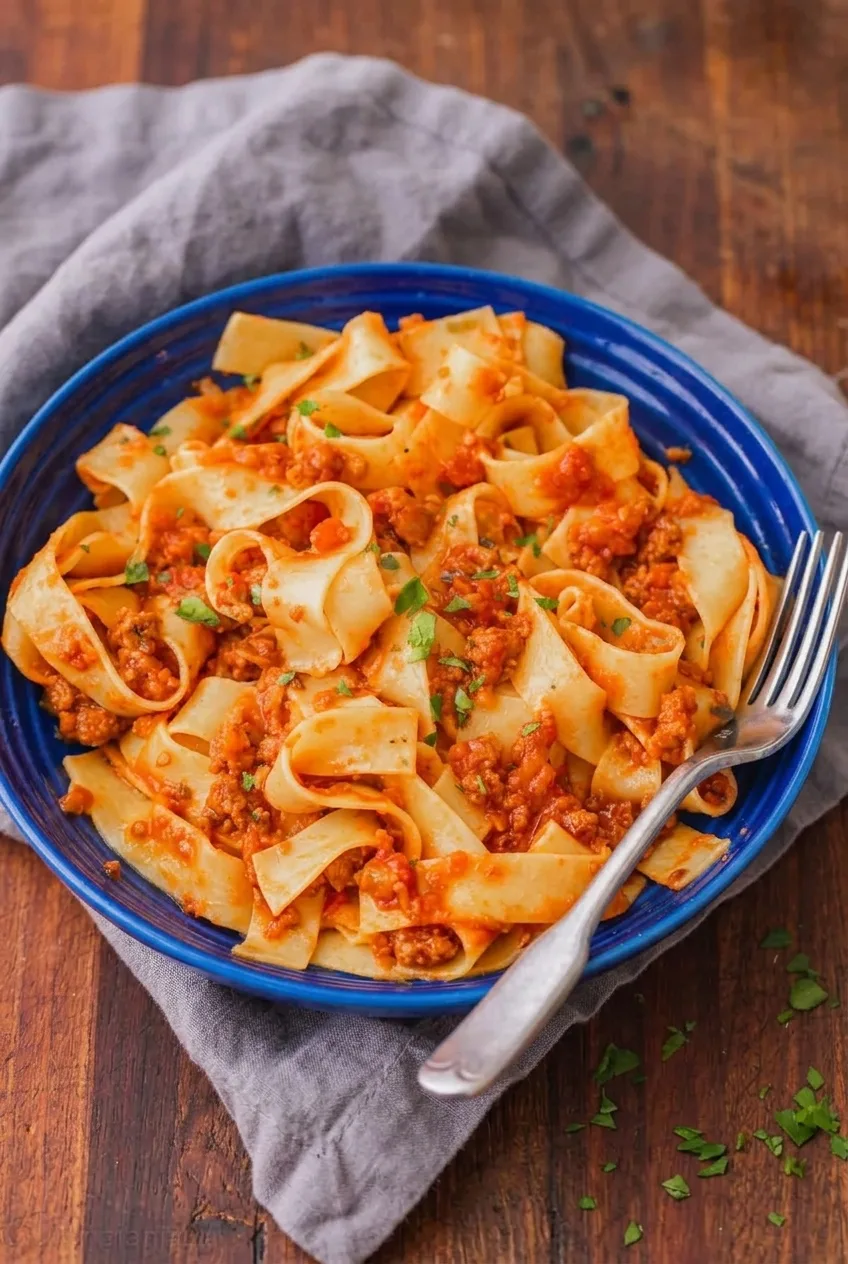
Ground Beef Bolognese Sauce
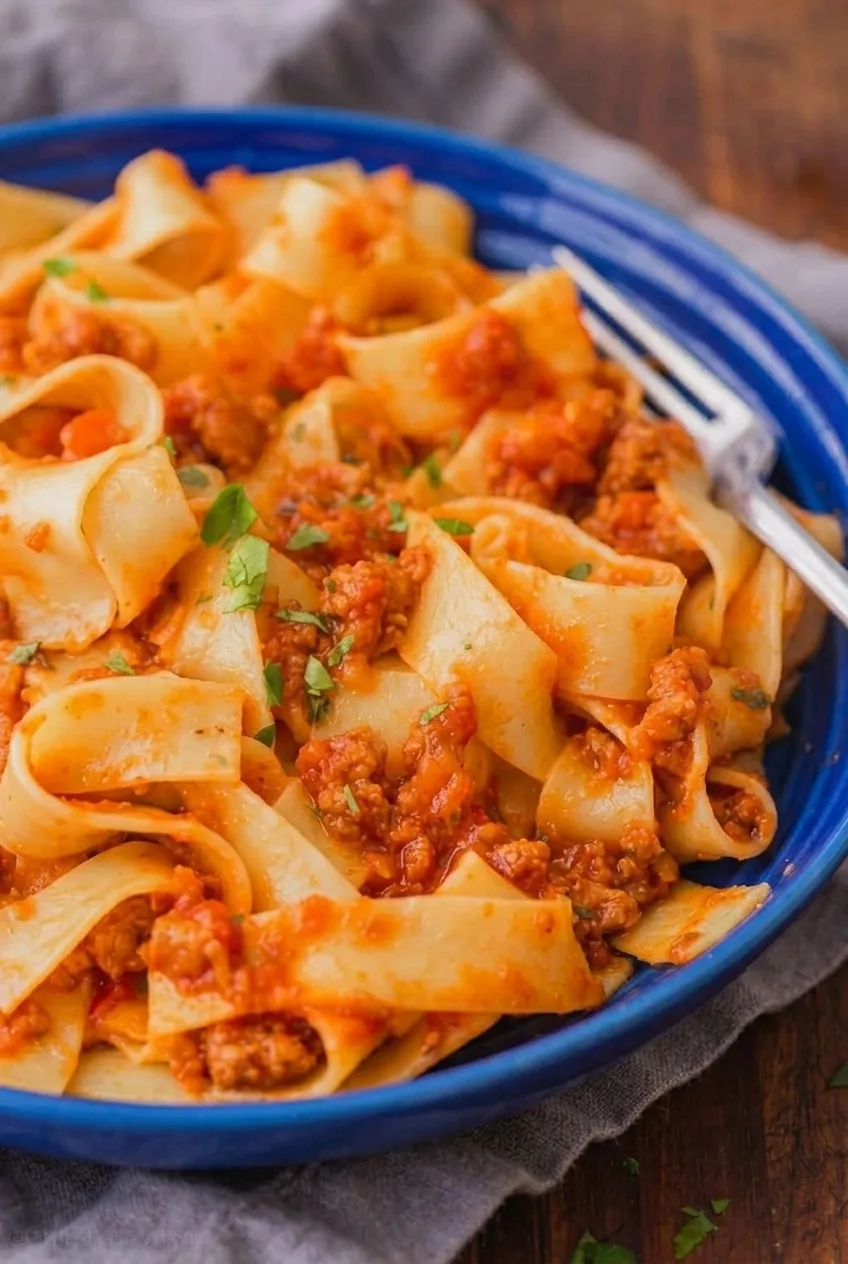
Ground beef Bolognese should be thick enough to cling to broad pappardelle ribbons, with tender beef crumbles and finely softened vegetables throughout. This version starts with onion, carrot, and celery, then reduces milk and white wine into the beef before adding tomatoes. Keep the long simmer gentle: the sauce needs time to concentrate, but a little hot water will keep it from sticking if the pot dries out too soon.
Serves: 6 | Prep: 25 minutes | Cook: about 2½ to 3 hours, or longer if needed
Ingredients
- 1 tablespoon olive oil
- 2 tablespoons unsalted butter
- 1 medium yellow onion, finely diced (150g)
- 1 medium carrot, finely diced (75g)
- 1 celery rib, finely diced (50g)
- 1 teaspoon kosher salt, plus more to taste
- 1/2 teaspoon ground black pepper
- 1 1/2 pounds ground beef, preferably 80/20 (680g)
- 1 cup whole milk
- 1 cup dry white wine
- 2 tablespoons tomato paste (30g)
- 1 can crushed tomatoes (28 ounces/about 795g)
- 1/2 cup water, plus more as needed
- 1 pound pappardelle (450g)
- 2 tablespoons finely chopped fresh parsley, for serving
Optional: Add a small pinch of nutmeg with the milk, or cook 1 minced garlic clove briefly after the vegetables soften. Offer finely grated Parmesan at the table, if desired.
How to Make Ground Beef Bolognese
- Chop the vegetables: Finely dice the onion, carrot, and celery so they soften into the sauce. If using a food processor, pulse them finely without turning them into a purée.
- Soften the vegetables: Warm the olive oil and butter in a 5- to 6-quart Dutch oven or heavy-bottomed pot over medium heat. Add the onion, carrot, celery, salt, and pepper. Cook, stirring often, for 8 to 10 minutes, until glossy and very soft but not browned.
- Cook the beef: Add the ground beef and break it into small crumbles. Cook over medium heat for 8 to 10 minutes, until no longer raw-looking. Spoon off excess rendered fat only if the pot looks greasy.
- Reduce the milk: Add the milk and simmer gently over medium-low heat for 10 to 15 minutes, stirring occasionally, until most of the liquid has evaporated. The beef should look moist and creamy, not soupy. Add the nutmeg here if using.
- Reduce the wine: Add the wine and simmer over medium-low heat for 10 to 15 minutes, until little free liquid remains and its sharp alcohol smell has mostly cooked off. Stir in the tomato paste and cook briefly to coat the beef and vegetables.
- Simmer the sauce: Stir in the crushed tomatoes and 1/2 cup water. Bring to a gentle simmer, then reduce the heat to low. Cook mostly uncovered for 2 to 2½ hours, with only small, occasional bubbles breaking the surface. Stir every 20 to 30 minutes. Begin checking after 1½ hours for tenderness, sticking, and liquid level. If the sauce dries out before the beef is tender, lower the heat and add hot water in small splashes. If it evaporates unusually quickly, set the lid ajar.
- Finish and season: When the beef is tender and the vegetables have softened into the sauce, uncover fully and simmer for another 10 to 20 minutes if needed. Stir more often as it thickens. The sauce should cling to a spoon rather than run off it. Taste and adjust the salt and pepper; add a small splash of hot water if it becomes too thick.
- Cook the pasta: Near the end of the sauce’s cooking time, cook the pappardelle in salted water according to the package directions until just tender. Drain, reserving a little pasta water.
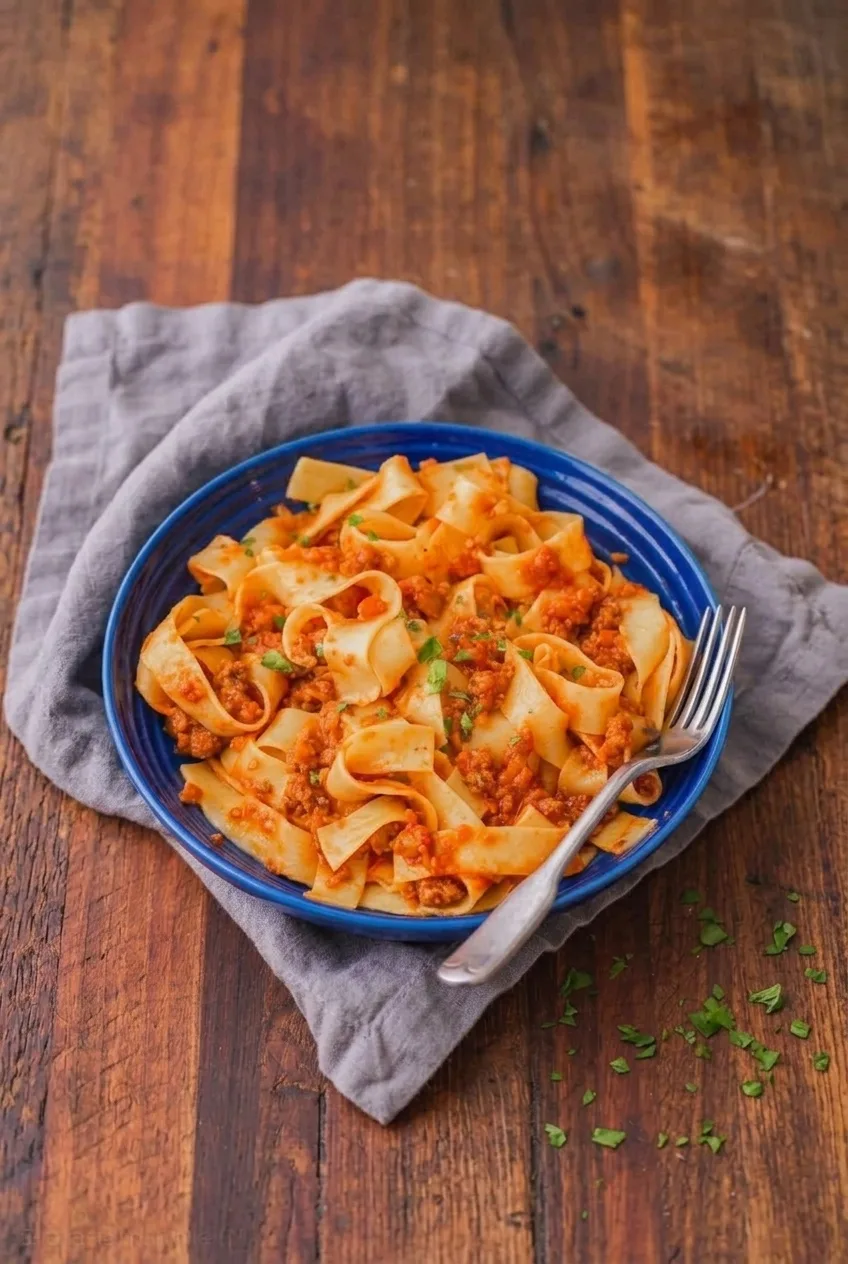
- Toss and serve: Toss the pappardelle with enough sauce to coat the broad ribbons, adding a splash of reserved pasta water only if needed. Serve in shallow bowls with a light scattering of parsley. Pass Parmesan separately if using.
How to Judge the Simmer and Finished Sauce
A heavy pot helps limit scorching, but a wide pot or a stronger burner may evaporate liquid faster. Keep the heat low and check the bottom of the pot when you stir. Add hot water a little at a time if the sauce is drying before the beef becomes tender; once the beef is tender, let excess moisture reduce uncovered.
The finished sauce should have distinct, tender beef crumbles and vegetables that are very soft. It should coat a pappardelle ribbon without leaving a watery pool beneath the pasta. Use those cues rather than an exact simmer time. A quick wide-skillet version can shorten the cook, but it will not develop the same tenderness and depth as this long simmer.
Wine and Pasta Options
Dry red wine can replace the white wine, though it changes the sauce’s flavor. For a wine-free version, use chicken or beef stock instead and taste before adding more salt. Reduce either substitute at the same stage as the white wine.
Pappardelle’s broad ribbons hold the substantial sauce; tagliatelle is a close alternative. This recipe reduces milk before adding wine and tomatoes, but milk timing varies among Bolognese methods.
Make-Ahead, Storage, and Reheating
The sauce can be made ahead. Let it cool, then refrigerate it in an airtight container for up to 3 days. Store it separately from the pasta when possible, and cook the pasta close to serving time.
Reheat the sauce gently in a saucepan, stirring until hot and adding a splash of water if it has thickened too much. For longer storage, freeze the cooled sauce in airtight, freezer-safe containers for up to 3 months for best quality. Thaw overnight in the refrigerator before reheating.
Nutrition
Approximate nutrition per serving, based on 6 servings of pasta with sauce: 730 calories, 33g protein, 31g fat, and 71g carbohydrates. Per 100g: about 160 calories, 7g protein, 7g fat, and 16g carbohydrates. Values vary with ingredients, portions, and how much liquid evaporates.
Equipment
- 5- to 6-quart Dutch oven or heavy-bottomed pot
- Large pot
- Colander
Ingredients
For the Sauce
- 1 tablespoon olive oil
- 2 tablespoons unsalted butter
- 1 medium yellow onion, finely diced (150 g)
- 1 medium carrot, finely diced (75 g)
- 1 celery rib, finely diced (50 g)
- 1 teaspoon kosher salt, plus more to taste
- 1/2 teaspoon ground black pepper
- 1 1/2 pounds ground beef, preferably 80/20 (680 g)
- 1 cup whole milk
- 1 cup dry white wine
- 2 tablespoons tomato paste (30 g)
- 1 can crushed tomatoes (28 ounces/about 795 g)
- 1/2 cup water, plus more as needed
For Serving
- 1 pound pappardelle (450 g)
- 2 tablespoons finely chopped fresh parsley
- Finely grated Parmesan, optional
Instructions
- Finely dice the onion, carrot, and celery. If using a food processor, pulse until finely chopped but not puréed.
- Warm the olive oil and butter in a Dutch oven over medium heat. Add the onion, carrot, celery, salt, and pepper. Cook, stirring often, for 8 to 10 minutes, until very soft but not browned.
- Add the ground beef and break it into small crumbles. Cook over medium heat for 8 to 10 minutes, until no longer raw-looking. Spoon off excess fat only if the pot looks greasy.
- Add the milk and simmer gently over medium-low heat for 10 to 15 minutes, stirring occasionally, until most of the liquid has evaporated and the beef looks moist and creamy.
- Add the wine and simmer over medium-low heat for 10 to 15 minutes, until little free liquid remains and the sharp alcohol smell has mostly cooked off.
- Stir in the tomato paste and cook briefly to coat the beef and vegetables.
- Stir in the crushed tomatoes and 1/2 cup water. Bring to a gentle simmer, then reduce the heat to low.
- Cook mostly uncovered for 2 to 2 1/2 hours, keeping the simmer gentle. Stir every 20 to 30 minutes and begin checking after 1 1/2 hours. Add hot water in small splashes if the sauce dries before the beef is tender; set the lid ajar if it evaporates unusually quickly.
- When the beef is tender and the vegetables are very soft, simmer uncovered for another 10 to 20 minutes if needed, stirring more often as the sauce thickens. Season with salt and pepper, and add a splash of hot water if it becomes too thick.
- Near the end of the sauce’s cooking time, cook the pappardelle in salted water according to the package directions until just tender. Drain, reserving a little pasta water.
- Toss the pappardelle with enough sauce to coat, adding a splash of reserved pasta water if needed. Serve with parsley and Parmesan, if desired.
Tips
- Dice the vegetables finely so they soften into the sauce.
- Keep the simmer low, with only small, occasional bubbles.
- Check the bottom of the pot when stirring and add hot water a little at a time if the sauce is drying out.
- Judge doneness by tender beef and a sauce that clings to a spoon, rather than by time alone.
- Store the sauce separately from the pasta when possible.
Variations
- Red Wine Bolognese: Replace the white wine with dry red wine.
- Wine-Free Bolognese: Replace the wine with chicken or beef stock and taste before adding more salt.
- Garlic or Nutmeg Bolognese: Add 1 minced garlic clove after the vegetables soften, or stir a small pinch of nutmeg into the milk.
- Tagliatelle Bolognese: Use tagliatelle instead of pappardelle.