

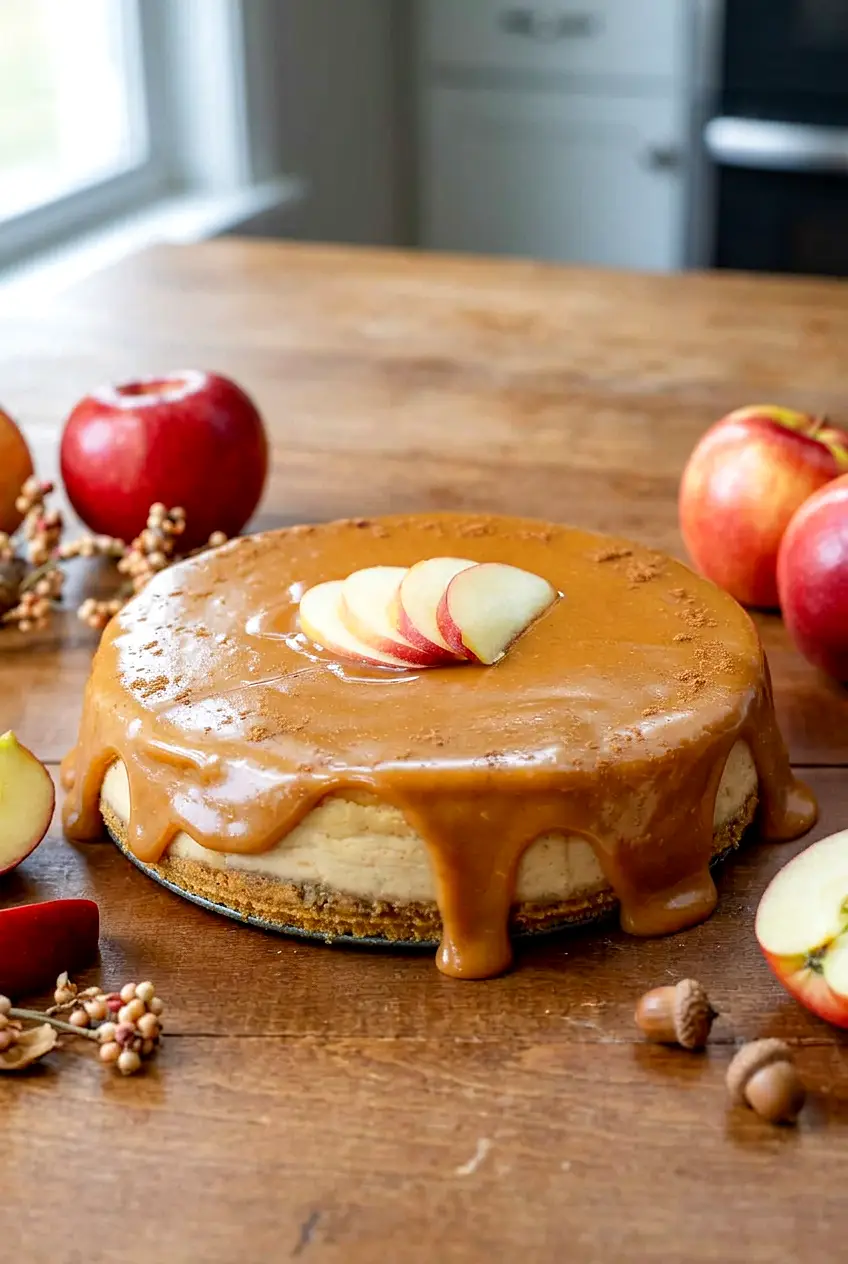
Apple Cider Cheesecake
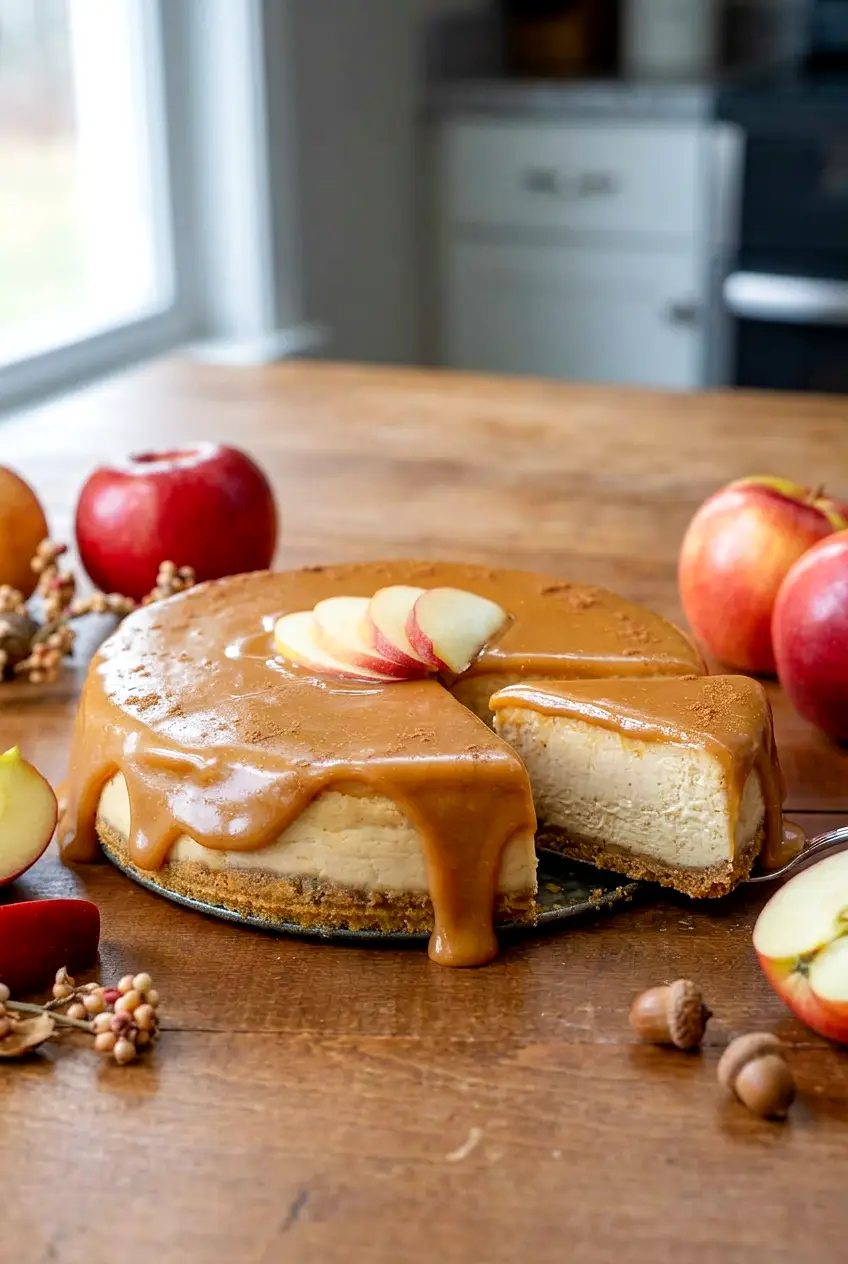
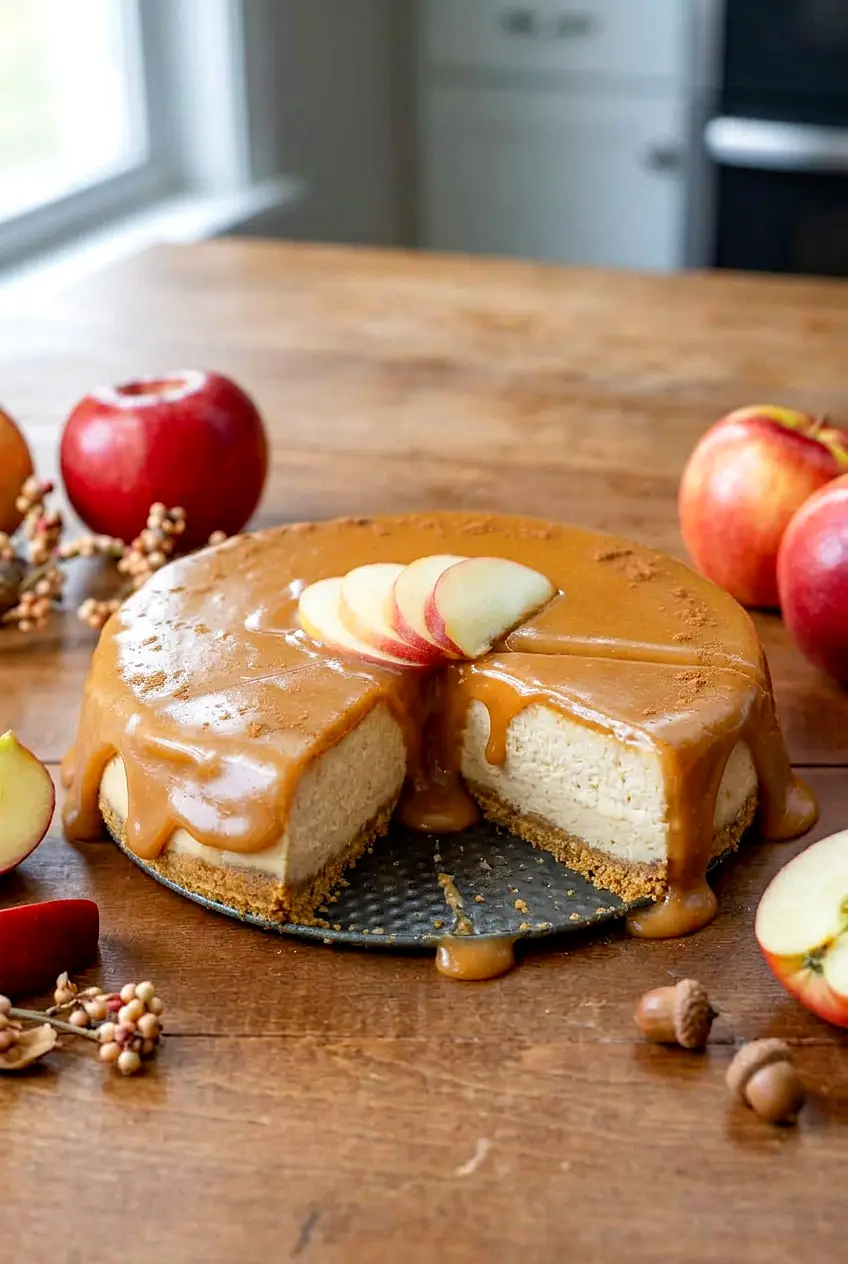
Apple cider cheesecake has a creamy baked filling, a simple graham cracker crust, and a clear apple flavor that comes from reducing the cider before it goes into the batter. It is finished with a homemade caramel topping that fits the apple flavor without making the cheesecake overly sweet.
The method is straightforward: reduce the cider, mix the filling gently, bake the cheesecake in a water bath, and chill it until fully set. For doneness, look for set edges and a center that still has a slight wobble.
Ingredients for Apple Cider Cheesecake
- For the crust:
- 1 1/2 cups graham cracker crumbs (150g)
- 6 tablespoons melted butter (85g)
- 1/4 cup granulated sugar (50g)
- Pinch of salt
- For the filling:
- 2 cups apple cider, reduced to 1 cup
- 24 ounces full-fat block cream cheese, softened (675g)
- 1 cup granulated sugar (200g)
- 1 cup sour cream (240g)
- 3 large eggs
- 1 teaspoon ground cinnamon
- 1 teaspoon vanilla extract
- 1/4 teaspoon salt
- For the apple cider caramel topping:
- 1 cup granulated sugar (200g)
- 4 tablespoons butter (55g)
- 1/2 cup heavy cream (120g)
- Pinch of salt
Use block cream cheese here, not whipped or tub-style cream cheese. Let the reduced cider cool completely before adding it to the filling so the batter stays smooth and thick.
How to Make Apple Cider Cheesecake
- Reduce the cider: Pour the apple cider into a small saucepan and simmer over medium heat for 15 to 25 minutes, until it reduces from 2 cups to 1 cup and looks slightly syrupy. Set aside and cool completely.
- Preheat the oven and prepare the pan: Heat the oven to 325°F. Wrap the outside of a 9-inch springform pan well with heavy-duty foil to help keep water out. Lightly grease the inside if you like.
- Make the crust: Stir together the graham cracker crumbs, melted butter, sugar, and salt until the crumbs are evenly coated and hold together when pressed. Press the mixture firmly into the bottom of the pan and slightly up the sides.
- Mix the filling: Beat the softened cream cheese and sugar until smooth. Mix in the sour cream. Add the eggs, reduced cider, cinnamon, vanilla, and salt, then mix just until smooth and combined. Stop once the lumps are gone so you do not beat in too much air.
- Fill the pan and set up the water bath: Pour the filling over the crust and smooth the top. Place the foil-wrapped springform pan inside a large roasting pan. Set the roasting pan in the oven, then carefully pour hot water into the outer pan until it comes partway up the sides of the springform pan.
- Bake the cheesecake: Bake for 55 to 70 minutes, checking near the lower end. The edges should look set, the center should still have a slight jiggle, and the top should stay fairly pale. If you want to check by temperature, the center should be about 150°F.
- Cool gradually: Turn off the oven and let the cheesecake cool gradually in the oven using your usual cheesecake method. Then remove it from the water bath and set it on a rack to cool to room temperature.
- Chill until firm: Refrigerate for at least 4 to 6 hours, or overnight, until fully set.
- Make the caramel: When ready to serve, cook the sugar in a saucepan over medium heat until melted and amber. Watch closely so it does not scorch. Carefully stir in the butter until melted, then slowly add the heavy cream and salt. Stir until smooth. If the caramel tightens, keep stirring over lower heat until it loosens again.
- Finish and serve: Let the caramel cool slightly, then spoon or drizzle it over the chilled cheesecake just before serving. Slice and serve cold.
Why the Cheesecake Stays Smooth
Three things make the biggest difference here: fully softened cream cheese, cooled reduced cider, and gentle mixing once the eggs go in. Overmixing can add too much air, which makes the cheesecake more likely to puff, crack, or bake up less evenly.
The water bath also helps the filling bake more gently. It will not guarantee a perfectly smooth top, but it does help the cheesecake cook more evenly from edge to center.
Why Reduce the Apple Cider First
Apple cider adds flavor, but it also adds water. Reducing it first concentrates the apple flavor without thinning the cheesecake batter too much. If your cider tastes especially sweet, reducing it a bit farther can help keep the flavor more focused.
Simple Variations
With Spiced Apples and Pecans
Top the chilled cheesecake with softly cooked spiced apples and a small sprinkle of chopped pecans, either instead of the caramel or with a light drizzle. Let the apples cool before adding them.
Salted Caramel Finish
For a slightly sharper finish, add a small pinch of flaky salt over the caramel just before serving.
How to Store Apple Cider Cheesecake
Store the cheesecake covered in the refrigerator for up to 4 to 5 days. For the cleanest slices and best texture, keep the caramel separate and add it just before serving.
You can freeze individual slices tightly wrapped for longer storage. Thaw them in the refrigerator before serving. Serve the cheesecake chilled; it does not need reheating.
If you want to make it ahead, bake the cheesecake a day in advance so it has time to chill and fully set. The caramel can also be made ahead and gently rewarmed if it becomes too thick.
More Apple Dessert Ideas
If you want another apple dessert with caramel notes, try these Apple Pie Bars with Oat Streusel and Caramel.
For a no-bake apple treat, check out these Chocolate Covered Caramel Apple Slices.
If you like the same flavor profile in bar form, try these Caramel Apple Cheesecake Bars.
Nutrition
Nutrition is approximate and will vary based on ingredient brands, exact amounts, caramel yield, and slice size.
- Serving size: 1 slice out of 12
- Calories: about 500
- Protein: 7g
- Fat: 31g
- Carbohydrates: 50g
- Per 100g: about 325 calories, 5g protein, 20g fat, 33g carbohydrates
Equipment
- 9-inch springform pan
- heavy-duty foil
- large roasting pan
- small saucepan
- medium saucepan
- electric mixer
- mixing bowls
- wire rack
Ingredients
For the crust
- 1 1/2 cups graham cracker crumbs (150g)
- 6 tablespoons melted butter (85g)
- 1/4 cup granulated sugar (50g)
- Pinch of salt
For the filling
- 2 cups apple cider, reduced to 1 cup
- 24 ounces full-fat block cream cheese, softened (675g)
- 1 cup granulated sugar (200g)
- 1 cup sour cream (240g)
- 3 large eggs
- 1 teaspoon ground cinnamon
- 1 teaspoon vanilla extract
- 1/4 teaspoon salt
For the apple cider caramel topping
- 1 cup granulated sugar (200g)
- 4 tablespoons butter (55g)
- 1/2 cup heavy cream (120g)
- Pinch of salt
Instructions
- Pour the apple cider into a small saucepan and simmer over medium heat until reduced from 2 cups to 1 cup, about 15 to 25 minutes; set aside and cool completely.
- Preheat the oven to 325°F (163°C). Wrap the outside of a 9-inch springform pan well with heavy-duty foil and lightly grease the inside if desired.
- Combine graham cracker crumbs, melted butter, sugar, and a pinch of salt until crumbs are evenly coated; press firmly into the bottom and slightly up the sides of the pan.
- Beat the softened cream cheese and sugar with an electric mixer until smooth. Mix in the sour cream.
- Add the eggs, cooled reduced cider, cinnamon, vanilla, and salt; mix just until smooth and combined, stopping once lumps are gone.
- Pour the filling over the crust and smooth the top. Place the foil-wrapped springform pan inside a large roasting pan.
- Set the roasting pan in the oven, then carefully pour hot water into the outer pan until it comes partway up the sides of the springform pan to create a water bath.
- Bake for 55 to 70 minutes, checking near the lower end; the edges should be set, the center should still have a slight jiggle, and the top should remain fairly pale. For doneness, the center will be about 150°F (66°C).
- Turn off the oven and let the cheesecake cool gradually in the oven (you may crack the door) until it stops steaming; then remove from the water bath and set on a wire rack to cool to room temperature.
- Refrigerate the cheesecake for at least 4 to 6 hours, or overnight, until fully set.
- To make the caramel, cook the sugar in a medium saucepan over medium heat until melted and amber, watching closely. Stir in the butter until melted, then slowly add the heavy cream and salt, stirring until smooth; if the caramel tightens, stir over low heat until it loosens.
- Let the caramel cool slightly, then spoon or drizzle it over the chilled cheesecake just before serving. Slice and serve cold.
Tips
- Fully soften block cream cheese before mixing to avoid lumps.
- Allow the reduced cider to cool completely so the batter stays thick and smooth.
- Mix gently after adding eggs to avoid incorporating excess air and prevent cracking.
- Use a water bath to help the cheesecake bake evenly and reduce cracking.
- Check for set edges and a slight jiggle in the center rather than relying only on baking time.
Variations
- With Spiced Apples and Pecans: Top the chilled cheesecake with softly cooked spiced apples and a sprinkle of chopped pecans instead of or along with the caramel.
- Salted Caramel Finish: Finish with a small pinch of flaky salt over the caramel just before serving for a brighter contrast.