

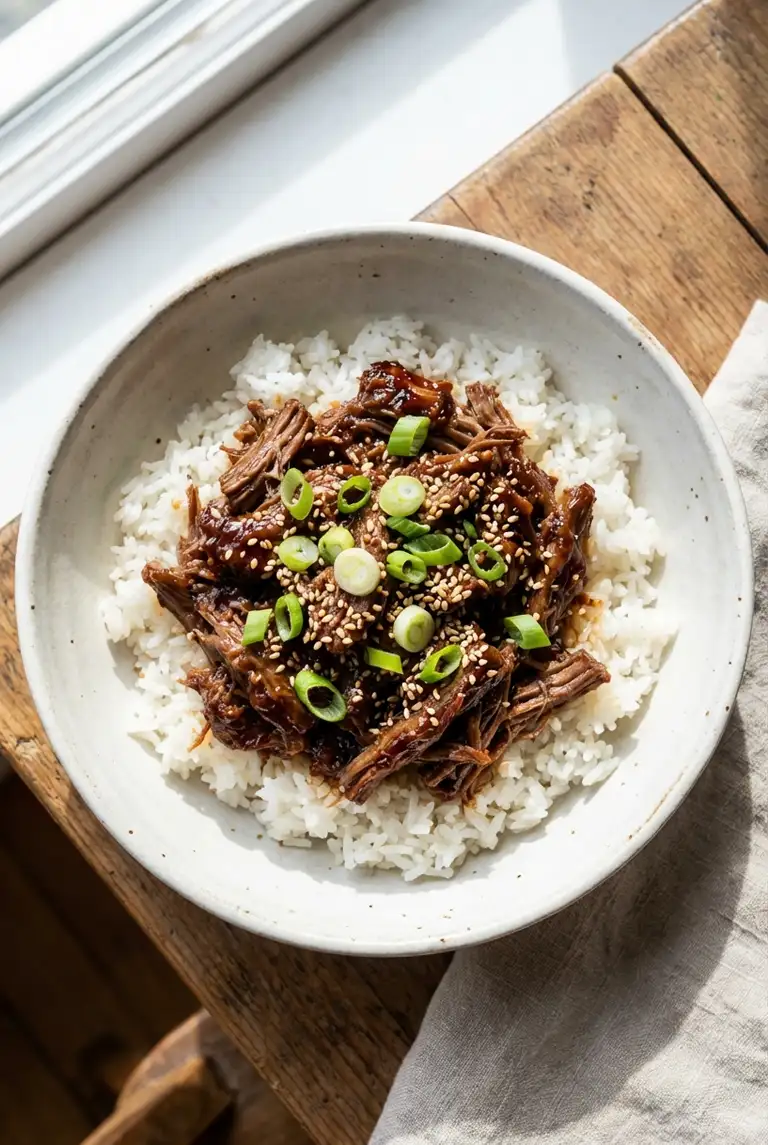
The first time I tested this, I used too much liquid because I assumed the beef needed to be covered. It didn’t. Chuck roast gives off plenty of juice as it cooks, and if you start with too much sauce, you end up with something thin and washed out. What worked better was using just enough soy, garlic, ginger, and brown sugar to season the beef at the start, then letting the meat build the rest of the sauce on its own as it cooked.
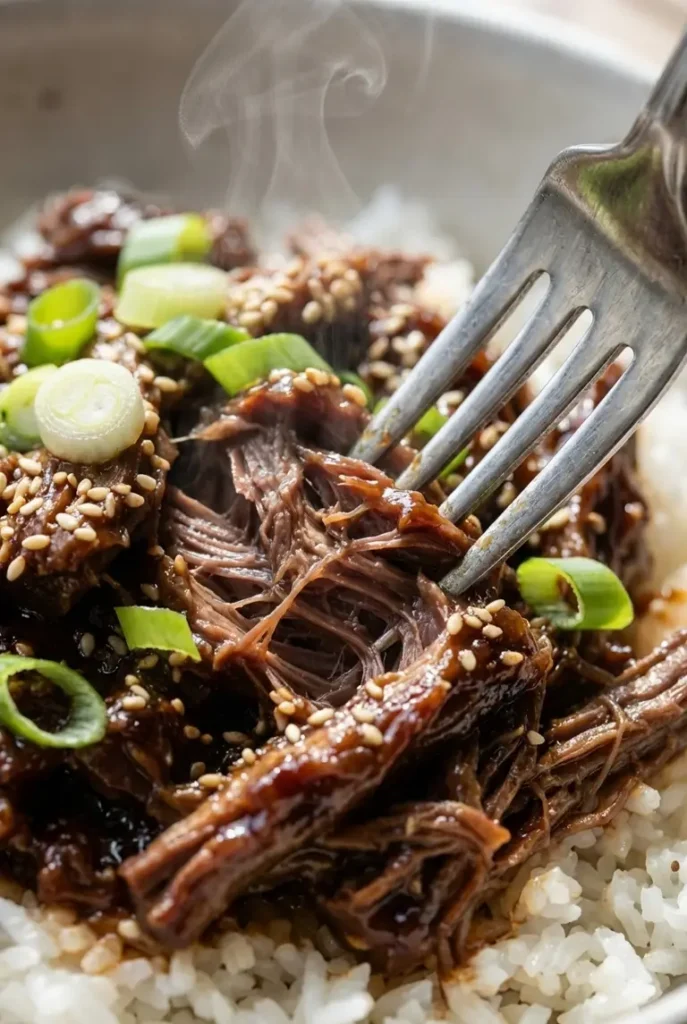
By the end, I want the beef to pull apart with light pressure but still hold some shape. The sauce should look loose and glossy, not thick like gravy. It lands savory first, then a mild brown sugar sweetness, followed by garlic, ginger, and sesame. Over rice, it works better than takeout-style shredded beef because the meat stays moist all the way through and the sauce doesn’t drift too sweet.
What Keeps This Slow Cooker Korean Beef From Tasting Washed Out
- Chuck roast has enough fat and connective tissue to soften properly over a long cook, so the beef shreds cleanly instead of drying out.
- The sauce starts concentrated. As the meat releases liquid, it opens up into a fuller cooking liquid that still tastes seasoned instead of diluted.
- Cutting the beef into chunks instead of cooking one whole piece gives you more surface area for the sauce and more even cooking.
- Letting the shredded beef rest in the hot sauce at the end makes a real difference. The meat takes on more flavor and stays juicy.
Ingredients You Need for Slow Cooker Korean Beef
- 3 pounds chuck roast, cut into 2- to 3-inch chunks (1360g)
- 3/4 cup low-sodium soy sauce (180g)
- 1/2 cup beef broth (120g)
- 1/3 cup packed brown sugar (70g)
- 2 tablespoons sesame oil
- 1 tablespoon rice vinegar
- 6 cloves garlic, minced
- 1 tablespoon fresh ginger, grated (15g)
- 1/4 teaspoon black pepper
- 2 tablespoons cornstarch
- 2 tablespoons water
- 3 green onions, thinly sliced (45g)
- 1 tablespoon sesame seeds
Best Beef Cut for Korean Beef in the Slow Cooker
Use chuck roast. It has enough marbling to stay soft after a long cook, and it shreds into thick, moist pieces rather than dry flakes.
Avoid lean stew meat here if possible. It can work, but it tightens up faster and gives you less room for error.
Optional Add-Ins for Heat and Garnish
If you want heat, add 1 to 2 teaspoons gochujang or a pinch of red pepper flakes to the sauce.
For garnish, green onions and sesame seeds are enough, but thin cucumber slices on the side work well too. The cold crunch helps balance the rich beef.
How to Make Slow Cooker Korean Beef
Mix the Korean-Inspired Sauce
In a bowl, whisk together the soy sauce, beef broth, brown sugar, sesame oil, rice vinegar, garlic, ginger, and black pepper until the brown sugar is mostly dissolved and the sesame oil is no longer floating in visible streaks.
Add the Beef and Cook Low Until Fork-Tender
- Place the beef chunks in the slow cooker. Pour the sauce over the top and turn the pieces once or twice so they’re coated. The beef does not need to be fully submerged.
- Cover and cook on low for 6 to 8 hours. Try not to lift the lid during the first several hours. Early on, the sauce may look shallow. Later, the beef will release more liquid and the cooker will look much fuller.
- Start checking at 6 hours. A fork should slide in easily and twist apart a piece with very little resistance. If the meat still feels tight or shreds into long chewy strands, cook it 30 to 60 minutes longer.
Shred the Beef and Finish the Sauce
- Transfer the beef to a cutting board or large bowl. Shred into bite-size pieces, not fine threads. Thicker shreds stay juicier and give the dish more texture.
- Skim excess fat from the sauce if needed. In a small bowl, stir together the cornstarch and water, then whisk it into the slow cooker liquid. Return the shredded beef to the slow cooker and toss well.
- Cook on high for 20 to 30 minutes if you want the sauce thicker for rice bowls. When it’s ready, the sauce should look glossy and lightly coat the meat rather than pool like broth.
- Let the beef sit in the hot sauce for 5 to 10 minutes before serving.
- Top with green onions and sesame seeds.
Slow Cooker Korean Beef With Rice or Noodles
This is the part most recipes skip, but it matters because the sauce behaves differently depending on how you serve it.
Best Rice for Serving
Jasmine rice is the easiest choice here. The grains stay separate, and the sauce runs into the rice without making it heavy. Short-grain rice also works if you want a stickier bowl.
Spoon extra sauce over the rice right before serving. Otherwise, the rice underneath stays plain.
If rice-bowl dinners are your go-to, this One-Pan Honey BBQ Chicken and Rice is another easy family-style meal to bookmark.
Best Noodles for Serving
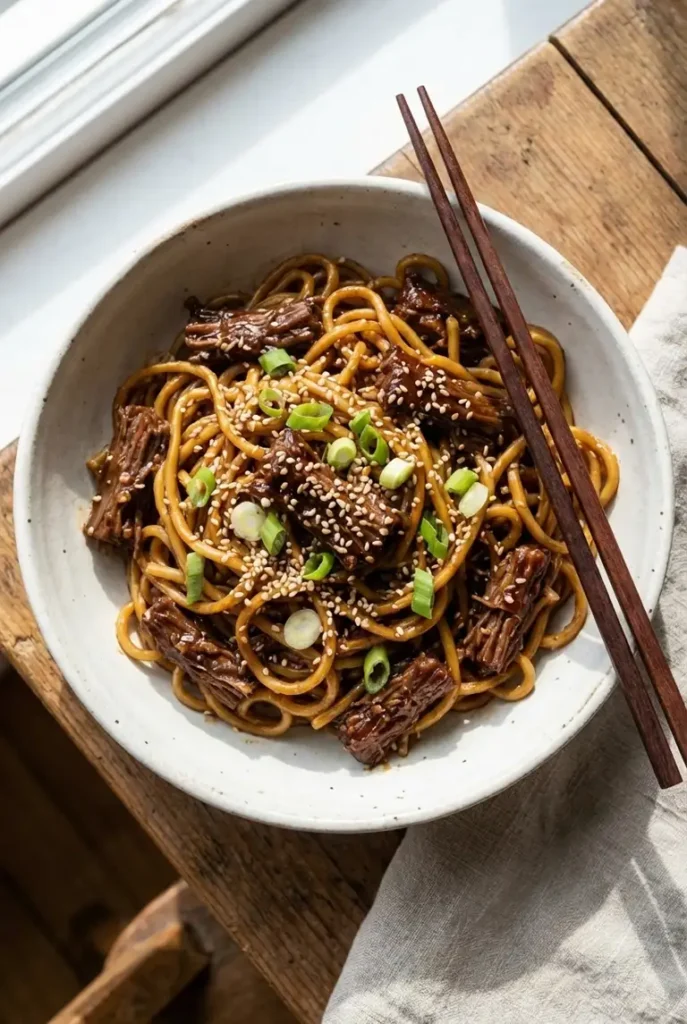
For noodles, use lo mein noodles, ramen, or rice noodles. Keep in mind that noodles absorb sauce fast, so reserve a little extra liquid before mixing everything together.
If the sauce has thickened a lot, loosen it with a small splash of broth or water.
Toss the noodles with the beef while everything is still hot so the sauce coats evenly instead of clumping in patches.
Tips for Tender Beef and a Richer Sauce
- Cut the beef into even chunks so one piece doesn’t go soft while another stays tight in the center.
- Don’t add extra liquid at the start unless your slow cooker runs unusually hot and fast. The beef releases plenty on its own.
- Taste the sauce only at the end. Before cooking, it can seem salty. After hours with the beef juices, it rounds out.
- If you want deeper flavor, you can sear the beef first, but this is one of the few slow cooker beef recipes where it’s optional. The sauce brings enough flavor without adding another pan to wash.
For another dinner with the same ginger-sesame profile, these Sesame Ginger Chicken Meatballs make a great next recipe to try.
Variations
Spicy Slow Cooker Korean Beef
Add 1 to 2 teaspoons gochujang to the sauce at the start. It gives the dish deeper heat than red pepper flakes and thickens the sauce slightly.
If you want a sharper heat, add red pepper flakes at the end so the spice stays more direct.
Gluten-Free Slow Cooker Korean Beef
Use a gluten-free soy sauce or tamari, and double-check your beef broth label. The rest of the recipe is straightforward.
Serve with rice for the easiest gluten-free option.
How to Store and Reheat
Store cooled beef and sauce in an airtight container in the fridge for up to 4 days.
To reheat, warm it in a covered skillet or saucepan over medium-low heat with a splash of water or broth if the sauce has tightened in the fridge. Microwave reheating works too, but stir halfway through so the edges don’t overcook while the center stays cool.
This also freezes well for up to 3 months. Freeze it with some of the sauce, not dry, so the beef stays protected.
Slow Cooker Korean Beef FAQ
Why is my slow cooker Korean beef tough instead of tender?
Usually it just needs more time. Tough beef in a slow cooker often means the connective tissue hasn’t finished breaking down yet.
If a fork meets resistance or the meat shreds into long ropey strands, keep cooking for 30 to 60 minutes and check again.
How do I thicken the sauce if it seems too thin?
The easiest fix is a cornstarch slurry, then a short cook on high. You can also leave the lid slightly ajar and cook on high for 20 to 30 minutes to reduce it further.
For rice, a spoon-coating sauce works best. For noodles, keep it a little looser.
Can I use frozen ginger or bottled garlic in this recipe?
Yes. Frozen ginger works well here. Bottled garlic is usable, though the flavor is flatter than fresh.
Since this recipe has a short ingredient list, fresh garlic and ginger give a cleaner result if you have them.
What’s the best way to serve slow cooker Korean beef with rice or noodles?
Rice is the default because it catches the sauce better and doesn’t compete with the beef. Noodles work too, but they absorb sauce quickly, so keep extra on hand or loosen the sauce before tossing.
If you want a faster version of this same flavor direction on another night, the Easy Korean Ground Beef Bowl (20 Minutes) is the one I’d make.
Nutrition
- Serving size: approximately 1/6 of the total recipe
- Calories: 430 kcal
- Protein: 38g
- Fat: 25g
- Carbohydrates: 12g
- Per 100g: Calories: 145 kcal, Protein: 13g, Fat: 8g, Carbohydrates: 4g.
These nutritional values are approximate and can vary based on the specific ingredients and brands used.
Equipment
- Slow cooker
- Cutting board
- Chef’s knife
- Small bowl
- Whisk
Ingredients
- 3 pounds chuck roast, cut into 2- to 3-inch chunks (1360g)
- 3/4 cup low-sodium soy sauce (180g)
- 1/2 cup beef broth (120g)
- 1/3 cup packed brown sugar (70g)
- 2 tablespoons sesame oil
- 1 tablespoon rice vinegar
- 6 cloves garlic, minced
- 1 tablespoon fresh ginger, grated (15g)
- 1/4 teaspoon black pepper
- 2 tablespoons cornstarch
- 2 tablespoons water
- 3 green onions, thinly sliced (45g)
- 1 tablespoon sesame seeds
Instructions
- Whisk together soy sauce, beef broth, brown sugar, sesame oil, rice vinegar, garlic, ginger, and black pepper until the brown sugar is mostly dissolved and sesame oil is no longer floating in visible streaks.
- Place beef chunks in slow cooker and pour sauce over them. Turn pieces once or twice to coat. Beef does not need to be fully submerged.
- Cover and cook on low for 6 to 8 hours, avoiding lifting the lid early in the cooking.
- Check for tenderness starting at 6 hours; beef should pull apart with light pressure. If tough, cook 30 to 60 minutes longer.
- Transfer beef to a board or bowl and shred into bite-size pieces.
- Skim excess fat from sauce if needed. Stir cornstarch and water together and whisk into slow cooker liquid.
- Return shredded beef to slow cooker, toss to coat. Cook on high for 20 to 30 minutes for thicker sauce.
- Let beef sit in hot sauce for 5 to 10 minutes before serving. Top with green onions and sesame seeds.
2 Comments
Just curious, how can it be low carb with brown sugar in it?
You’re right — this recipe isn’t low carb. It does include brown sugar, and the post itself doesn’t describe it that way. It’s meant to be a savory-sweet Korean-inspired beef recipe.