

Melt in Your Mouth Chicken
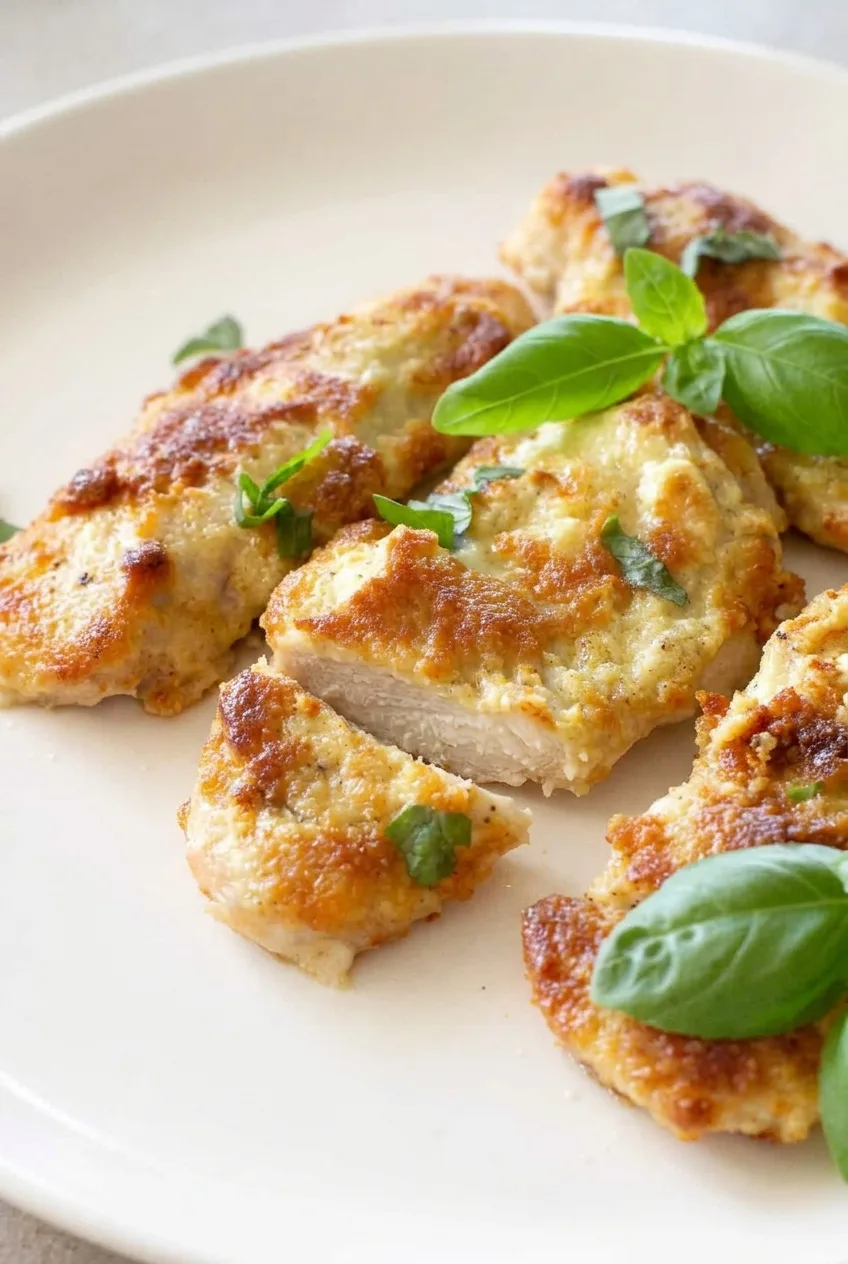
These baked chicken cutlets have a creamy Parmesan topping that turns golden in uneven, browned patches. Slicing the breasts lengthwise makes thinner, more even pieces than baking them whole, so the centers can cook without leaving the thinner ends dry.
Bake the cutlets uncovered at 375°F (190°C), then check the chicken with a thermometer: browned cheese alone cannot tell you when it is done. Add fresh basil after cooking so it stays bright against the golden topping.
Ingredients for Melt in Your Mouth Chicken
- 3 boneless, skinless chicken breasts, about 1 1/2 pounds total (680g)
- 1/2 teaspoon kosher salt
- 1/4 teaspoon black pepper
- 1/2 cup mayonnaise (115g)
- 1/2 cup finely grated Parmesan, plus 2 tablespoons for topping (about 60g total)
- 1 teaspoon garlic powder
- 1/2 teaspoon paprika
- Nonstick cooking spray, for the dish
- About 1/4 cup loosely packed fresh basil leaves, whole or torn
How to Bake Melt in Your Mouth Chicken
- Prepare the oven and dish: Preheat the oven to 375°F with a rack in the middle position. Lightly coat a 9-by-13-inch baking dish with nonstick spray.
- Cut and season the chicken: Slice each breast lengthwise into two cutlets, making six pieces. Gently even out any especially thick ends so the cutlets are roughly 3/4 inch thick. Pat dry and season with the salt and pepper.
- Add the topping: Mix the mayonnaise, 1/2 cup Parmesan, garlic powder, and paprika. Arrange the cutlets in one layer without overlap. Spread the mixture over their tops in a moderate layer, without leaving large pools in the dish. Sprinkle with the remaining 2 tablespoons Parmesan.
- Bake uncovered: Start checking at 20 minutes. Cutlets about 3/4 inch thick generally take 22–30 minutes, but thickness and oven performance affect the time. The topping should be golden, and the thickest part of each cutlet must reach 165°F (75°C). Insert the thermometer into the chicken flesh, away from the topping.
- Broil only if needed: If the chicken is nearly done but the topping is pale, broil for 1–2 minutes. Watch continuously and stop when darker golden-brown patches appear. Confirm the chicken has reached 165°F before serving.
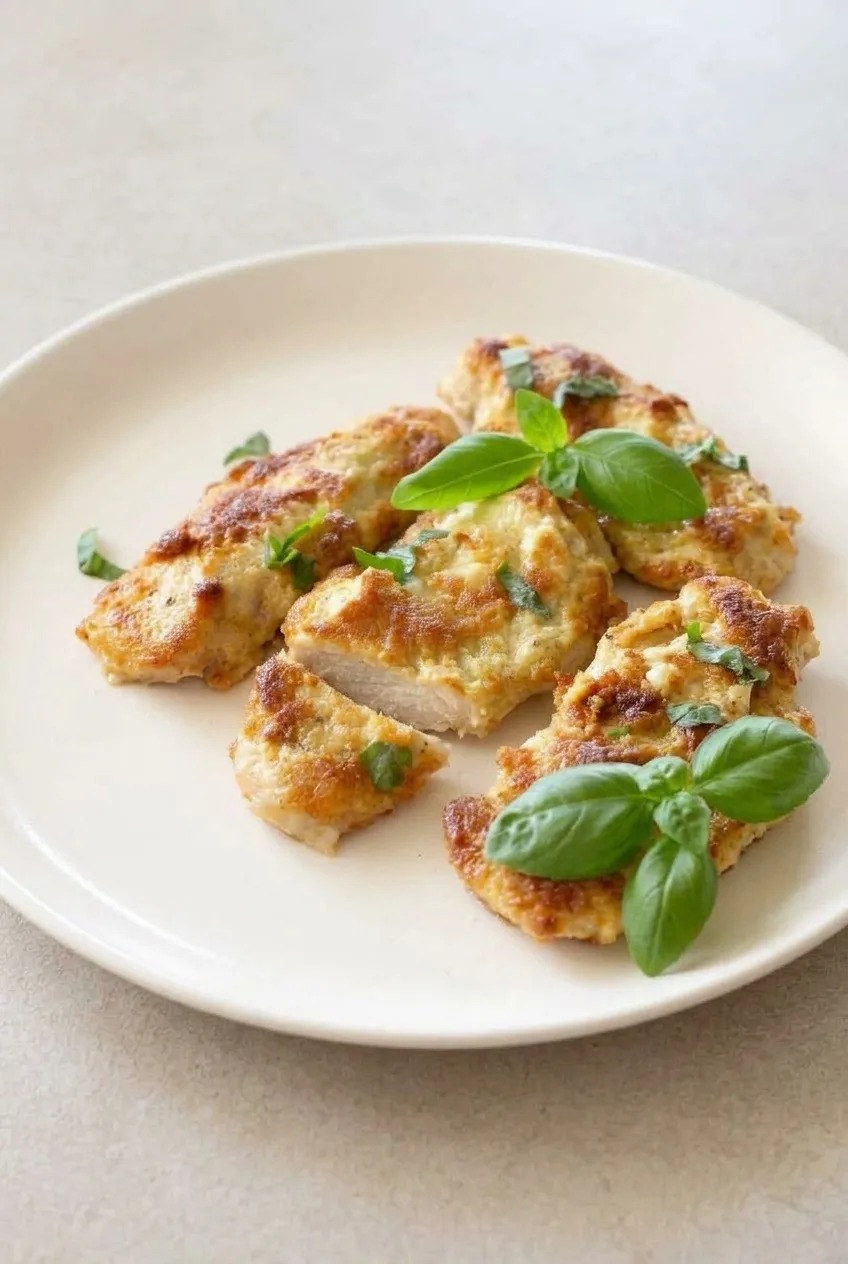
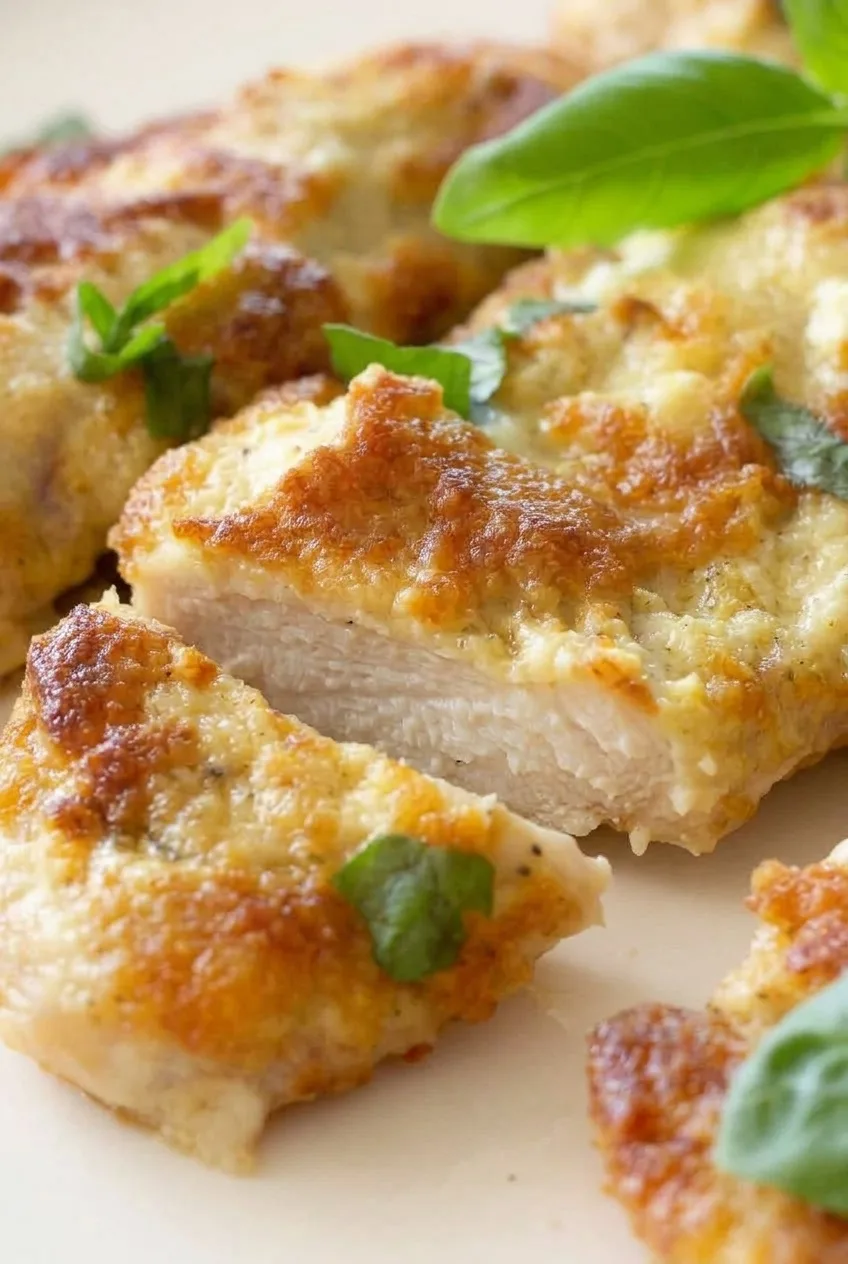
- Rest and garnish: Let the chicken rest about 5 minutes, then add the basil. To serve, arrange several cutlets together and cut one open to show the cooked interior.
Why Cutlet Thickness Matters
The 22–30-minute baking range applies to the roughly 3/4-inch cutlets in this recipe, not thick, unsliced breasts. If the pieces vary in size, check each at its thickest point and remove it when it reaches 165°F rather than waiting for every cutlet to finish at once.
For a different oven-baked option, try baked chicken breasts with paprika and garlic.
Getting a Golden Parmesan Top
A moderate layer of topping can brown while staying creamy underneath; a thick mound is more likely to remain pale and soft. Keep the dish uncovered, and rotate it if your oven browns one side more quickly. The finished coating should have scattered golden-brown patches, not a uniform breadcrumb crust.
If the topping needs a brief broil, stay at the oven: Parmesan can burn quickly. For a distinct, crunchier coating, see oven-baked ranch chicken with a panko crust.
Storing and Reheating
Cool leftovers and refrigerate them in an airtight container for up to 4 days. Keep the cutlets whole until needed to help retain moisture. Reheat gently in a covered baking dish at 350°F (175°C) until heated through; uncover briefly near the end if you want to dry the surface slightly.
You can mix the topping ahead and refrigerate it, then spread it on the chicken just before baking. Refrigeration is preferable for the topping’s texture. If you freeze cooked leftovers, expect the mayonnaise-Parmesan coating to change after thawing.
Nutrition
Approximate nutrition per serving, based on 4 servings from 6 cutlets: 465 calories, 45g protein, 30g fat, and 2g carbohydrates. Estimated per 100g of cooked chicken with topping: 255 calories, 25g protein, 17g fat, and 1g carbohydrates. Values vary with ingredient brands, cutlet size, and moisture lost during baking.
Equipment
- Oven
- 9-by-13-inch baking dish
- Instant-read thermometer
- Mixing bowl
- Knife
- Cutting board
Ingredients
For the Chicken
- 3 boneless, skinless chicken breasts, about 1 1/2 pounds (680 g) total
- 1/2 teaspoon kosher salt
- 1/4 teaspoon black pepper
- Nonstick cooking spray, for the dish
For the Topping
- 1/2 cup mayonnaise (115 g)
- 1/2 cup finely grated Parmesan, plus 2 tablespoons for topping (about 60 g total)
- 1 teaspoon garlic powder
- 1/2 teaspoon paprika
- About 1/4 cup loosely packed fresh basil leaves, whole or torn
Instructions
- Preheat the oven to 375°F (190°C) with a rack in the middle position. Lightly coat a 9-by-13-inch baking dish with nonstick spray.
- Slice each chicken breast lengthwise into two cutlets, making six pieces. Gently even out thick ends so the cutlets are roughly 3/4 inch thick.
- Pat the cutlets dry and season with the salt and pepper.
- Mix the mayonnaise, 1/2 cup Parmesan, garlic powder, and paprika.
- Arrange the cutlets in one layer in the baking dish. Spread a moderate layer of the mayonnaise mixture over each cutlet, avoiding large pools in the dish.
- Sprinkle the remaining 2 tablespoons Parmesan over the cutlets.
- Bake uncovered, starting to check at 20 minutes. Cutlets about 3/4 inch thick generally take 22–30 minutes. Check the thickest part of each cutlet with a thermometer, inserting it into the chicken flesh away from the topping; it must reach 165°F (75°C).
- If the chicken is nearly done but the topping is pale, broil for 1–2 minutes, watching continuously. Stop when golden-brown patches appear and confirm the chicken has reached 165°F (75°C).
- Rest the chicken for about 5 minutes, then garnish with basil.
Tips
- Slice the breasts into cutlets so they cook more evenly than whole breasts.
- Check each cutlet at its thickest point and remove it once it reaches 165°F (75°C).
- Spread the topping in a moderate layer; a thick mound may stay pale and soft.
- Rotate the baking dish if your oven browns one side faster than the other.
- Watch closely if broiling because Parmesan can burn quickly.