

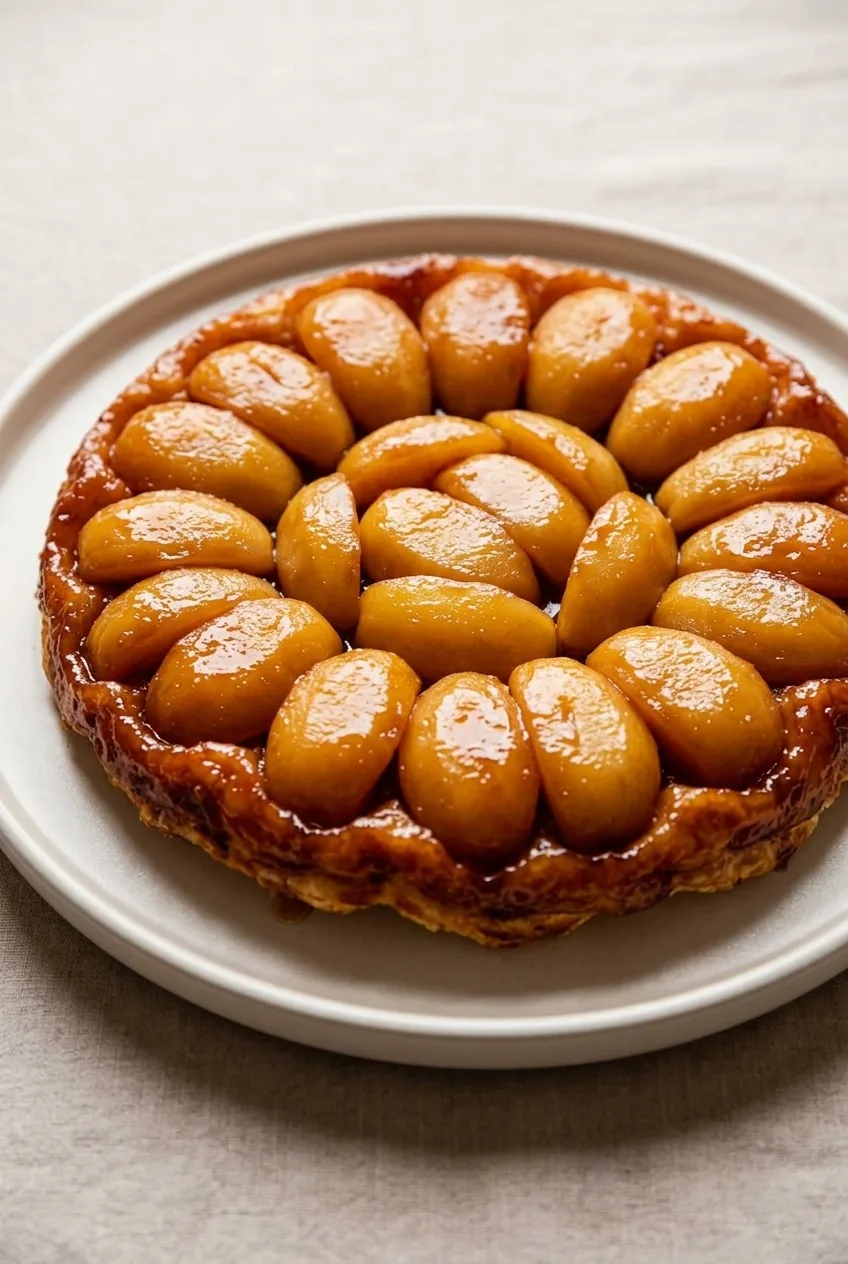
Apple Tarte Tatin
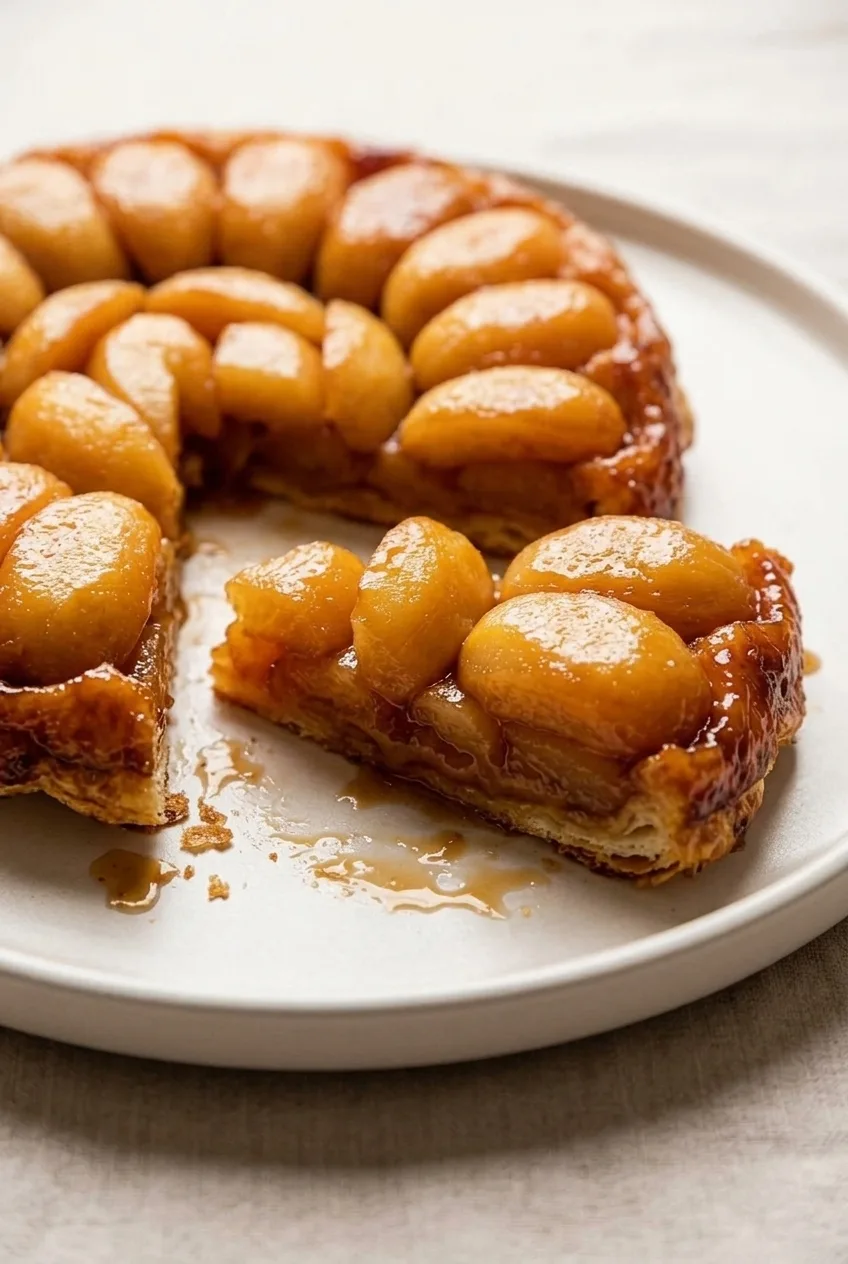
Apple tarte Tatin bakes upside down: apple quarters cook in butter caramel beneath a pastry lid, then become the glossy top when the tart is inverted. This version uses a refrigerated pie crust for a sturdy base beneath the warm fruit.
Watch the caramel rather than relying only on the clock, and stop cooking the apples while the quarters still hold their shape. After baking, invert the tart while the caramel is still mobile, using oven mitts and a lipped platter to contain the hot syrup.
Yield: One approximately 9-inch tart, or 8 wedges. Prep: 25 minutes. Cook: 40–50 minutes. Total: About 1 hour 15 minutes to 1 hour 30 minutes, including the rest before inversion.
Ingredients for Apple Tarte Tatin
- About 2 1/2 lb firm apples, such as Braeburn or a mix of Braeburn and Granny Smith (about 6 medium; about 1,150g before peeling and coring)
- 3/4 cup granulated sugar (150g)
- 2 tablespoons water
- 4 tablespoons unsalted butter, cut into pieces (55g)
- 1 refrigerated pie crust, large enough to cover a 9-inch skillet and tuck around the apples (about 200g; package weights vary)
- About 1 pint vanilla ice cream, optional, for serving
How to Make Apple Tarte Tatin
- Prepare the apples and oven: Preheat the oven to 400°F (205°C) with a rack near the center. Peel, core, and quarter the apples. Keep the crust chilled and the measured butter beside the stove. Use a 9-inch oven-safe skillet, preferably light-colored so the caramel is easier to judge, and confirm that its handle is rated for 400°F.
- Make the caramel: Spread the sugar and water in the skillet. Cook over medium heat for about 7–10 minutes, gently swirling the pan as the sugar colors. Watch continuously once it turns golden. At an even medium amber, reduce the heat and carefully add the butter; it may bubble vigorously. Swirl to combine. If the caramel smells acrid, start again rather than adding the apples.
- Cook the apples: Using heat-safe tongs, arrange the quarters snugly in a circular pattern in the caramel. Cook over medium-low heat for about 8–12 minutes, carefully nudging or turning pieces if needed. Stop when the edges begin to look translucent but the quarters still hold their shape. If a noticeable pool of thin apple juice collects, simmer briefly to reduce it before adding the pastry.
- Add the pastry: Remove the skillet from the heat. Lay the chilled crust over the apples and carefully tuck its edge between the fruit and skillet; do not leave pastry hanging over the pan. Cut a few small steam vents.
- Bake: Set the skillet on a rimmed baking sheet to catch drips. Bake uncovered for about 25–35 minutes, checking at 25 minutes. The pastry should be deeply golden, with caramel bubbling at the edges.
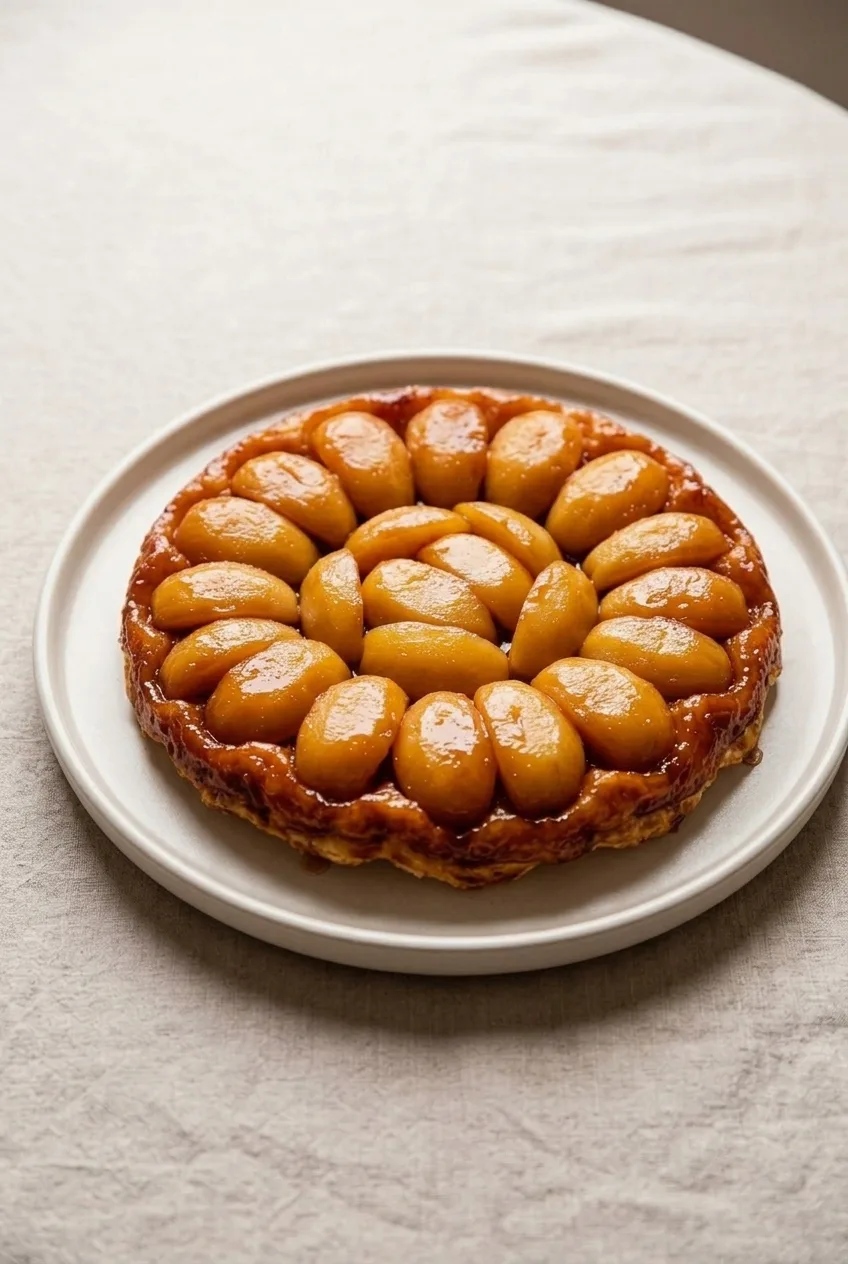
- Rest and invert: Let the skillet rest for about 8–12 minutes. Wearing sturdy oven mitts, gently tilt it to check that the caramel still moves at the edge. Place a heat-safe, lipped platter wider than the skillet over the tart. Hold the platter and skillet firmly together, invert carefully, and lift off the skillet, keeping your hands clear of hot caramel. Return any apples left in the pan to their places on the tart.
- Serve: Cut into wedges while warm or lukewarm. Add vanilla ice cream to individual servings just before eating, if desired.
Choosing Apples That Hold Their Shape
Braeburn and Granny Smith hold up well to the stovetop cook and the bake. Pink Lady or Honeycrisp can also work; especially juicy apples may need a little more reduction before the pastry goes on.
Use quarters rather than thin slices, and pack them tightly in the skillet because they shrink as they cook. A skillet larger than 9 inches will spread the fruit into a shallower layer.
Caramel Color and Apple Juices
Medium amber gives the apples a caramel coating without the bitterness of a very dark caramel. Sugar darkens quickly near the end, so have the butter ready to add as soon as the color is right. A dark skillet makes that color harder to see.
Apple moisture varies. Reducing a noticeable pool of thin juice before covering the fruit helps keep excess liquid away from the pastry, which becomes the tart’s base after inversion.
If the Tart Sticks During Inversion
The 8–12-minute rest is a starting point, not a guaranteed release time. If the caramel has cooled and set, do not force the flip. Warm the skillet over low heat for 30–60 seconds, then retry with oven mitts and the lipped platter. Use tongs to reposition any quarters left in the pan.
Pie Crust or Puff Pastry?
Pie crust makes a sturdy base for the caramel-coated apples. Puff pastry can replace it for a flakier base: keep the same upside-down assembly, bake until deeply golden, and serve promptly because it can soften against the fruit juices. For caramel apples in a conventional pie format, try this caramel apple pie.
Storage and Reheating
Refrigerate leftovers in an airtight container for up to 3 days; the pastry will soften as it sits. If desired, warm portions in a 300°F (150°C) oven or toaster oven for about 10 minutes. For the best pastry texture, bake and invert the tart near serving time.
Nutrition
Approximate nutrition per wedge, based on 8 wedges and excluding optional ice cream: 290 calories, 2g protein, 12g fat, and 46g carbohydrates. Approximate values per 100g of finished tart: 210 calories, 2g protein, 9g fat, and 33g carbohydrates. Values vary with apple trimming, caramel reduction, and pie crust brand.
Equipment
- 9-inch oven-safe skillet
- Rimmed baking sheet
- Heat-safe tongs
- Lipped heat-safe platter
- Oven mitts
Ingredients
- About 2 1/2 lb firm apples, such as Braeburn or a mix of Braeburn and Granny Smith (about 6 medium; about 1,150g before peeling and coring)
- 3/4 cup granulated sugar (150g)
- 2 tablespoons water
- 4 tablespoons unsalted butter, cut into pieces (55g)
- 1 refrigerated pie crust, large enough to cover a 9-inch skillet and tuck around the apples (about 200g; package weights vary)
- About 1 pint vanilla ice cream, optional, for serving
Instructions
- Preheat the oven to 400°F (205°C) with a rack near the center. Peel, core, and quarter the apples, and keep the pie crust chilled.
- Spread the sugar and water in a 9-inch oven-safe skillet. Cook over medium heat for 7–10 minutes, gently swirling the pan as the sugar colors.
- When the caramel reaches an even medium amber, reduce the heat and carefully add the butter. Swirl to combine.
- Arrange the apple quarters snugly in the caramel with heat-safe tongs. Cook over medium-low heat for 8–12 minutes, nudging or turning the pieces as needed, until the edges begin to look translucent but the quarters still hold their shape.
- If a noticeable pool of thin apple juice collects, simmer briefly to reduce it. Remove the skillet from the heat.
- Lay the chilled crust over the apples and tuck its edges between the fruit and skillet. Cut a few small steam vents.
- Set the skillet on a rimmed baking sheet. Bake uncovered for 25–35 minutes, checking at 25 minutes, until the pastry is deeply golden and caramel bubbles at the edges.
- Let the skillet rest for 8–12 minutes. Wearing sturdy oven mitts, gently tilt it to check that the caramel still moves at the edge.
- Place a heat-safe, lipped platter wider than the skillet over the tart. Hold the platter and skillet firmly together, invert carefully, and lift off the skillet with your hands clear of the hot caramel. Return any apples left in the pan to the tart.
- Cut into wedges while warm or lukewarm. Serve with vanilla ice cream if desired.
Tips
- Use a light-colored skillet so you can judge the caramel color more easily.
- Watch the caramel continuously as it turns golden; it darkens quickly near the end.
- Pack apple quarters tightly because they shrink as they cook.
- Reduce excess apple juice before adding the pastry to help keep the crust from becoming soggy.
- Check that the skillet handle is rated for 400°F (205°C).
Variations
- Puff Pastry Tarte Tatin: Replace the pie crust with puff pastry, bake until deeply golden, and serve promptly because it can soften against the fruit juices.
- Pink Lady or Honeycrisp Tarte Tatin: Use Pink Lady or Honeycrisp apples; reduce any extra juice before covering the fruit with pastry.