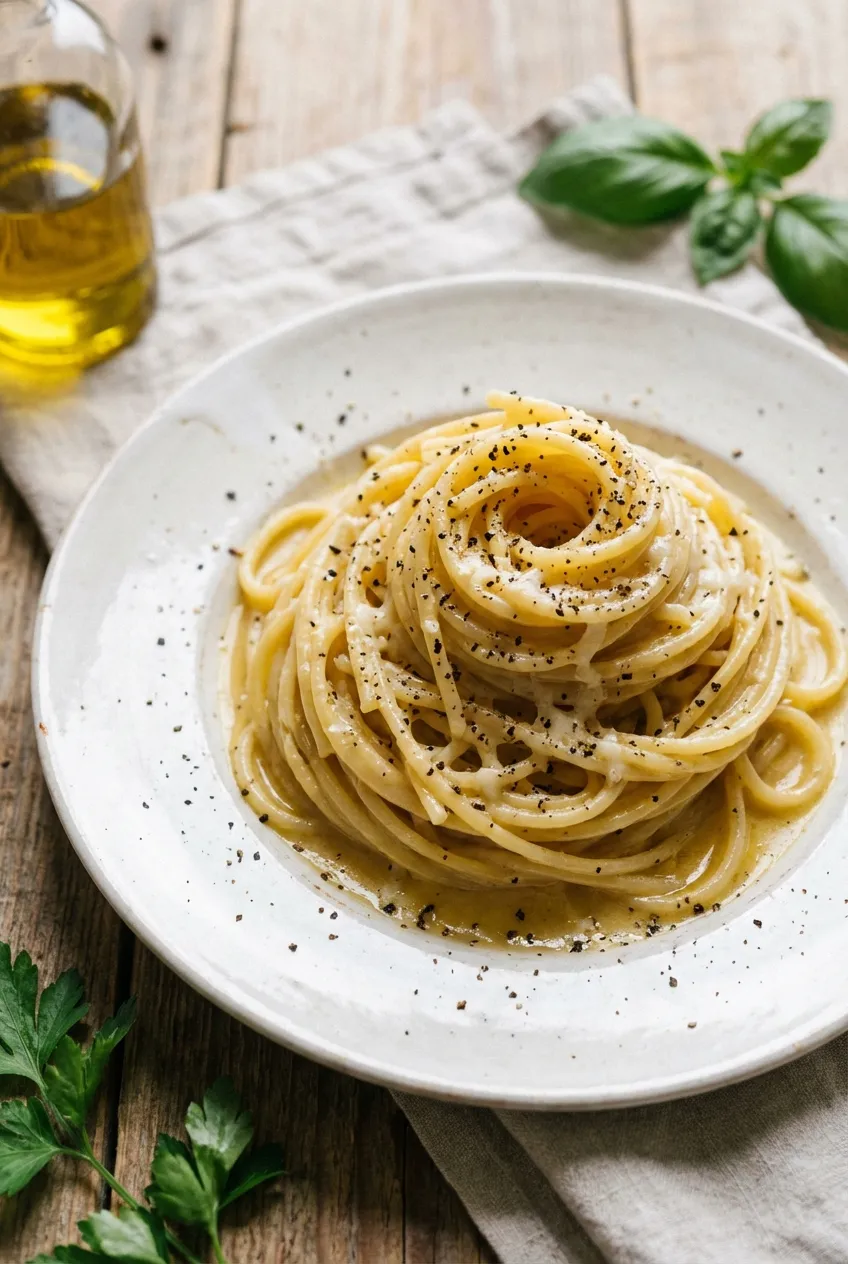
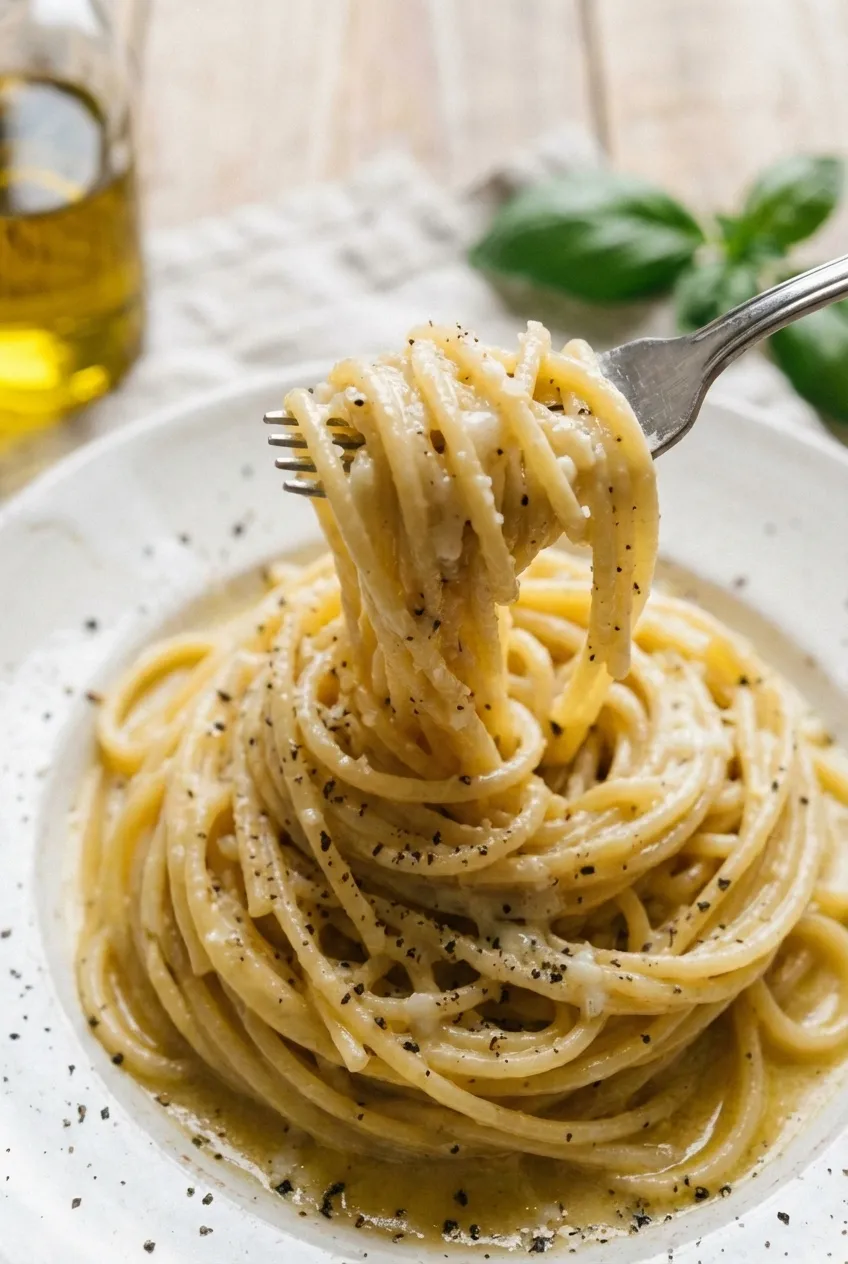
There are few dishes as comforting and impressively simple as Cacio e Pepe. It’s my go-to recipe when I need a satisfying meal on the table fast, using ingredients I almost always have on hand. The magic is in the technique, turning pasta water, cheese, and pepper into a silky, savory sauce that clings to every strand of spaghetti. Julia’s note: I love using a very coarse grind for the pepper here; the textural contrast with the smooth sauce is fantastic.
This recipe celebrates the beauty of Italian cooking: quality ingredients and proper technique over a long, complicated process. The key is creating a stable emulsion, which sounds technical but is straightforward once you get the hang of it. We’ll walk through how to use the starchy pasta water to melt the cheese into a perfectly creamy sauce without any clumps. It’s a foundational recipe every home cook should know.
Achieving the Perfect Emulsion
The success of Cacio e Pepe hinges on creating a perfect emulsion, which is a stable mixture of fat and water. In this case, the fat comes from the Pecorino Romano cheese, and the water is the starchy liquid left over from cooking the pasta. The starch acts as a binder, helping the two combine into a smooth, creamy sauce instead of a clumpy, oily mess. To do this, you must work quickly while the pasta is hot and the skillet is off the direct heat. Add the pasta water gradually while whisking or tossing vigorously; this constant motion is what encourages the fat and water molecules to bond, creating that signature glossy sauce.
Selecting the Right Cheese
For authentic Cacio e Pepe, Pecorino Romano is the only choice. This hard, salty cheese is made from sheep’s milk and provides the sharp, tangy flavor that defines the dish. Unlike Parmigiano-Reggiano, which is milder and nuttier, Pecorino has a distinct funkiness that stands up to the pungent black pepper. It is essential to buy a wedge of cheese and grate it yourself. Pre-shredded cheeses are often coated with anti-caking agents like potato starch, which prevent them from melting smoothly and will almost guarantee a clumpy sauce. A microplane or the finest side of a box grater will give you the fluffy, snow-like texture needed for a silky emulsion.
Troubleshooting Common Sauce Issues
Two main issues can arise when making this sauce: it can become clumpy or it can break (separate into oil and water). A clumpy sauce is usually caused by the heat being too high when the cheese is added, causing it to seize up. Always work on very low heat or completely off the heat. It can also happen if your cheese isn’t grated finely enough. If your sauce breaks, it’s often because there isn’t enough starchy water to stabilize the emulsion. The fix for both is often the same: add another splash of hot pasta water and whisk vigorously off the heat. The extra liquid and agitation can help bring a separated or clumpy sauce back together.
Recipe Overview
- Prep Time: 5 minutes
- Cook Time: 15 minutes
- Total Time: 20 minutes
- Servings: 4 servings
- Difficulty: Easy
Ingredients
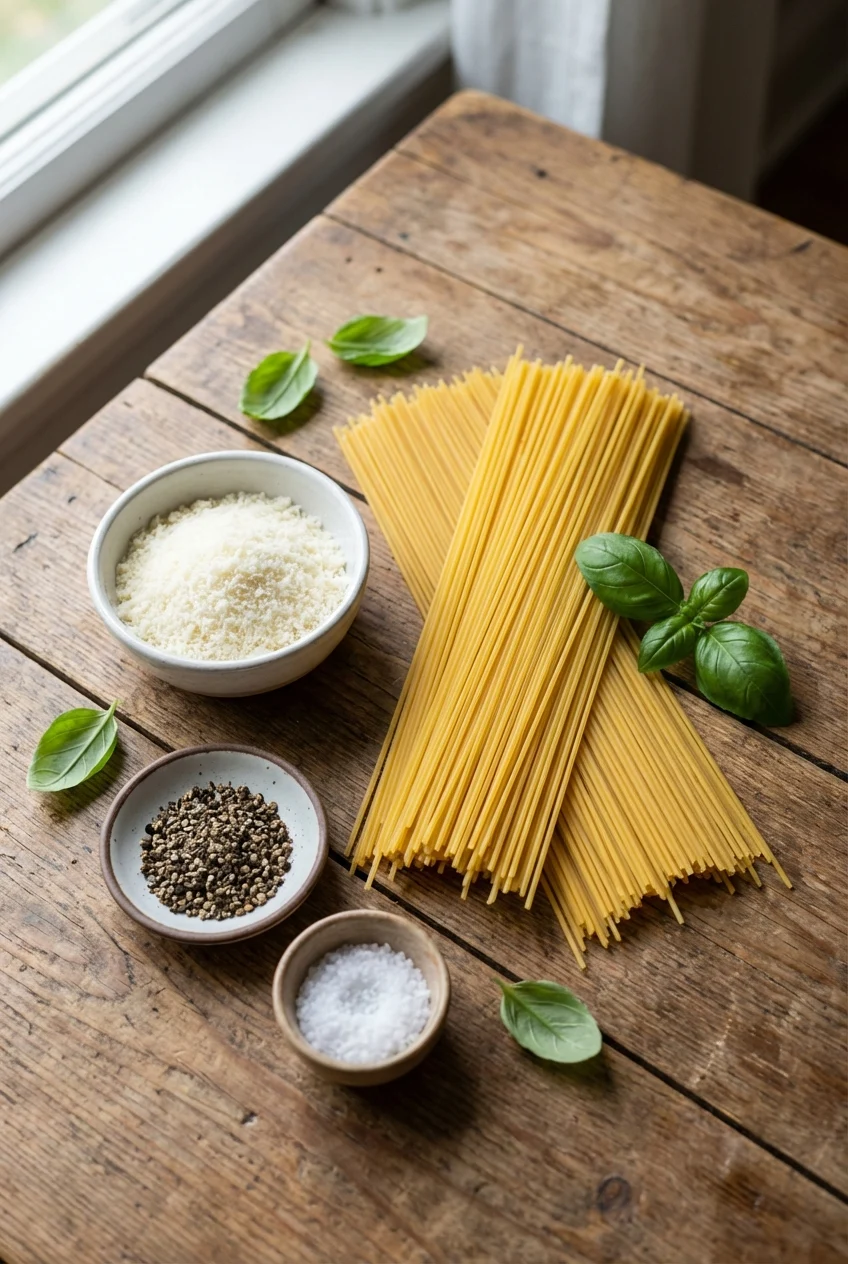
- 340g (12 oz) spaghetti
- 90g (1 cup) Pecorino Romano cheese, finely grated, plus more for serving
- 6g (1 Tbsp) black pepper, freshly cracked
- Salt, for pasta water
Step-By-Step Instructions
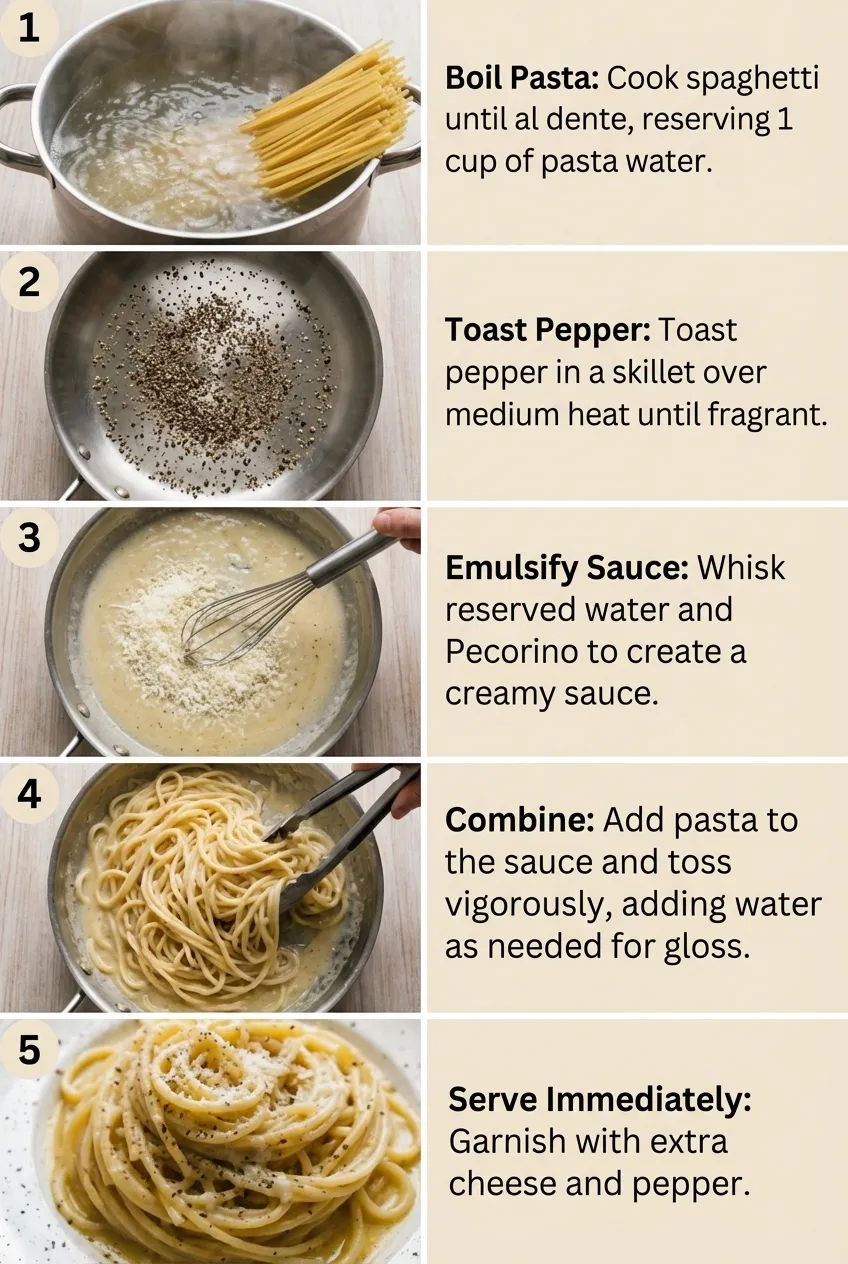
- Boil Pasta
Bring a large pot of water to a rolling boil and salt it generously. Add the spaghetti and cook according to package directions until al dente, typically 8-10 minutes. Just before draining, reserve about 1 cup of the starchy pasta water. This water is critical for making the sauce.
- Toast Pepper
While the pasta cooks, place a large skillet over medium heat. Add the freshly cracked black pepper and toast it for 1-2 minutes, swirling the pan, until it becomes highly fragrant. This step blooms the oils in the pepper, deepening its flavor.
- Emulsify Sauce
Reduce the heat to low. Add a few splashes (about 1/2 cup) of the hot, reserved pasta water to the skillet with the pepper. Bring it to a gentle simmer, then add the finely grated Pecorino Romano. Stir constantly and quickly with a whisk or wooden spoon to melt the cheese and create a creamy, emulsified sauce. If it seems too thick, add another splash of pasta water.
- Combine Pasta and Sauce
Drain the spaghetti and immediately add it to the skillet. Toss the pasta vigorously with tongs to coat every strand in the sauce. The heat from the pasta will help the sauce cling. Continue tossing, adding more pasta water a tablespoon at a time, until the sauce is glossy and coats the spaghetti perfectly without being watery.
- Serve Immediately
Divide the Cacio e Pepe among four warm bowls. Garnish with an extra sprinkle of Pecorino Romano and another dash of cracked black pepper. This dish is best enjoyed right away while the sauce is hot and creamy.
If you enjoy this dish, try our Baked Chicken Veggie Meal Prep for a perfect pairing or next-weeknight option.
Substitutions & Variations
- For a slightly milder flavor, use a mix of half Pecorino Romano and half Parmigiano-Reggiano.
- Add a squeeze of fresh lemon juice at the end for a bright, zesty finish that cuts through the richness.
- To prevent clumping, ensure your cheese is at room temperature and grated as finely as possible before adding it to the pan.
Make-Ahead, Storage & Reheat
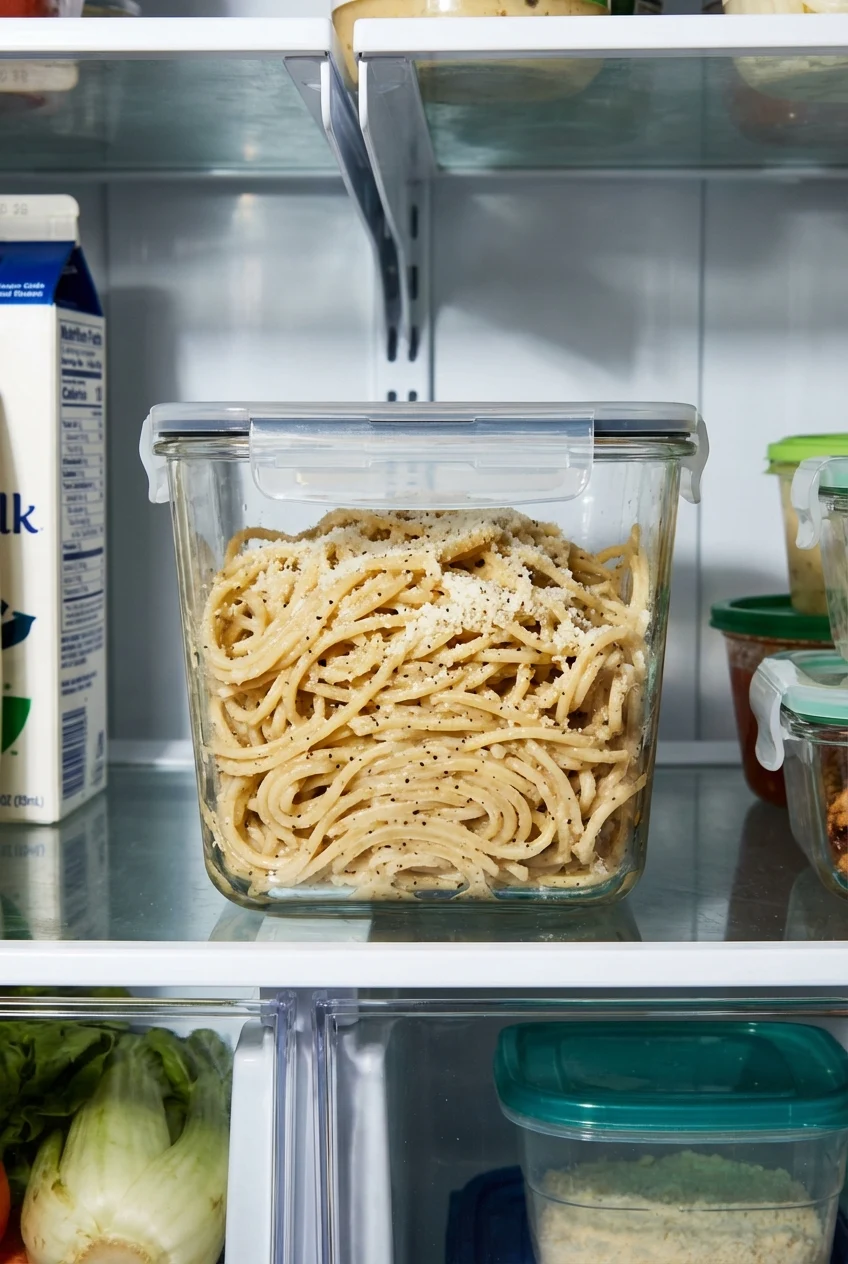
Cacio e Pepe is best served fresh, as the sauce can tighten and separate upon cooling. Leftovers can be stored in an airtight container in the refrigerator for up to 2 days. To reheat, place the pasta in a skillet over low heat with a splash of water. Stir gently until the sauce becomes creamy again and the pasta is warmed through.
Nutrition
- Serving Size: 1 bowl of Cacio e Pepe
- Calories: 400
- Protein: 15g
- Fat: 10g
- Carbohydrates: 60g
- Note: Estimates only.
FAQ
Why did my Pecorino cheese clump up instead of making a creamy sauce?
The pan was likely too hot when you added the cheese, causing the proteins to tighten and seize. Let the pan cool slightly before adding finely grated cheese.
My sauce looks greasy and separated instead of creamy. How can I fix it?
Your emulsion broke. Whisk in another splash of hot pasta water off the heat. The starch will help bind the fat and water back together into a smooth sauce.
How much starchy pasta water should I add to get the right consistency?
Start with less than you think you need, about a half cup. You can always add more, a splash at a time, until the sauce is glossy and coats the pasta nicely.
Can I just use plain hot water instead of the starchy pasta water?
It's best not to, because the starch released from the pasta is the key emulsifier here. It helps the cheese and fat bind into a stable, glossy sauce.
Does the quality of the Pecorino Romano cheese really make a difference?
Yes, it does. Use a genuine Pecorino Romano wedge and grate it yourself. Pre-grated cheeses often contain anti-caking agents that prevent a smooth melt.
How well does this recipe scale if I need to make a larger batch?
You can double it, but use a much larger pan to give the pasta room. It's harder to emulsify a large batch, so add the pasta water gradually to control it.
Can I use short pasta shapes like penne instead of long spaghetti?
You can, but long strands are traditional because they hold this simple sauce best. Their surface area helps create and carry the emulsion as you toss them.
What is the best way to make this recipe with gluten-free pasta?
Use your favorite brand, but be sure to save its cooking water. Some gluten-free pasta waters are less starchy, so you may need to reduce it a bit first.
My finished dish tastes a little bland. What am I doing wrong?
The flavor comes from just a few ingredients, so quality is key. Use freshly cracked black pepper and good cheese. A squeeze of lemon juice also brightens it up.
Equipment
- Large pot
- Large skillet
- Whisk or wooden spoon
- Tongs
- Microplane or fine box grater
- Colander
Ingredients
- 340 g (12 oz) Spaghetti
- 90 g (1 cup) Pecorino Romano cheese finely grated, plus more for serving
- 6 g (1 Tbsp) Black pepper freshly cracked
- Salt for pasta water
Instructions
- Bring a large pot of water to a rolling boil and salt it generously. Add the spaghetti and cook until al dente, about 9 minutes. Reserve about 1 cup of the starchy pasta water just before draining.
- While the pasta cooks, toast the freshly cracked black pepper in a large skillet over medium heat for 1–2 minutes until highly fragrant.
- Reduce heat to low and add about 1/2 cup of the hot reserved pasta water to the skillet with the pepper. Bring to a gentle simmer.
- Add the finely grated Pecorino Romano to the skillet and stir constantly and quickly to melt the cheese and create a creamy, emulsified sauce. Add more pasta water if the sauce is too thick.
- Drain the spaghetti and immediately add it to the skillet. Toss vigorously with tongs, adding more pasta water a tablespoon at a time until the sauce is glossy and coats the spaghetti without being watery.
- Divide the pasta among warm bowls and garnish with extra Pecorino Romano and cracked black pepper. Serve immediately.
