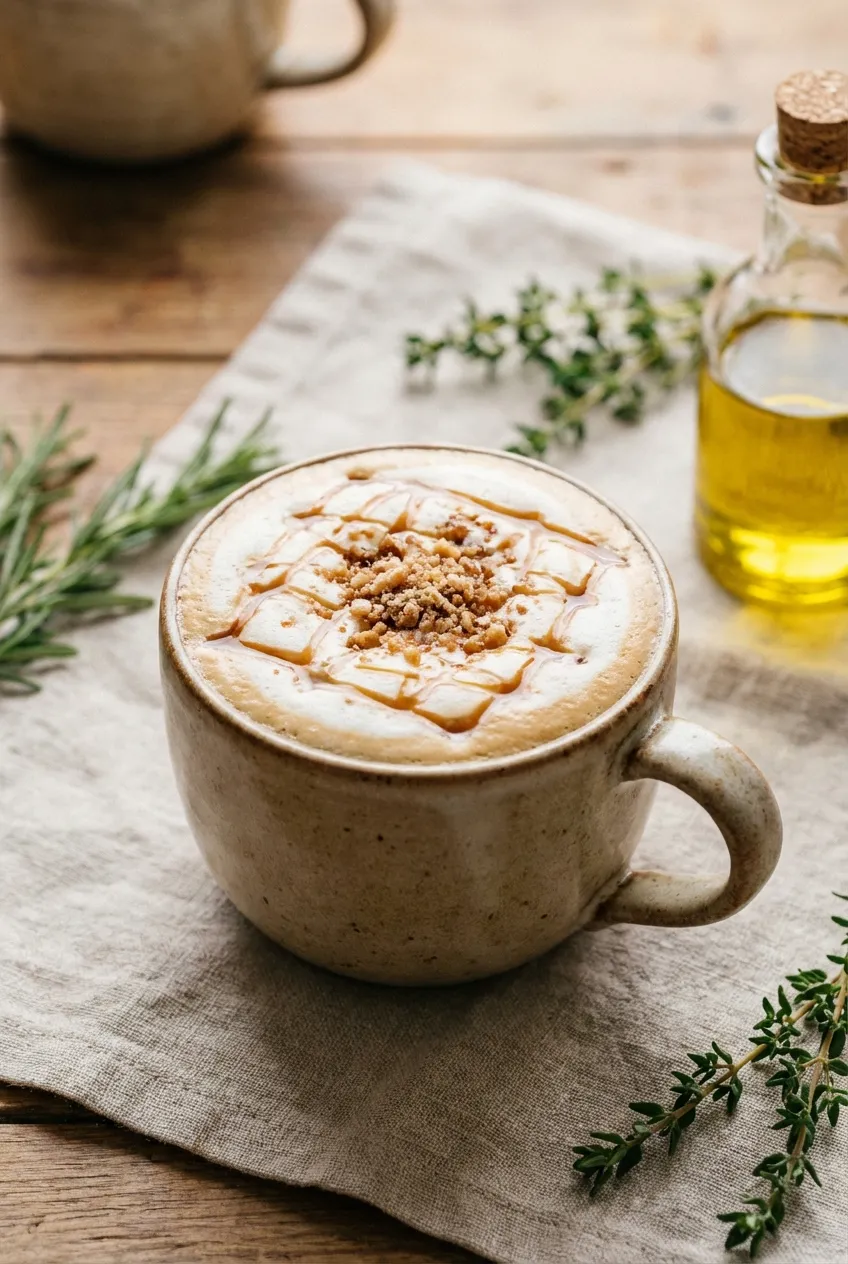
When the holidays roll around, there’s nothing I crave more than a warm, festive drink to start the day. I developed this Chestnut Praline Latte recipe to bring that cozy coffee shop feeling right into my own kitchen. It’s become a fast favorite for chilly mornings when I need a little extra comfort.
What makes this recipe so reliable is its simplicity. With rich espresso, a sweet, nutty syrup, and a crunchy chestnut topping, it delivers incredible flavor without complicated steps. You can easily make it with or without an espresso machine, and it comes together in just a few minutes.
Mastering Milk Frothing
Achieving velvety microfoam is the key to a great latte. Always start with very cold milk, as it gives you a longer window to incorporate air before it gets too hot. If you’re using a steam wand, submerge the tip just below the surface and angle it to create a gentle vortex in the pitcher. You’re looking for a soft hissing sound, which means you’re introducing air. Once the milk has increased in volume by about a third, submerge the wand deeper to heat the milk to about 150°F / 65°C for a silky, pourable texture. My take: I always use a chilled metal pitcher for frothing—it keeps the milk colder for longer, giving you more time to build that perfect silky foam.
Crafting Praline Syrup
While store-bought syrup is a great shortcut, making your own is surprisingly simple and adds a deeper flavor. To create a homemade praline syrup, combine equal parts water and brown sugar in a small saucepan. Add a tablespoon of butter and a handful of crushed pecans. Bring the mixture to a gentle simmer, stirring until the sugar dissolves completely. Let it bubble for a few minutes until it thickens slightly. Once it coats the back of a spoon, remove it from the heat and strain out the pecans for a smooth, rich syrup that’s ready for your latte.
Choosing Chestnuts
The quality of your chestnuts makes a real difference in the final garnish. For the best flavor and convenience, I recommend using pre-roasted, vacuum-packed chestnuts. When selecting them, look for whole nuts with a uniform, deep brown color and a firm texture. Avoid any that appear shriveled, dry, or have blemishes. A light toast in a dry skillet for just a minute or two before crushing will amplify their nutty, slightly sweet aroma, adding the perfect finishing touch to your drink.
Recipe Overview
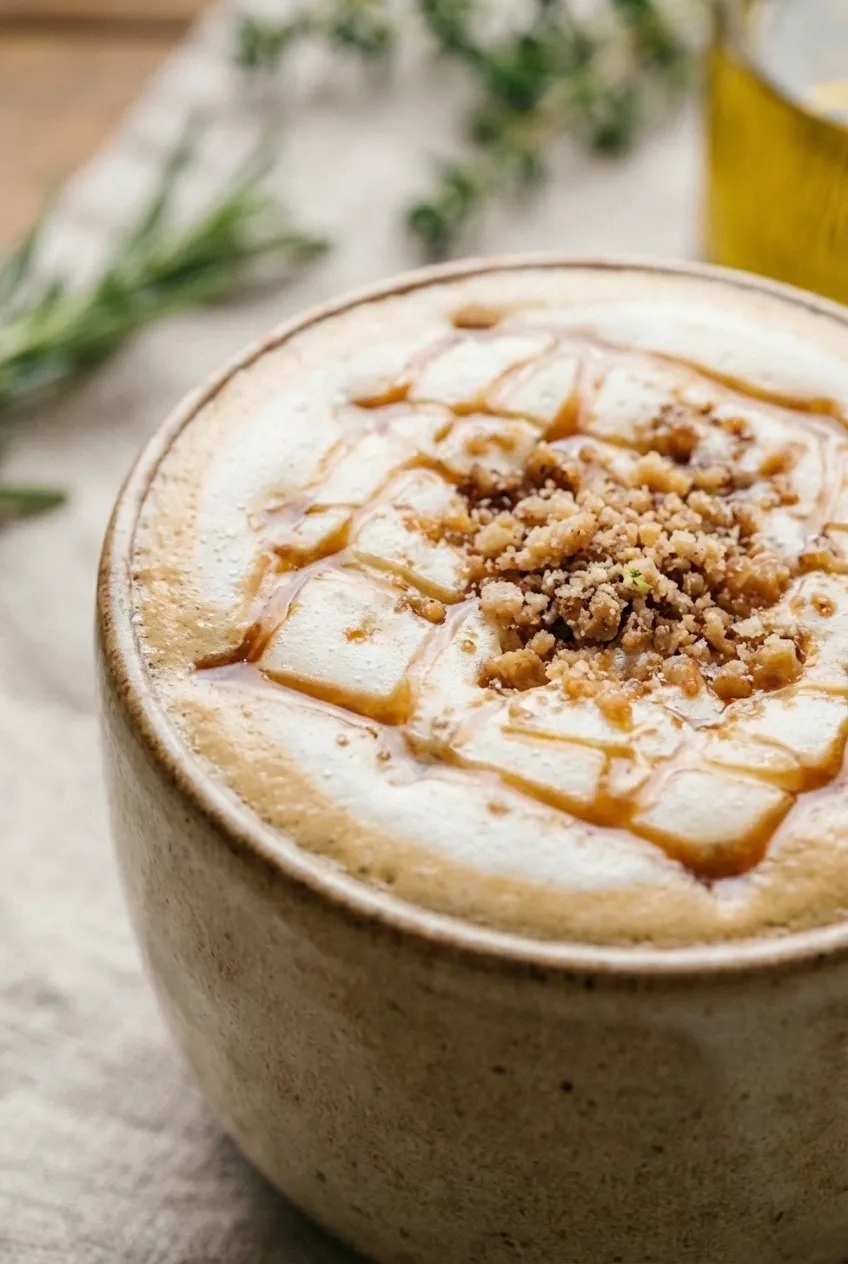
- Prep Time: 5 minutes
- Cook Time: 5 minutes
- Total Time: 10 minutes
- Servings: 1 serving
- Difficulty: Easy
Ingredients
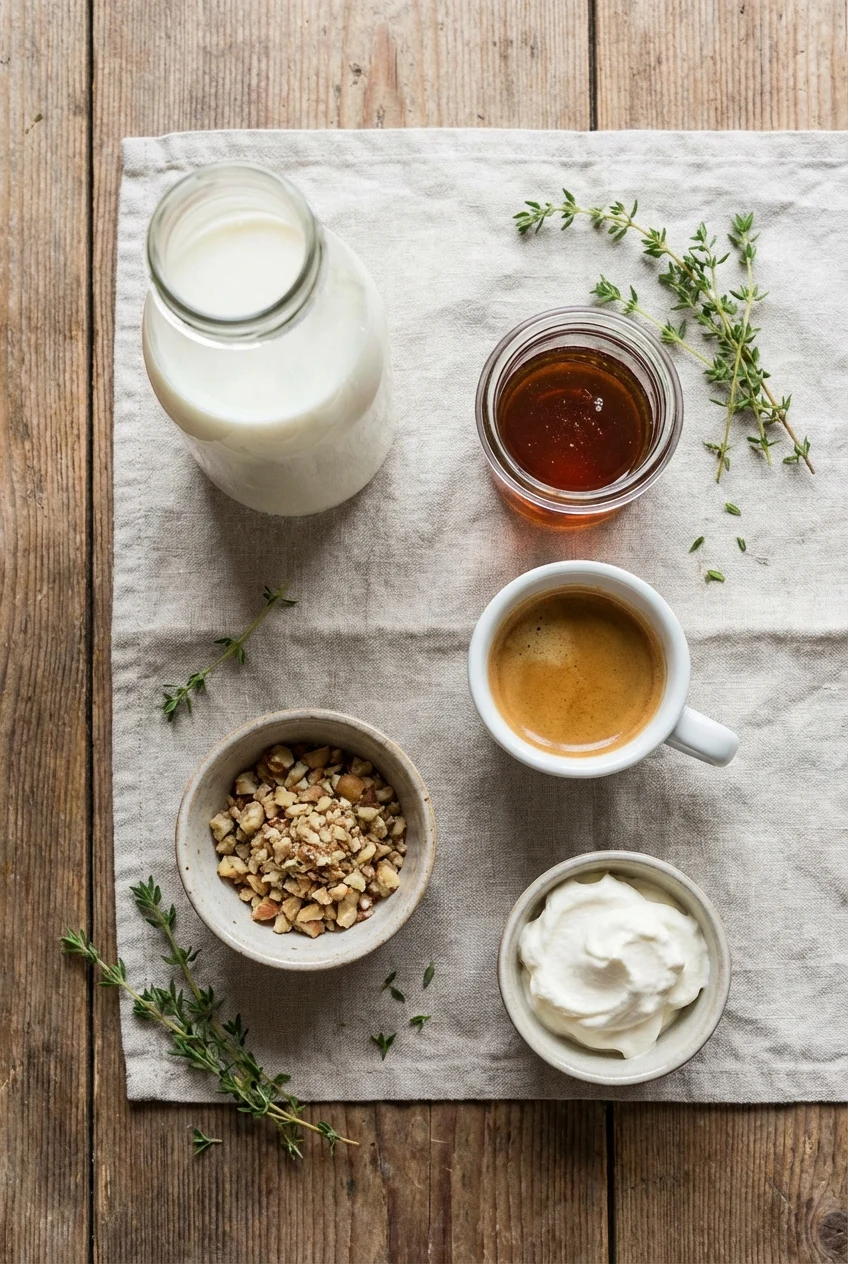
- 240g whole milk (1 cup)
- 30g praline syrup (2 tablespoons)
- 1 shot freshly brewed espresso
- 20g crushed chestnuts (2 tablespoons), lightly toasted
- Whipped cream, to taste (optional)
Step-By-Step Instructions
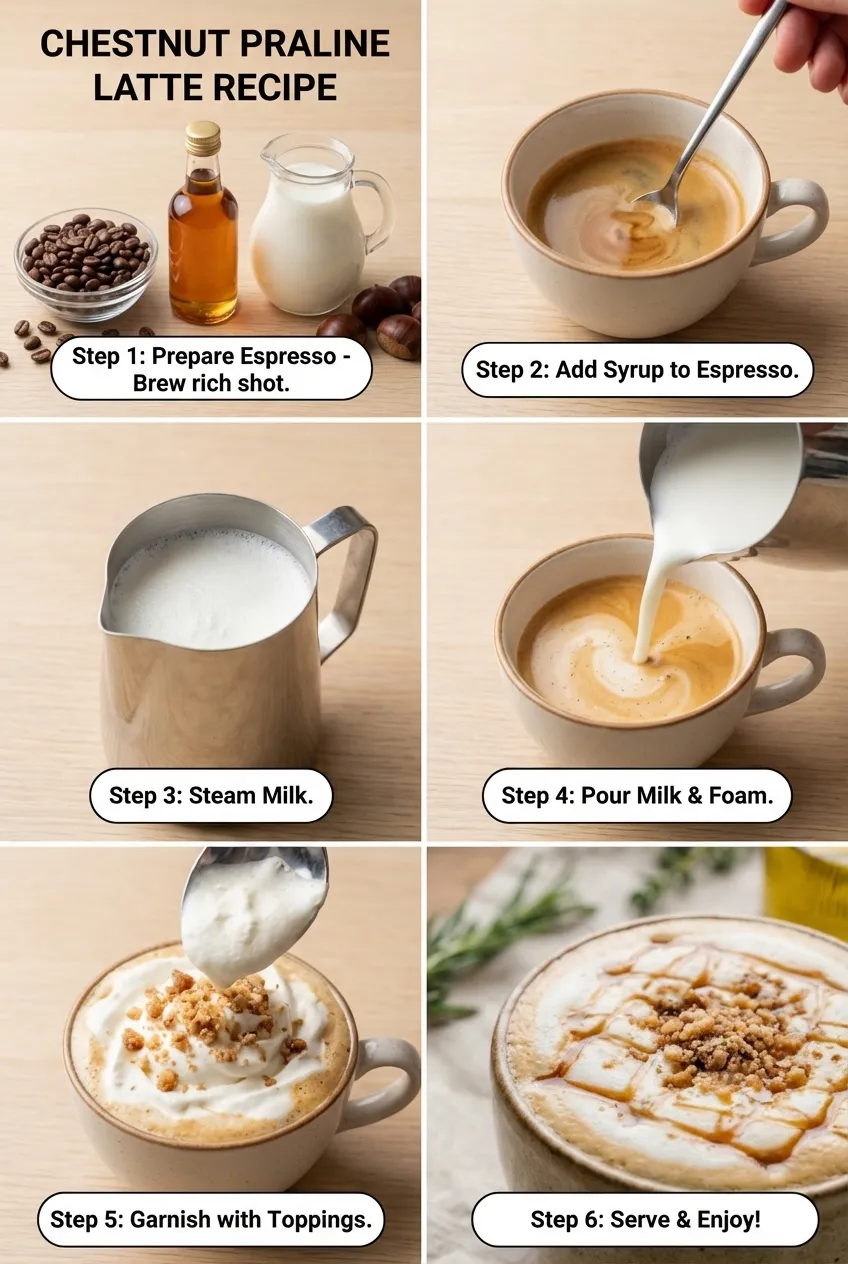
- Prepare Espresso
Brew a fresh shot of rich, aromatic espresso. A strong base is essential for the latte’s flavor, so use a good quality coffee bean. Pour the hot espresso directly into your serving mug.
- Steam the Milk
Pour cold milk into a frothing pitcher and steam it until it’s hot and frothy, with a silky foam. If you don’t have a frother, gently heat the milk in a saucepan over medium heat until just steaming, then whisk it vigorously until it becomes foamy.
- Combine and Stir
Add the praline syrup to the hot espresso in your mug and stir until fully combined. Slowly pour the steamed milk into the mug, using a spoon to hold back the foam. Once the mug is nearly full, spoon the remaining foam over the top.
- Garnish and Serve
Top the latte with a swirl of whipped cream, if you like. Sprinkle the toasted crushed chestnuts over the top for a delightful crunch and nutty aroma. Serve immediately to enjoy while it’s warm.
If you enjoy this dish, try our French Yogurt Cake for a perfect pairing or next-weeknight option.
Substitutions & Variations
- Dairy-Free / Vegan: Use oat milk or almond milk for a delicious plant-based version. Both froth well and complement the nutty flavors.
- Spice it Up: Add a pinch of ground cinnamon or nutmeg to the espresso before adding the milk for an extra layer of warmth.
- Different Nut: If you don’t have chestnuts, finely chopped toasted hazelnuts or pecans make an excellent substitute for the garnish.
Make-Ahead, Storage & Reheat
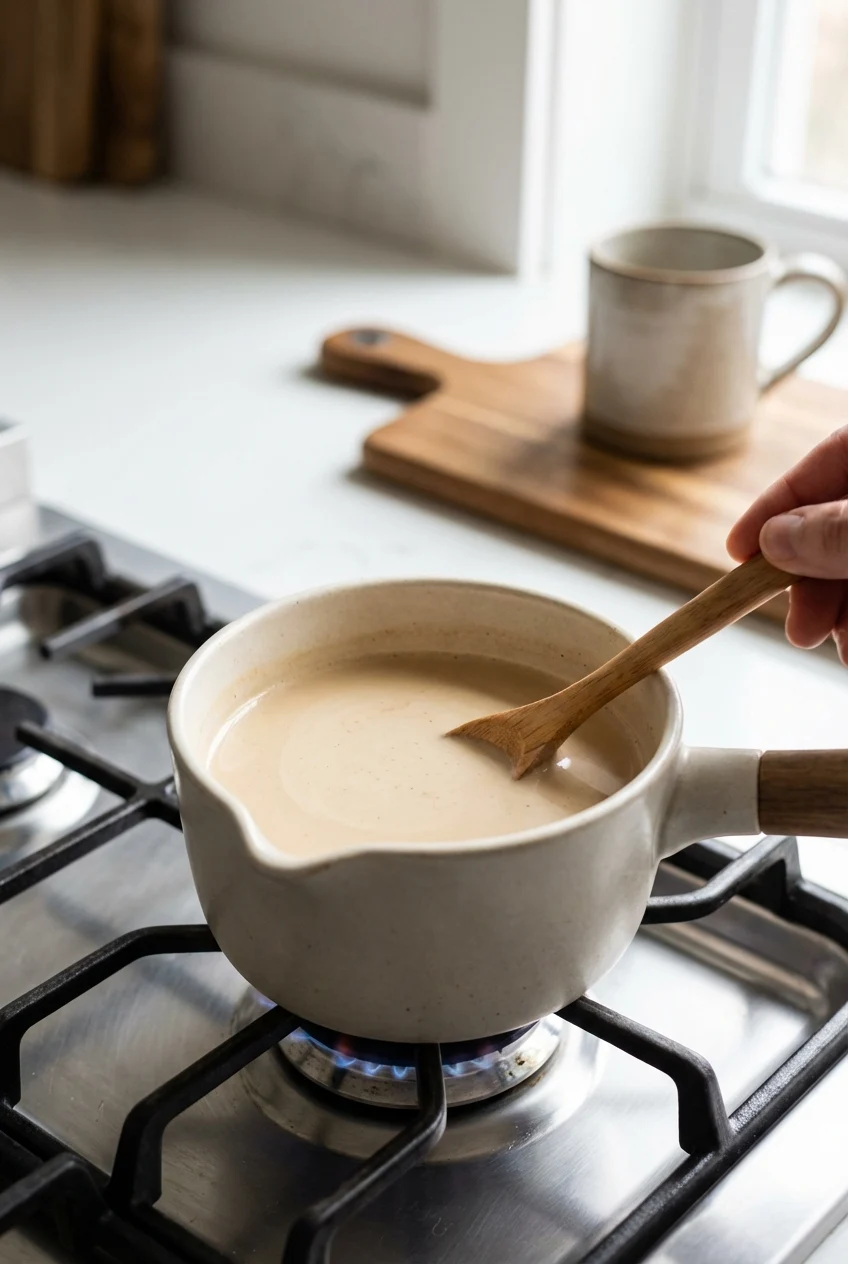
This latte is best enjoyed immediately after it’s made for the best flavor and texture. If you need to reheat it, do so gently in a saucepan over low heat, but be aware that the milk foam will likely dissipate.
Nutrition
- Serving Size: 1 cup
- Per Serving: 250 calories, 8g protein, 10g fat, 32g carbs
- Per 100g: 105 calories, 3g protein, 4g fat, 13g carbs
- Estimates only.
FAQ
Why does my frothed milk sometimes taste burnt, bitter, or sour?
This usually happens if the milk gets scalded. Always start with fresh, cold milk to preserve its sweetness, and stop heating just as the pitcher becomes too hot to hold.
How do I get silky microfoam instead of big, separated bubbles?
To avoid soapy foam, introduce air for only the first few seconds. Then, submerge the frother's tip to create a gentle vortex, which folds air in and polishes the texture.
What is the best way to froth milk without an espresso machine?
A French press works well for creating dense foam. Just pump the plunger vigorously through warm milk until it has doubled in volume. A simple handheld frother is another great, low-cost tool.
Do plant-based milks froth differently than regular dairy milk?
Yes, they can be less stable. Choose a "barista series" oat or almond milk, as they have stabilizers for better foam. Shake the carton well and avoid overheating to prevent separation.
Can I make a batch of frothed milk ahead of time to use later?
I don't recommend it. The foam is a delicate structure that collapses as it cools, so it loses its texture. For the best result, it is always better to steam just enough milk for each drink.
How much milk should I use in my frothing pitcher to avoid a mess?
A good rule is to fill your pitcher to just below the base of the spout, about one-third full. This leaves enough room for the milk to expand without overflowing as you incorporate air.
Does the starting temperature of the milk really make a difference?
It’s critical. Starting with very cold milk gives you more time to froth before it gets too hot, which helps develop a smoother, silkier texture without scalding the milk's sugars.
How can I adapt this recipe to make a refreshing iced chestnut latte?
Let the espresso cool slightly so it won't melt all the ice. Then combine it with your syrup and cold milk in a glass over ice. Skip the hot foam or top it with whipped cream instead.
Easy Chestnut Praline Latte
Equipment
- Espresso machine or coffee maker
- Frothing pitcher
- Small saucepan
- Spoon
- Serving mug
Ingredients
- 240 g Whole milk (1 cup)
- 30 g Praline syrup (2 tablespoons)
- 1 shot Freshly brewed espresso
- 20 g Crushed chestnuts (2 tablespoons), lightly toasted
- Whipped cream to taste, optional
Instructions
- Brew a fresh shot of espresso and pour it into your serving mug.
- Steam the cold milk in a frothing pitcher until hot and silky-frothed; if no frother is available, heat milk gently on medium and whisk vigorously until foamy.
- Add praline syrup to the hot espresso and stir to combine.
- Slowly pour steamed milk into the mug, holding back foam with a spoon; then spoon the remaining foam on top.
- Top with whipped cream if desired and sprinkle with toasted crushed chestnuts before serving immediately.
