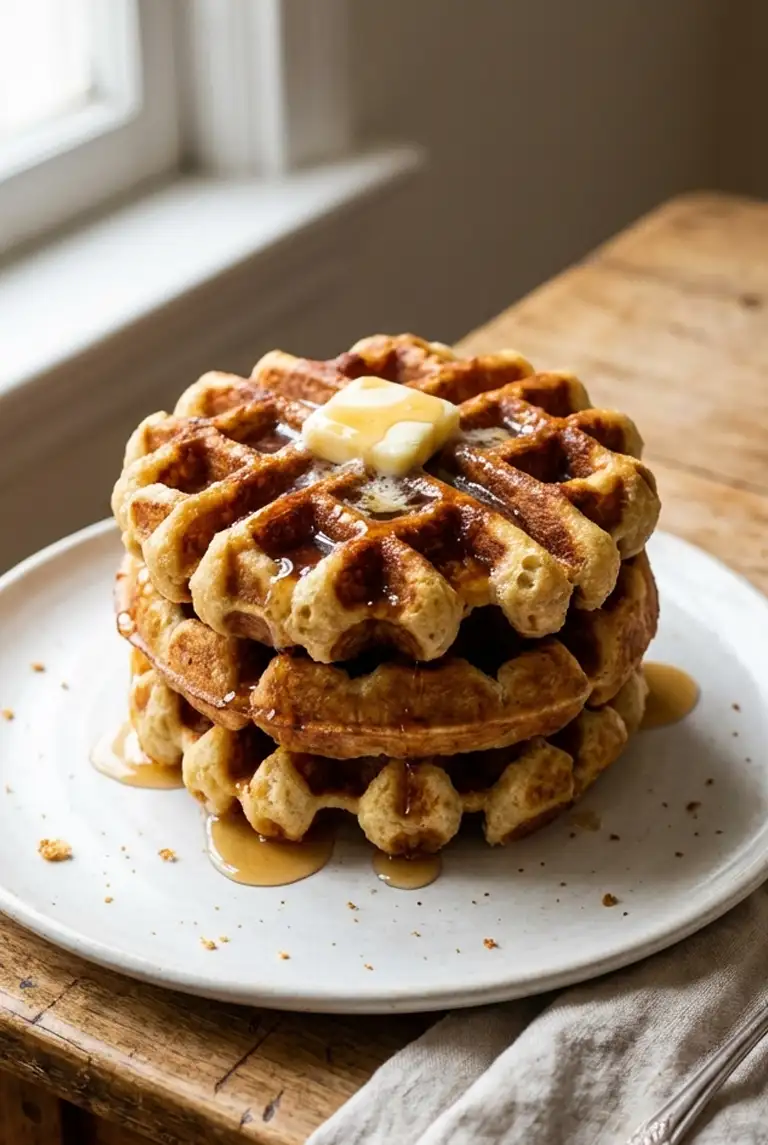
The first time I tested these, I made the batter too loose and pulled the waffles too early. They looked done, but the centers steamed themselves soft on the plate. A 5-minute rest and a little more time in the iron fixed both problems. The batter should be thicker than pancake batter but still pourable, and the waffles should come out deep golden with ridges that stay crisp instead of bending.
These are same-day sourdough discard waffles, not an overnight project. The discard adds a light tang and improves browning, not an aggressive sour flavor. You get crisp edges, a tender middle, and enough structure to hold butter and syrup without going limp.
Why These Stay Crisp Instead of Steaming Soft
- The discard adds acidity, which helps the waffles brown more deeply and gives them more flavor than a standard batter.
- A short 5-minute rest thickens the batter just enough to help the waffles set with better ridges and less trapped steam.
- Melted butter adds richness, but it needs to be warm rather than hot so it blends in smoothly without affecting the eggs.
- The real key is cooking for color, not just for time. Deep golden waffles stay crisp much better than pale ones that still hold too much steam inside.
Ingredients for Sourdough Discard Waffles
- 1 cup sourdough discard (240g)
- 1 1/2 cups all-purpose flour (180g)
- 1 tablespoon granulated sugar (10g)
- 1 tablespoon baking powder (10g)
- 1/2 teaspoon kosher salt
- 2 large eggs (100g)
- 1 1/4 cups milk (300g)
- 6 tablespoons unsalted butter, melted and slightly cooled (85g)
- 1 teaspoon vanilla extract
Vanilla does more than make these smell sweeter. In a fairly simple batter like this, a 👉good vanilla with a clean flavor comes through more than you might expect. If I’m adding cinnamon at the table or in whipped butter for serving, I usually use a softer 👉Ceylon cinnamon because it gives warmth without overpowering the tang of the discard.
What Kind of Discard Works Best
Unfed discard from the fridge or room-temperature discard both work well here. Cold discard may make the batter feel a little stiffer at first, but it smooths out once mixed. Older discard usually tastes a little tangier and can brown faster because of the extra acidity.
Active starter works too. The waffles may taste a little lighter and less tangy, but the texture stays good and you do not need to change the method.
How to make sourdough discard waffles
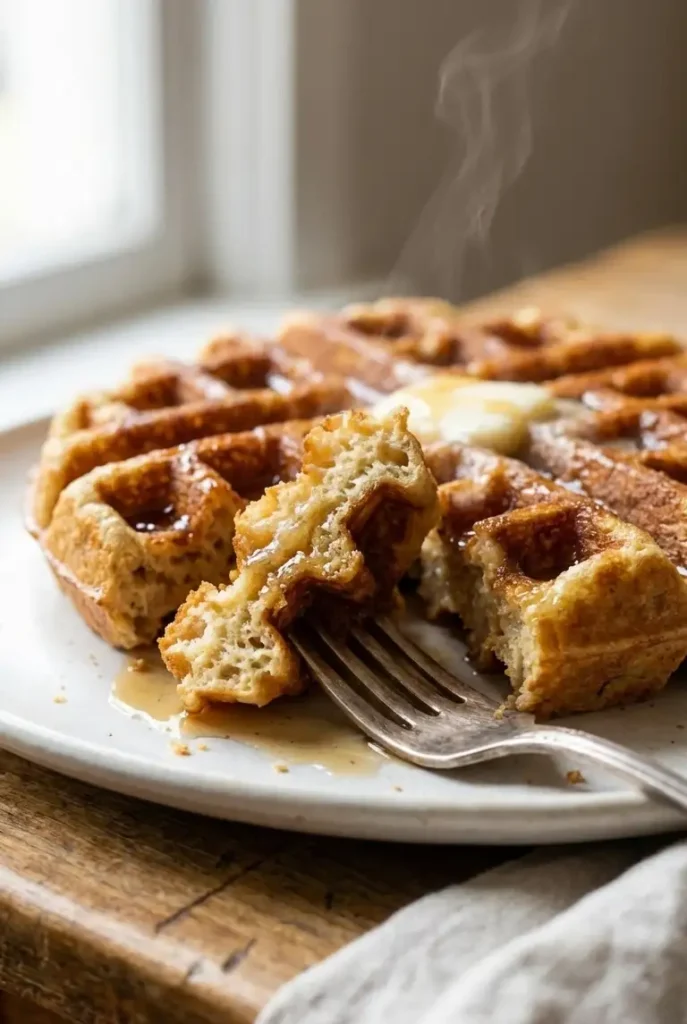
Mix the batter without overworking it
- Preheat your waffle iron fully. If it has a ready light, wait for it, then give it another 1 minute so the plates are actually hot all the way through.
- In a large bowl, whisk together the flour, sugar, baking powder, and salt.
- In another bowl, whisk the sourdough discard, eggs, milk, melted butter, and vanilla until smooth. The butter should feel warm, not hot.
- Pour the wet mixture into the dry ingredients and stir just until no dry streaks remain. A few small lumps are fine. If you mix until the batter is completely smooth, the waffles usually lose some lift and eat a little tougher.
Rest the batter for better texture
Let the batter sit for 5 minutes. It should look thicker than pancake batter and mound slightly before settling. If it still looks thin and runny, the waffles will spread too much and steam more than they crisp.
Cook until deep golden and crisp
- Lightly grease the waffle iron if needed. Add enough batter to spread close to the edges once the lid closes, but not so much that it runs out the sides. For many Belgian-style irons, that’s about 1/2 to 3/4 cup, but your machine matters more than the measuring cup.
- Cook for 4 to 6 minutes, depending on your waffle iron, until the steam drops off noticeably and the waffle is deep golden brown. If it’s pale, it usually isn’t crisp yet.
- If the waffle resists when you try to lift it, close the iron and give it another 30 to 60 seconds. A properly cooked waffle releases much more cleanly.
- Transfer finished waffles to a wire rack, not a plate. A plate traps steam underneath and softens the bottom fast.
- If you’re cooking in batches, hold the waffles in a 200°F oven directly on the rack or on a sheet pan fitted with a rack.
These waffles are especially good with a warm Honey Cinnamon Latte if you’re putting together a weekend breakfast.
Tips for crisp sourdough discard waffles
- Get the waffle iron fully hot before the batter goes in. If the iron is underheated, the batter steams before it sets, which is one of the fastest ways to lose crisp edges.
- Do not stack hot waffles. Even well-cooked waffles soften quickly once steam gets trapped between them, so keep them in a single layer on a rack.
- Cook for color, not just for time. Different machines run differently, so look for deep golden ridges and a noticeable drop in steam rather than relying only on the clock.
If you’re trying to use up a jar of starter throughout the week, these Sourdough Discard English Muffins are another easy breakfast recipe to make.
Sourdough discard waffles variations
Buttermilk sourdough discard waffles
Replace the milk with 1 1/4 cups buttermilk (300g). The batter will taste a little sharper, and the interior will be slightly softer. Keep the iron fully heated and cook until the outside is well browned so the edges still crisp properly.
Egg-free sourdough discard waffles
Replace the 2 eggs with 2 flax eggs. For each flax egg, mix 1 tablespoon ground flaxseed with 3 tablespoons water and let it sit for 5 to 10 minutes before adding it to the batter. The waffles won’t be quite as airy, and they usually need an extra 1 minute in the iron to crisp properly.
For a sweeter way to use the rest of your starter, these Sourdough Discard Brownies are a good baking project for later.
Storage, freezing, and reheating
Refrigerate leftover waffles in an airtight container for up to 3 days.
For longer storage, freeze them in a single layer first, then transfer them to a freezer bag or container for up to 2 months. Put parchment between layers if needed.
Reheat in a toaster or 350°F oven until hot and crisp again, about 5 to 8 minutes from the fridge or a little longer from frozen. Microwaving will warm them, but the crust stays soft.
Sourdough discard waffles FAQ
Can I make these sourdough discard waffles without an overnight rest?
Yes. This recipe is built for the same day. The only rest is 5 minutes, and that’s for batter texture, not fermentation.
Why did my sourdough waffles turn out soft instead of crispy?
Usually it’s one of three things: the iron wasn’t hot enough, the batter was too thin, or the waffles came out before they were deeply browned. Putting them on a plate instead of a rack can soften them too.
Can I use sourdough discard straight from the fridge?
Yes. Cold discard works well here. It may make the batter feel a little thicker at first, but once mixed, it cooks normally.
Can I freeze cooked sourdough discard waffles and reheat them later?
Yes. They freeze well. Reheat them straight from frozen in the toaster or oven until the outside feels dry and crisp again.
Can I use buttermilk instead of regular milk in this recipe?
Yes. Swap it in 1:1. Expect a little more tang and slightly softer centers, so give them full time in the iron.
Nutrition
- Serving size: approximately 1 waffle, or 1/6 of the total recipe
- Calories: 296 kcal
- Protein: 8g
- Fat: 14g
- Carbohydrates: 34g
- Per 100g: Calories: 257 kcal, Protein: 7g, Fat: 12g, Carbohydrates: 29g.
These nutritional values are approximate and can vary based on the specific ingredients and brands used.
Sourdough Discard Waffles
Equipment
- Waffle iron
- Large mixing bowls
- Whisk
- Wire rack
- Measuring cups and spoons
Ingredients
- 1 cup sourdough discard (240g)
- 1 1/2 cups all-purpose flour (180g)
- 1 tablespoon granulated sugar (10g)
- 1 tablespoon baking powder (10g)
- 1/2 teaspoon kosher salt
- 2 large eggs (100g)
- 1 1/4 cups milk (300g)
- 6 tablespoons unsalted butter, melted and slightly cooled (85g)
- 1 teaspoon vanilla extract
Instructions
- Preheat waffle iron fully and wait an extra 1 minute after the ready light goes off to ensure plates are hot.
- In a large bowl, whisk together flour, sugar, baking powder, and salt.
- In another bowl, whisk sourdough discard, eggs, milk, melted butter (warm, not hot), and vanilla until smooth.
- Pour wet mixture into dry ingredients and stir until no dry streaks remain; a few lumps are fine.
- Let batter rest for 5 minutes until slightly thickened.
- Lightly grease waffle iron if needed. Pour enough batter to almost fill the iron (about 1/2 to 3/4 cup depending on iron).
- Cook waffles for 4 to 6 minutes until steam slows and waffles are deep golden brown and crisp.
- If waffles resist lifting, close iron and cook 30 to 60 seconds more.
- Transfer waffles to a wire rack to cool and avoid sogginess. Keep warm in a 200°F oven if cooking batches.
