

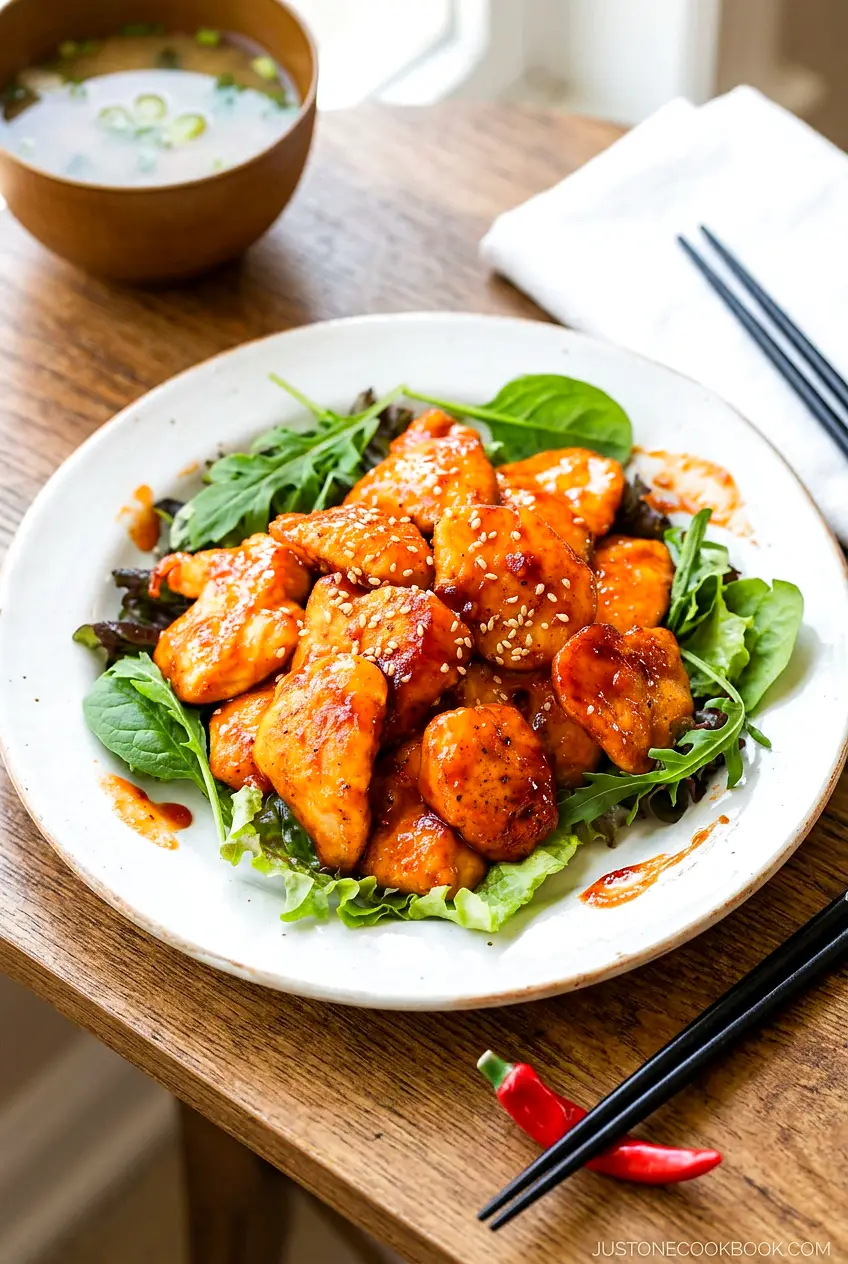
High-Protein Honey Gochujang Chicken
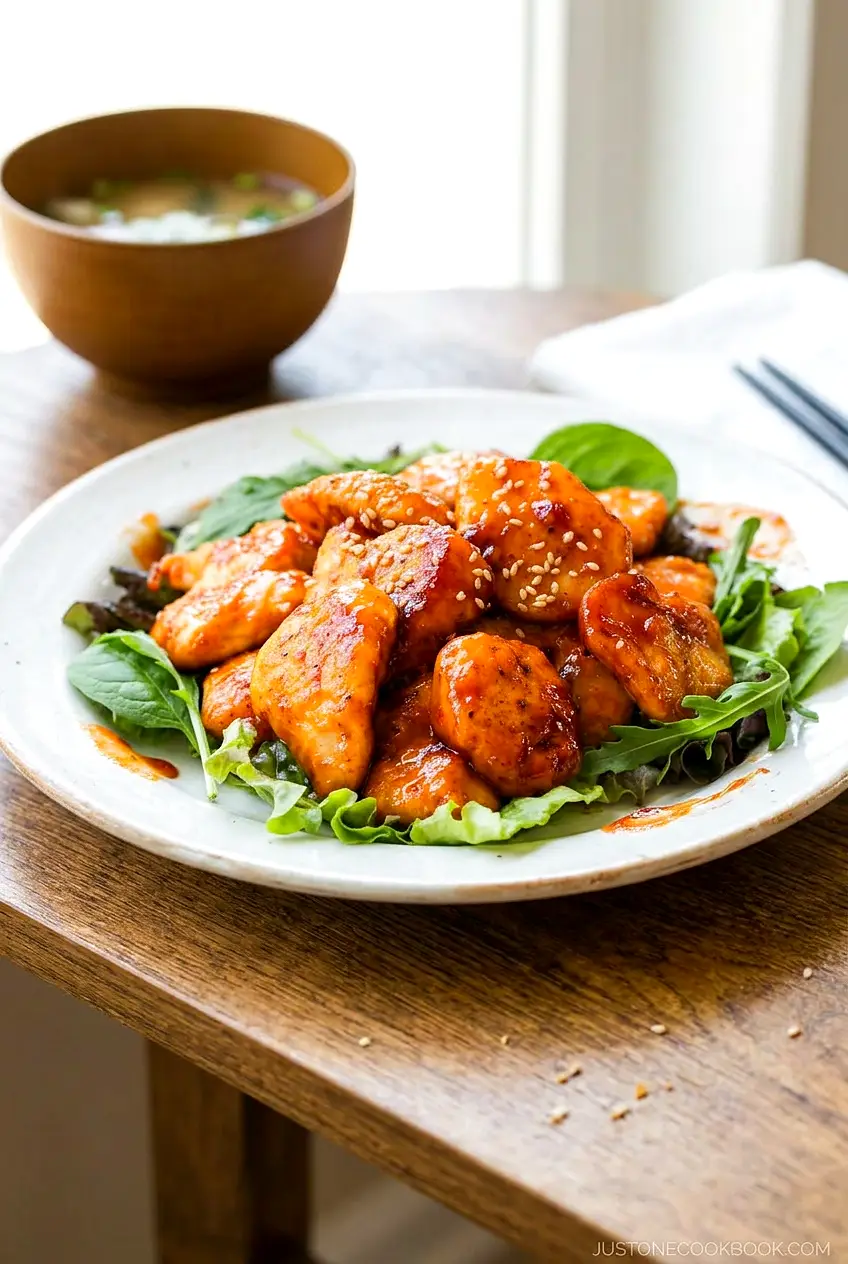
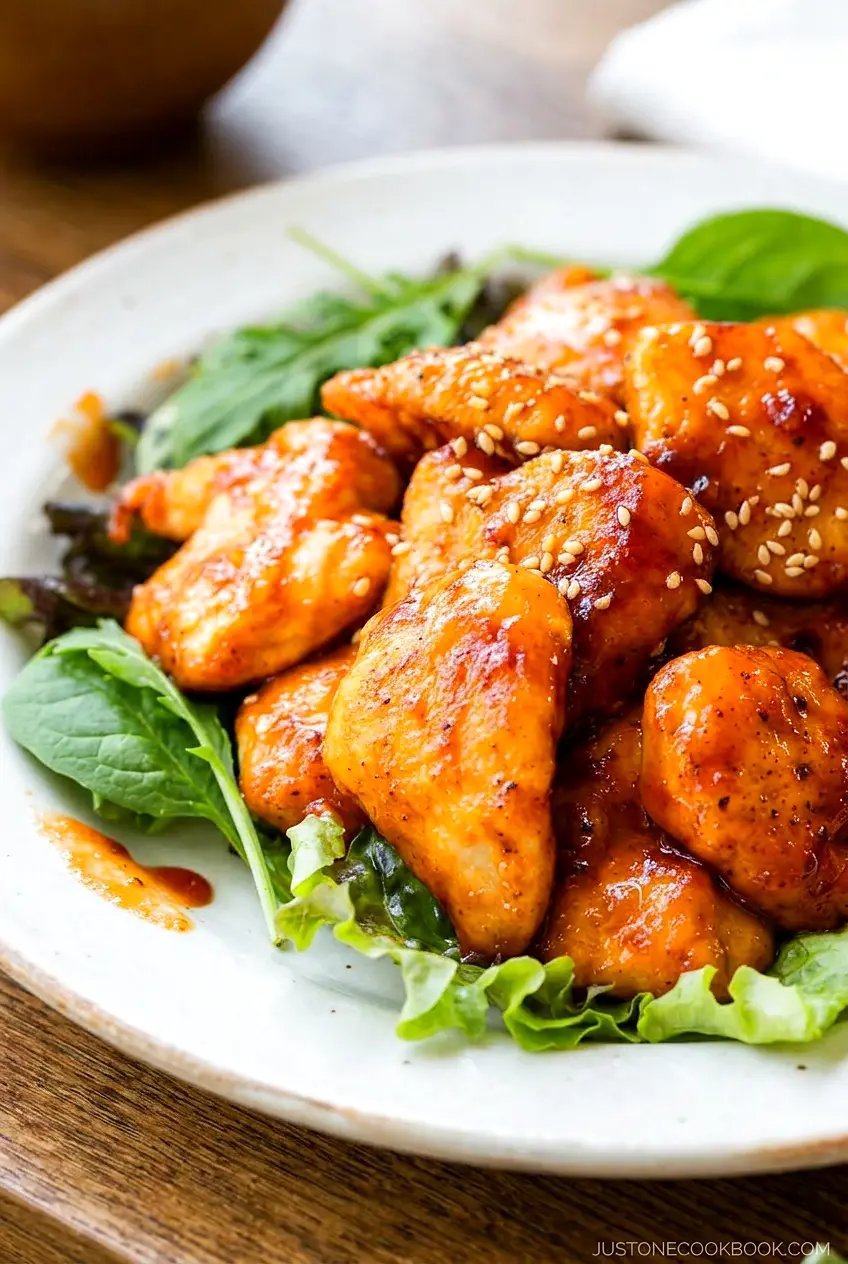
This honey gochujang chicken is sweet, spicy, and glossy, with browned pieces of chicken breast that stay tender and cook fast in a skillet. It is an easy dinner to serve over rice, noodles, or with a simple vegetable side.
The method is straightforward: coat the chicken lightly with starch, sear it in batches so it browns instead of steams, then finish it in a quick sauce of gochujang, honey, garlic, soy sauce, and mirin. Keep the pieces similar in size and start checking for doneness early, since chicken breast can go from juicy to dry pretty quickly.
Ingredients for High-Protein Honey Gochujang Chicken
- 1 1/2 pounds boneless skinless chicken breast (about 675g), sliced into even pieces and lightly flattened where needed
- 2 tablespoons potato starch or cornstarch
- 2 tablespoons neutral oil
- 3 cloves garlic, minced
- 3 tablespoons gochujang
- 2 tablespoons honey
- 2 tablespoons mirin
- 2 tablespoons soy sauce
- 2 to 4 tablespoons water, as needed to loosen the sauce
- 1 tablespoon toasted white sesame seeds
Optional for serving: sliced scallions, a small drizzle of toasted sesame oil, or a pinch of red pepper flakes for extra heat.
Chicken thighs can be used instead of chicken breast if you want a juicier result, but they may need a little longer to cook. For a gluten-free version, use tamari instead of soy sauce and check your gochujang and starch labels.
How to Make High-Protein Honey Gochujang Chicken
- Prep the chicken: Slice the chicken into even pieces and lightly flatten any thicker spots so it cooks at the same rate. Pat dry, then toss with the potato starch or cornstarch until lightly coated. The coating should look thin and dry, not heavy or pasty.
- Mix the sauce: In a small bowl, stir together the gochujang, honey, mirin, soy sauce, garlic, and 2 tablespoons water until smooth and pourable.
- Heat the pan: Set a large 12-inch skillet or wok over medium-high heat. When hot, add the oil and swirl to coat.
- Sear the chicken in batches: Add the chicken in a single layer without crowding the pan. Cook for 3 to 4 minutes on the first side, leaving it mostly undisturbed so it can brown. Flip and cook for 2 to 4 minutes more, until the edges are browned and the chicken is nearly cooked through. Transfer out as needed and repeat with the remaining chicken.
- Add the sauce: Lower the heat to medium or medium-low if the pan looks very hot. If there is a lot of dark residue in the skillet, wipe it out so the sauce does not taste scorched. Return all the chicken to the pan and pour in the sauce.
- Simmer until glossy: Toss to coat, then let the sauce bubble gently for 2 to 4 minutes. Stir enough to coat the chicken and keep the garlic from burning. Add another splash of water if the sauce thickens too fast or starts sticking.
- Finish and serve: Cook just until the sauce is glossy and clings to the chicken and the thickest piece reaches 165°F. Remove from the heat, sprinkle with sesame seeds, and add scallions or a little toasted sesame oil if using. Serve right away.
Timing can vary with chicken thickness, pan size, and stovetop heat, so use the color of the chicken and the sauce texture along with the clock.
How to Keep the Chicken Juicy
Even pieces make the biggest difference here. Thin, similar-sized pieces cook quickly and evenly, which helps you avoid dry edges and undercooked centers. Searing the chicken until it is almost done, then finishing it briefly in the sauce, also helps keep the texture tender.
Pull the chicken off the heat as soon as the thickest piece reaches 165°F. If you leave it simmering once the sauce has reduced, the glaze can get too thick and the chicken can dry out.
Why the Sauce Can Burn Quickly
Honey and gochujang both thicken fast in a hot skillet. If the pan is too hot when the sauce goes in, it can go from glossy to sticky and dark very quickly. Lower the heat before adding the sauce, and use a splash of water if it needs loosening. You want a thin glaze that coats the chicken, not a dry pan with burnt spots around the edges.
Easy Variations
Honey Gochujang Chicken Thighs
Use the same method with boneless skinless chicken thighs. Keep the pieces in a single layer so they brown well, and cook until the thickest piece reaches 165°F.
Honey Gochujang Chicken with Vegetables
For more of a one-pan dinner, add 1 to 2 cups of broccoli, bell peppers, or snap peas. Stir-fry the vegetables briefly before adding the sauce, or cook them separately and serve them alongside. Leave enough room in the pan so the chicken still sears well.
What to Serve With High-Protein Honey Gochujang Chicken
Steamed white rice, brown rice, or rice noodles all work well here. For a simple side, try a crisp cucumber salad, bean sprouts, quick pickled vegetables, steamed broccoli, or sautéed greens.
If you want another easy chicken dinner, try these Greek Chicken Gyros with Tzatziki.
How to Store and Reheat High-Protein Honey Gochujang Chicken
Let the chicken cool slightly, then refrigerate it in an airtight container for up to 3 to 4 days. If possible, store it separately from rice so the texture stays better.
Reheat gently in a skillet over low heat or in the microwave at reduced power. Add a small splash of water if the sauce has thickened too much. Avoid overheating, since chicken breast can dry out quickly when reheated.
You can also mix the sauce ahead and refrigerate it, but the chicken is best cooked just before serving.
For another quick skillet dinner, take a look at Creamy Cajun Chicken Skillet Dinner.
If you like saucy chicken dinners, you may also enjoy Easy Thai Red Curry Chicken.
Nutrition
Nutrition is approximate and will vary based on ingredient brands, exact amounts, and serving size.
- Serving size: 1/4 of recipe
- Calories: about 345
- Protein: 39g
- Fat: 10g
- Carbohydrates: 24g
- Per 100g: about 155 calories, 18g protein, 5g fat, 11g carbohydrates
Equipment
- 12-inch skillet or wok
- mixing bowl
- knife
- cutting board
- measuring spoons
- instant-read thermometer
- tongs or spatula
Ingredients
For the chicken
- 1 1/2 pounds boneless skinless chicken breast (about 675g), sliced into even pieces and lightly flattened where needed
- 2 tablespoons potato starch or cornstarch
- 2 tablespoons neutral oil
For the sauce
- 3 tablespoons gochujang
- 2 tablespoons honey
- 2 tablespoons mirin
- 2 tablespoons soy sauce
- 3 cloves garlic, minced
- 2 tablespoons water (plus 2 to 4 tablespoons more as needed to loosen the sauce)
To finish
- 1 tablespoon toasted white sesame seeds
Optional for serving
- sliced scallions (optional)
- toasted sesame oil, a small drizzle (optional)
- red pepper flakes, a pinch (optional)
Instructions
- Slice the chicken into even pieces and lightly flatten any thicker spots so pieces cook at the same rate.
- Pat the chicken dry and toss with the potato starch or cornstarch until lightly and evenly coated.
- In a small bowl, whisk together gochujang, honey, mirin, soy sauce, minced garlic, and 2 tablespoons water until smooth and pourable.
- Heat a large 12-inch skillet or wok over medium-high heat, add the oil, and swirl to coat the pan.
- Add the chicken in a single layer without crowding; cook 3 to 4 minutes on the first side without disturbing to allow browning.
- Flip the chicken and cook 2 to 4 minutes more, until edges are browned and pieces are nearly cooked through; transfer cooked pieces out and repeat with remaining chicken.
- Lower the heat to medium or medium-low and wipe out the pan if there is a lot of dark residue to avoid a scorched sauce.
- Return all chicken to the pan and pour in the sauce; toss to coat and let the sauce bubble gently for 2 to 4 minutes, stirring enough to prevent burning and adding a splash of water if the sauce thickens too fast.
- Cook just until the sauce is glossy and clings to the chicken and the thickest piece reaches 165°F (74°C).
- Remove from heat, sprinkle with toasted sesame seeds, add sliced scallions or a drizzle of toasted sesame oil if using, and serve immediately.
Tips
- Cut chicken into even, thin pieces so they cook quickly and evenly.
- Sear in batches to brown the chicken rather than steam it.
- Lower the heat before adding the sauce to prevent the honey and gochujang from burning.
- Use an instant-read thermometer and remove chicken once the thickest piece reaches 165°F (74°C).
- Add a splash of water if the sauce reduces too quickly or starts to stick.
Variations
- Honey Gochujang Chicken Thighs: Use boneless skinless chicken thighs for a juicier result; cook until the thickest piece reaches 165°F (74°C).
- Honey Gochujang Chicken with Vegetables: Add 1 to 2 cups of broccoli, bell peppers, or snap peas; stir-fry the vegetables briefly before adding the sauce or cook separately and serve alongside.