

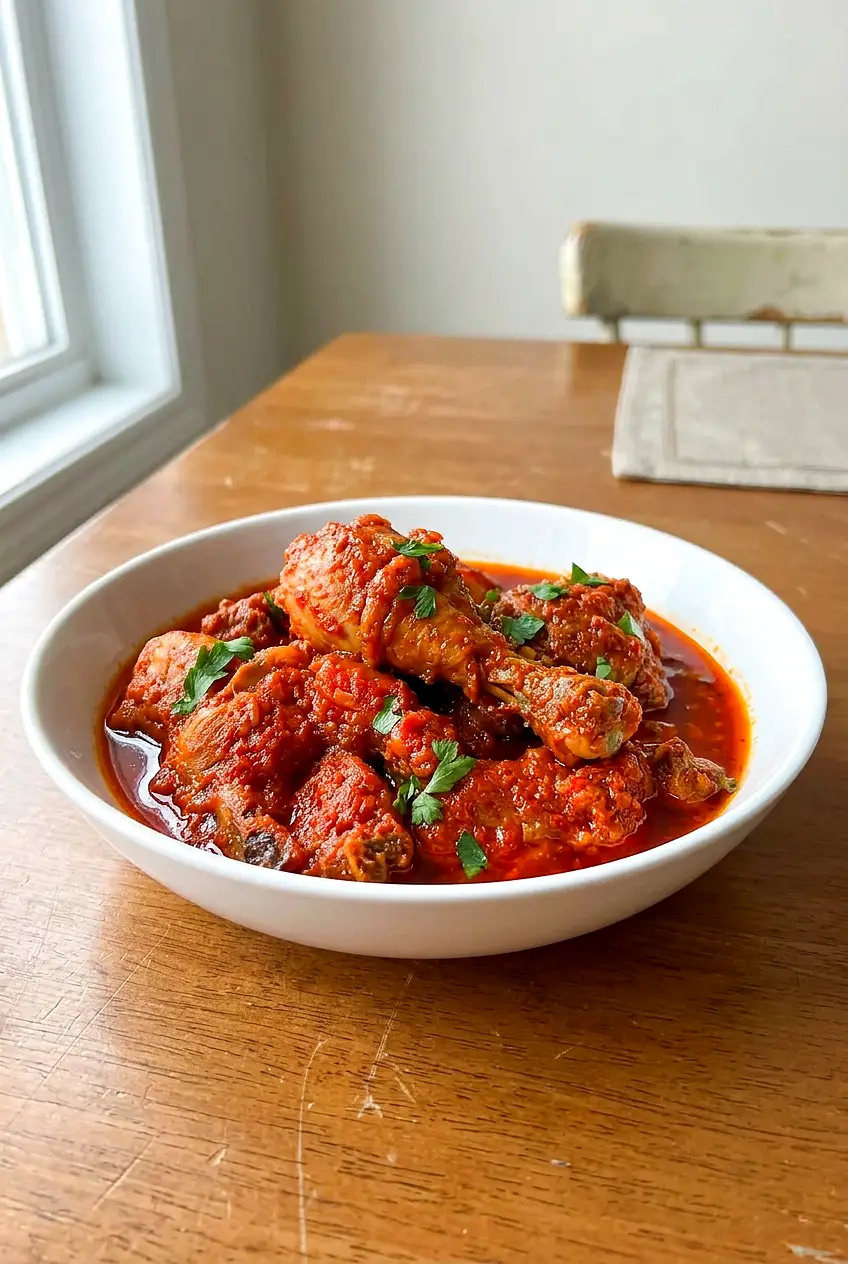
Nigerian Chicken Stew
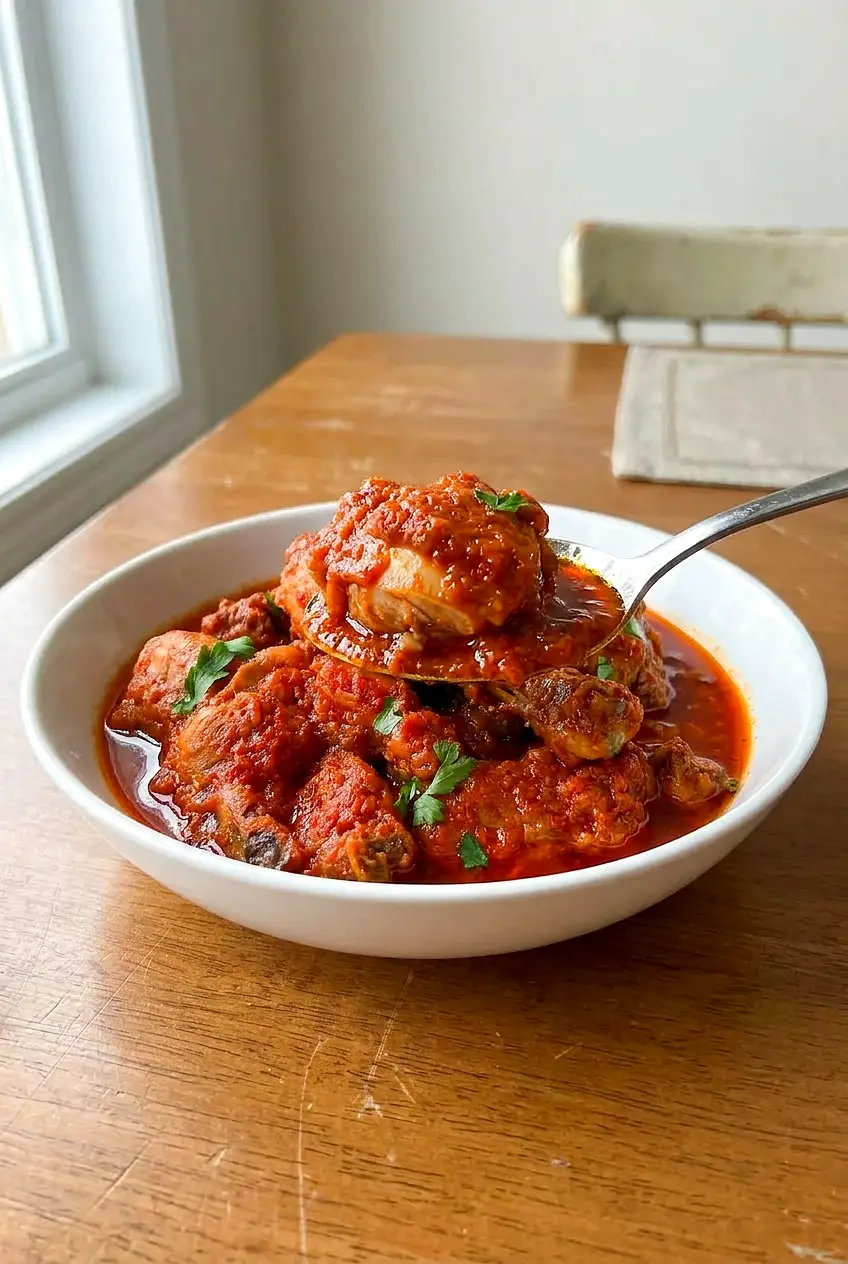
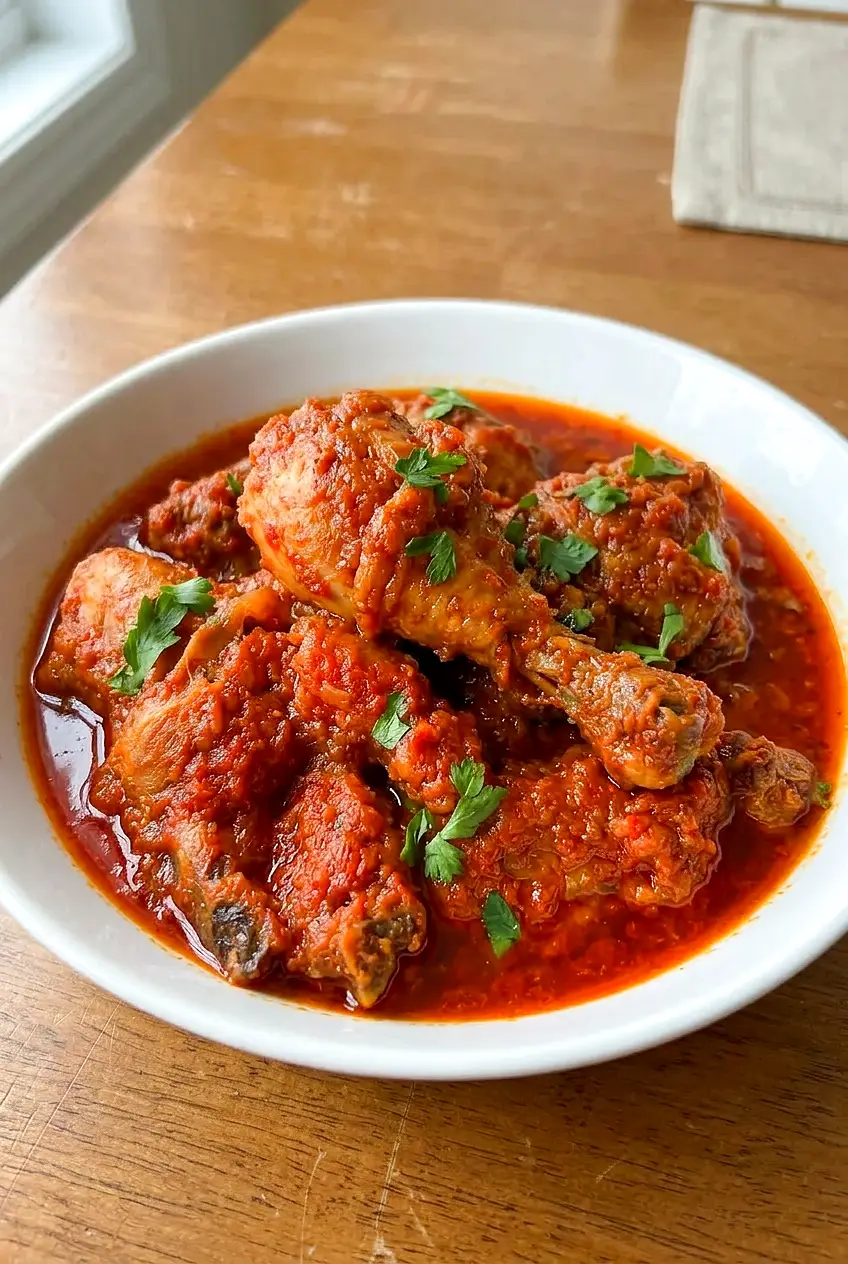
Nigerian chicken stew is a rich red pepper-tomato stew with tender chicken and a sauce that is meant to coat, not run. When the pepper base cooks down properly, the flavor turns deeper and more savory, and the color shifts from bright and raw-looking to a darker red.
This version keeps the process straightforward for home cooks. You simmer the chicken to make a quick stock, blend a softened pepper base, then finish the stew in one pot. The main thing to watch is the sauce texture: keep it fairly thick at the start, then let it simmer until the raw smell is gone and the sauce clings to the chicken.
Ingredients for Nigerian Chicken Stew
- 2 1/2 to 3 pounds chicken pieces, bone-in or boneless (about 1.35kg), cut into even portions if needed
- 4 medium tomatoes (about 500g)
- 2 large red bell peppers (about 300g)
- 2 medium onions (about 300g total), divided
- 1 to 2 Scotch bonnet peppers or other hot chiles
- 4 garlic cloves
- 1 tablespoon grated fresh ginger
- 1/2 cup neutral cooking oil
- 2 to 3 cups reserved chicken stock
- 1 to 2 bouillon cubes or 1 teaspoon bouillon powder
- 1 to 2 teaspoons curry powder
- 1 teaspoon dried thyme
- 1/2 teaspoon black pepper
- Salt, to taste
Optional for serving or finishing: bay leaf, chopped parsley, sliced green onion, rice, fried plantains, yams, beans, bread, or spaghetti.
Bone-in chicken gives you a richer stock, while boneless chicken is easier to serve. Start with 1 Scotch bonnet for a milder stew. If you blend the vegetables while they are still hot, vent the blender carefully and work in batches.
How to Make Nigerian Chicken Stew
- Simmer the chicken: Add the chicken to a large Dutch oven or heavy pot with half of 1 onion, sliced or chopped, a little salt, and enough water to cover well. Bring to a gentle boil over medium to medium-high heat, then reduce to medium and simmer for 20 to 30 minutes, or until the chicken is cooked through and the thickest piece reaches 165°F. Transfer the chicken to a plate and reserve 2 to 3 cups of the stock.
- Soften the vegetables: While the chicken cooks, combine the tomatoes, bell peppers, remaining onion, Scotch bonnet, garlic, and ginger. Roast on a sheet pan at 400°F, air fry at 400°F, or soften them on the stovetop over medium heat for 15 to 25 minutes, until softened and lightly blistered in spots. The vegetables should be cooked and tender, not dried out.
- Blend the pepper base: Blend the softened vegetables into a smooth, thick red sauce. Add only a small splash of reserved stock if needed to help it blend. The puree should be pourable, but not thin.
- Brown the chicken if you want: For extra flavor and texture, heat a thin film of oil in the pot or in a skillet over medium-high heat and brown the cooked chicken in batches for 8 to 15 minutes total. Turn the pieces so they pick up some golden spots instead of steaming. This step is optional.
- Start the stew base: In the same pot, heat the remaining oil over medium heat. If you have a little onion left, add it and cook for a few minutes until softened. Carefully pour in the blended pepper sauce, then add the curry powder, thyme, bouillon, black pepper, and 1 to 1 1/2 cups of reserved stock. Stir well and bring to a steady simmer over medium to medium-low heat.
- Cook down the sauce: Simmer uncovered or partially covered for 20 to 30 minutes, stirring often enough to prevent scorching. Add more stock only as needed if the sauce gets too thick. The stew is ready for the chicken when the sauce looks deeper red, smells cooked and savory instead of raw, and has thickened enough to lightly coat a spoon. You may also see a little oil collect around the edges.
- Finish the stew: Return the chicken and any juices to the pot. Simmer gently over low to medium-low heat for 10 to 15 minutes, until the chicken is hot, the sauce coats the pieces well, and the thickest piece still reads 165°F. Taste and adjust with salt, more bouillon, or a small splash of stock if needed.
- Rest and serve: Let the stew sit off the heat for 5 minutes, then serve over rice or alongside plantains, yams, beans, bread, or spaghetti.
How to Keep the Sauce Thick and Rich
A watery stew usually comes from blending the vegetables too thin or adding too much stock too early. Start with a thick pepper puree and loosen it gradually as it cooks.
Use the sauce itself as the cue more than the clock. Keep simmering until the raw pepper smell is gone and the stew clings to the chicken instead of pooling like broth. If it still looks loose near the end, simmer it uncovered a little longer.
How to Keep the Chicken Juicy
Do not overcook the chicken during the first simmer. Once it reaches 165°F, take it out and let the stew finish separately. After that, keep the final simmer gentle so the chicken warms through without drying out.
Bone-in pieces give you a little more room for error and make a better stock. Boneless thighs or breasts work too, but start checking early.
Easy Variations
Boneless Chicken Stew
Use boneless chicken thighs or breasts for easier serving. Follow the same method, but watch the chicken closely since boneless pieces can dry out faster.
Crispier Chicken Finish
After simmering the chicken, brown it in a skillet, shallow-fry it, or air-fry it before adding it back to the stew. Keep the final simmer short so the outside keeps some texture.
What to Serve With Nigerian Chicken Stew
Rice is the easiest pairing because it soaks up the sauce well. Steamed white rice, basmati rice, or brown rice all work. Fried plantains, boiled yams, beans, bread, or spaghetti are also good with this stew.
For another spicy chicken dinner, try Spicy Dragon Chicken with Cashews or Moroccan Harissa Chicken.
How to Store and Reheat Nigerian Chicken Stew
Let the stew cool before transferring it to an airtight container. Refrigerate for up to 4 days. If you are storing it with rice, keep the rice separate so it does not soak up too much sauce.
For longer storage, freeze the stew in portions. Reheat gently on the stovetop over low to medium-low heat or in the microwave until hot. If the sauce has thickened too much, stir in a small splash of stock or water to loosen it. The flavor settles in well overnight, so this is a good make-ahead dish.
If you want another chicken dinner idea, try Easy Turkish Yogurt Chicken Kabobs.
Nutrition
Nutrition is approximate and will vary based on the chicken cut, how much oil stays in the finished stew, ingredient brands, and serving size.
- Serving size: about 1/6 of the stew
- Calories: about 510
- Protein: 31g
- Fat: 38g
- Carbohydrates: 12g
- Per 100g: about 145 calories, 9g protein, 11g fat, 3g carbohydrates
Equipment
- Dutch oven or heavy pot
- blender
- sheet pan or air fryer
- skillet (optional for browning)
Ingredients
For the Chicken
- 2 1/2 to 3 pounds chicken pieces (about 1.35 kg), bone-in or boneless, cut into even portions
- salt, to taste
- water, enough to cover the chicken
For the Pepper-Tomato Base
- 4 medium tomatoes (about 500 g)
- 2 large red bell peppers (about 300 g)
- 2 medium onions, divided (use half for simmering chicken and the rest for the sauce)
- 1 to 2 Scotch bonnet peppers or other hot chiles
- 4 garlic cloves
- 1 tablespoon grated fresh ginger
For the Stew & Seasoning
- 1/2 cup neutral cooking oil
- 2 to 3 cups reserved chicken stock
- 1 to 2 bouillon cubes or 1 teaspoon bouillon powder
- 1 to 2 teaspoons curry powder
- 1 teaspoon dried thyme
- 1/2 teaspoon black pepper
- salt, to taste
Optional for Serving
- bay leaf
- chopped parsley or sliced green onion
- rice, fried plantains, yams, beans, bread, or spaghetti
Instructions
- Place the chicken in a large Dutch oven or heavy pot with half of 1 onion (sliced or chopped), a little salt, and enough water to cover; bring to a gentle boil over medium to medium-high heat.
- Reduce heat to medium and simmer the chicken 20 to 30 minutes, or until cooked through and the thickest piece registers 165°F (74°C); transfer the chicken to a plate and reserve 2 to 3 cups of the stock.
- While the chicken cooks, combine the tomatoes, red bell peppers, the remaining onion, Scotch bonnet, garlic, and ginger.
- Roast the vegetables on a sheet pan at 400°F (204°C), air fry at 400°F (204°C), or soften them on the stovetop over medium heat for 15 to 25 minutes until softened and lightly blistered.
- Blend the softened vegetables into a smooth, thick red sauce, adding only a small splash of reserved stock if needed so the puree is pourable but not thin.
- Optional: heat a thin film of oil in a skillet or the pot over medium-high and brown the cooked chicken in batches for 8 to 15 minutes total, turning so pieces pick up golden spots; set aside.
- In the same pot, heat the remaining oil over medium; if you have some onion left, cook it a few minutes until softened.
- Carefully pour in the blended pepper sauce, then add the curry powder, thyme, bouillon, black pepper, and 1 to 1 1/2 cups of the reserved stock; stir and bring to a steady simmer over medium to medium-low heat.
- Simmer the sauce uncovered or partially covered for 20 to 30 minutes, stirring often to prevent scorching, and add more stock only if the sauce becomes too thick; look for a deeper red color, a cooked pepper aroma, and a sauce that coats a spoon.
- Return the chicken and any juices to the pot and simmer gently over low to medium-low heat for 10 to 15 minutes, until the chicken is hot, the sauce coats the pieces, and the thickest piece reads 165°F (74°C); taste and adjust seasoning with salt or bouillon or a splash of stock.
- Remove from heat and let the stew rest 5 minutes, then serve over rice or with plantains, yams, beans, bread, or spaghetti.
Tips
- Start with a thick pepper puree and loosen gradually to avoid a watery stew.
- Vent the blender carefully and blend in batches when the vegetables are still hot.
- Remove the chicken from the initial simmer as soon as it reaches 165°F (74°C) to prevent overcooking.
- Use bone-in chicken for richer stock or boneless for easier serving.
- If the sauce thickens too much after chilling, loosen with a small splash of stock or water when reheating.
Variations
- Boneless Chicken Stew: Use boneless chicken thighs or breasts for easier serving; watch closely to avoid drying them out.
- Crispier Chicken Finish: After simmering, brown the chicken in a skillet, shallow-fry, or air-fry before adding back to the stew and keep the final simmer short to preserve texture.