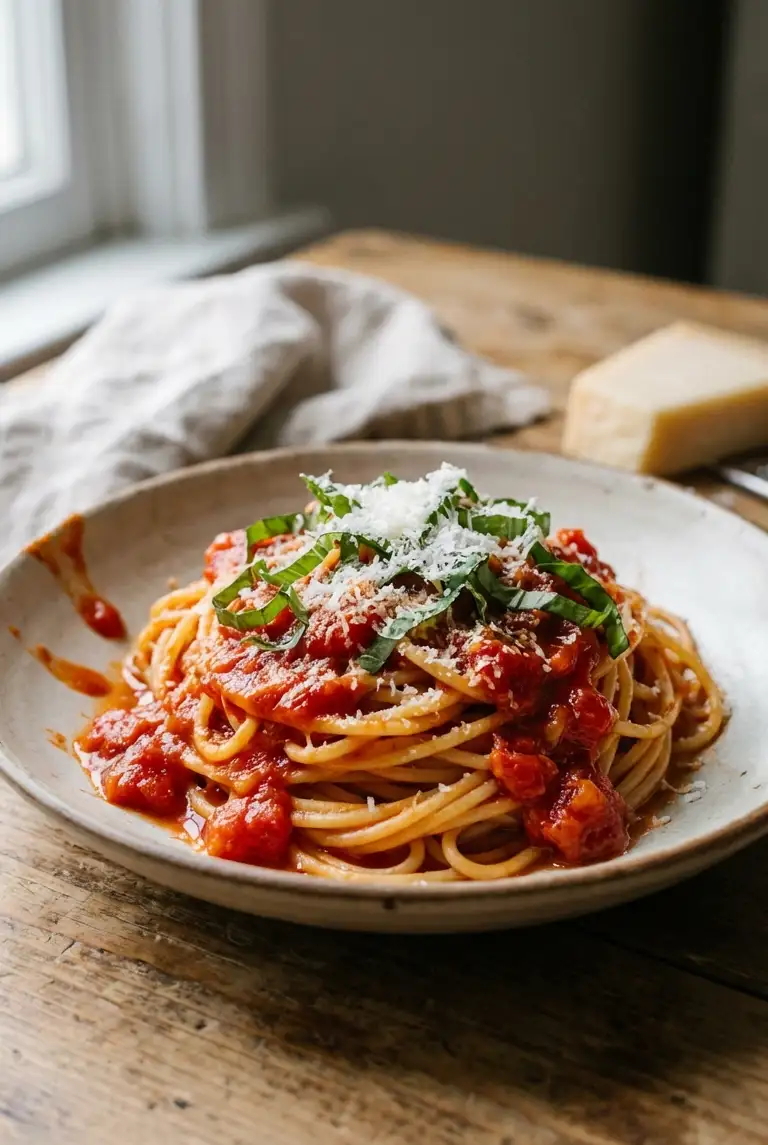
Fresh tomato sauce gets disappointing fast when the tomatoes in the pot are giving off more water than the sauce can cook away. Roma and San Marzano-style tomatoes usually break down into a thicker sauce pretty quickly, while juicier garden tomatoes need more time before they stop looking loose.
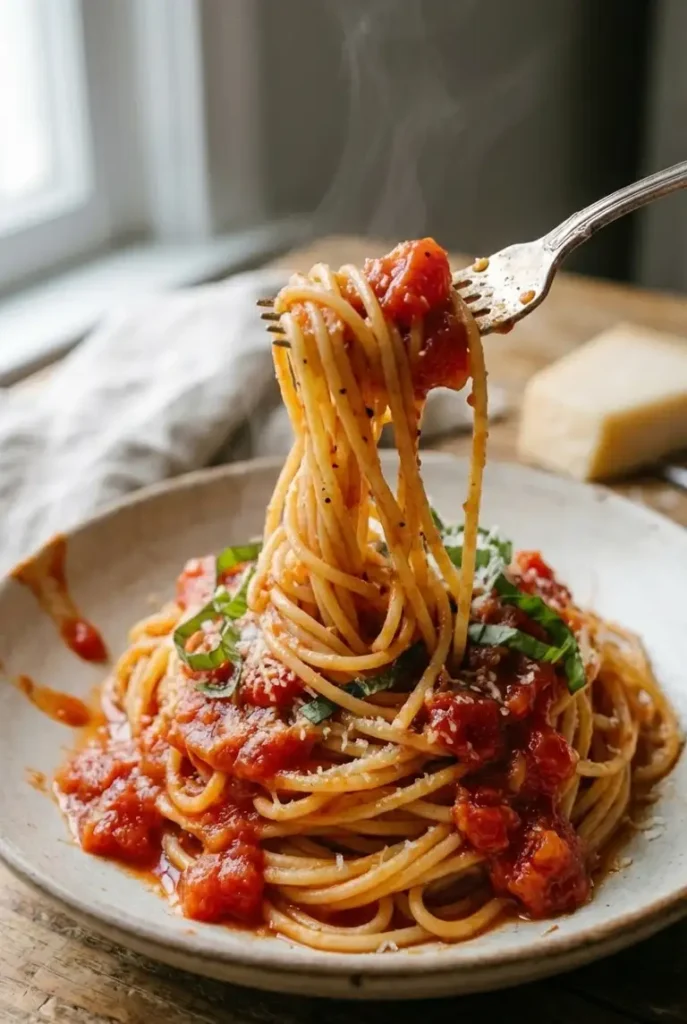
The other step that changes this dish most is finishing the spaghetti in the sauce with a little pasta water. That last minute is what turns it from chopped tomatoes on noodles into a glossy sauce that actually clings.
What you get here is a fresh tomato spaghetti sauce that stays bright, lightly chunky, and clean-tasting, with softened onion, garlic in the background, and basil added late so it still tastes fresh.
Why This Fresh Tomato Spaghetti Sauce Works
- Blanching and peeling the tomatoes removes the papery skin, so the finished sauce feels smoother and doesn’t leave tough bits tangled in the pasta.
- Onion is cooked until soft but not browned, which rounds out the acidity without pushing the sauce toward a sweeter, darker flavor.
- A short simmer cooks off raw wateriness but stops before the tomatoes turn dull or jammy.
- Tossing the pasta in the sauce with reserved pasta water helps the starch emulsify the sauce so it clings to the spaghetti instead of pooling underneath.
Best Tomatoes for Fresh Tomato Pasta Sauce
Roma vs. San Marzano vs. Juicier Garden Tomatoes
Roma and San Marzano-style tomatoes are the easiest choice because they have more flesh and less water, so they cook down into a thicker sauce faster.
Round slicing tomatoes and mixed garden tomatoes work too, but expect a looser sauce at first and plan on a little more simmer time. Very ripe tomatoes collapse quickly but can release a lot of liquid, while firmer ones usually need longer to soften.
Do You Need to Peel Tomatoes First?
Not absolutely, but peeling improves the texture. Tomato skins tend to separate as the sauce cooks and can leave thin curled pieces throughout the pot. For a cleaner sauce, peel them.
If you leave the skins on, chop the tomatoes more finely and expect a more rustic result.
Ingredients You Need for Homemade Spaghetti Sauce with Fresh Tomatoes
- 2 pounds fresh Roma or plum tomatoes (900g)
- 12 ounces spaghetti (340g)
- 2 tablespoons olive oil
- 1 medium yellow onion, finely chopped (150g)
- 3 cloves garlic, minced
- 1 teaspoon kosher salt, plus more for pasta water (I prefer 👉Atlantic sea salt)
- 1/2 teaspoon black pepper
- 1/4 teaspoon sugar, optional
- 1/4 cup fresh basil, chopped
- 1/4 cup grated Parmesan cheese (25g), plus more for serving
How to Make Spaghetti Sauce from Fresh Tomatoes
Blanch and Peel the Tomatoes
- Bring a large pot of water to a boil. Cut a shallow X on the bottom of each tomato.
- Lower the tomatoes into the boiling water for 30 to 60 seconds, just until the scored skin starts to curl back at the X. Transfer them to a bowl of cold water.
- Peel off the skins. If any resist, return those tomatoes to the boiling water for 10 to 15 more seconds. Core the tomatoes, then chop them roughly, keeping all the juices.
Cook the Onion and Garlic Without Browning
- Heat the olive oil in a large skillet or wide saucepan over medium heat. Add the onion and cook for 4 to 5 minutes, stirring now and then, until soft, glossy, and translucent. The edges should not brown.
- Add the garlic and cook for 30 to 60 seconds, just until fragrant. If the garlic starts to color, lower the heat right away.
Simmer Until the Sauce Coats a Spoon
- Add the chopped tomatoes and all their juices, along with the salt, pepper, and optional sugar. Bring the mixture to a lively simmer, then lower the heat so it cooks at a gentle bubble.
- Simmer for 20 to 30 minutes, stirring occasionally, until the tomatoes look softened and slightly broken down. The sauce should be lightly chunky, not watery. When you drag a spoon across the pan, it should leave a brief trail before the sauce settles back.
- Taste only after the sauce has reduced, then adjust the salt and pepper. Stir in the basil over low heat so it keeps its fresher flavor.
Finish the Pasta in the Sauce for Better Texture
- While the sauce simmers, cook the spaghetti in well-salted water until 1 minute shy of package directions. Before draining, reserve 1/2 to 1 cup of pasta water.
- Add the drained spaghetti to the sauce along with the Parmesan. Toss over low heat for 1 to 2 minutes, adding small splashes of pasta water as needed, until the noodles look glossy and evenly coated.
- Serve right away with more Parmesan on top.
If you want to turn this into a full Italian-style dinner, serve it with my Classic Crispy Air Fryer Chicken Parmesan on the side.
How to Keep Fresh Tomato Sauce from Getting Watery
- Use plum-style tomatoes if you can. They contain less water and reduce faster.
- Do not cover the pan while the sauce simmers. You want the steam to escape.
- Use a wide pan when possible so the sauce reduces faster.
- Do not judge the texture too early. Fresh tomatoes release a lot of liquid before they start to thicken.
- Always finish the pasta in the sauce. Even a slightly loose sauce tightens once the pasta water is worked in.
Easy Variations for Fresh Tomato Spaghetti Sauce
Spicy Fresh Tomato Spaghetti Sauce
Add 1/4 to 1/2 teaspoon crushed red pepper flakes when you add the garlic. The heat should sit in the background, not cover the tomato flavor.
Fresh Tomato Sauce with Red Wine
After the onion softens, add 1/4 cup dry red wine and simmer until it is almost gone before adding the garlic and tomatoes. This gives the sauce a slightly deeper, darker edge without making it heavy.
If pasta night is on repeat at your house, you might also like this Easy Pasta Carbonara (No Egg) for a creamier change of pace.
Storage, Freezing, and Reheating Tips
Store leftover sauce in an airtight container in the refrigerator for up to 4 days.
For longer storage, freeze the sauce without the pasta for up to 3 months. Let it cool first, then portion it into containers or freezer bags.
Reheat the sauce gently on the stove over medium-low heat. If it has thickened too much in the fridge, loosen it with a splash of water.
If you already mixed the pasta into the sauce, the noodles will keep absorbing liquid as they sit. Add a little water when reheating to bring it back.
Fresh Tomato Sauce FAQ
Why is my spaghetti sauce with fresh tomatoes watery?
Usually the tomatoes were very juicy or the sauce needed more time. Keep simmering uncovered until the liquid reduces. A wide pan helps, and finishing the pasta in the sauce improves the texture even if the sauce starts a little loose.
Why did my tomato sauce taste too acidic or bitter?
Acidity usually softens as the sauce cooks and the onion breaks down. If it still tastes sharp at the end, a small pinch of sugar can help. Bitterness usually comes from browned garlic or over-reduced sauce.
Do I have to peel the tomatoes?
No, but peeling gives you a smoother sauce. If you skip it, expect a more rustic texture with some skin in the finished dish.
Can I use frozen or canned tomatoes instead of fresh?
Yes. Frozen tomatoes work well once thawed, though they release a lot of liquid and may need longer to reduce. Canned whole tomatoes are the easiest substitute when fresh tomatoes are out of season.
Nutrition
- Serving size: approximately 1/4 of the total recipe
- Calories: 403 kcal
- Protein: 13g
- Fat: 11g
- Carbohydrates: 63g
- Per 100g: Calories: 120 kcal, Protein: 4g, Fat: 3g, Carbohydrates: 19g
These nutritional values are approximate and can vary based on the specific ingredients and brands used.
Equipment
- Large pot
- Bowl
- Large skillet or wide saucepan
- Wooden spoon
- Colander
- Cutting board
- Chef’s knife
Ingredients
- 2 pounds fresh Roma or plum tomatoes (900g)
- 12 ounces spaghetti (340g)
- 2 tablespoons olive oil
- 1 medium yellow onion, finely chopped (150g)
- 3 cloves garlic, minced
- 1 teaspoon kosher salt, plus more for pasta water
- 1/2 teaspoon black pepper
- 1/4 teaspoon sugar, optional
- 1/4 cup fresh basil, chopped
- 1/4 cup grated Parmesan cheese (25g), plus more for serving
Instructions
- Bring a large pot of water to a boil. Cut a shallow X on the bottom of each tomato.
- Lower the tomatoes into boiling water for 30 to 60 seconds until the skin curls back at the X, then transfer to a bowl of cold water.
- Peel off the skins, return any resistant tomatoes to boiling water for 10 to 15 more seconds, core and chop roughly, keeping all juices.
- Heat olive oil in a large skillet or saucepan over medium heat. Add onion and cook for 4 to 5 minutes until soft and translucent without browning.
- Add garlic and cook for 30 to 60 seconds until fragrant; lower heat if garlic starts to color.
- Add chopped tomatoes with juices, salt, pepper, and optional sugar. Bring to a lively simmer, then lower heat to a gentle bubble.
- Simmer for 20 to 30 minutes, stirring occasionally, until tomato pieces are softened and sauce is lightly chunky and coats a spoon.
- Taste and adjust seasoning; stir in basil over low heat to keep fresh flavor.
- Cook spaghetti in well-salted water until 1 minute shy of package directions. Reserve 1/2 to 1 cup pasta water before draining.
- Add drained spaghetti to sauce with Parmesan. Toss over low heat 1 to 2 minutes, adding pasta water as needed until noodles are glossy and coated.
- Serve immediately with extra Parmesan on top.
