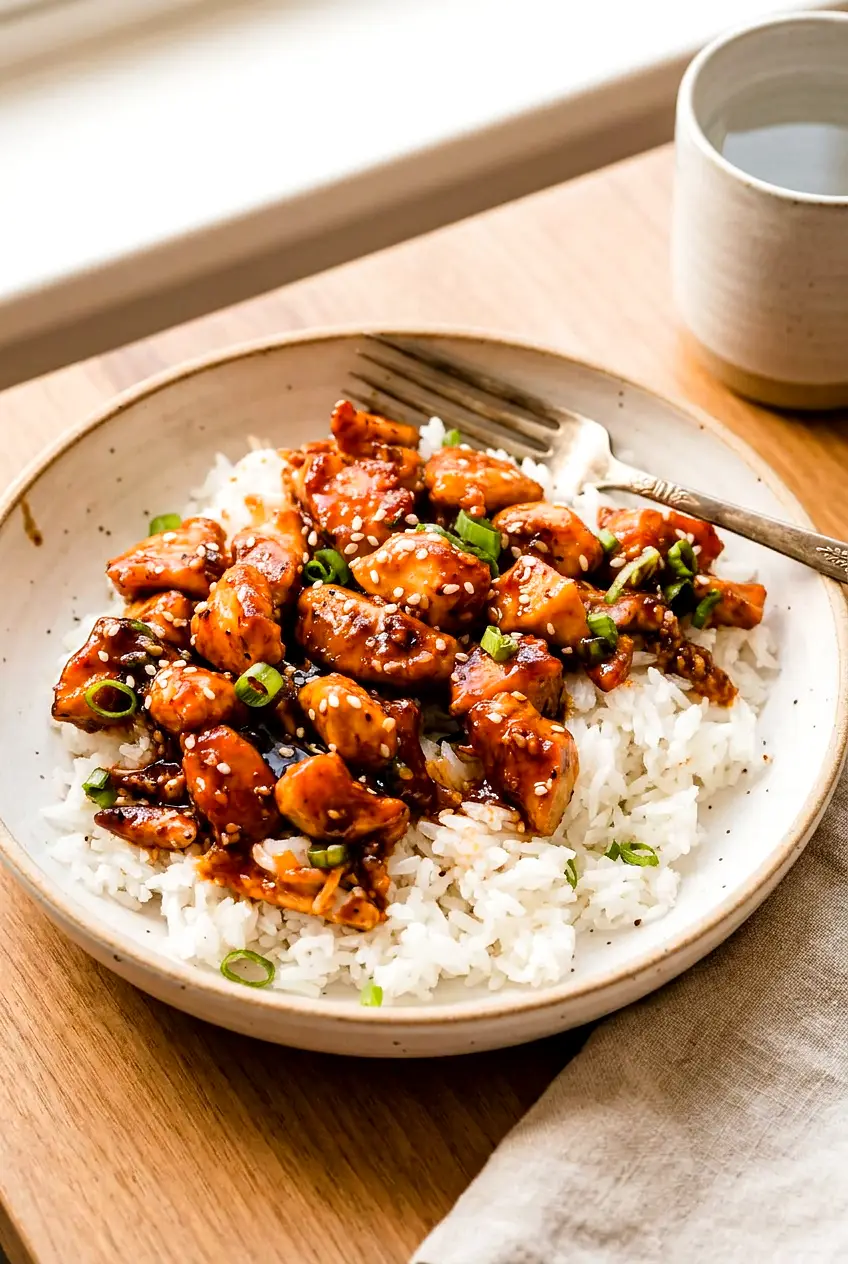
Easy Healthy Sesame Chicken
This sesame chicken is quick, saucy, and easy to make in a skillet with simple pantry ingredients. The chicken gets a light starch coating for browned edges, then finishes in a short sweet-savory sauce with garlic, ginger, and sesame.
The method stays practical for a weeknight dinner: brown the chicken in batches, build the sauce in the same pan, and toss everything together just until glossy. Use a wide skillet so the chicken can brown instead of steam.
Ingredients for Easy Healthy Sesame Chicken
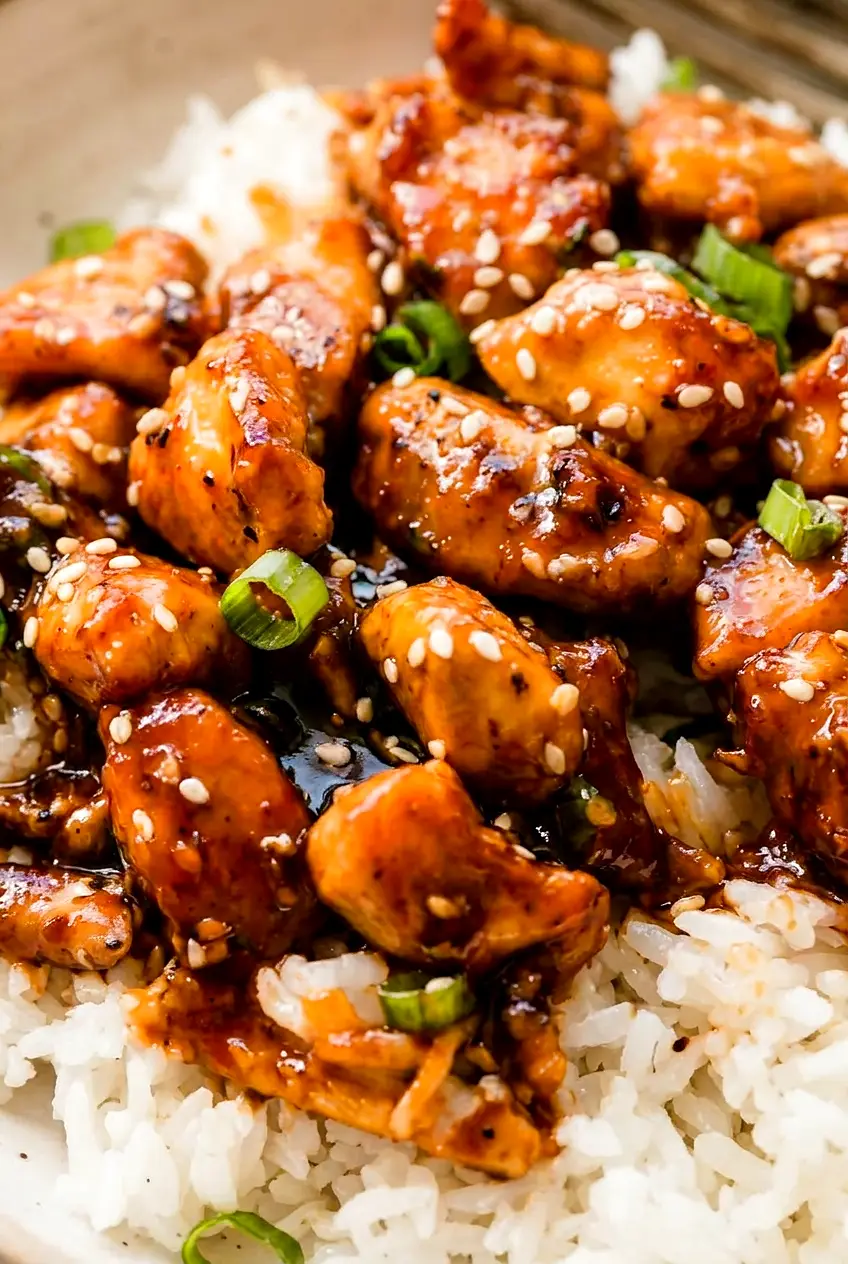
- 1 1/2 pounds boneless skinless chicken breasts or thighs (675g), cut into bite-size pieces
- 1/4 cup cornstarch or arrowroot starch (30g)
- 1/3 cup reduced-sodium soy sauce or tamari (80g)
- 1/4 cup water (60g)
- 2 to 3 tablespoons honey, monk fruit sweetener, or coconut sugar, to taste
- 1 tablespoon tomato paste (15g)
- 2 tablespoons seasoned rice vinegar
- 1 teaspoon toasted sesame oil
- 2 to 3 tablespoons avocado oil, for cooking
- 3 garlic cloves, minced
- 1 tablespoon fresh ginger, grated
- 1/4 teaspoon red pepper flakes
- 1 to 2 tablespoons sesame seeds
- 2 scallions, sliced
- Cooked rice or noodles, for serving
Chicken thighs are a little more forgiving and stay juicier. If you use chicken breasts, start checking them early so they do not dry out.
Seasoned rice vinegar already contains some sweetness and salt, so it helps to taste the sauce before using the full 3 tablespoons of sweetener.
How to Make Easy Healthy Sesame Chicken
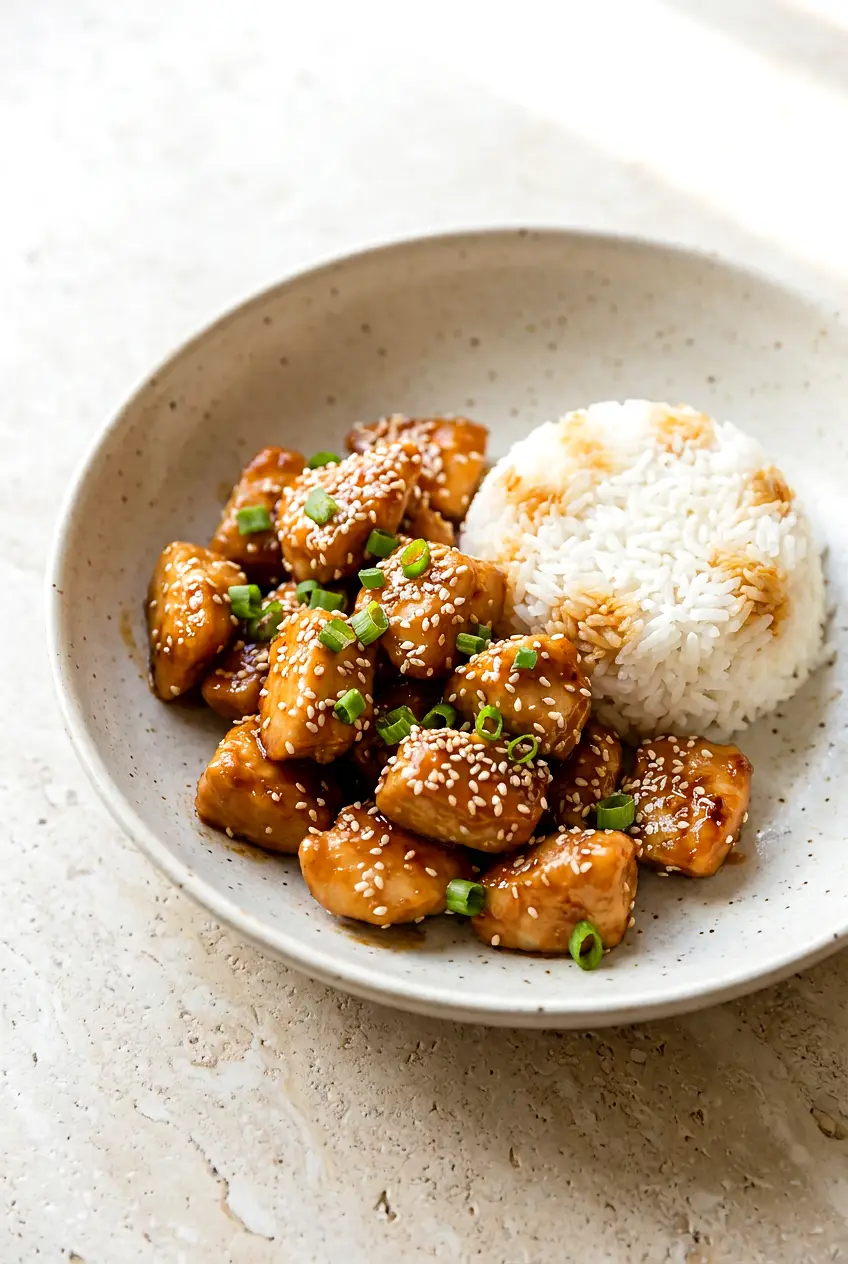
- Prep the chicken and sauce: Pat the chicken dry and cut it into even bite-size pieces. In a bowl, whisk together the soy sauce or tamari, water, sweetener, tomato paste, rice vinegar, and toasted sesame oil until smooth. If you want to thicken the sauce with a slurry, stir 1 teaspoon of the cornstarch or arrowroot with 1 tablespoon water in a small bowl until smooth.
- Coat the chicken: Toss the chicken with the remaining cornstarch or arrowroot until lightly and evenly coated. Shake off any excess. The coating should be thin so the chicken browns instead of turning gummy.
- Brown the chicken in batches: Heat a large skillet or sauté pan over medium-high heat, then add 2 tablespoons avocado oil. When the oil is hot and the chicken sizzles on contact, add half the chicken in a single layer. Leave it undisturbed for 1 to 2 minutes, then turn and cook until browned in spots and nearly cooked through, about 3 to 5 minutes total per batch, depending on size. Transfer to a plate and repeat with the remaining chicken, adding the last tablespoon of oil if needed.
- Cook the aromatics: Reduce the heat to medium. If the pan looks dry, add a small drizzle of oil. Add the garlic, ginger, and red pepper flakes and cook for about 30 seconds, stirring, just until fragrant.
- Simmer the sauce: Pour in the sauce mixture and bring it to a gentle simmer. Stir the slurry again, then add it gradually while whisking or stirring. Simmer for 1 to 2 minutes, until the sauce is glossy and lightly thickened enough to coat the back of a spoon. If you are using arrowroot, add it slowly since it thickens quickly.
- Finish the chicken: Return the chicken and any juices to the skillet and toss to coat. Cook for 1 to 3 minutes more, just until the chicken is cooked through and the sauce clings to the pieces. The thickest piece should reach 165°F, and the center should be opaque with no pink left.
- Garnish and serve: Turn off the heat and sprinkle with sesame seeds and scallions. Serve right away over rice, noodles, or vegetables.
How to Keep the Chicken from Getting Soggy
This recipe is meant to have lightly crisp edges, not a thick fried crust. Pat the chicken dry, preheat the skillet well, and cook in batches so the pieces brown instead of steam. After you add the sauce, serve the chicken soon so the coating stays at its best texture.
Serving Ideas
- Steamed white rice or brown rice
- Noodles
- Cauliflower rice
- Broccoli, snap peas, or a simple stir-fried vegetable mix
For a lighter chicken option, you may also like Asian Chicken Crunch Salad.
If you want another flavorful chicken dinner, try Peruvian Grilled Chicken with Green Sauce.
How to Store and Reheat Easy Healthy Sesame Chicken
Let leftovers cool, then refrigerate in an airtight container for up to 3 to 4 days. The coating will soften as it sits, so the texture will be less crisp than when freshly cooked.
Reheat gently in a skillet over medium-low heat or in the microwave in short bursts until hot. If the sauce has thickened too much in the refrigerator, add a small splash of water to loosen it.
For better make-ahead texture, keep the cooked chicken and sauce separate when possible and combine them just before serving.
If you want a richer chicken dinner, try Creamy Chicken Thigh Pasta.
Nutrition
Nutrition is approximate and will vary based on ingredient brands, exact sweetener used, oil absorption, and serving size. These numbers are for the chicken and sauce only, not rice, noodles, or vegetables.
- Serving size: 1/4 of recipe
- Calories: about 340
- Protein: 37g
- Fat: 12g
- Carbohydrates: 18g
- Per 100g: about 155 calories, 17g protein, 5g fat, 8g carbohydrates
Equipment
- large skillet or sauté pan
- mixing bowls
- measuring cups
- measuring spoons
- whisk
- tongs
- small bowl
Ingredients
For the chicken
- 1 1/2 lb boneless skinless chicken breasts or thighs (675g), cut into bite-size pieces
- 1/4 cup cornstarch or arrowroot starch (30g)
- 2 to 3 tablespoons avocado oil, for cooking
For the sauce
- 1/3 cup reduced-sodium soy sauce or tamari (80g)
- 1/4 cup water (60g)
- 2 to 3 tablespoons honey, monk fruit sweetener, or coconut sugar, to taste
- 1 tablespoon tomato paste (15g)
- 2 tablespoons seasoned rice vinegar
- 1 teaspoon toasted sesame oil
- 1 teaspoon cornstarch or arrowroot + 1 tablespoon water (optional slurry)
Aromatics & garnish
- 3 garlic cloves, minced
- 1 tablespoon fresh ginger, grated
- 1/4 teaspoon red pepper flakes
- 1 to 2 tablespoons sesame seeds
- 2 scallions, sliced
To serve
- Cooked rice or noodles, for serving
Instructions
- Pat the chicken dry and cut into even bite-size pieces.
- Whisk together the soy sauce or tamari, water, sweetener, tomato paste, rice vinegar, and toasted sesame oil in a bowl until smooth.
- If using a slurry to thicken, stir 1 teaspoon of the cornstarch or arrowroot with 1 tablespoon water in a small bowl until smooth and set aside.
- Toss the chicken with the remaining cornstarch or arrowroot until lightly and evenly coated; shake off excess.
- Heat a large skillet over medium-high heat and add 2 tablespoons avocado oil.
- When the oil is hot and sizzling, add half the chicken in a single layer and leave undisturbed 1 to 2 minutes, then turn and cook until browned in spots and nearly cooked through, about 3 to 5 minutes per batch; transfer to a plate and repeat with remaining chicken, adding more oil if needed.
- Reduce heat to medium and add a small drizzle of oil if the pan is dry; add garlic, ginger, and red pepper flakes and cook about 30 seconds until fragrant.
- Pour in the sauce mixture and bring to a gentle simmer; whisk in the slurry gradually while stirring and simmer 1 to 2 minutes until glossy and lightly thickened (add slurry slowly if using arrowroot).
- Return the chicken and any juices to the skillet and toss to coat; cook 1 to 3 minutes more until chicken is cooked through and sauce clings to pieces (thickest piece should reach 165°F (74°C)).
- Turn off the heat, sprinkle with sesame seeds and sliced scallions, and serve immediately over rice or noodles.
Tips
- Pat chicken very dry before coating to promote browning and prevent sogginess.
- Cook the chicken in batches so pieces brown instead of steaming.
- Taste the sauce before adding the maximum sweetener because seasoned rice vinegar may add sweetness.
- Use thighs for a juicier result; check breasts early to avoid drying out.
- Add arrowroot slurry slowly because it thickens quickly.
Variations
- Chicken Thighs: Use boneless skinless chicken thighs for a more forgiving, juicier result.
- Arrowroot or Alternative Sweeteners: Swap cornstarch with arrowroot and use monk fruit or coconut sugar instead of honey for a different texture or lower-sugar option.
