

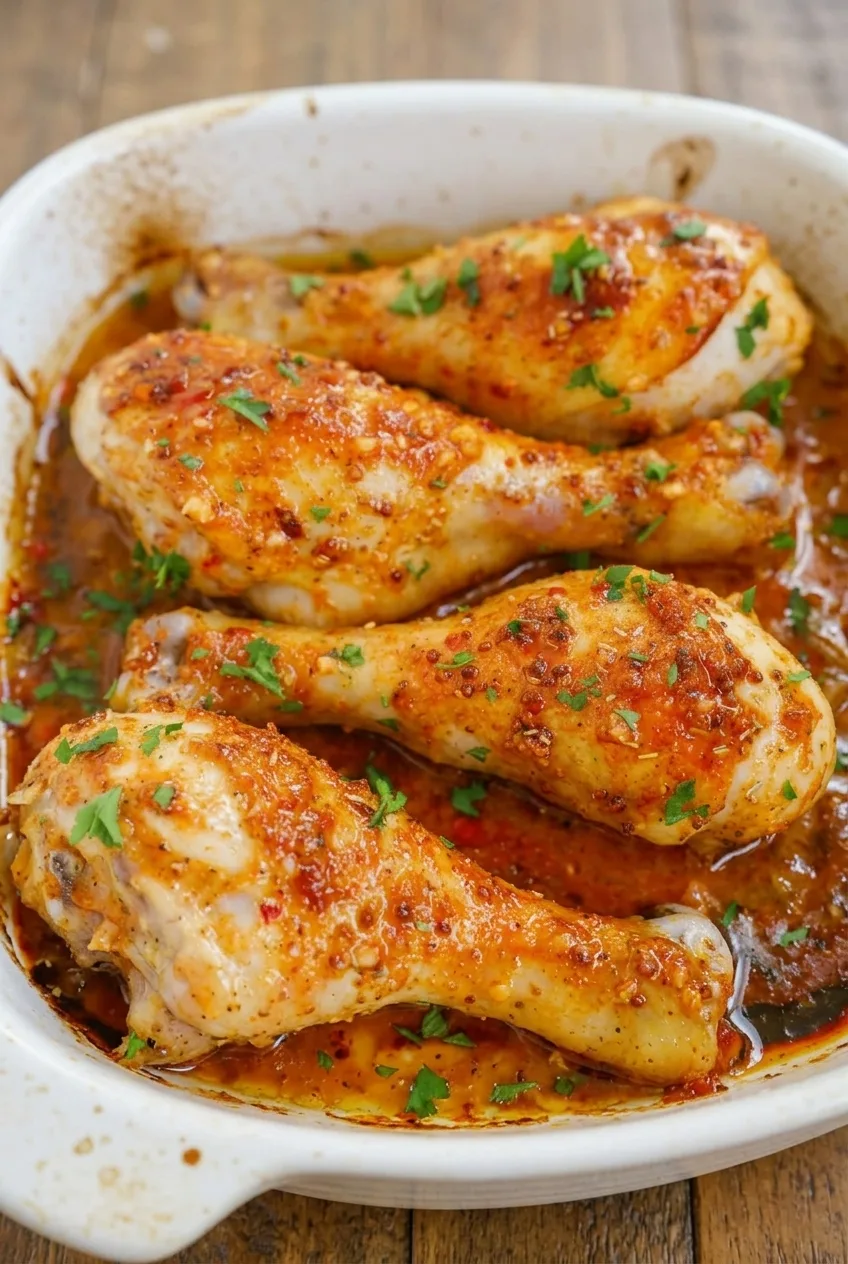
Honey Mustard Chicken Drumsticks
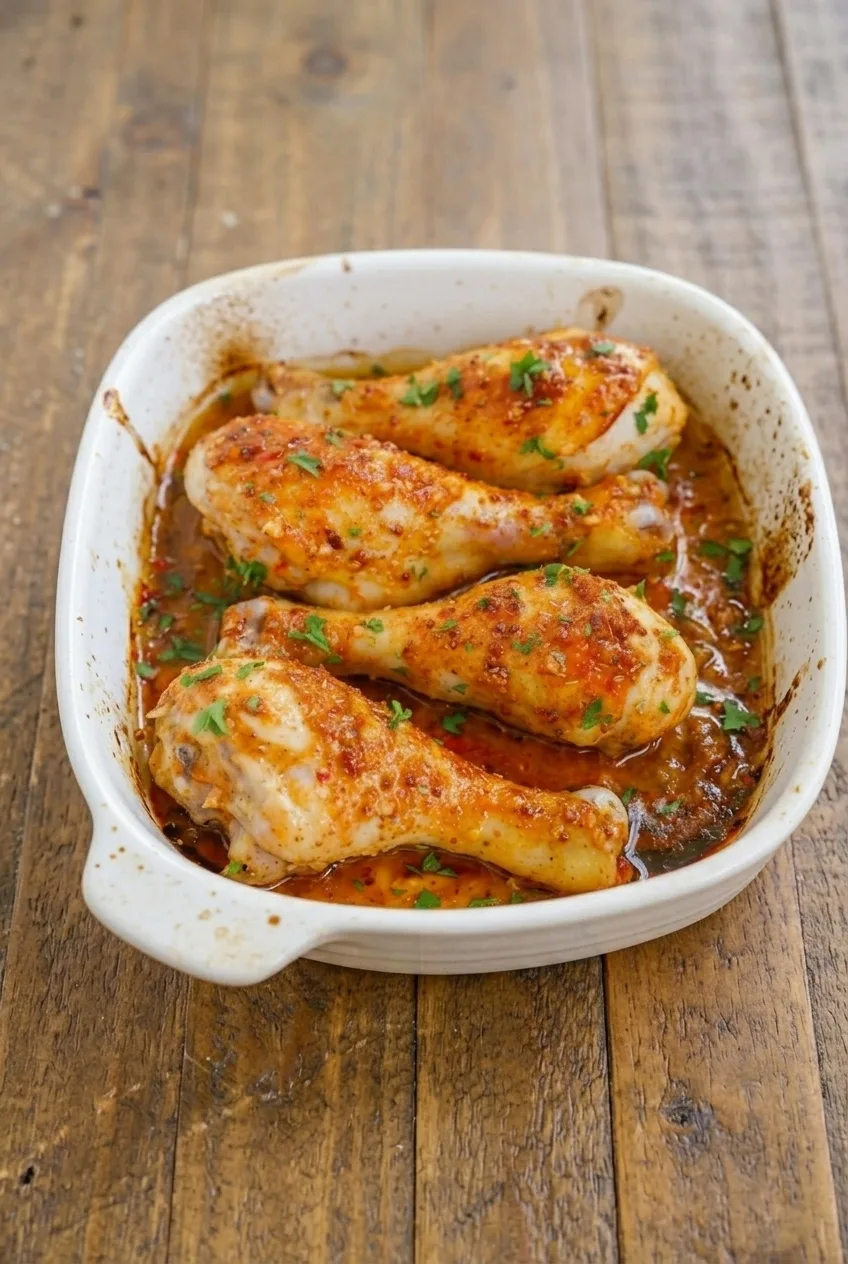
These oven-roasted, bone-in drumsticks get a glossy, golden-amber coating from honey, Dijon mustard, and flecks of whole-grain mustard. Brushing on some of the glaze partway through roasting builds a sticky finish without broiling. Honey can darken before larger drumsticks cook through, so use a thermometer rather than the color of the glaze to judge doneness.
The recipe makes 4 servings. Allow about 15 minutes to prepare it, 35 to 45 minutes to roast, and 5 minutes for the chicken to rest.
Ingredients for Honey Mustard Chicken Drumsticks
- 8 bone-in, skin-on chicken drumsticks, about 2½ pounds (1,150g)
- ¼ cup honey (85g)
- 3 tablespoons Dijon mustard (45g)
- 1 tablespoon whole-grain mustard (15g)
- 1 tablespoon apple cider vinegar
- 1 tablespoon olive oil, plus a little more for greasing the foil
- 2 garlic cloves, finely minced
- 1 teaspoon paprika
- 1 teaspoon kosher salt, or to taste
- ½ teaspoon black pepper
- 2 tablespoons chopped fresh parsley
How to Roast Honey Mustard Chicken Drumsticks
- Prepare the oven and pan: Fully preheat the oven to 400°F (205°C). Line a 13-by-18-inch rimmed sheet pan with foil and lightly grease it so the sticky glaze is less likely to cling.
- Mix and divide the glaze: Whisk together the honey, both mustards, vinegar, olive oil, garlic, and paprika. Transfer about one-third to a separate clean bowl for later brushing, before any glaze touches the raw chicken.
- Coat the drumsticks: Pat the chicken dry and season with the salt and pepper. Brush with the glaze left in the original bowl. Arrange the drumsticks in one layer with gaps between them so they brown rather than steam.
- Roast and brush again: Roast uncovered for about 20 minutes. Gently loosen and turn the drumsticks with tongs, then brush with the clean reserved glaze. Use a clean brush, or wash the first brush if it touched raw chicken. Roast for another 15 to 25 minutes, rotating the pan if browning is uneven. Begin checking the chicken around 30 minutes total; small drumsticks may finish early.
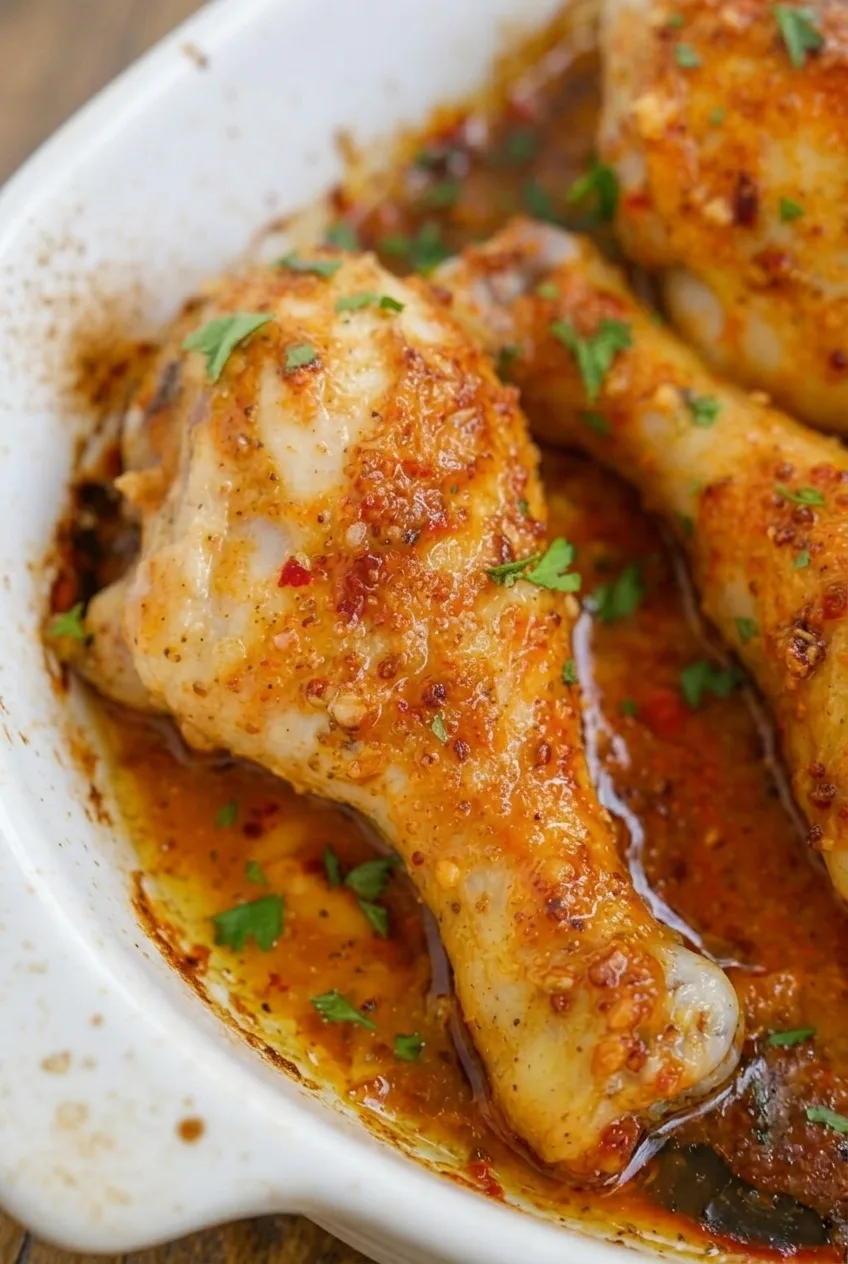
- Check, rest, and serve: The glaze should be glossy with golden-brown patches, not blackened. Check the thickest meat of each drumstick without touching bone; it must reach at least 165°F (75°C). Rest for 5 minutes. Arrange the drumsticks close together in a shallow dish, spoon a little fully cooked pan glaze and juices beneath or over them, and scatter with parsley.
Why Brush the Glaze on Twice?
Honey browns quickly, so saving some glaze for the second half of roasting helps build a shiny coating without exposing all of it to the full cooking time. Set that portion aside before coating the chicken. Do not serve leftover glaze from a bowl or brush that touched raw poultry; use only the glaze and juices cooked in the roasting pan.
How to Tell When the Drumsticks Are Done
Drumstick size affects roasting time, and browned glaze is not proof that the meat is cooked. Check each piece with an instant-read thermometer in the thickest meat, away from the bone. While 165°F is the minimum, dark meat cooked closer to 175°F (80°C) may be more tender. Expect browned, sticky skin rather than uniformly crisp skin.
Keep the Honey Glaze from Burning
If the coating becomes very dark before the chicken reaches temperature, loosely shield those areas with foil and continue roasting. When turning the drumsticks, loosen them gently: caramelized honey can stick even to greased foil.
Serving and Storage
Serve with rice or roasted potatoes to catch the sauce, plus a green vegetable or salad if you like. For a different sweet glaze, try these honey garlic chicken drumsticks.
Refrigerate leftovers in an airtight container for up to 3 days and reheat until warmed through. The glaze may be less glossy afterward. If coating the chicken ahead, keep it refrigerated and store the clean finishing glaze separately. Freezing is possible, though the texture may be less pleasant after thawing.
Nutrition
Approximate nutrition per serving (2 drumsticks, including a share of the glaze): 430 calories, 36g protein, 23g fat, and 21g carbohydrates. Per 100g of edible chicken and glaze: approximately 215 calories, 18g protein, 12g fat, and 10g carbohydrates. Values vary with drumstick size, edible meat yield, and how much pan sauce is served.
Equipment
- Oven
- Rimmed sheet pan
- Foil
- Mixing bowl
- Whisk
- Pastry brush
- Tongs
- Instant-read thermometer
Ingredients
For the Chicken
- 8 bone-in, skin-on chicken drumsticks, about 2½ pounds (1,150 g)
- 1 teaspoon kosher salt, or to taste
- ½ teaspoon black pepper
- A little olive oil for greasing the foil
For the Glaze
- ¼ cup honey (85 g)
- 3 tablespoons Dijon mustard (45 g)
- 1 tablespoon whole-grain mustard (15 g)
- 1 tablespoon apple cider vinegar
- 1 tablespoon olive oil
- 2 garlic cloves, finely minced
- 1 teaspoon paprika
For Serving
- 2 tablespoons chopped fresh parsley
Instructions
- Preheat the oven to 400°F (205°C). Line a 13-by-18-inch rimmed sheet pan with foil and lightly grease the foil.
- Whisk together the honey, Dijon mustard, whole-grain mustard, vinegar, olive oil, garlic, and paprika.
- Transfer about one-third of the glaze to a separate clean bowl for brushing later.
- Pat the drumsticks dry and season with salt and pepper. Brush them with the remaining glaze.
- Arrange the drumsticks in a single layer on the pan, leaving space between them.
- Roast uncovered for about 20 minutes. Gently loosen and turn the drumsticks with tongs.
- Brush the drumsticks with the reserved clean glaze. Roast for another 15 to 25 minutes, rotating the pan if they brown unevenly.
- Begin checking for doneness at about 30 minutes total. Insert an instant-read thermometer into the thickest meat of each drumstick without touching the bone; it must reach at least 165°F (75°C).
- Rest the chicken for 5 minutes. Arrange the drumsticks in a shallow dish, spoon cooked pan glaze and juices beneath or over them, and sprinkle with parsley.
Tips
- Set aside the finishing glaze before it touches raw chicken.
- Use a clean brush for the reserved glaze, or wash the first brush before using it.
- Check each drumstick with a thermometer; browned glaze does not confirm the chicken is cooked.
- Dark meat may be more tender when cooked closer to 175°F (80°C).
- If the glaze darkens too quickly, loosely cover those areas with foil and continue roasting.
- Loosen the drumsticks gently when turning because caramelized honey can stick to the foil.