

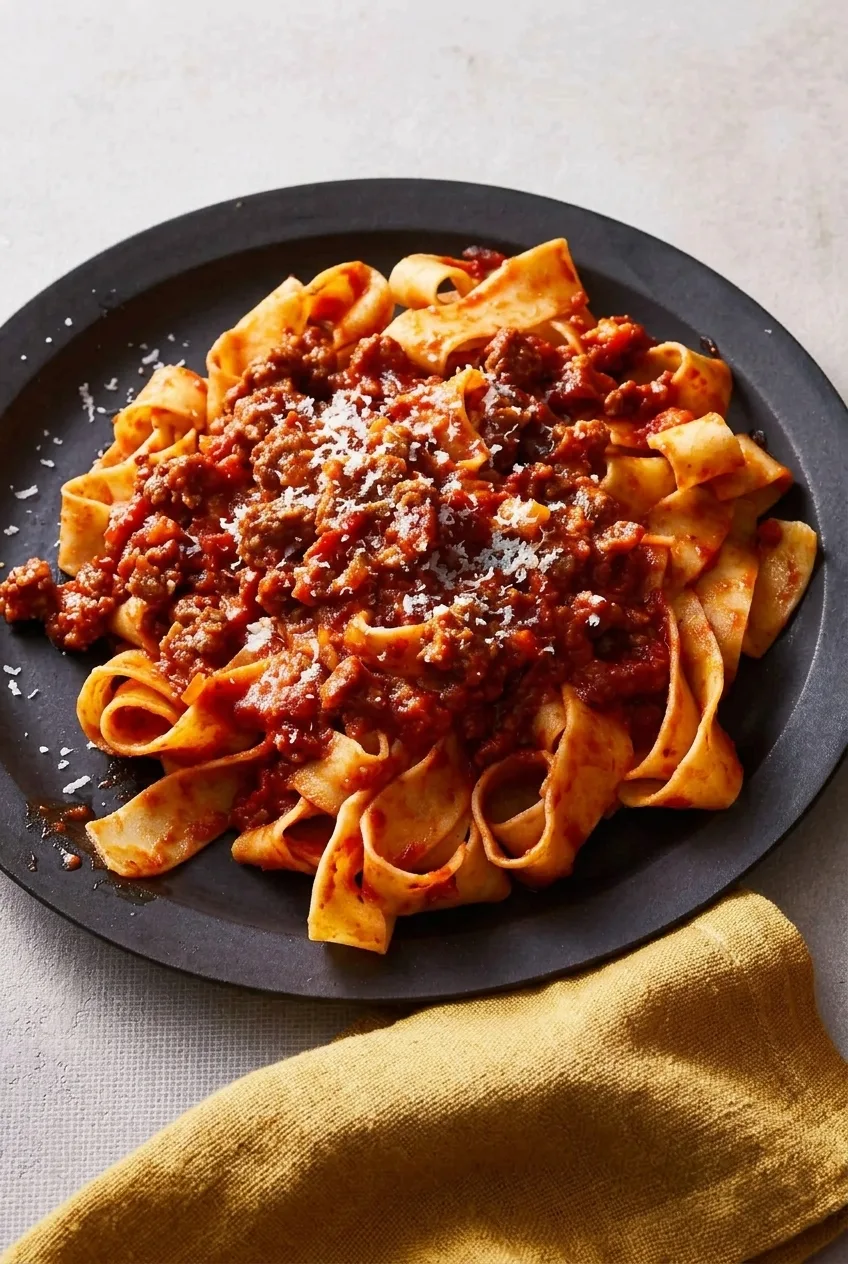
Bolognese Pasta with Pappardelle
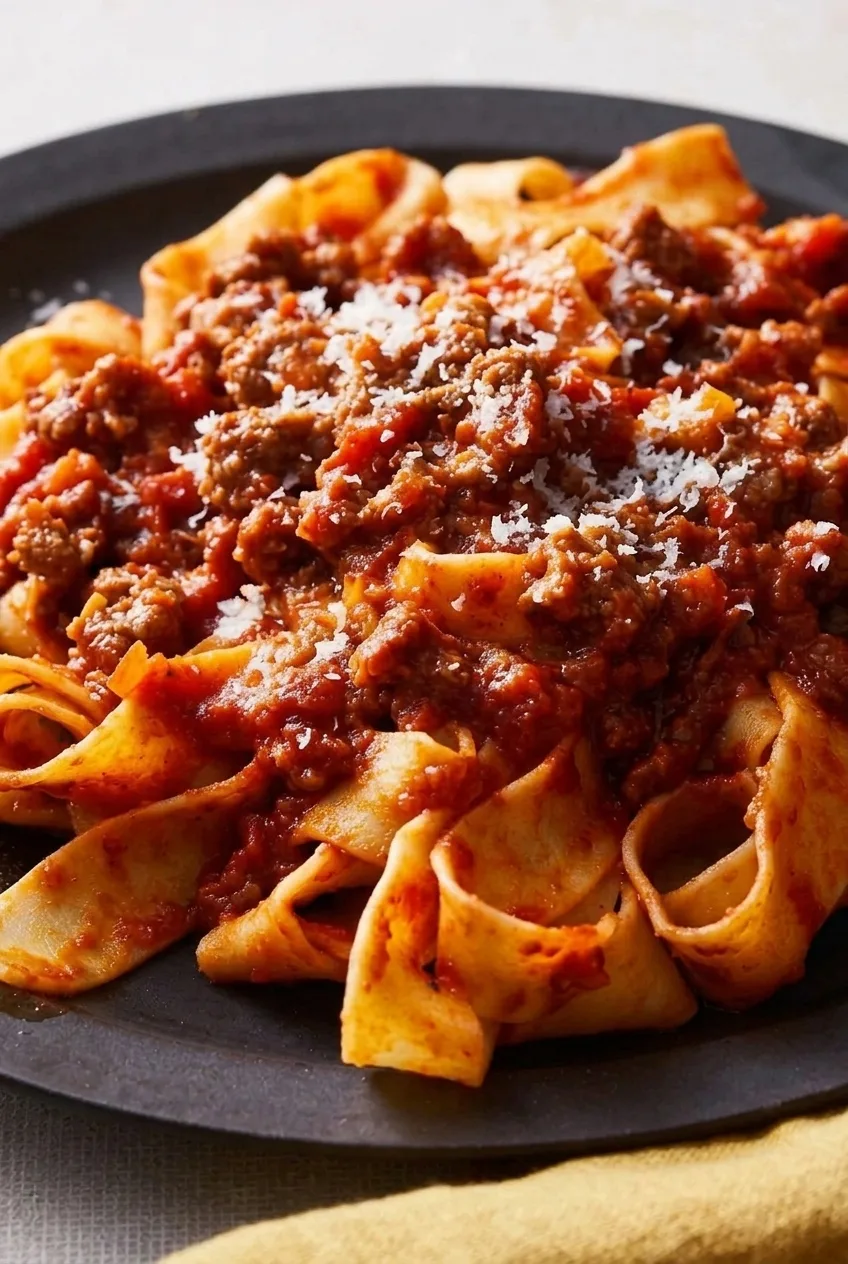
Broad pappardelle ribbons hold a thick, chunky beef-and-pork sauce without disappearing beneath it. For this from-scratch version, milk is reduced into the browned meat, followed by red wine and tomatoes. The sauce then simmers gently for about 1½ hours, until it clings to the pasta rather than pooling on the plate.
A brief toss with some sauce, butter, Parmesan, and reserved pasta water gives the ribbons a light coating. Spoon the remaining sauce over the center of each loose mound, leaving the folded pappardelle visible around the edges.
Ingredients for Pappardelle Bolognese
- 12 ounces dried pappardelle (340g)
- 1 tablespoon olive oil
- 1 medium yellow onion, finely diced (150g)
- 1 medium carrot, finely diced (75g)
- 1 celery rib, finely diced (50g)
- 3 garlic cloves, minced
- 12 ounces ground beef (340g)
- 8 ounces ground pork (225g)
- About 1 teaspoon kosher salt for the sauce, plus more for the pasta water and to taste
- 1/2 teaspoon black pepper, plus more to taste
- 2 tablespoons tomato paste
- 3/4 cup whole milk
- 3/4 cup dry red wine
- One 28-ounce can crushed tomatoes
- 1 tablespoon unsalted butter
- 1/2 cup finely grated Parmesan (50g), plus more for serving
Optional: Add a small pinch of ground nutmeg with the milk, or finish with 1 tablespoon finely chopped flat-leaf parsley. Omit the parsley to keep the Parmesan as the only garnish.
How to Make Bolognese Pasta with Pappardelle
- Soften the vegetables: Warm the olive oil in a heavy-bottomed Dutch oven or 5- to 6-quart saucepan over medium heat. Add the onion, carrot, celery, salt, and pepper. Cook for 8 to 10 minutes, stirring occasionally, until the vegetables are tender and the onion is translucent. Add the garlic and cook briefly, just until fragrant; do not let it brown.
- Brown the meat: Add the beef and pork. Cook over medium to medium-high heat for 8 to 10 minutes, breaking the meat into small crumbles, until browned. If the pot looks greasy, spoon off excess fat. If the meat is crowded and steaming rather than browning, cook it in batches.
- Reduce the milk: Stir in the tomato paste, then add the milk. Simmer gently over medium-low heat, stirring, for 8 to 10 minutes, until most of the loose liquid is gone and the meat looks moist but not soupy.
- Reduce the wine: Pour in the red wine and scrape up any browned bits from the bottom of the pot. Simmer over medium heat for 6 to 8 minutes, until the sharp wine aroma mellows and little loose liquid remains.
- Simmer the sauce: Stir in the crushed tomatoes and bring the sauce just to a gentle bubble. Reduce the heat to low and simmer, partially covered with a small opening for steam, for about 1½ hours. Stir periodically, scraping the bottom. Start checking the texture and seasoning after about 1 hour. The sauce is ready when it is thick and cohesive, with no watery ring around the meat. If it gets too thick before the meat and vegetables are tender, lower the heat and stir in a small splash of water. Taste and adjust the salt and pepper.
- Cook the pappardelle: Near the end of the simmer, bring a large pot of well-salted water to a boil. Cook the dried pappardelle according to the package directions, checking at the earliest suggested time. It generally takes 6 to 10 minutes; drain when tender but still slightly firm to the bite. Reserve at least 1 cup of pasta water before draining.
- Coat the ribbons: Transfer the pasta to a wide skillet or the drained pasta pot. Add a portion of the sauce, the butter, the 1/2 cup Parmesan, and a splash of pasta water. Toss gently with tongs over low to medium-low heat for 1 to 2 minutes. Add more pasta water a little at a time only if needed; the ribbons should have a light sheen, not swim in liquid.
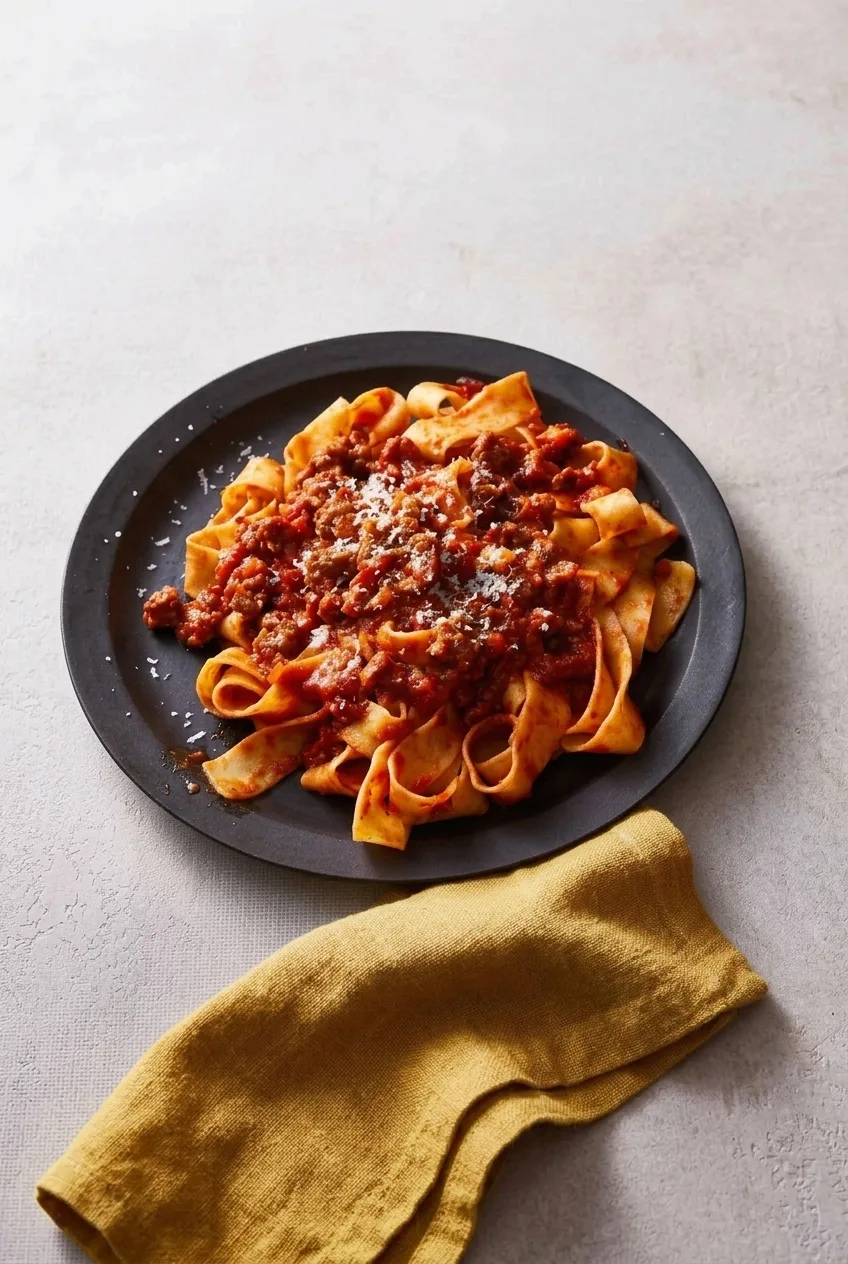
- Plate and top: Loosely mound the pappardelle on warm plates. Spoon the remaining chunky sauce over the center, leaving folded ribbons visible around the edges. Scatter a little more finely grated Parmesan over the sauce and serve hot.
How to Tell When the Bolognese Is Ready
Keep the sauce at an occasional lazy bubble rather than a rapid boil. Pot width and simmer intensity affect how quickly it reduces, so use its texture as the final guide: it should hold together on a spoon and cling to the pasta without a pool of thin liquid. Stir and scrape the bottom periodically to prevent sticking, adding a small splash of water if the sauce thickens before the meat and vegetables are tender.
Why Toss the Pappardelle with Only Some of the Sauce?
A short, gentle toss coats the wide ribbons while keeping them intact. Add reserved pasta water gradually—the amount needed depends on how thick the sauce is. Saving most of the sauce for the top gives each serving a generous topping without hiding the pappardelle beneath it.
Ingredient and Timing Notes
- Ground meat: The main recipe uses beef and pork. For an all-beef version, use 1 pound of ground beef; this makes a slightly smaller batch of meat sauce.
- No-wine option: Replace the red wine with 3/4 cup beef broth or water. Reduce it before adding the tomatoes; the finished flavor will be different.
- Fresh pappardelle: Fresh pasta cooks much faster than dried. Follow its package directions and check for doneness after a couple of minutes rather than using the dried-pasta timing.
For another ground-beef pasta dinner with a different sauce, try Ground Beef Stroganoff Pasta. For a skillet-style alternative, see Bowtie Pasta Lasagna.
How to Store and Reheat
Refrigerate leftovers promptly in airtight containers and use within 3 to 4 days. Store the sauce and pasta separately when possible to help the ribbons keep their texture. The sauce can be made ahead and gently reheated on the stovetop with a splash of water if it has thickened. Reheat pasta gently with a little water or sauce, without cooking it for so long that it softens further.
For longer storage, freeze the sauce separately in airtight portions for up to about 3 months. Thaw it in the refrigerator and reheat gently. Cook the pappardelle shortly before serving for better texture than pasta frozen with the sauce.
Nutrition
Approximate nutrition per serving, based on 4 generous servings: 950 calories, 48g protein, 40g fat, and 82g carbohydrates. Per 100g: about 145 calories, 7g protein, 6g fat, and 12g carbohydrates. Values vary with ingredient brands and the fat content of the meat.
Equipment
- Dutch oven or 5- to 6-quart saucepan
- Large pot
- Wide skillet
- Tongs
Ingredients
For the sauce
- 1 tablespoon olive oil
- 1 medium yellow onion, finely diced (150g)
- 1 medium carrot, finely diced (75g)
- 1 celery rib, finely diced (50g)
- 3 garlic cloves, minced
- 12 ounces ground beef (340g)
- 8 ounces ground pork (225g)
- About 1 teaspoon kosher salt, plus more to taste
- 1/2 teaspoon black pepper, plus more to taste
- 2 tablespoons tomato paste
- 3/4 cup whole milk
- 3/4 cup dry red wine
- One 28-ounce can crushed tomatoes
For the pasta and finishing
- 12 ounces dried pappardelle (340g)
- Salt, for the pasta water
- 1 tablespoon unsalted butter
- 1/2 cup finely grated Parmesan (50g), plus more for serving
- Reserved pasta water, as needed
Optional
- A small pinch of ground nutmeg
- 1 tablespoon finely chopped flat-leaf parsley
Instructions
- Warm the olive oil in a heavy-bottomed Dutch oven or 5- to 6-quart saucepan over medium heat. Add the onion, carrot, celery, salt, and pepper. Cook for 8 to 10 minutes, stirring occasionally, until tender and the onion is translucent.
- Add the garlic and cook briefly, just until fragrant. Do not let it brown.
- Add the beef and pork. Cook over medium to medium-high heat for 8 to 10 minutes, breaking the meat into small crumbles, until browned. Cook in batches if needed, and spoon off excess fat if the pot looks greasy.
- Stir in the tomato paste and milk. Simmer gently over medium-low heat for 8 to 10 minutes, stirring, until most of the loose liquid has evaporated. Add the optional nutmeg with the milk, if using.
- Pour in the red wine and scrape up the browned bits from the bottom of the pot. Simmer over medium heat for 6 to 8 minutes, until the sharp wine aroma mellows and little loose liquid remains.
- Stir in the crushed tomatoes and bring the sauce to a gentle bubble. Reduce the heat to low, partially cover the pot with a small opening for steam, and simmer for about 1½ hours. Stir and scrape the bottom periodically. Begin checking the texture and seasoning after about 1 hour.
- When the sauce is thick and cohesive, taste and adjust the salt and pepper. If it thickens before the meat and vegetables are tender, lower the heat and stir in a small splash of water.
- Near the end of the simmer, bring a large pot of well-salted water to a boil. Cook the pappardelle according to package directions, checking at the earliest suggested time. Drain when tender but still slightly firm, reserving at least 1 cup of pasta water.
- Transfer the pasta to a wide skillet or the drained pasta pot. Add a portion of the sauce, the butter, Parmesan, and a splash of pasta water. Toss gently with tongs over low to medium-low heat for 1 to 2 minutes, adding more pasta water a little at a time if needed.
- Loosely mound the pasta on warm plates. Spoon the remaining sauce over the center, leaving folded ribbons visible around the edges. Finish with more Parmesan and optional parsley, then serve hot.
Tips
- Keep the sauce at an occasional gentle bubble rather than a rapid boil.
- Stir and scrape the bottom of the pot periodically to prevent sticking.
- Use the sauce’s texture as your guide: it should cling to a spoon and the pasta without a watery ring.
- Reserve at least 1 cup of pasta water, and add it gradually so the ribbons get a light sheen without becoming soupy.
- Check dried pappardelle at the earliest package-recommended time; it generally cooks in 6 to 10 minutes.
Variations
- All-Beef Bolognese: Replace the beef and pork with 1 pound of ground beef for a slightly smaller batch of meat sauce.
- No-Wine Bolognese: Replace the red wine with 3/4 cup beef broth or water and reduce it before adding the tomatoes.
- Fresh Pappardelle: Use fresh pappardelle and follow its package directions, checking for doneness after a couple of minutes.
- Nutmeg or Parsley Finish: Add a small pinch of ground nutmeg with the milk, or finish with 1 tablespoon finely chopped flat-leaf parsley.