

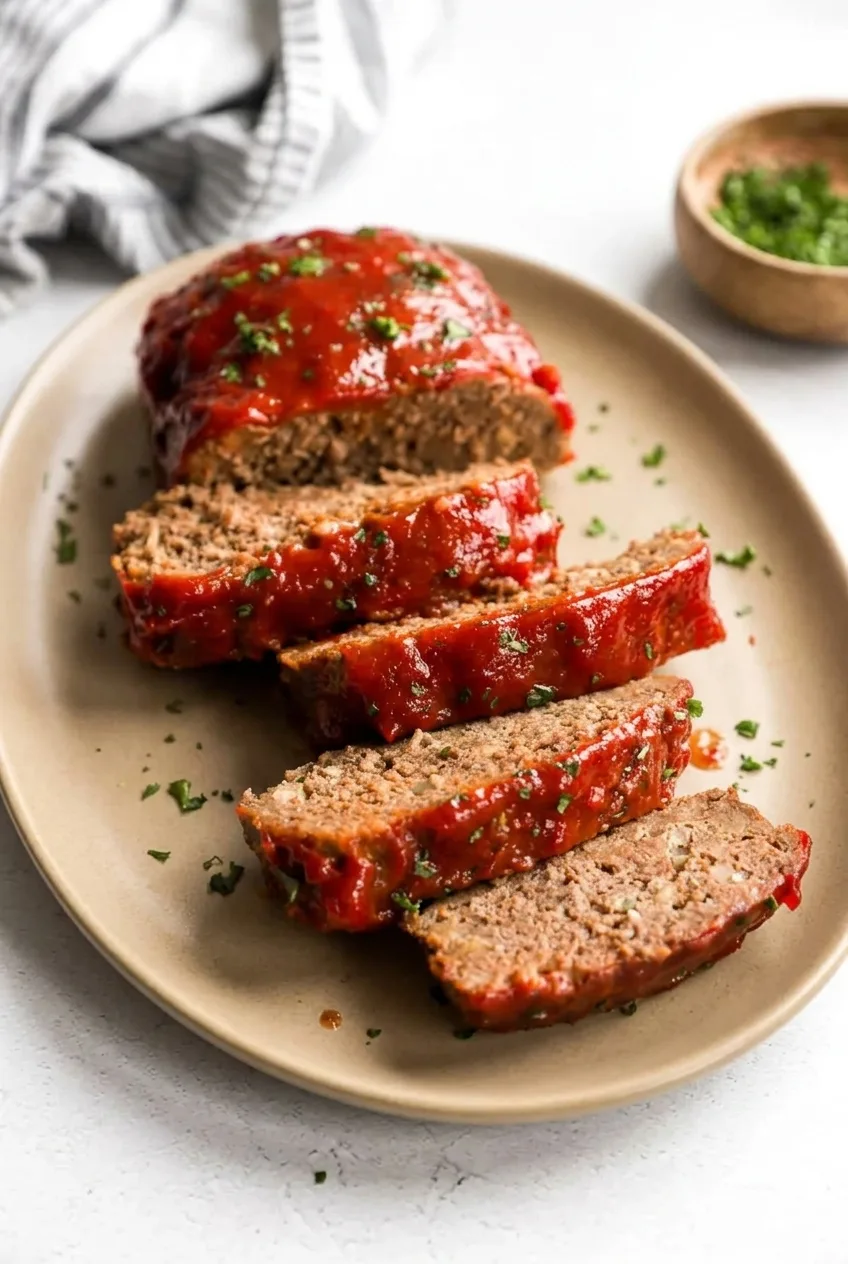
Classic Homemade Meatloaf
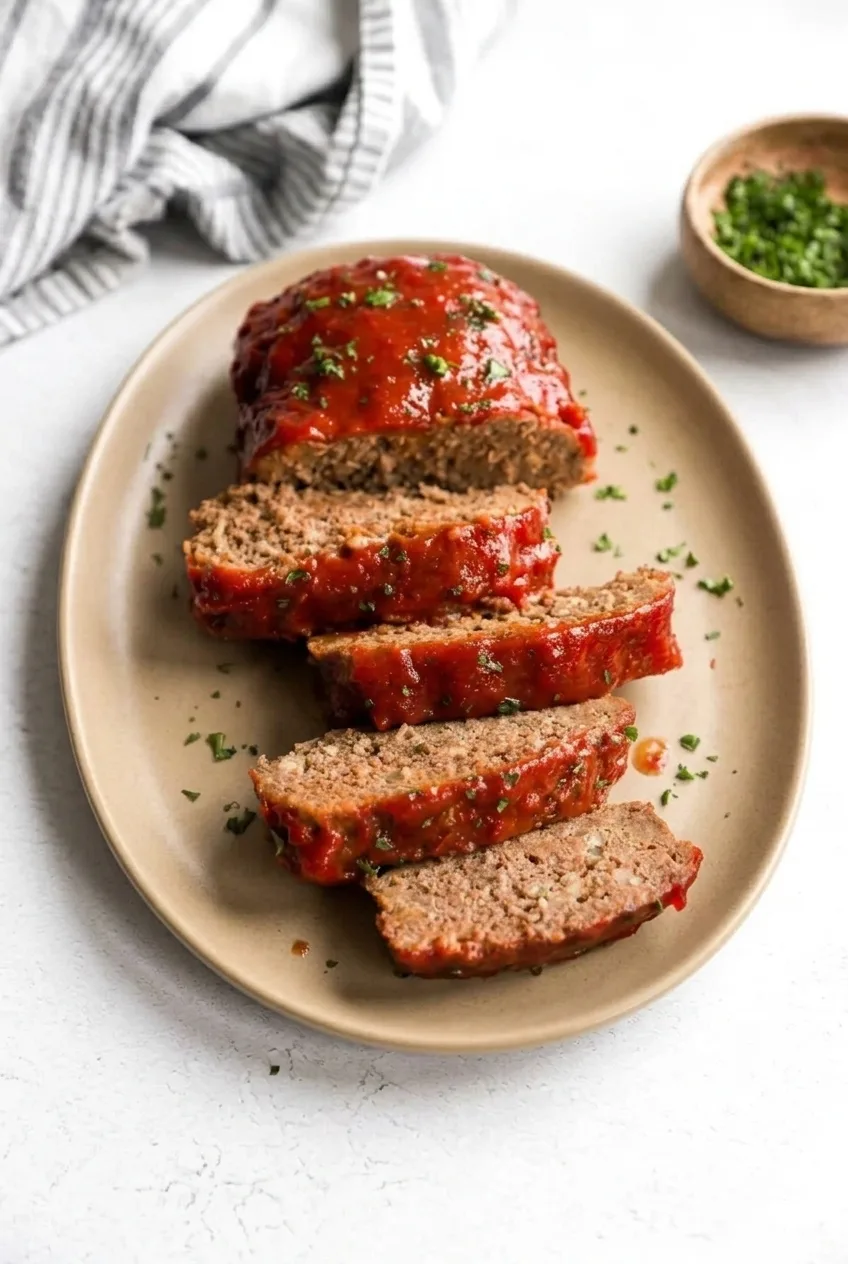
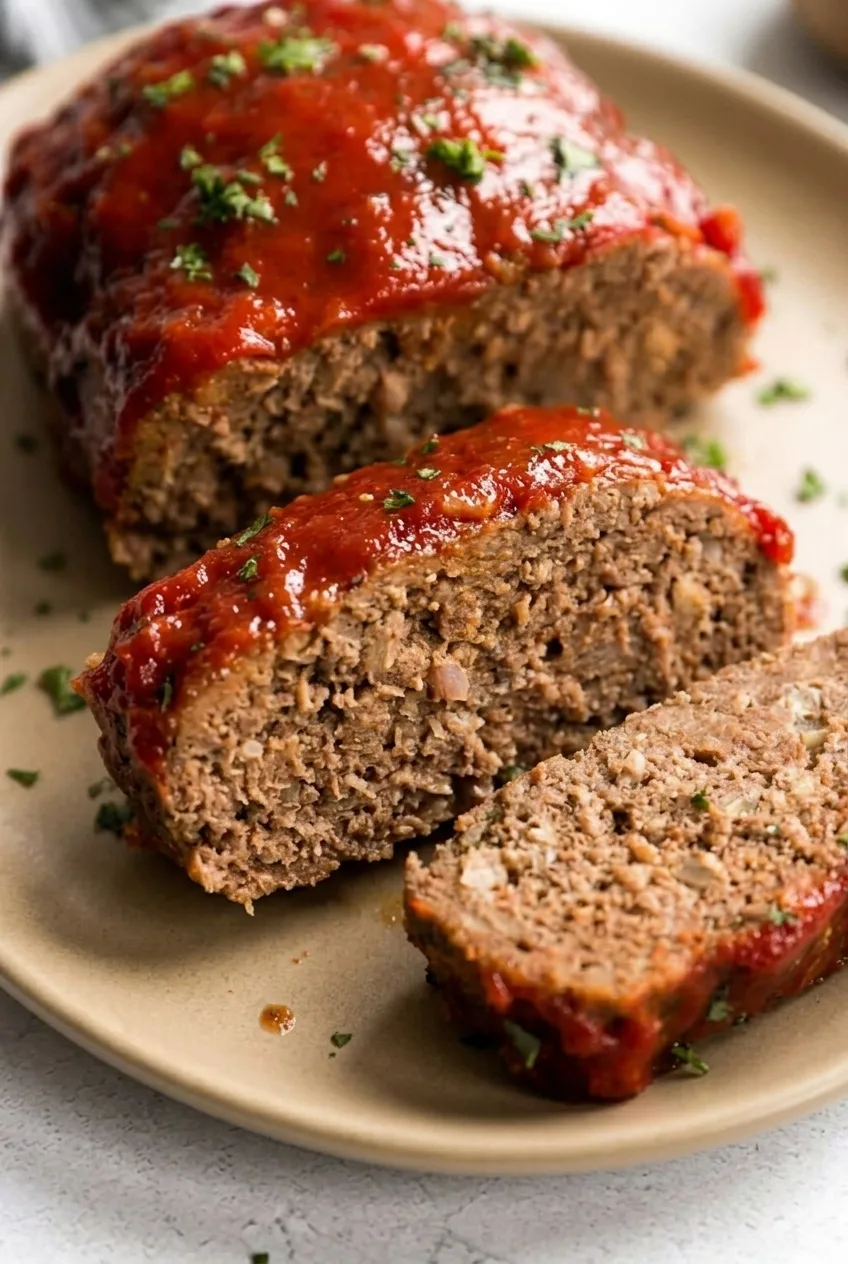
This free-form beef meatloaf has lightly browned edges, a tender center that holds together in thick slices, and a glossy ketchup glaze. Milk-hydrated breadcrumbs, egg, and finely minced onion give the loaf its even texture.
Baking it on a rimmed sheet pan leaves the sides exposed and lets some rendered fat drain away. Add the glaze near the end so it can set without getting too dark, and use the center temperature—not the clock alone—to judge doneness. The recipe makes 6 to 8 servings.
Ingredients for Classic Homemade Meatloaf
For the meatloaf
- 1 teaspoon neutral oil
- 1 small yellow onion, finely minced (about 3/4 cup or 100g)
- 1 cup plain breadcrumbs (100g)
- 1/2 cup milk (120g)
- 2 pounds ground beef, about 85% lean (900g)
- 1 large egg
- 1 tablespoon Worcestershire sauce
- 1 teaspoon Italian seasoning
- 1 1/2 teaspoons kosher salt
- 1/2 teaspoon black pepper
For the glaze and finish
- 1/2 cup ketchup (120g)
- 2 tablespoons packed brown sugar (25g)
- 1 teaspoon yellow or Dijon mustard
- 1 tablespoon finely chopped fresh parsley, plus a little more for the platter
How to Bake Classic Homemade Meatloaf
- Prepare the oven and pan: Heat the oven to 350°F (175°C) with a rack in the middle position. Line a rimmed baking sheet with foil.
- Soften the onion and soak the breadcrumbs: Warm the oil in a small skillet over medium heat. Cook the onion for 4 to 5 minutes, until soft but not browned, then let it cool briefly. Meanwhile, stir the breadcrumbs and milk together in a large bowl. Let stand for a few minutes, until the crumbs absorb the milk.
- Mix gently: Add the egg, Worcestershire sauce, Italian seasoning, salt, pepper, onion, and beef to the breadcrumb mixture. Fold with your hands or a fork just until evenly combined. Stop before the mixture becomes paste-like.
- Shape the loaf: Transfer the mixture to the baking sheet and gently shape it into an even oblong loaf about 9 by 5 inches, with rounded ends and sloped sides. Do not pack it tightly.
- Bake before glazing: Bake uncovered for 40 to 45 minutes. While the loaf bakes, stir the ketchup, brown sugar, and mustard together until smooth.
- Glaze and finish baking: Carefully brush or spoon the glaze over the top and sides. Bake for another 15 to 20 minutes. Begin checking the thickest part of the center around 50 minutes of total baking time, or sooner if the loaf is unusually narrow or your oven runs hot. The loaf is done when the center reaches 160°F (70°C) on an instant-read thermometer; avoid touching the pan with the probe. The glaze should look glossy and set. If it darkens before the center is done, tent the loaf loosely with foil.
- Rest and slice: Let the loaf rest on the pan for 10 minutes so it firms up before cutting. Transfer it to a platter, cut several slices about 3/4 to 1 inch thick, and arrange them overlapping in front of the remaining loaf. Scatter the parsley lightly over the glaze and platter.
Why Bake Meatloaf Free-Form?
On a rimmed sheet pan, the loaf’s exposed sides can brown while some rendered fat drains onto the foil. The rim catches the drips. A loaf pan produces a more defined shape and retains more juices, but it also changes the browning and cooking time; do not rely on the sheet-pan timing if you use one.
How to Keep Meatloaf Tender and Sliceable
Soaking the breadcrumbs helps distribute moisture, while the crumbs and egg bind the beef. Finely minced, softened onion blends into the loaf without leaving large pieces that can interrupt a slice.
Overworking the mixture or packing it tightly can make the loaf dense. For a cleaner cut, give it the full 10-minute rest and slice gently. Loaf thickness affects baking time as much as weight does, so check the center with a thermometer rather than waiting for a fixed time.
Serving, Storage, and Reheating
Serve the meatloaf with mashed potatoes and green beans, or with roasted or steamed vegetables. For other ground-beef dinners, try Salisbury steak with mushroom gravy or classic beef shepherd’s pie.
Cool leftovers promptly and refrigerate them in an airtight container for 3 to 4 days. Reheat slices covered in a 350°F oven until hot, adding a small splash of water or broth to help keep them moist. Individual slices can also be microwaved in short increments until hot.
You can assemble the loaf ahead and refrigerate it for a short period before baking. A cold loaf may take longer to cook, so check its center temperature. Cooked slices may also be wrapped airtight and frozen; thaw them in the refrigerator before reheating.
Nutrition Information
Approximate nutrition per serving, based on 1 of 8 portions: 300 calories, 24g protein, 19g fat, and 18g carbohydrates. Per 100g: approximately 190 calories, 16g protein, 12g fat, and 12g carbohydrates. Values vary with the beef, ingredient brands, and how much fat drains during baking.
Equipment
- Rimmed baking sheet
- Aluminum foil
- Small skillet
- Large mixing bowl
- Instant-read thermometer
- Pastry brush
Ingredients
For the meatloaf
- 1 teaspoon neutral oil
- 1 small yellow onion, finely minced (about 3/4 cup or 100 g)
- 1 cup plain breadcrumbs (100 g)
- 1/2 cup milk (120 g)
- 2 pounds ground beef, about 85% lean (900 g)
- 1 large egg
- 1 tablespoon Worcestershire sauce
- 1 teaspoon Italian seasoning
- 1 1/2 teaspoons kosher salt
- 1/2 teaspoon black pepper
For the glaze and finish
- 1/2 cup ketchup (120 g)
- 2 tablespoons packed brown sugar (25 g)
- 1 teaspoon yellow or Dijon mustard
- 1 tablespoon finely chopped fresh parsley, plus a little more for the platter
Instructions
- Preheat the oven to 350°F (175°C) with a rack in the middle position. Line a rimmed baking sheet with foil.
- Warm the oil in a small skillet over medium heat. Cook the onion for 4 to 5 minutes, until soft but not browned, then let it cool briefly.
- Stir the breadcrumbs and milk together in a large bowl. Let stand for a few minutes until the crumbs absorb the milk.
- Add the egg, Worcestershire sauce, Italian seasoning, salt, pepper, softened onion, and beef. Fold gently with your hands or a fork just until evenly combined.
- Transfer the mixture to the prepared baking sheet. Shape it gently into an oblong loaf about 9 by 5 inches, with rounded ends and sloped sides; do not pack it tightly.
- Bake uncovered for 40 to 45 minutes. Meanwhile, stir the ketchup, brown sugar, and mustard together until smooth.
- Brush or spoon the glaze over the top and sides of the loaf. Bake for another 15 to 20 minutes.
- Begin checking the thickest part of the center around 50 minutes of total baking time. Bake until it reaches 160°F (70°C) on an instant-read thermometer, avoiding contact between the probe and pan. If the glaze darkens before the center is done, tent the loaf loosely with foil.
- Rest the meatloaf on the pan for 10 minutes. Transfer it to a platter, slice about 3/4 to 1 inch thick, and scatter parsley over the glaze and platter.
Tips
- Soak the breadcrumbs in milk before mixing to help keep the meatloaf moist.
- Cook and cool the onion before adding it to the meat mixture.
- Mix gently and avoid packing the loaf tightly so it stays tender.
- Check the center temperature rather than relying on baking time alone; loaf thickness affects how quickly it cooks.
- Let the meatloaf rest for 10 minutes before slicing for cleaner cuts.