

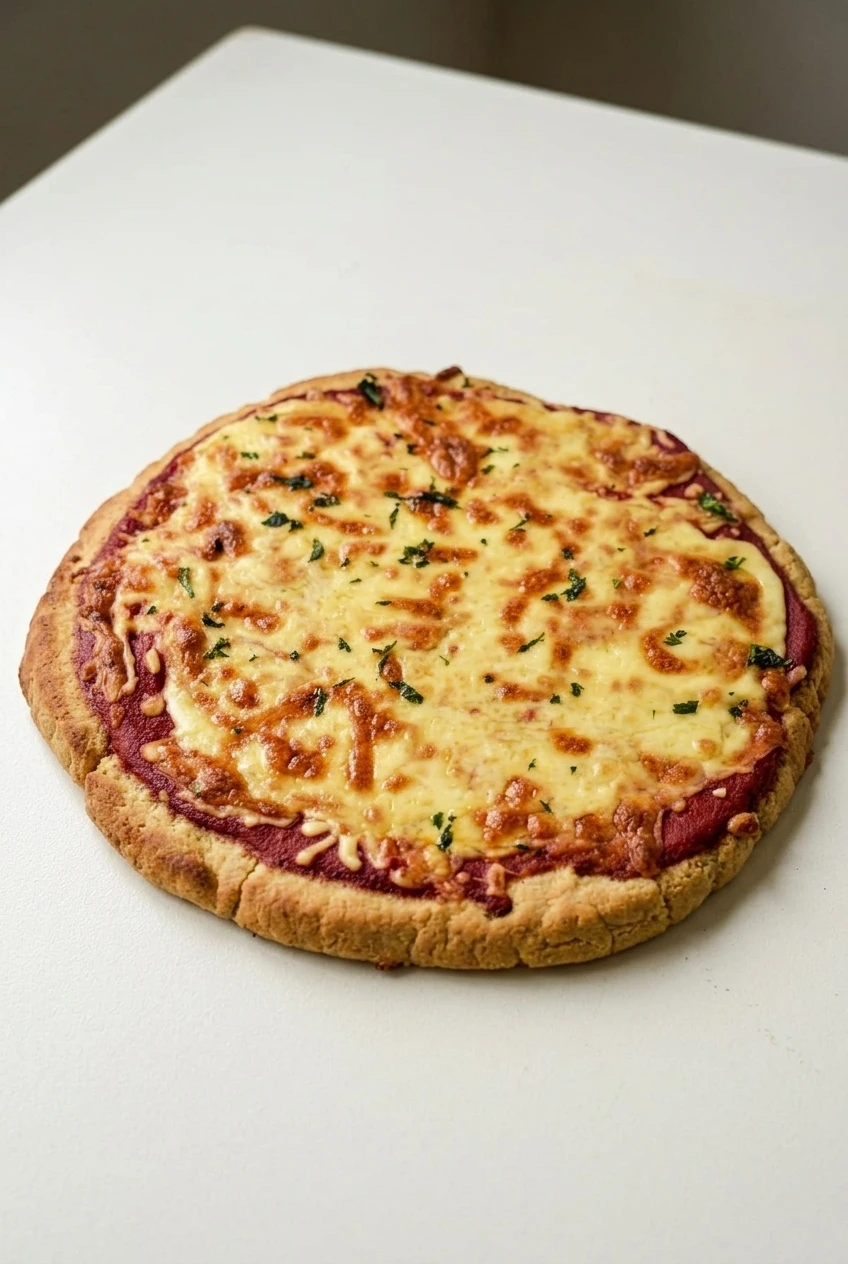
Keto Pizza with Almond Flour Crust
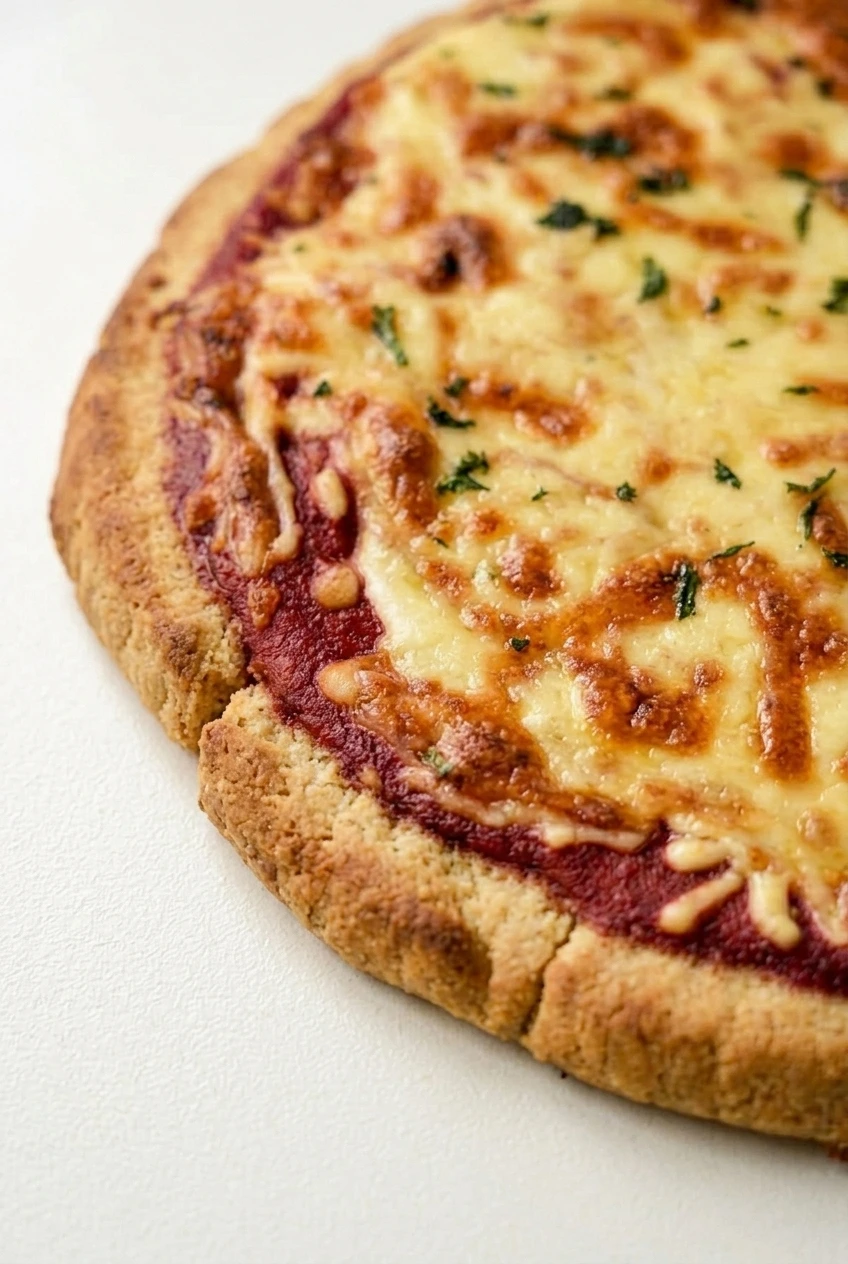
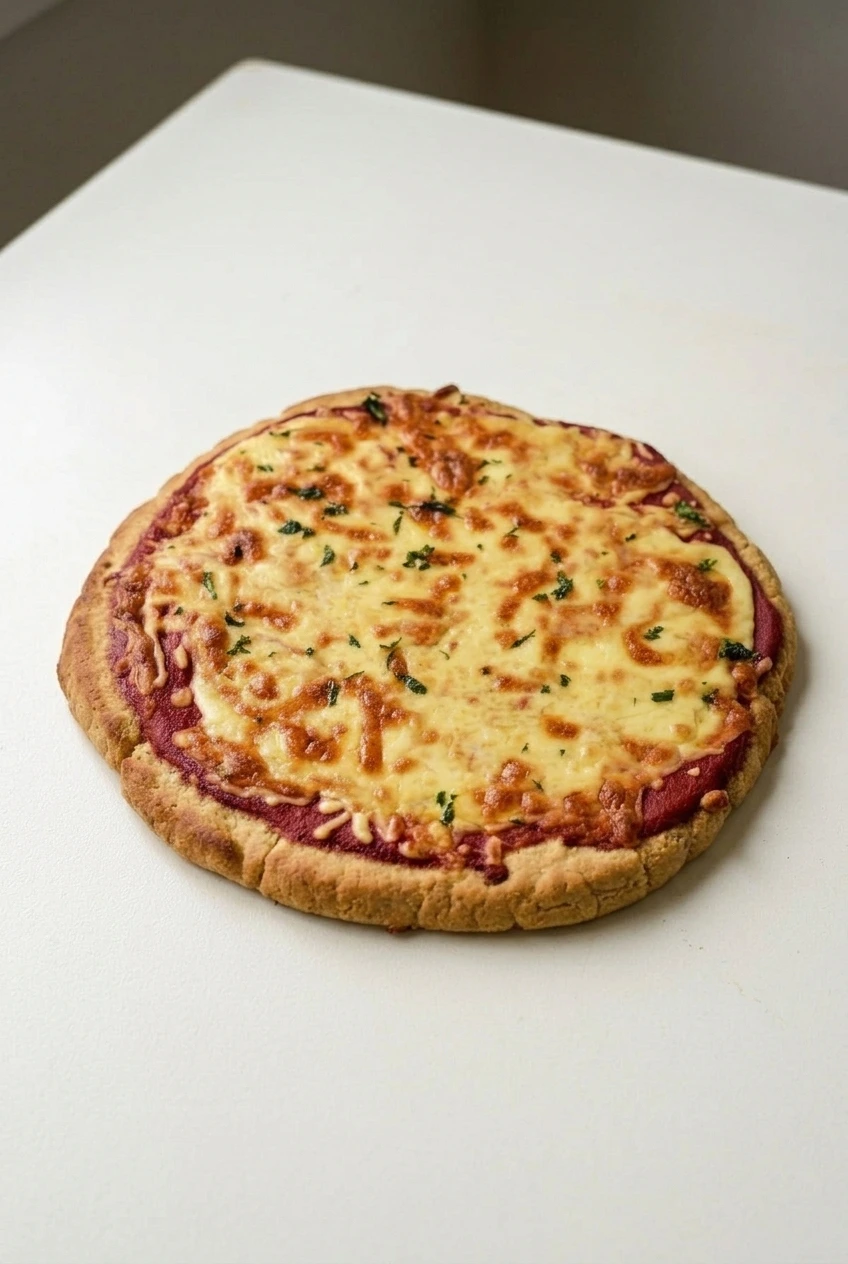
This cheese pizza has a substantial, rustic almond-flour crust topped with a thin layer of red sauce, melted mozzarella, and parsley. The dough contains egg and olive oil, not the melted cheese used in fathead crust.
Almond-flour dough is more fragile than wheat dough, so shape it on parchment and prebake it before adding the toppings. The crust should look dry and lightly golden before the sauce goes on; that matters more than hitting an exact minute.
Ingredients for Keto Pizza with Almond Flour Crust
- 2 cups fine blanched almond flour (225g)
- 1 large egg
- 1 tablespoon olive oil
- 1/2 teaspoon baking powder
- 1/2 teaspoon fine salt
- 1/2 teaspoon garlic powder
- 1/2 teaspoon dried Italian seasoning
- About 1/3 cup low-carbohydrate pizza sauce (80g)
- 1 1/2 cups shredded mozzarella (170g)
- 1 tablespoon finely chopped fresh parsley
Check the sauce label if carbohydrate content matters to you; brands vary.
How to Make Keto Pizza with Almond Flour Crust
- Heat the oven: Preheat to 400°F (205°C) with a rack in the middle position. Line a metal baking sheet with parchment paper.
- Mix the dough: Combine the almond flour, baking powder, salt, garlic powder, and Italian seasoning in a bowl. Add the egg and olive oil and mix until the dough holds together when pressed. If it seems crumbly, press it together rather than kneading it.
- Shape and dock the crust: Press or roll the dough between two sheets of parchment into an approximately 10-inch round. Keep the center about 1/4 inch thick and make the edge slightly thicker and irregular, without building a tall rim. Remove the top sheet, transfer the crust to the baking sheet on its bottom sheet of parchment, and prick the center with a fork.
- Prebake: Bake uncovered for 10–12 minutes, starting to check at 9 minutes. The top should look dry and set, and the edge should be lightly golden. Carefully pierce any large bubble that forms and continue baking.
- Add sauce and cheese: Spread the sauce thinly over the center, leaving the crust edge exposed. Scatter the mozzarella over the sauce, leaving a narrow border of red visible around parts of the cheese.
- Finish baking: Return the pizza to the oven for about 7–10 minutes, checking after 7 minutes. The cheese should be melted with scattered golden-brown spots, and the edge should be golden, not scorched. Loosely shield the rim with foil if it darkens before the cheese is ready.
- Rest and serve: Scatter the parsley over the hot pizza. Let it rest for 3–5 minutes so the cheese settles and the crust is easier to cut, then slice into 4–6 wedges.
How to Keep the Center from Getting Soft
Use a thin layer of sauce rather than letting it pool in the center. If adding vegetables that release a lot of water, cook or drain them first and use them sparingly. A heavy layer of wet toppings can soften the prebaked crust.
Is This a Fathead Crust?
No. This crust is made with almond flour, egg, and olive oil; the mozzarella goes on top. Fathead dough mixes melted cheese into the crust and handles differently, so its ingredients and baking times are not interchangeable with these.
Serving, Storing, and Reheating
Serve warm with a leafy green salad, if desired. Crushed red pepper or a little grated Parmesan can be offered at the table.
Refrigerate leftover slices in an airtight container for 3–4 days. Separate stacked slices with parchment if needed to reduce sticking. Reheat in a covered skillet over medium heat for a few minutes, until the base is warm and the cheese melts. Or reheat in a 350°F (175°C) oven for at least 5 minutes, adjusting the time for the number and thickness of the slices.
For a head start, refrigerate the prebaked crust for 1–2 days before topping it. A prebaked crust can also be wrapped and frozen; thaw it before adding the sauce and cheese.
Nutrition
Approximate nutrition per serving, based on 1 of 4 portions: 500 calories, 25g protein, 40g fat, and 15g carbohydrates. Approximate nutrition per 100g: 375 calories, 19g protein, 30g fat, and 11g carbohydrates. Values vary with the sauce and mozzarella used.
Equipment
- Oven
- Baking sheet
- Parchment paper
- Mixing bowl
- Fork
Ingredients
For the crust
- 2 cups fine blanched almond flour (225g)
- 1 large egg
- 1 tablespoon olive oil
- 1/2 teaspoon baking powder
- 1/2 teaspoon fine salt
- 1/2 teaspoon garlic powder
- 1/2 teaspoon dried Italian seasoning
For the topping
- About 1/3 cup low-carbohydrate pizza sauce (80g)
- 1 1/2 cups shredded mozzarella (170g)
- 1 tablespoon finely chopped fresh parsley
Instructions
- Preheat the oven to 400°F (205°C) with a rack in the middle position. Line a metal baking sheet with parchment paper.
- Combine the almond flour, baking powder, salt, garlic powder, and Italian seasoning in a bowl.
- Add the egg and olive oil and mix until the dough holds together when pressed. If crumbly, press it together rather than kneading.
- Press or roll the dough between two sheets of parchment into an approximately 10-inch round. Keep the center about 1/4 inch thick and the edge slightly thicker and irregular.
- Remove the top parchment sheet. Transfer the crust on its bottom sheet to the baking sheet and prick the center with a fork.
- Bake uncovered for 10–12 minutes, checking from 9 minutes. Bake until the top looks dry and set and the edge is lightly golden. Pierce any large bubbles and continue baking.
- Spread a thin layer of sauce over the center, leaving the edge exposed. Scatter the mozzarella over the sauce, leaving a narrow border of red visible in places.
- Bake for about 7–10 minutes, checking after 7 minutes, until the cheese is melted with scattered golden-brown spots and the edge is golden. Loosely shield the rim with foil if it darkens too quickly.
- Scatter parsley over the pizza. Rest for 3–5 minutes, then slice into 4–6 wedges.
Tips
- Shape the fragile dough between sheets of parchment.
- Prebake until the crust looks dry and lightly golden before adding toppings.
- Use a thin layer of sauce to help keep the center from getting soft.
- Cook or drain water-releasing vegetables before using them, and add them sparingly.
- Check the sauce label because carbohydrate content varies by brand.