

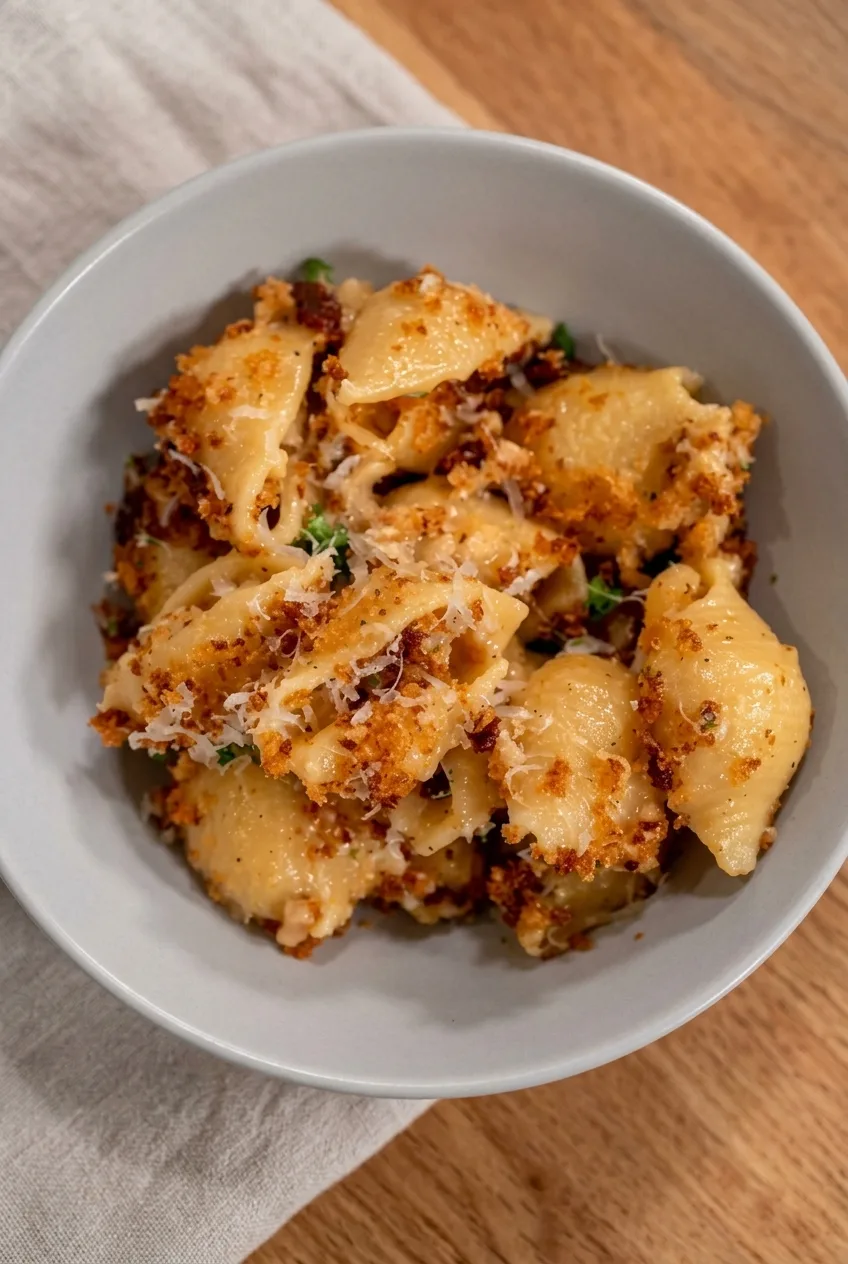
High-Protein Mac and Cheese
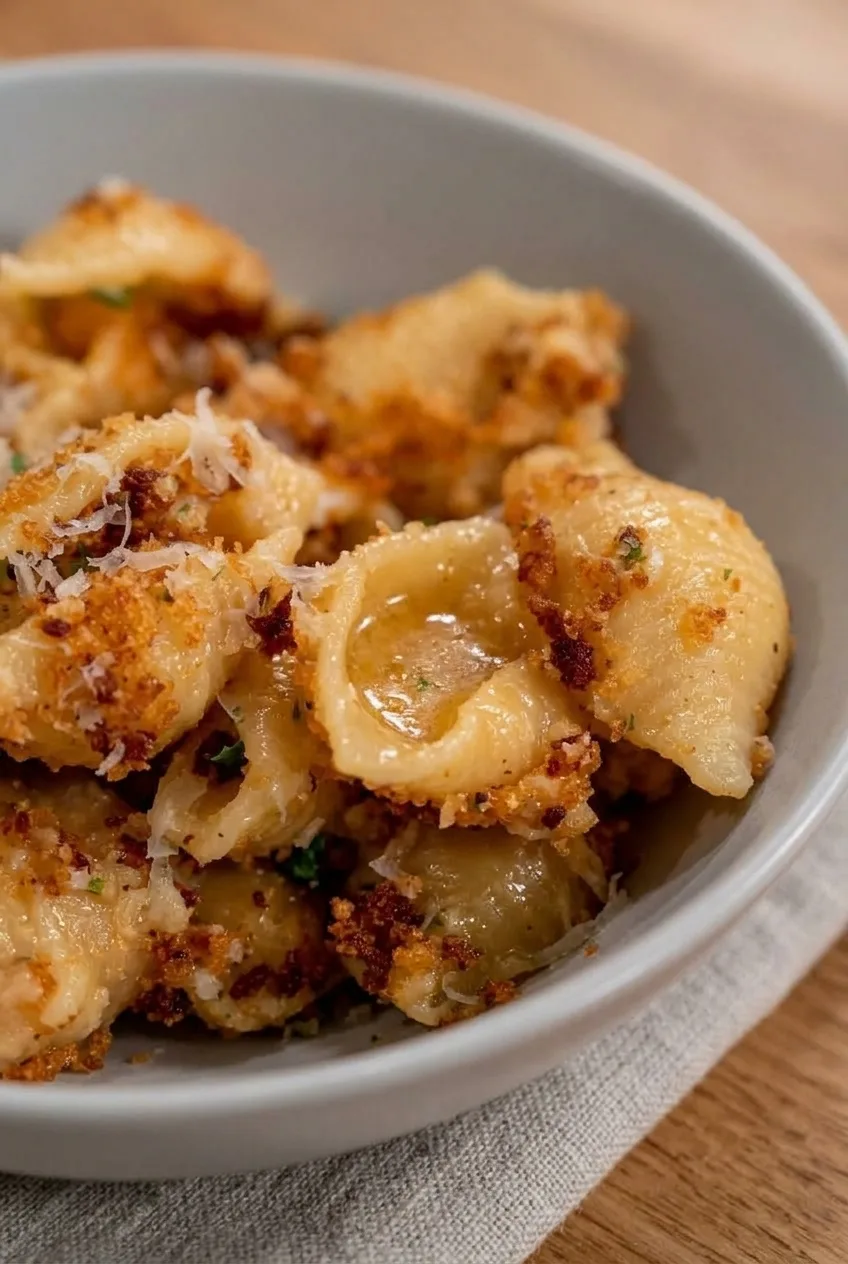
These stovetop shells are coated in a creamy cottage-cheese and cheddar sauce, then finished with scattered golden crumbs and a little Parmesan. Blending the cottage cheese removes visible curds; tossing it with hot pasta off the burner helps the cheddar melt without simmering the sauce.
Protein-enriched shells add protein, though the amount depends on the brand. The mac stays loose and spoonable rather than forming a baked crust. It makes four modest main-dish servings in about 25 minutes.
Ingredients for High-Protein Mac and Cheese
- 8 ounces dry protein-enriched medium pasta shells (about 225g)
- 1 cup 4% cottage cheese (about 225g)
- 1/4 cup milk
- 1/4 teaspoon garlic powder
- 1/4 teaspoon paprika
- 1 cup lightly packed sharp cheddar, freshly grated (about 115g)
- 1 tablespoon butter (about 15g)
- 1/3 cup panko breadcrumbs (about 20g)
- 2 tablespoons finely grated Parmesan (about 10g)
Optional finish: Up to 1 tablespoon finely chopped parsley and freshly ground black pepper, to taste. You will also need salted water for boiling the pasta; reserve at least 1 cup before draining.
How to Make High-Protein Mac and Cheese
- Cook the shells: Boil the pasta uncovered in a roomy pot of salted water according to the package directions, usually 8 to 12 minutes. Start checking 1 minute early. The shells should be tender with a slight bite and hold their curved shape.
- Toast the crumbs: While the pasta cooks, warm a small skillet over medium-low heat. Melt the butter, add the panko, and stir frequently for 2 to 4 minutes, until golden brown and crisp. Remove from the heat.
- Blend the sauce: Blend the cottage cheese, milk, garlic powder, and paprika until pourable and completely smooth, with no visible curds.
- Save the pasta water: Scoop out at least 1 cup of hot pasta water. Drain the shells and immediately return them to the pot with the burner off.
- Coat the shells: Add the blended sauce, cheddar, and 1/4 cup reserved pasta water. Toss for 2 to 3 minutes, until the cheddar melts and the sauce coats the shells. If the sauce is too thick, add more hot pasta water 1 or 2 tablespoons at a time; it should be glossy without pooling in the pot. If the cheddar needs more warmth, stir over the lowest heat only briefly. Do not simmer the sauce. Taste before adding salt.
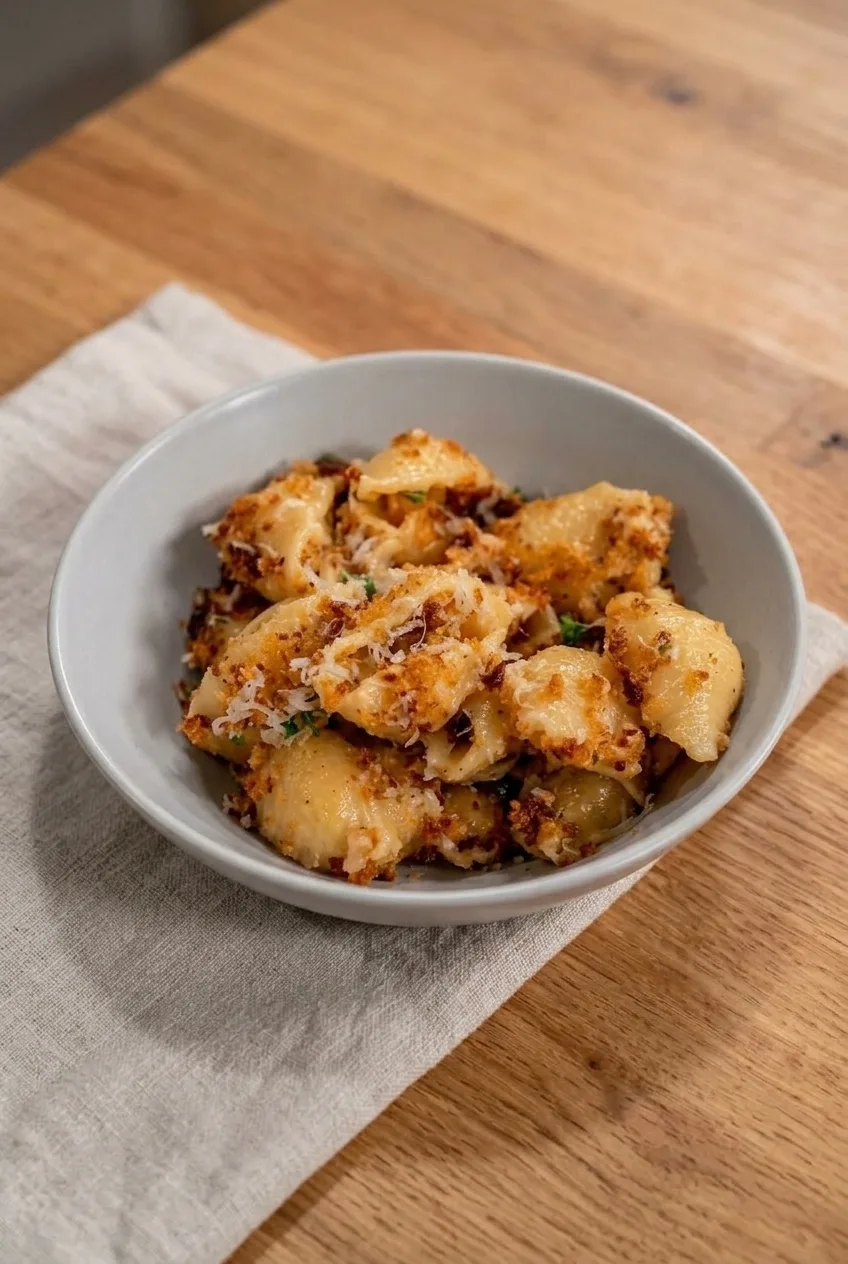
- Serve: Spoon loosely into four shallow bowls. Scatter the toasted crumbs and Parmesan over the top, leaving some saucy shells visible. Add parsley or black pepper, if using, and serve immediately.
How to Keep the Cottage-Cheese Sauce Smooth
Blend until every cottage-cheese curd disappears, and grate the cheddar from a block so it melts readily. The hot shells and a little pasta water should bring the sauce together off heat. If the sauce looks grainy, incomplete blending or too much heat may be the cause; avoid boiling it once the cheeses are added.
For a different sauce approach, try this creamy stovetop mac and cheese.
Why the Topping Goes on Last
Keep the toasted panko separate until serving. Moist pasta softens crumbs quickly, so add them in scattered patches rather than covering the shells with a solid crust. For a baked top instead, see this no-roux baked mac and cheese.
Pasta Choices
Medium shells catch sauce in their pockets. Follow the cooking time on your chosen protein pasta, since some brands soften or break if overcooked. Regular medium shells also work, but the nutrition will change. You can use 2% cottage cheese in place of 4%, though the sauce may be less rich.
How to Store and Reheat
Refrigerate leftover mac and cheese in an airtight container for up to 3 days. Keep extra toasted crumbs separate so they stay crisp.
The pasta absorbs sauce as it sits. Add a splash of milk and reheat over low heat, stirring until creamy and hot. Alternatively, microwave at reduced power in short intervals, stirring between them. Freezing is not recommended because the cottage-cheese sauce may turn grainy or watery after thawing.
Nutrition
Approximate nutrition per serving, based on 4 modest main-dish servings: 425 calories, 25g protein, 17g fat, and 45g carbohydrates. Approximate values per 100g of prepared mac and cheese: 165 calories, 10g protein, 7g fat, and 18g carbohydrates. Values vary with the pasta and dairy brands, the amount of pasta water used, and the final cooked weight.
Equipment
- Large pot
- Blender
- Small skillet
- Colander
Ingredients
For the mac and cheese
- 8 ounces (about 225g) dry protein-enriched medium pasta shells
- 1 cup (about 225g) 4% cottage cheese
- 1/4 cup milk
- 1/4 teaspoon garlic powder
- 1/4 teaspoon paprika
- 1 cup lightly packed sharp cheddar, freshly grated (about 115g)
- Salted water for boiling
- At least 1 cup hot reserved pasta water
For the topping
- 1 tablespoon butter (about 15g)
- 1/3 cup panko breadcrumbs (about 20g)
- 2 tablespoons finely grated Parmesan (about 10g)
Optional finish
- Up to 1 tablespoon finely chopped parsley
- Freshly ground black pepper, to taste
Instructions
- Boil the shells in a roomy pot of salted water according to package directions, usually 8 to 12 minutes. Start checking 1 minute early; cook until tender with a slight bite.
- While the pasta cooks, melt the butter in a small skillet over medium-low heat. Add the panko and stir frequently for 2 to 4 minutes, until golden and crisp. Remove from the heat.
- Blend the cottage cheese, milk, garlic powder, and paprika until completely smooth and pourable.
- Reserve at least 1 cup of hot pasta water. Drain the shells and return them to the pot with the burner off.
- Add the blended sauce, cheddar, and 1/4 cup reserved pasta water. Toss for 2 to 3 minutes, until the cheddar melts and the sauce coats the shells.
- If the sauce is too thick, add more hot pasta water 1 or 2 tablespoons at a time. If needed, stir over the lowest heat briefly; do not simmer. Taste before adding salt.
- Spoon the mac and cheese into four shallow bowls. Top with the toasted panko and Parmesan, then add parsley or black pepper if using. Serve immediately.
Tips
- Blend the cottage cheese until no curds remain for a smooth sauce.
- Grate cheddar from a block so it melts readily.
- Toss the sauce with the hot shells off the heat to help prevent a grainy texture.
- Add pasta water a little at a time until the sauce is glossy but not pooling.
- Keep the toasted panko separate until serving so it stays crisp.
Variations
- Regular Shells: Use regular medium pasta shells instead of protein-enriched shells; the nutrition will change.
- Lighter Cottage-Cheese Sauce: Use 2% cottage cheese in place of 4%; the sauce may be less rich.