

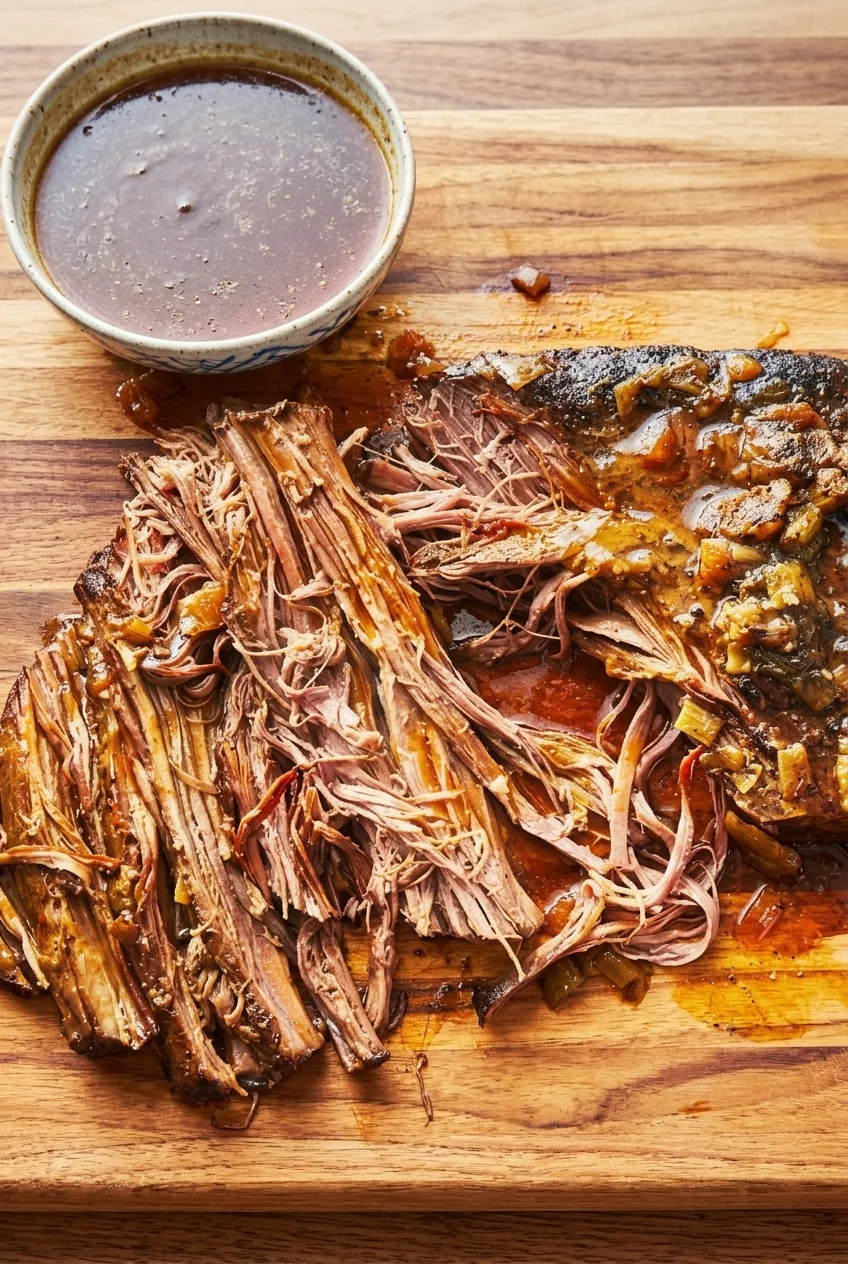
Slow Cooker Brisket
Slow cooking turns brisket tender enough to pull into long strands, but it cannot brown the surface. A skillet sear gives this brisket its dark exterior before it cooks on LOW with onions, beef broth, and Worcestershire. The juices stay savory and pourable rather than becoming a thick barbecue sauce.
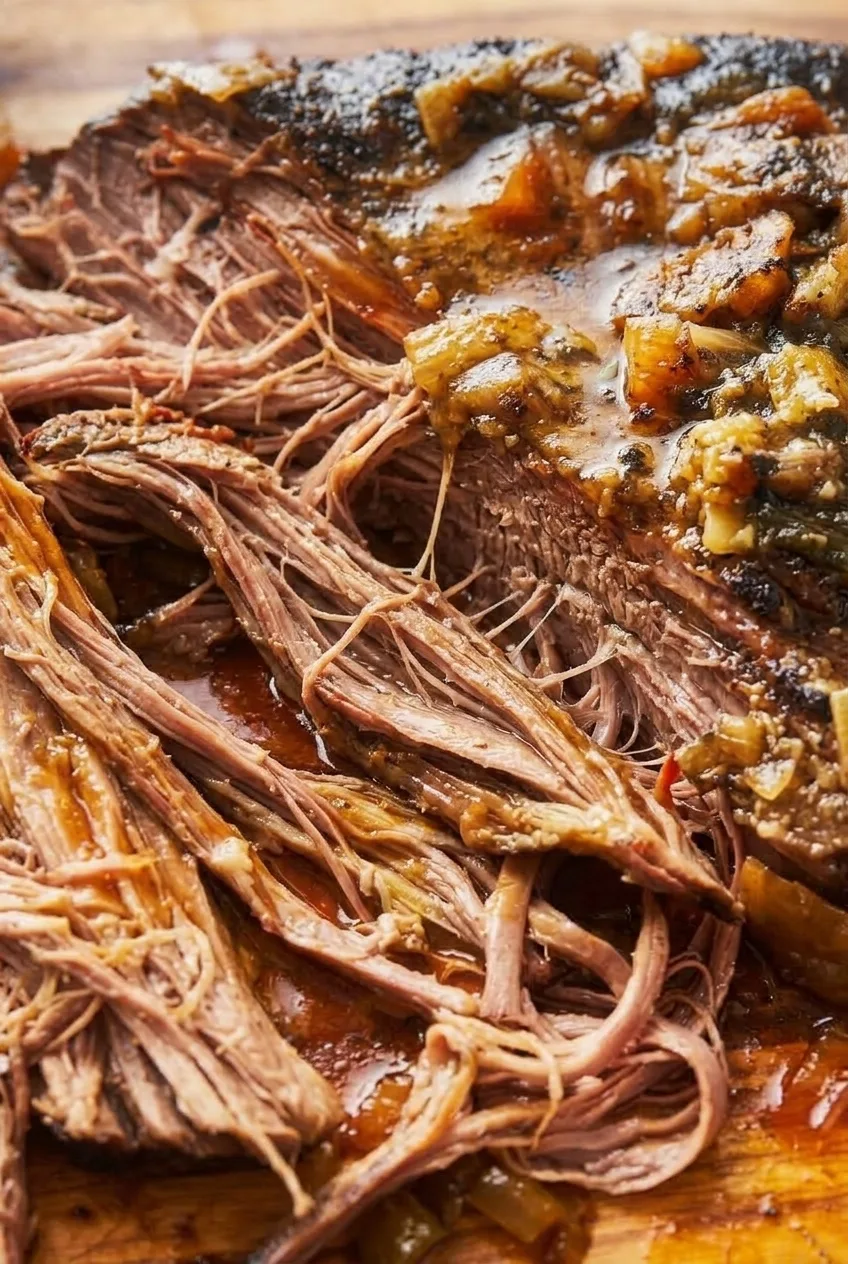
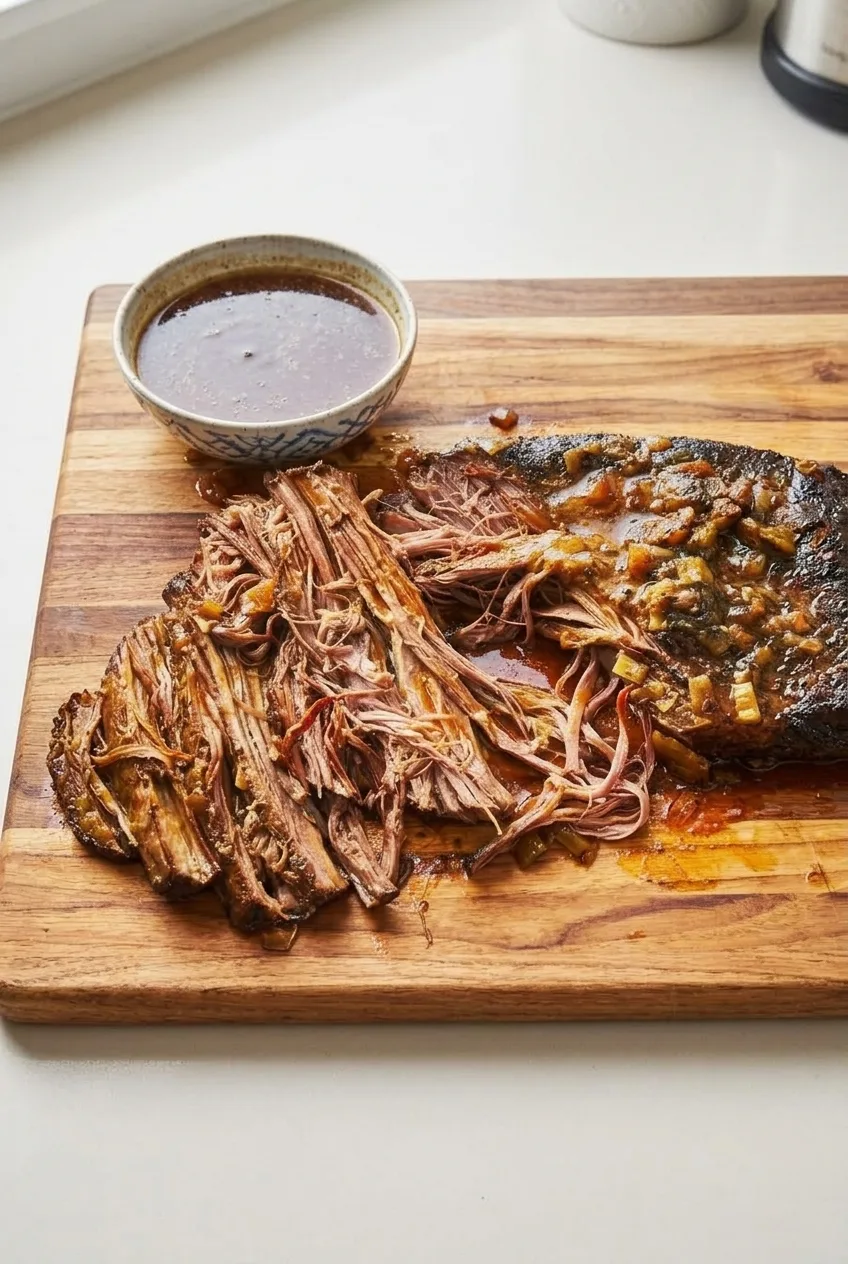
Serve it with most of the brisket intact and one end pulled apart. Spoon the soft onions and a little juice over the meat, then offer the rest alongside. Start checking around 8 hours, but let fork tenderness—not the clock—tell you when it is done.
Ingredients for Slow Cooker Brisket
- 1 beef brisket, 3–4 lb, preferably point or a well-marbled flat
- 1 1/4 teaspoons fine salt
- 1 teaspoon black pepper
- 1 teaspoon smoked paprika
- 1 tablespoon neutral cooking oil
- 2 medium yellow onions, coarsely chopped (about 300g)
- 4 garlic cloves, minced
- 1 tablespoon tomato paste
- 1 cup low-sodium beef broth
- 2 tablespoons Worcestershire sauce
Optional: 2 sprigs fresh thyme.
How to Make Slow Cooker Brisket
Serves: 6–8. Prep: 20–25 minutes. Cook: About 8–10 hours on LOW, plus up to 10 minutes to reduce the juices if needed. Allow about 15 minutes for resting and additional slow-cooker time if the brisket is not yet tender.
- Trim and season: Trim an exceptionally thick fat cap to about 1/4 inch, leaving a modest layer. Pat the brisket dry and season it all over with the salt, pepper, and smoked paprika. If it will not fit in a 6-quart or larger slow cooker with the lid closed, cut it into two large pieces.
- Brown the brisket: Heat the oil in a large heavy skillet over medium-high heat. Sear the broad sides for about 4–5 minutes per side, until deeply browned but not charred. Transfer to the slow cooker. The browned surface will soften during cooking; it will not stay crisp.
- Make the onion base: Reduce the skillet heat to medium. Cook the onions for 4–5 minutes, until beginning to soften. Stir in the garlic and tomato paste and cook for 1 minute. Add the broth and Worcestershire, scraping up the browned bits from the skillet. Pour the mixture around and partly over the brisket. Add the thyme, if using.
- Slow-cook: Cover and cook on LOW for about 8–10 hours. Keep the lid closed rather than routinely turning the meat. Start checking around 8 hours: a fork should enter the thickest part easily, and the fibers should pull away with little effort. If the brisket is resistant or chewy, cover and continue cooking, checking every 30–60 minutes.
- Rest and finish the juices: Transfer the brisket to a cutting or serving board and rest for about 15 minutes. Remove the thyme, if used. Let the cooking juices stand briefly, then skim off visible fat. If the juices are watery, simmer them uncovered in a saucepan over medium heat for up to 10 minutes, until they lightly coat a spoon but remain pourable. Keep the softened onions in the juices.
- Pull one end and serve: Use two forks to pull long strands from one end, leaving most of the brisket intact. Spoon some onions and juices over the meat without covering all of its browned surface. Serve the extra juices in a small bowl alongside.
Choosing a Brisket Cut
A well-marbled point suits the partly pulled finish and makes rich juices, though it may leave more fat to skim. A well-marbled flat also works; its more uniform shape makes it easier to slice if you prefer that for leftovers. With either cut, trim unusually thick exterior fat rather than removing it all.
Does the Broth Need to Cover the Brisket?
No. The brisket only needs to be partly surrounded by liquid. The beef and onions release more moisture as they cook, so adding broth just to submerge the meat can leave the finished juices thin.
Serving Slow Cooker Brisket
Serve the partly pulled brisket with mashed potatoes or roasted vegetables to catch the onion juices. For another saucy beef dinner, try Crockpot Cube Steak and Gravy.
Storing and Reheating Brisket
Refrigerate leftovers promptly in a covered container with some of their juices for up to 3–4 days. Reheat covered with the juices in a 300°F (150°C) oven until warmed through. For make-ahead serving, refrigerate the cooked brisket in its juices, remove the hardened fat, then reheat gently.
Freeze cooled portions with a little juice for up to 3 months. Thaw in the refrigerator before reheating. Fully pulled leftovers can also be used in sandwiches.
Nutrition
Approximate per serving, based on 7 servings: 575 calories, 42g protein, 42g fat, and 7g carbohydrates. Approximate per 100g: 275 calories, 20g protein, 20g fat, and 3g carbohydrates. Values vary considerably with the brisket cut, portion size, and how much rendered fat is skimmed.
Equipment
- 6-quart or larger slow cooker
- Large heavy skillet
- Saucepan
- Cutting board
- Two forks
Ingredients
- 1 beef brisket, 3–4 lb, preferably point or a well-marbled flat
- 1 1/4 teaspoons fine salt
- 1 teaspoon black pepper
- 1 teaspoon smoked paprika
- 1 tablespoon neutral cooking oil
- 2 medium yellow onions, coarsely chopped (about 300g)
- 4 garlic cloves, minced
- 1 tablespoon tomato paste
- 1 cup low-sodium beef broth
- 2 tablespoons Worcestershire sauce
- 2 sprigs fresh thyme (optional)
Instructions
- Trim an exceptionally thick fat cap to about 1/4 inch, leaving a modest layer. Pat the brisket dry and season all over with the salt, pepper, and smoked paprika.
- If the brisket will not fit in a 6-quart or larger slow cooker with the lid closed, cut it into two large pieces.
- Heat the oil in a large heavy skillet over medium-high heat. Sear the broad sides of the brisket for 4–5 minutes per side, until deeply browned but not charred. Transfer it to the slow cooker.
- Reduce the skillet heat to medium. Cook the onions for 4–5 minutes, until beginning to soften. Stir in the garlic and tomato paste and cook for 1 minute.
- Add the broth and Worcestershire sauce, scraping up the browned bits from the skillet. Pour the mixture around and partly over the brisket. Add the thyme, if using.
- Cover and cook on LOW for about 8–10 hours without routinely turning the meat. Start checking around 8 hours; the brisket is ready when a fork enters the thickest part easily and the fibers pull away with little effort. If it is still resistant or chewy, continue cooking and check every 30–60 minutes.
- Transfer the brisket to a cutting or serving board and rest for about 15 minutes. Remove the thyme, if used.
- Let the cooking juices stand briefly, then skim off visible fat. If the juices are watery, simmer them uncovered in a saucepan over medium heat for up to 10 minutes, until they lightly coat a spoon but remain pourable. Keep the softened onions in the juices.
- Use two forks to pull long strands from one end of the brisket, leaving most of it intact. Spoon some onions and juices over the meat and serve the remaining juices alongside.
Tips
- Use a well-marbled brisket for rich, tender results; a point may leave more fat to skim.
- Trim unusually thick exterior fat, but leave a modest layer.
- Do not add broth to submerge the brisket; it only needs to be partly surrounded by liquid.
- Keep the slow cooker lid closed and use fork tenderness, not the clock, to judge doneness.
- Skim visible fat before serving, and reduce watery juices only as needed.