

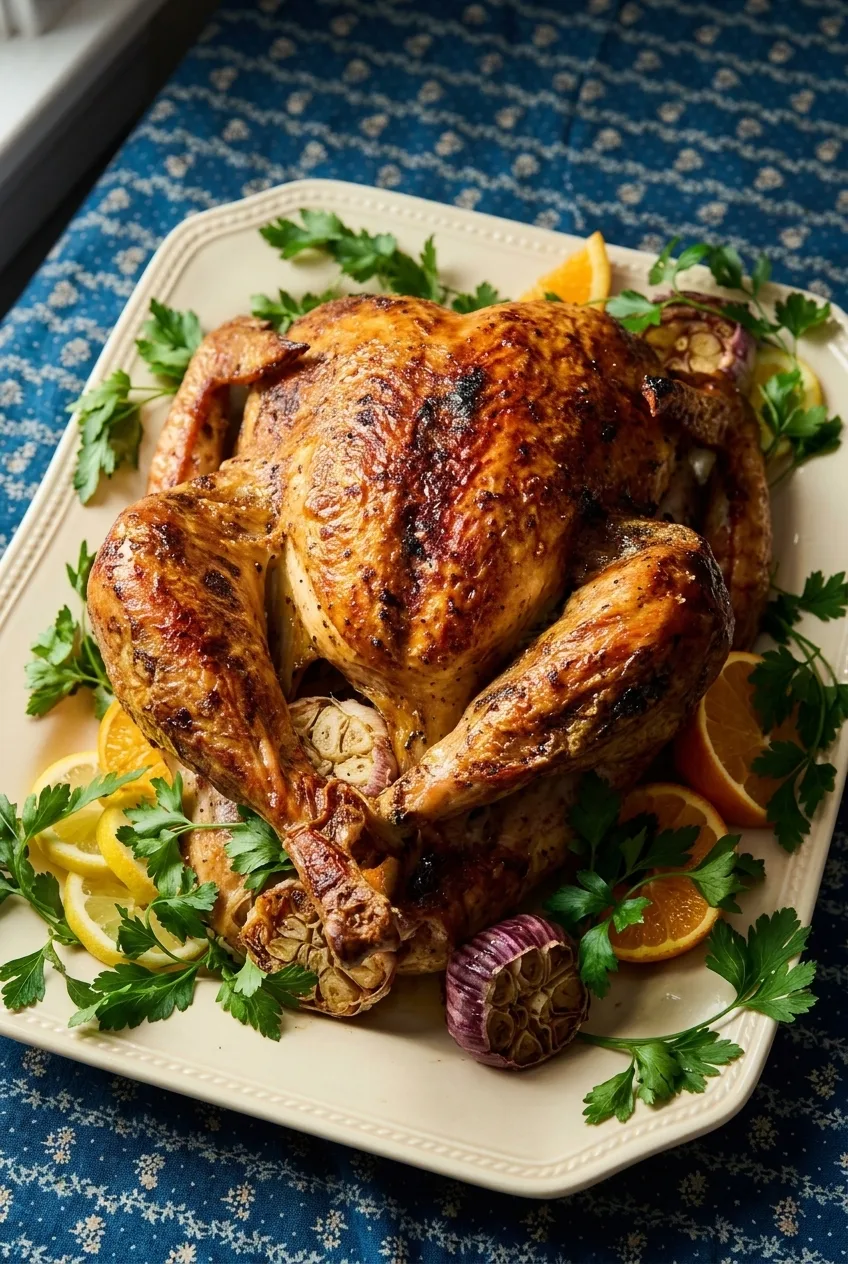
Classic Roast Turkey
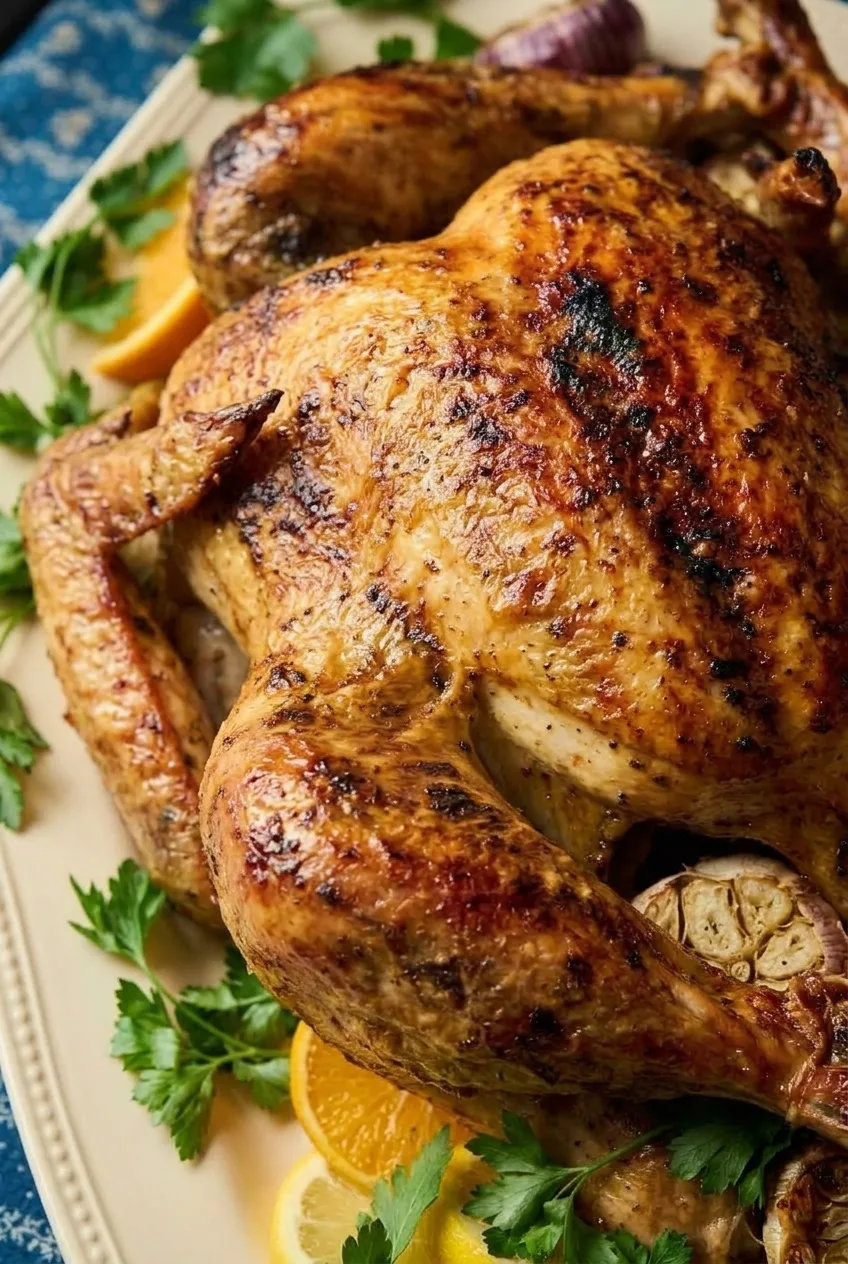
Roast turkey should have deeply browned skin and meat that is cooked through without relying on the clock. This whole, unstuffed bird gets a coating of softened butter, salt, and pepper, with onion placed loosely in the cavity. It roasts breast-side up at a steady temperature, without scheduled basting.
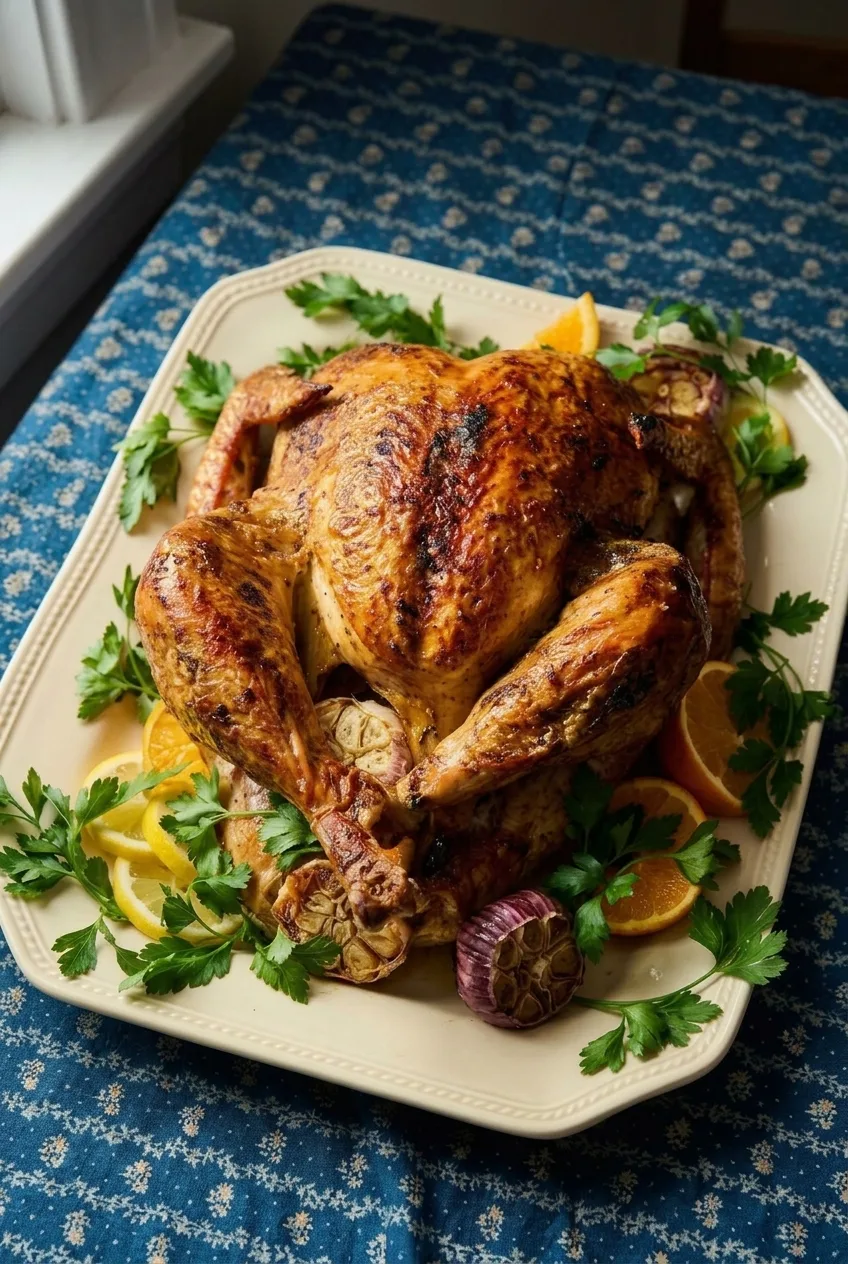
Start checking the breast and thigh before the estimated roasting time is up; skin color cannot tell you whether either is done. After a rest, present the turkey whole on a platter with roasted garlic and red onion, fresh parsley, and orange wedges.
Serves: About 10–12. Prep: 25 minutes, excluding thawing. Roast: About 3–4 hours. Rest: 30 minutes. Total: About 3 hours 55 minutes to 4 hours 55 minutes, excluding thawing.
Ingredients for Classic Roast Turkey
- 1 whole turkey (12–14 pounds), fully thawed, with neck and giblets removed
- 1/2 cup (1 stick; 113g) unsalted butter, softened
- 1 tablespoon Diamond Crystal kosher salt or about 2 teaspoons Morton kosher salt; reduce if the turkey is pre-brined or salt-enhanced
- 2 teaspoons freshly ground black pepper
- 1 medium yellow onion, quartered
- 1 cup water, plus more as needed
- 1 whole garlic bulb, halved crosswise
- 1 medium red onion, halved
- 1 orange, cut into wedges
- 1 small bunch fresh flat-leaf parsley
- 3–4 fresh thyme sprigs (optional)
The yellow onion and optional thyme are loose cavity aromatics, not serving stuffing. The garlic and red onion roast for the platter; the orange and parsley go on fresh.
How to Roast the Turkey
- Prepare the oven and pan: Heat the oven to 325°F (165°C). Position an oven rack low enough to leave room above the turkey. Set a roasting rack in a large pan with enough space that the bird will not press against the sides. Pour 1 cup water beneath the rack.
- Dry and season: Check that the turkey is fully thawed, including inside the cavity, and remove the neck and giblets if needed. Pat the skin thoroughly dry so the butter spreads evenly and the skin can brown. Season the cavity and exterior with the salt and pepper. Place the yellow onion and optional thyme loosely in the cavity; do not pack it.
- Butter and position: Spread the softened butter over the exposed skin. Set the turkey securely on the rack, breast-side up. Tuck the wing tips beneath the bird to help protect them from burning, and leave the legs untrussed.
- Roast: Roast uncovered, planning on about 3–4 hours for this unstuffed bird. Check the pan occasionally and add a little water beneath the rack if it dries out or the drippings threaten to scorch. If an area darkens too quickly, tent just that area loosely with foil. Begin checking the breast and thigh temperatures at about 2 hours 30 minutes; recheck as the turkey approaches doneness.
- Roast the platter vegetables: During roughly the final hour, place the garlic and red onion halves cut-side up in a sheltered area of the roasting pan. Roast for about 45–60 minutes, until tender and visibly roasted but not blackened. Remove them when ready, even if the turkey needs more time.
- Check and rest: Remove the turkey only when an instant-read thermometer reads 165°F (75°C) in both the thickest part of the breast and the innermost, thickest part of the thigh, without touching bone. Rest the turkey whole for about 30 minutes. Save the pan drippings for gravy if desired.
- Arrange the platter: Transfer the uncarved turkey to a large rectangular platter. Arrange the roasted garlic and red onion around it, then add the fresh orange wedges and parsley sprigs without covering the browned breast. Carve for serving.
How to Tell When the Turkey Is Done
Use the 3–4-hour roasting time as a planning window, not a deadline: a bird’s shape and the oven can change how quickly it cooks. Check the thickest breast meat and the thickest inner thigh separately, keeping the thermometer tip away from bone. Both must reach 165°F, even if the skin is already deeply browned.
When to Use Foil
Start uncovered so the skin can brown. If the breast or another area becomes dark before the meat is done, lay foil loosely over that area and continue roasting. Foil limits further browning; it does not replace temperature checks.
Preparing a Frozen Turkey
The listed prep time does not include thawing. Allow roughly 24 hours of refrigerator thawing per 4–5 pounds, or about 3–4 days for a 12–14-pound turkey. Check that no ice remains in the cavity before preparing the bird.
Serving and Storing Leftovers
Present the rested turkey whole, then carve it for serving. Keep edible dressing out of the cavity; serve Grandma’s Thanksgiving Dressing baked separately.
Refrigerate leftover turkey in airtight containers within 2 hours after cooking and use it within 3–4 days.
Nutrition
Approximate per serving, based on 12 servings: 460 calories, 60g protein, 22g fat, and 3g carbohydrates. Approximate per 100g of served turkey and garnish: 205 calories, 27g protein, 10g fat, and 1g carbohydrates. Estimates vary with the amount of meat and skin served, how much butter remains with the turkey, and whether the garnishes are eaten.
Equipment
- Oven
- Roasting pan
- Roasting rack
- Instant-read thermometer
- Large platter
Ingredients
For the Turkey
- 1 whole turkey (12–14 pounds), fully thawed, with neck and giblets removed
- 1/2 cup (1 stick; 113g) unsalted butter, softened
- 1 tablespoon Diamond Crystal kosher salt or about 2 teaspoons Morton kosher salt
- 2 teaspoons freshly ground black pepper
- 1 medium yellow onion, quartered
- 3–4 fresh thyme sprigs (optional)
- 1 cup water, plus more as needed
For the Platter
- 1 whole garlic bulb, halved crosswise
- 1 medium red onion, halved
- 1 orange, cut into wedges
- 1 small bunch fresh flat-leaf parsley
Instructions
- Heat the oven to 325°F (165°C). Position a rack low enough to leave room above the turkey.
- Set a roasting rack in a large roasting pan and pour 1 cup water beneath the rack.
- Confirm the turkey is fully thawed, including inside the cavity, and remove the neck and giblets if needed.
- Pat the turkey skin thoroughly dry. Season the cavity and exterior with salt and pepper.
- Place the yellow onion and optional thyme loosely in the cavity without packing it.
- Spread the softened butter over the exposed skin. Set the turkey breast-side up on the rack, tuck the wing tips beneath the bird, and leave the legs untrussed.
- Roast uncovered for about 3–4 hours. Check the pan occasionally and add water beneath the rack if it dries out or the drippings threaten to scorch.
- Begin checking the breast and thigh temperatures at about 2 hours 30 minutes. If any area darkens too quickly, tent that area loosely with foil.
- During roughly the final hour, place the garlic and red onion cut-side up in a sheltered area of the pan. Roast for about 45–60 minutes until tender and visibly roasted, removing them when ready.
- Remove the turkey when an instant-read thermometer reads 165°F (75°C) in both the thickest part of the breast and the innermost, thickest part of the thigh, without touching bone.
- Rest the turkey whole for about 30 minutes. Save the pan drippings for gravy if desired.
- Transfer the turkey to a platter. Arrange the roasted garlic and red onion around it, add the fresh orange wedges and parsley, and carve to serve.
Tips
- Use the roasting time as a planning window, not a deadline; check doneness with a thermometer.
- Check the breast and thigh separately, keeping the thermometer tip away from bone.
- Start with dry skin so the butter spreads evenly and the skin can brown.
- Keep the cavity aromatics loose; do not pack the cavity.
- Use foil only over areas browning too quickly, and continue checking the internal temperature.
- Reduce the salt if the turkey is pre-brined or salt-enhanced.