

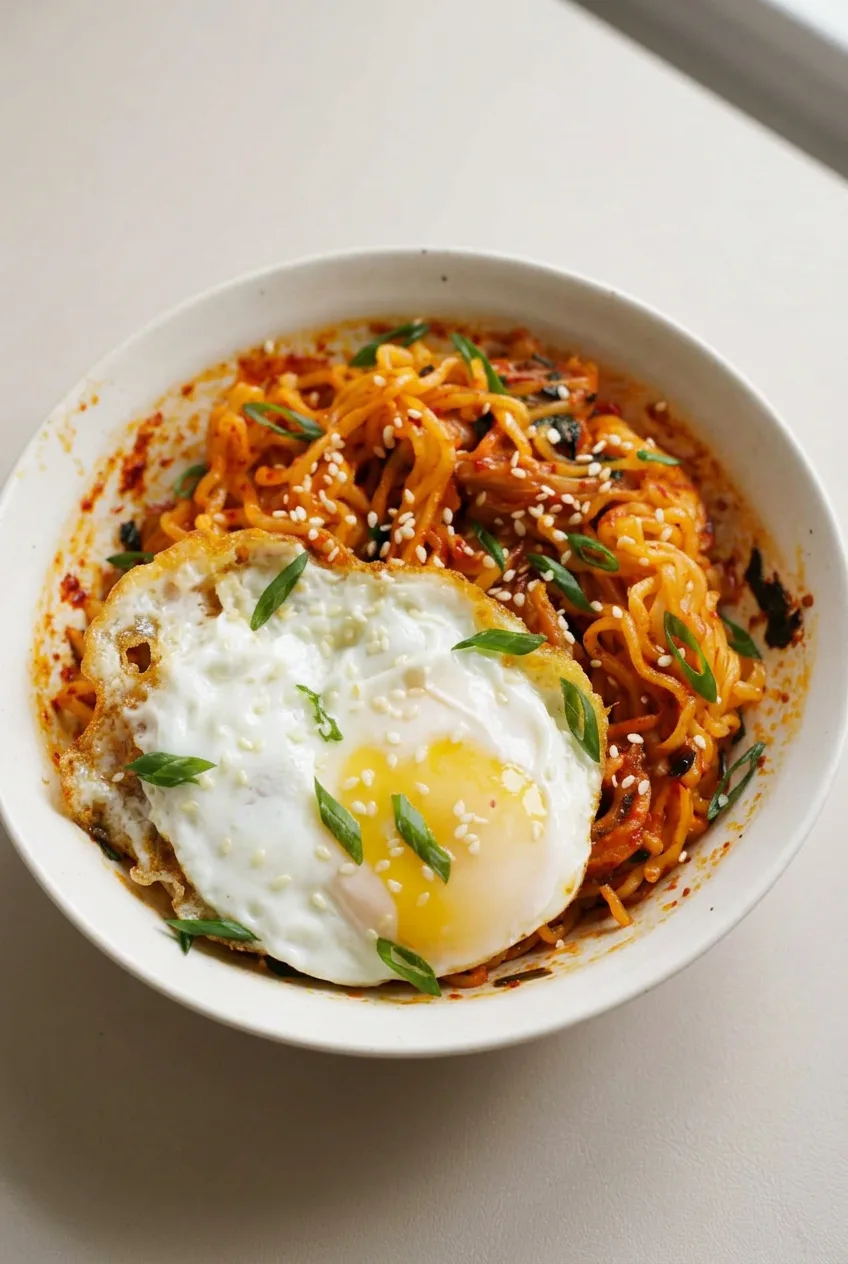
Chili Oil Ramen Noodles
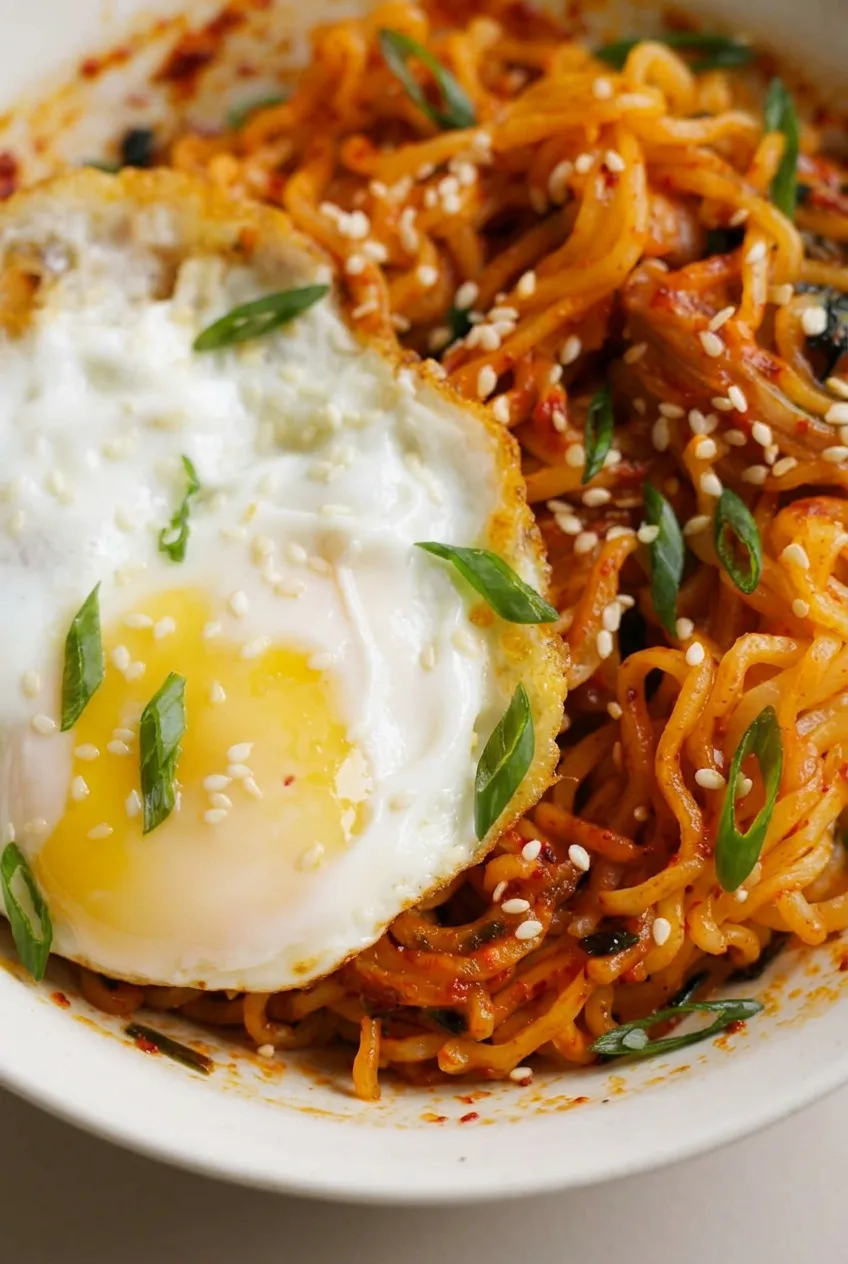
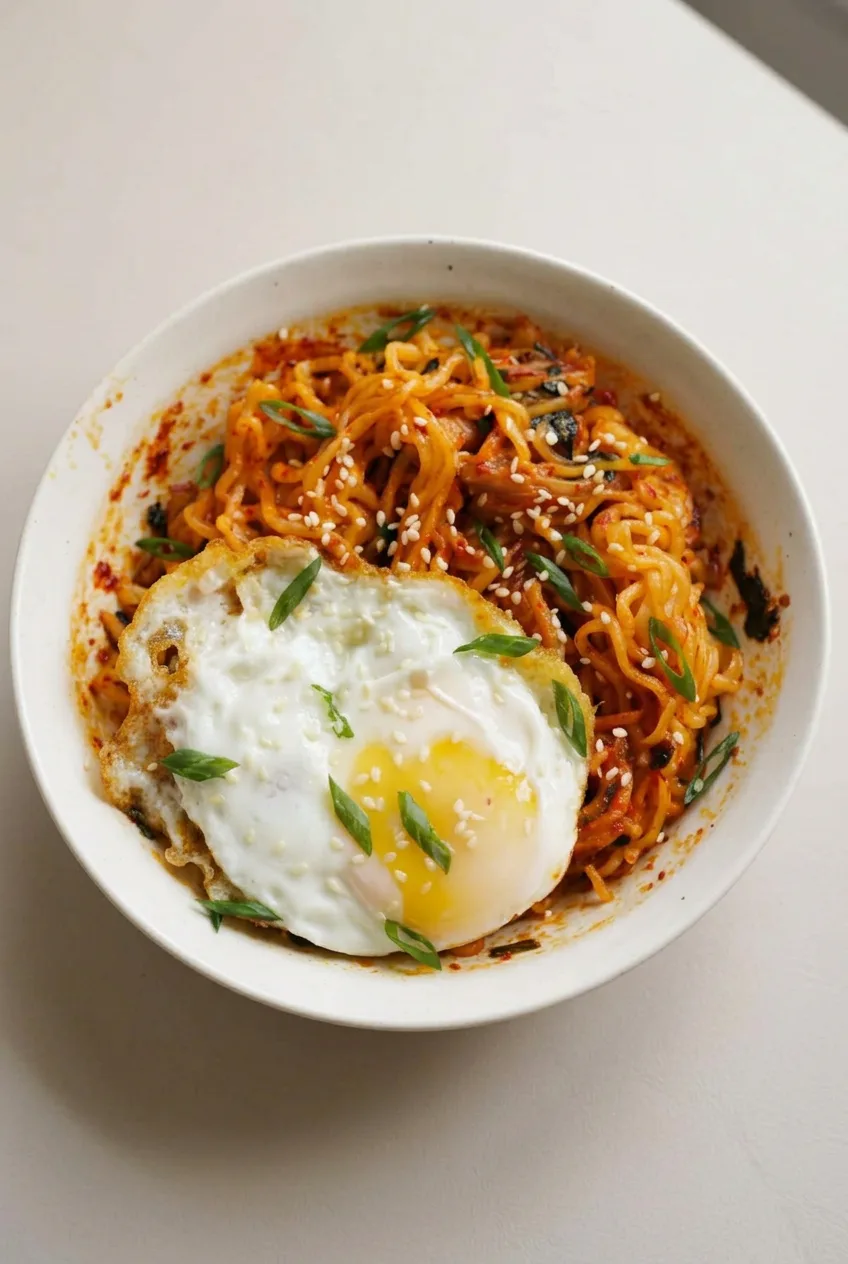
These dry-style ramen noodles are tossed in freshly bloomed garlic-chili oil until the strands are glossy and orange-red. A sunny-side-up egg rests partly over the noodles, with scallion greens and sesame seeds scattered on top. There’s no broth or ramen seasoning packet; soy sauce and a little rice vinegar season the coating.
Cook the noodles just until chewy, then drain and toss them promptly. If the strands clump, a teaspoon or two of reserved cooking water helps distribute the chili oil without turning the bowl soupy.
Ingredients for Chili Oil Ramen Noodles
- 1 package instant ramen noodles, about 3 oz (85g); set aside the seasoning packet
- 1 tablespoon plus 1 teaspoon neutral vegetable or canola oil, divided
- 2 teaspoons gochugaru
- 2 garlic cloves, finely minced
- 1 scallion, thinly sliced, whites and greens separated
- 2 teaspoons soy sauce
- 1 teaspoon rice vinegar
- 1 large egg
- 1 teaspoon white sesame seeds
Yield: 1 generous serving. Time: 5 minutes prep, 8–10 minutes cooking, 13–15 minutes total.
How to Make Chili Oil Ramen Noodles
- Prepare the aromatics: Put the gochugaru, garlic, and scallion whites in a dry, roomy heatproof bowl. Keep the soy sauce, vinegar, scallion greens, and sesame seeds nearby.
- Fry the egg: Heat 1 teaspoon oil in a small nonstick skillet over medium-low heat. Add the egg and cook without flipping for about 2–4 minutes, until the white is fully opaque and the yolk is soft. Briefly cover the skillet only if the top of the white needs help setting. Transfer the egg to a plate.
- Cook the ramen: Boil the noodles uncovered in a saucepan of actively boiling water, separating the strands as they loosen. Use the package time as a guide—often about 2–3 minutes—and start checking early for a chewy texture. Reserve about 1/4 cup cooking water, then drain the noodles well.
- Bloom the chili oil: Heat the remaining 1 tablespoon oil in the skillet over medium heat until it shimmers but does not smoke. Slowly pour it over the aromatics in the heatproof bowl, keeping your hands clear as they sizzle. Once the bubbling subsides, stir in the soy sauce and rice vinegar.
- Toss and serve: Add the drained noodles and toss until evenly coated. If the strands cling together, add reserved noodle water 1–2 teaspoons at a time, just until the coating looks glossy; there should be no pool of liquid. Transfer to a shallow bowl, place the egg partly over the noodles, and scatter the scallion greens and sesame seeds on top. Serve immediately.
How to Get an Even Chili Oil Coating
Shimmering oil looks slightly rippled across the surface; it does not need to smoke. Pour it slowly onto the aromatics in the heatproof bowl, not directly onto wet noodles, which can cause splattering. Toss the noodles thoroughly before adding any cooking water so you can judge whether they need it.
Noodle and Egg Timing
Fry the egg first so the noodles can be sauced as soon as they drain. Remove the egg when its white is set, even if the yolk still looks soft. Ramen thickness varies by brand, so drain when the strands are separate and springy rather than relying on the package time alone.
Ingredient Swaps and Heat
Gochugaru varies in heat by brand. For a milder bowl, start with less than 2 teaspoons; add a pinch to the finished noodles if you want more heat. Chinese black vinegar can replace rice vinegar, though it will taste different. Low-sodium soy sauce also works; taste before adding more seasoning.
If using fresh or thicker ramen, follow its cooking directions. A small handful of cooked greens or mushrooms can go alongside the noodles without replacing the egg. For a different, less chili-forward bowl, try these sesame garlic ramen noodles.
Storing and Reheating
Refrigerate leftover noodles promptly in an airtight container for up to 2 days; they will soften as they sit. Reheat in a skillet over medium heat or in the microwave until hot, adding a small splash of water to loosen them. For a soft-yolk topping, fry a fresh egg when serving.
You can prepare the aromatics ahead, but cook and toss the noodles close to serving time. Do not freeze the assembled bowl; the noodle texture suffers.
Nutrition
Approximate nutrition per serving: 660 calories, 18g protein, 39g fat, and 59g carbohydrates. Approximate nutrition per 100g of finished noodles and toppings: 210 calories, 6g protein, 13g fat, and 19g carbohydrates. Estimates assume a finished bowl of about 310g; values vary with the ramen brand and the amount of water the noodles absorb.
Equipment
- Saucepan
- Small nonstick skillet
- Heatproof bowl
Ingredients
- 1 package instant ramen noodles, about 3 oz (85 g); set aside the seasoning packet
- 1 tablespoon plus 1 teaspoon neutral vegetable or canola oil, divided
- 2 teaspoons gochugaru
- 2 garlic cloves, finely minced
- 1 scallion, thinly sliced, whites and greens separated
- 2 teaspoons soy sauce
- 1 teaspoon rice vinegar
- 1 large egg
- 1 teaspoon white sesame seeds
Instructions
- Place the gochugaru, minced garlic, and scallion whites in a dry, roomy heatproof bowl. Keep the soy sauce, rice vinegar, scallion greens, and sesame seeds nearby.
- Heat 1 teaspoon oil in a small nonstick skillet over medium-low heat. Add the egg and cook without flipping for 2–4 minutes, until the white is fully opaque. Briefly cover the skillet if needed to set the top of the white, then transfer the egg to a plate.
- Boil the noodles uncovered in a saucepan of actively boiling water, separating the strands as they loosen. Use the package time as a guide, often 2–3 minutes, and check early for a chewy texture. Reserve about 1/4 cup cooking water, then drain the noodles well.
- Heat the remaining 1 tablespoon oil in the skillet over medium heat until it shimmers but does not smoke. Slowly pour it over the aromatics in the heatproof bowl, keeping your hands clear as they sizzle.
- When the bubbling subsides, stir in the soy sauce and rice vinegar.
- Add the drained noodles and toss until evenly coated. If the strands cling together, add reserved noodle water 1–2 teaspoons at a time until the coating looks glossy, with no pool of liquid.
- Transfer the noodles to a shallow bowl. Place the egg partly over the noodles and scatter the scallion greens and sesame seeds on top. Serve immediately.
Tips
- Cook the noodles just until chewy and springy; ramen cooking times vary by brand.
- Let the oil shimmer, but do not let it smoke.
- Pour the hot oil over the aromatics in the heatproof bowl, not directly onto wet noodles.
- Toss the noodles thoroughly before adding any cooking water, then add it a teaspoon or two at a time.
- Fry the egg first so the noodles can be sauced as soon as they drain.
Variations
- Milder or Hotter Chili Ramen: Use less than 2 teaspoons gochugaru for a milder bowl, or add a pinch to the finished noodles for more heat.
- Black Vinegar Ramen: Replace the rice vinegar with Chinese black vinegar for a different flavor.
- Ramen with Greens or Mushrooms: Serve a small handful of cooked greens or mushrooms alongside the noodles.