

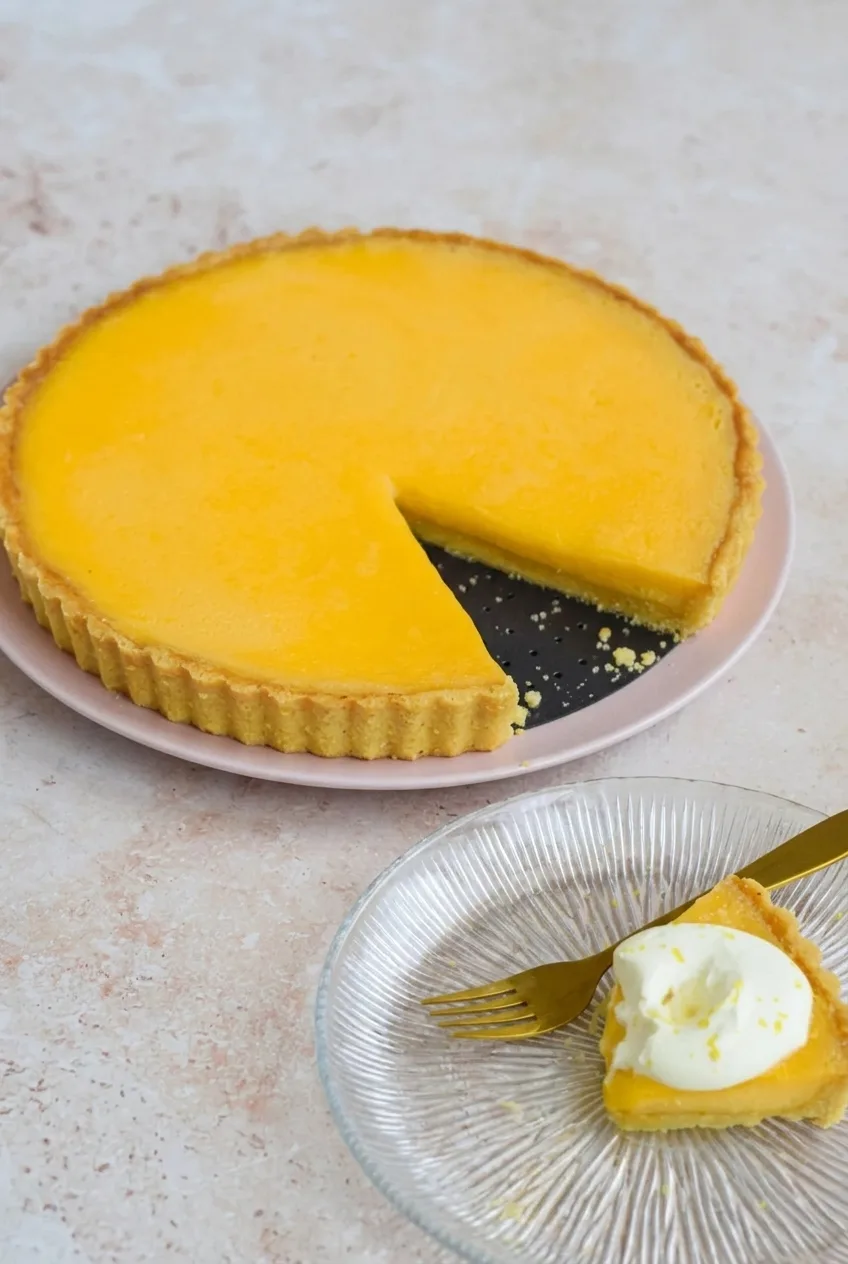
French Lemon Tart
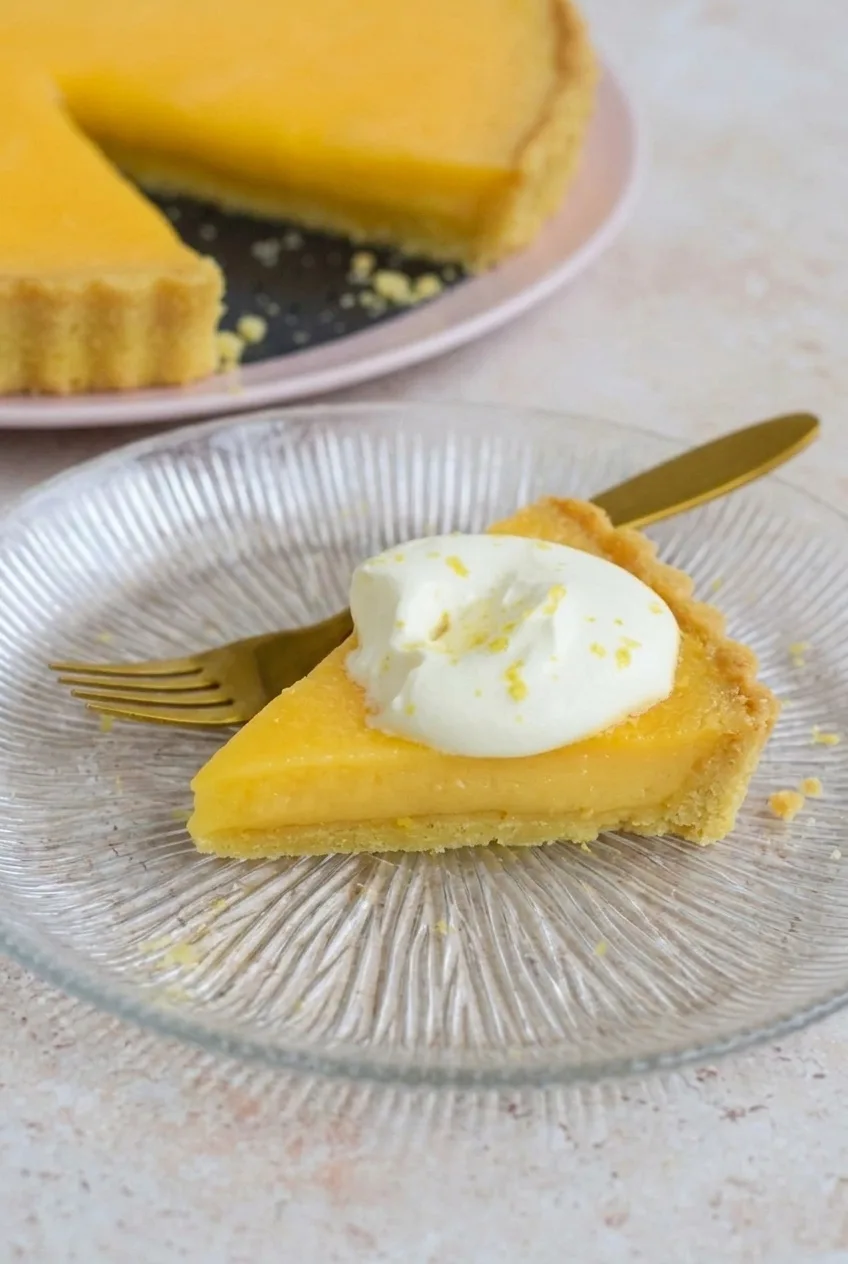
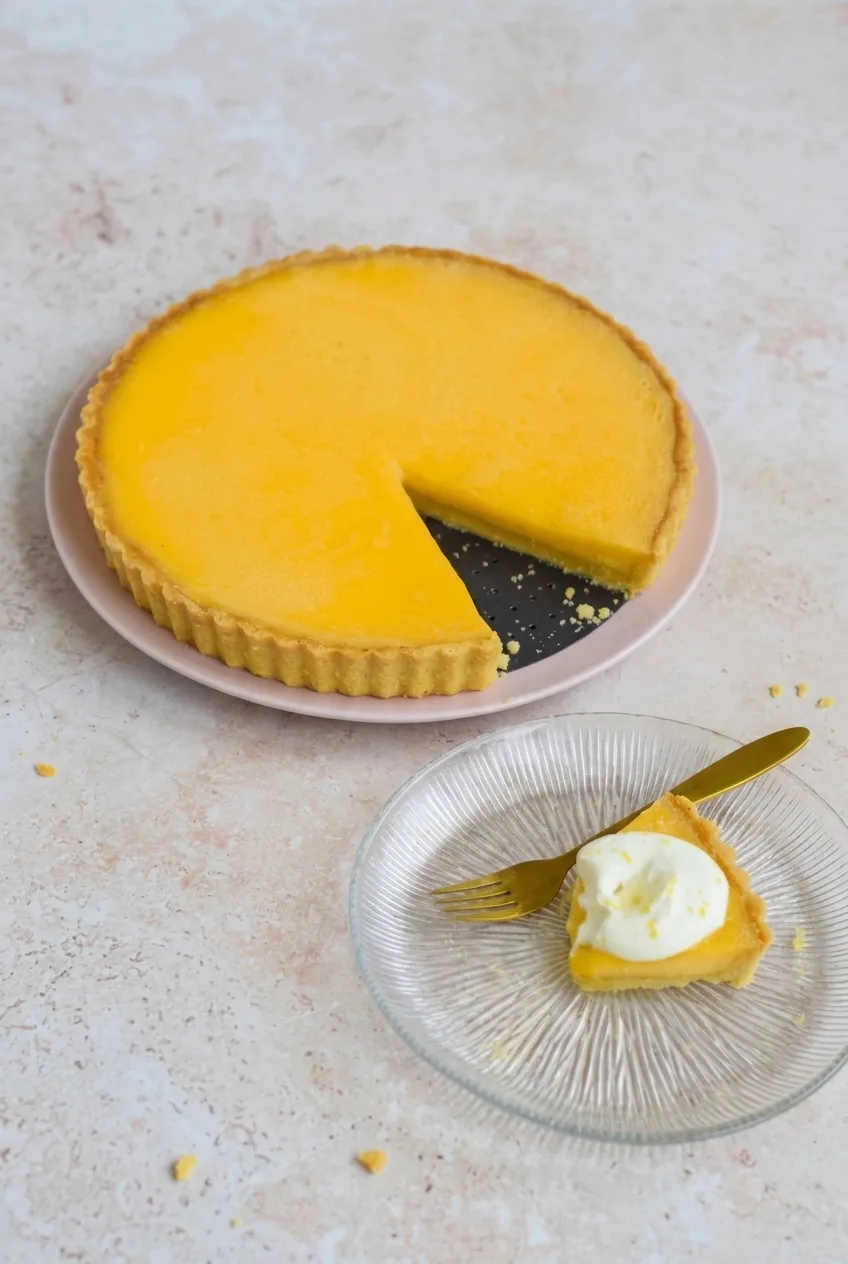
A French lemon tart pairs a thin, golden pastry shell with a smooth filling made from fresh lemon juice and zest. Fully blind-baking the shell before adding the custard helps it stay firm beneath the filling. Bake until the edges are set but the center still jiggles slightly, then chill the tart until it cuts into clean wedges. Leave the whole tart plain and add whipped cream and zest to individual slices.
Yield: One 9-inch tart, about 8 slices. Time: About 35 minutes active preparation, 45 minutes to chill the pastry, 45–55 minutes baking, plus cooling and at least 4 hours of refrigeration. Allow about 7 hours overall.
Ingredients for French Lemon Tart
Sweet pastry shell
- 1 1/4 cups all-purpose flour (155g)
- 1/4 cup powdered sugar (30g)
- 1/4 teaspoon fine salt
- 1/2 cup cold unsalted butter, cubed (115g)
- 1 large egg yolk
- 1–2 tablespoons ice water, only as needed
Lemon filling
- 3/4 cup granulated sugar (150g)
- 2 tablespoons finely grated fresh lemon zest, plus a little extra for serving
- 1/2 cup fresh lemon juice, measured after juicing (about 3–4 lemons)
- 3 large eggs
- 2 additional large egg yolks
- 1/2 cup heavy cream
For serving
- 1/2 cup heavy cream
- 1–2 teaspoons powdered sugar, optional
How to Make French Lemon Tart
- Make the pastry: Combine the flour, powdered sugar, and salt. Work in the cold butter until the mixture is crumbly, then mix in the egg yolk. Add 1 tablespoon ice water and a little more only if the dough does not hold together when pressed. It should not be sticky.
- Line and chill the pan: Roll out the dough and fit it into a 9-inch removable-bottom fluted tart pan. Press it gently into the flutes without stretching it, then trim the edge. Refrigerate the lined pan for 45 minutes.
- Blind-bake the shell: Preheat the oven to 350°F (175°C). Set the tart pan on a flat baking sheet and lightly prick the pastry base with a fork. Line with parchment and fill with pie weights or dried beans, reaching the edges. Bake for about 15 minutes. Remove the parchment and weights, then bake for another 10–15 minutes, checking after 10. The base should look dry and lightly golden.
- Mix the filling: Reduce the oven to 300°F (150°C) and let it settle at that temperature. Rub the 2 tablespoons lemon zest into the granulated sugar. Gently whisk in the eggs, additional yolks, measured lemon juice, and 1/2 cup heavy cream until combined without becoming foamy. If you see egg strands, pour the filling through a fine-mesh strainer.
- Fill and bake: Keep the tart pan on its baking sheet while pouring the custard into the fully baked shell. Stop below the pastry rim; leave behind any filling that will not fit. Move the baking sheet, not the removable-bottom pan by its base. Bake uncovered for about 20–30 minutes, checking at 20. The edges should be set and the center should have a small, cohesive jiggle rather than slosh. The top should remain smooth and unbrowned.
- Cool and chill: Let the tart cool in its pan for about 45–60 minutes. Refrigerate for at least 4 hours, preferably overnight, until thoroughly cold and firm. Carefully remove the tart ring before cutting.
- Finish individual slices: Whip the remaining 1/2 cup cream to soft peaks, adding the optional powdered sugar before whipping if desired. Top each plated slice with a dollop of cream and a little fresh lemon zest. Leave the rest of the tart plain.
How to Keep the Pastry Shell Crisp
Chilling the lined pan and placing weights all the way to the edges help the fluted sides hold their shape. Do not stretch the dough into the pan; it can pull back as it bakes. Once the weights are removed, continue baking until the base is dry and lightly golden. The brief bake with the moist filling will not make an underbaked shell crisp.
A prepared pastry shell can be used if it fits a 9-inch tart pan and is fully blind-baked. Check its capacity before adding the filling, and follow its own baking instructions.
How to Tell When the Lemon Filling Is Set
The center should still jiggle slightly when the tart comes out of the oven, while the edges look set. Look for one small movement, not liquid rippling or sloshing. Baking until the center is rigid or the top browns can leave the custard grainy or cracked.
Chilling completes the set. If the filling still flows after it is thoroughly cold, it did not bake long enough. This recipe uses a custard baked in the shell; a saucepan-cooked lemon curd requires different proportions and instructions.
Serving and Storing French Lemon Tart
The tart can be baked a day ahead and chilled overnight for easier slicing. Whip the serving cream and add the zest shortly before serving. For a chilled lemon dessert with a graham-cracker crust instead, see this creamy lemon icebox pie.
Refrigerate the undecorated tart loosely covered, without pressing wrap against the filling, and use within about 2–3 days. Store whipped cream separately. Serve the tart chilled rather than reheating it. Freezing may change the texture of this baked cream custard.
Nutrition
Approximate nutrition per slice, based on 8 slices and including the serving cream: 420 calories, 6g protein, 26g fat, and 40g carbohydrates. Approximate values per 100g: 350 calories, 5g protein, 22g fat, and 33g carbohydrates. Values vary with slice size, ingredients, and moisture lost during baking. Optional sugar for the cream is not included.
Equipment
- Mixing bowl
- Rolling pin
- 9-inch removable-bottom fluted tart pan
- Baking sheet
- Parchment paper
- Pie weights or dried beans
- Fine-mesh strainer
- Whisk
- Zester
- Electric mixer or whisk
Ingredients
Sweet pastry shell
- 1 1/4 cups all-purpose flour (155g)
- 1/4 cup powdered sugar (30g)
- 1/4 teaspoon fine salt
- 1/2 cup cold unsalted butter, cubed (115g)
- 1 large egg yolk
- 1–2 tablespoons ice water, as needed
Lemon filling
- 3/4 cup granulated sugar (150g)
- 2 tablespoons finely grated fresh lemon zest, plus extra for serving
- 1/2 cup fresh lemon juice, measured after juicing (about 3–4 lemons)
- 3 large eggs
- 2 additional large egg yolks
- 1/2 cup heavy cream
For serving
- 1/2 cup heavy cream
- 1–2 teaspoons powdered sugar, optional
Instructions
- Combine the flour, powdered sugar, and salt. Work in the cold butter until crumbly, then mix in the egg yolk.
- Add 1 tablespoon ice water. Add a little more only if needed for the dough to hold together when pressed; do not let it become sticky.
- Roll out the dough and fit it into a 9-inch removable-bottom fluted tart pan. Press it gently into the flutes without stretching, then trim the edge.
- Refrigerate the lined pan for 45 minutes.
- Preheat the oven to 350°F (175°C). Set the tart pan on a flat baking sheet and lightly prick the pastry base with a fork.
- Line the shell with parchment and fill with pie weights or dried beans, reaching the edges. Bake for about 15 minutes.
- Remove the parchment and weights. Bake for another 10–15 minutes, checking after 10 minutes, until the base is dry and lightly golden.
- Reduce the oven to 300°F (150°C) and let it settle at that temperature.
- Rub the lemon zest into the granulated sugar. Gently whisk in the eggs, additional yolks, lemon juice, and 1/2 cup heavy cream without making the mixture foamy. Strain through a fine-mesh strainer if egg strands are visible.
- Keep the tart pan on the baking sheet and pour the filling into the baked shell, stopping below the pastry rim. Leave behind any filling that will not fit.
- Bake uncovered for about 20–30 minutes, checking at 20 minutes. Remove the tart when the edges are set and the center has a small, cohesive jiggle. Keep the top smooth and unbrowned.
- Cool the tart in its pan for about 45–60 minutes, then refrigerate for at least 4 hours, preferably overnight, until cold and firm.
- Carefully remove the tart ring before cutting.
- Whip the remaining 1/2 cup cream to soft peaks, adding the optional powdered sugar before whipping if desired. Top each slice with a dollop of cream and fresh lemon zest.
Tips
- Chill the lined tart pan before baking to help the pastry hold its shape.
- Do not stretch the dough when fitting it into the pan, or it may pull back as it bakes.
- Fill the pastry shell with weights all the way to the edges during blind-baking.
- Bake the shell until its base is dry and lightly golden before adding the filling.
- Remove the tart while the center still jiggles slightly; chilling completes the set.