

Brown Butter Sweet Potato Pie
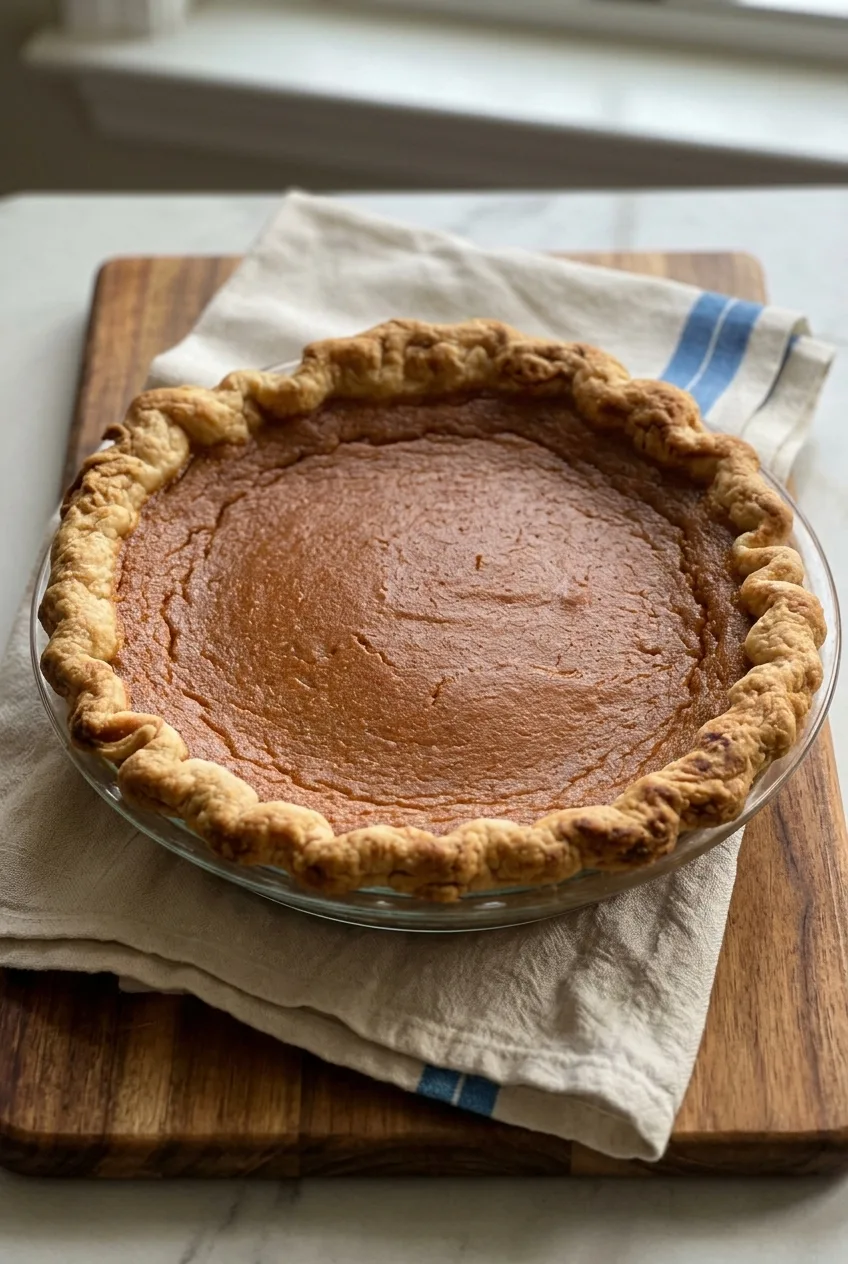
Roasted sweet potatoes give this custard pie its deep orange-brown color and flavor. Browned butter, briefly infused with a cinnamon stick and whole cloves, adds a nutty, gently spiced note. Sweetened condensed milk supplies the dairy and sweetness, so the filling needs no separate sugar.
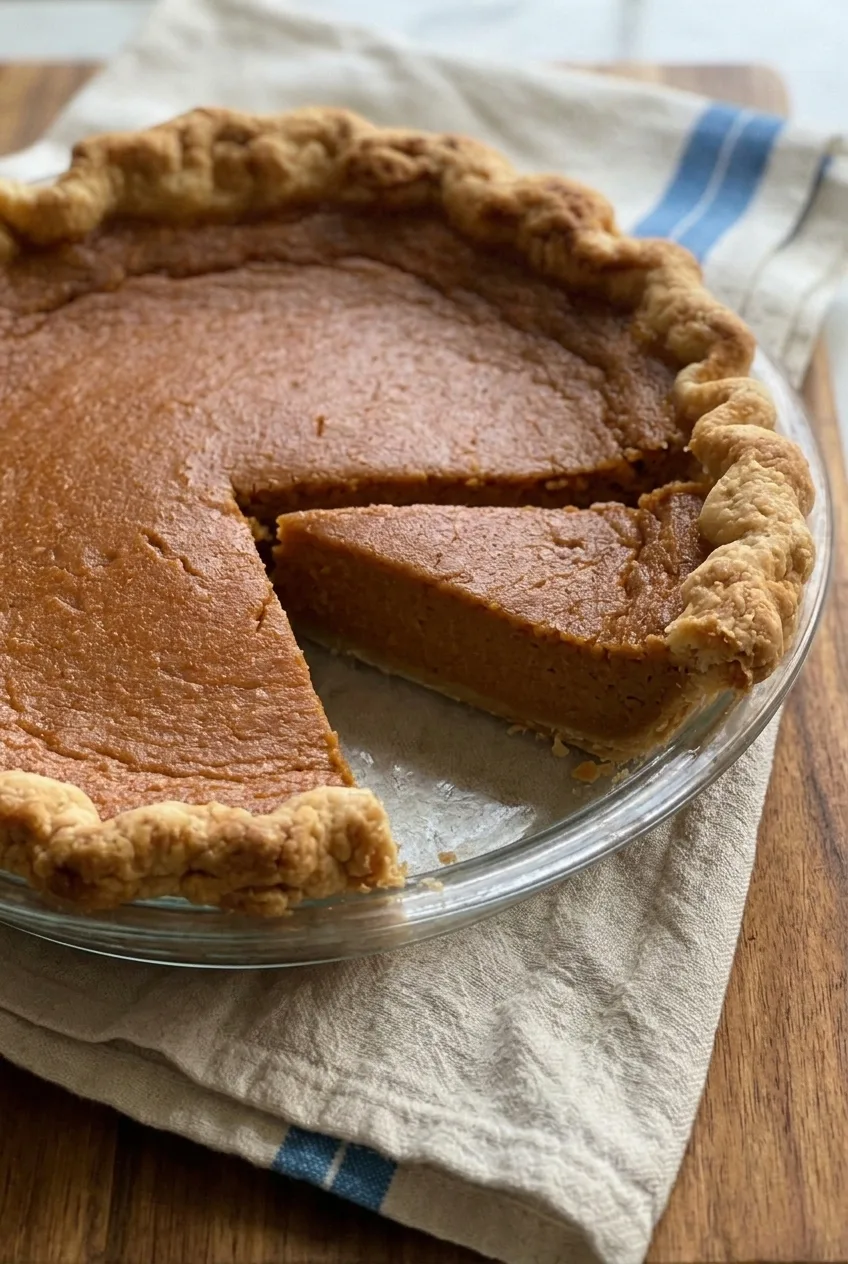
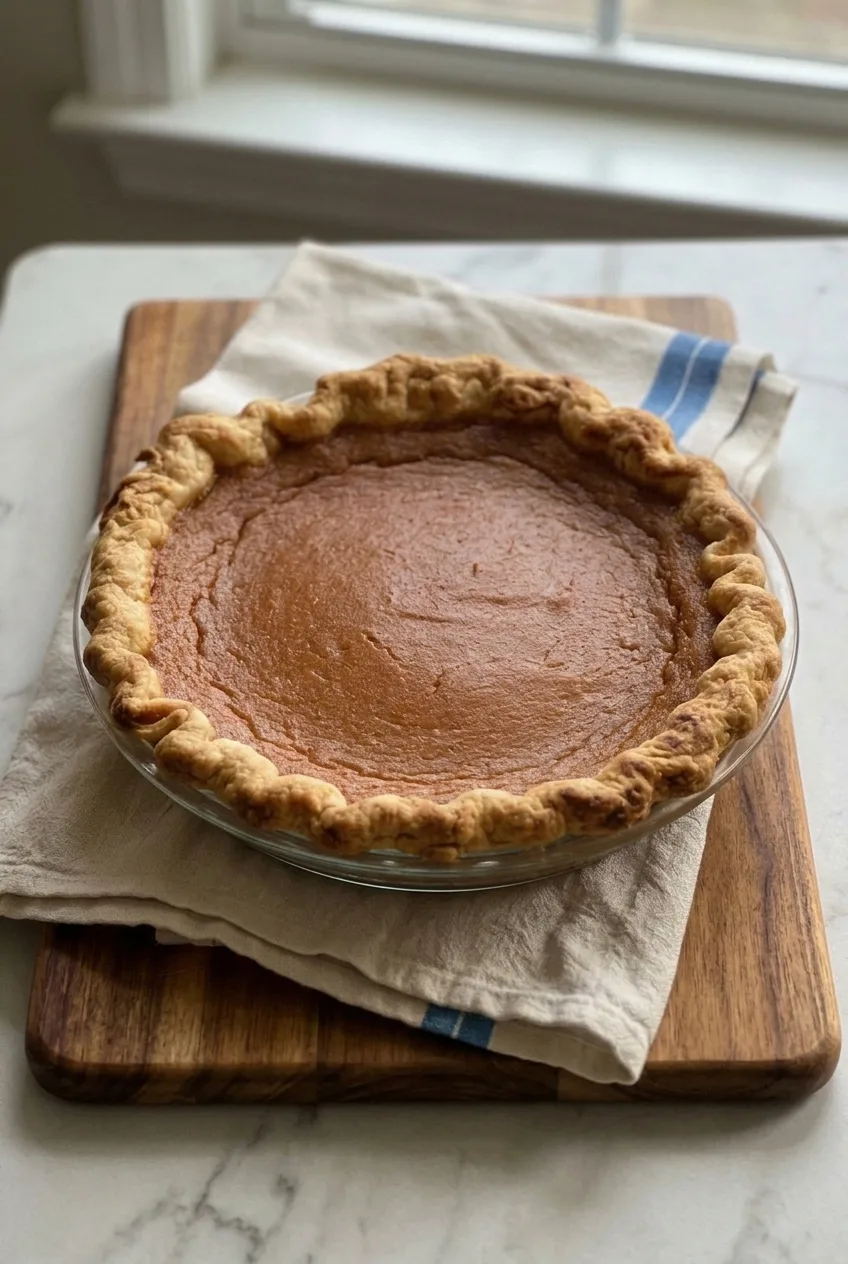
A blind-baked deep-dish crust helps keep the base dry and gives the pie its tall, rustic rim. Bake until the filling is set but still quivers slightly in the center, then cool it completely before slicing. Leave the whole pie plain to show its matte filling and golden crimp.
Ingredients for Brown Butter Sweet Potato Pie
- About 1 1/2 pounds orange-fleshed sweet potatoes (680g), enough to yield 2 cups roasted flesh
- 1 refrigerated pie crust round, sized to fit a 9-inch deep-dish pie plate
- 1/2 cup unsalted butter (1 stick; 113g)
- 1 cinnamon stick
- 3 whole cloves
- 1 can (14 ounces) sweetened condensed milk (396g)
- 2 large eggs
- 1/4 teaspoon fine salt
Use sweetened condensed milk, not evaporated milk; evaporated milk does not provide the sweetness this filling relies on. A shallow 9-inch pie plate may not hold all the filling.
Yield: One 9-inch deep-dish pie, about 8 slices. Allow about 30 minutes of active work and roughly 4 hours 45 minutes to 5 hours 45 minutes total, including cooling.
How to Make Brown Butter Sweet Potato Pie
- Roast the sweet potatoes: Heat the oven to 425°F (220°C). Prick the potatoes, place them on a lined baking sheet, and roast uncovered for about 45 to 70 minutes. Start checking at 45 minutes; a knife should slide easily through the thickest part. Cool until easy to handle, discard the skins, and measure 2 cups of flesh.
- Blind-bake the crust: Reduce the oven to 375°F (190°C) and let it reach temperature. Fit the pastry into a 9-inch deep-dish pie plate, leaving enough overhang for a tall, irregular crimp. Chill briefly, then line with parchment or foil and fill with pie weights or dried beans. Bake for about 20 minutes. Remove the lining and weights, then bake for 5 to 10 minutes more, until the base looks dry rather than raw or translucent. Let the shell cool.
- Brown and infuse the butter: Melt the butter in a small, preferably light-colored saucepan over medium heat. Stir or swirl frequently for about 5 to 8 minutes, until the milk solids turn amber-brown and smell nutty. Remove from the heat, add the cinnamon stick and cloves, and steep for about 5 minutes. Remove the cinnamon stick and all three cloves. Keep the browned milk solids in the butter and let it cool until warm, not hot.
- Blend the filling: Blend the measured sweet potato flesh until smooth. If it is visibly stringy, pass it through a food mill or fine-mesh sieve before blending. Blend in the warm browned butter, sweetened condensed milk, and salt. Add the eggs last and blend just until combined.
- Fill and bake: Reduce the oven to 350°F (175°C) and let it reach temperature. Pour the filling into the cooled shell, keeping it below the crimped rim. Set the pie plate on a rimmed baking sheet and bake uncovered for about 50 to 65 minutes, starting checks at 45 minutes. If the crust darkens before the filling sets, loosely shield the rim with foil. The edges should look set, and the center should move only slightly as one mass when the plate is gently nudged.
- Cool completely: Transfer the pie to a wire rack and cool for about 2 to 3 hours. The bottom of the plate should no longer feel warm before you slice the pie or cover it for refrigeration.
How to Brown Butter Without Burning the Spices
Watch the milk solids beneath the foam rather than relying only on the clock. Take the pan off the heat when they turn amber-brown; blackened specks can taste bitter. Steeping the whole spices off heat flavors the butter without continuing to cook them. Count the cloves as you remove them so none end up in the filling.
How to Keep the Crust Crisp and the Filling Smooth
The weighted bake helps the tall crimp hold its shape, while the final bake without weights dries the base before the custard goes in. Let the shell cool before filling it. Measure the roasted flesh rather than relying on the size of the raw potatoes; if the flesh is stringy, sieving or milling removes fibers that blending alone may not smooth out.
How to Tell When the Pie Is Done
A wet-looking center that ripples separately from the edges needs more time. A center with a slight, unified quiver is ready to cool. Pie-plate depth and oven behavior can shift the baking time, so use that movement cue rather than the clock alone. A few fine cracks may appear as the pie cools.
Storing and Freezing the Pie
Serve the pie plain, or add whipped cream to individual slices if desired. Once the pie and plate are completely cool, loosely cover and refrigerate for up to 3 days.
For longer storage, wrap the cooled pie securely in multiple layers and freeze for up to 1 month for best quality. Thaw overnight in the refrigerator; the custard texture may change slightly. Serve the thawed pie at room temperature, or warm it in a 325°F (165°C) oven for about 15 minutes, shielding the crust if needed.
For another baked custard-style dessert, try Old-Fashioned Lemon Chess Pie.
Nutrition
Approximate nutrition per slice (1/8 of the pie): 450 calories, 8g protein, 24g fat, and 53g carbohydrates. Per 100g: approximately 330 calories, 6g protein, 18g fat, and 39g carbohydrates. Estimates exclude optional whipped cream and vary with the crust brand, sweet potato yield, and finished pie weight.
Equipment
- Baking sheet
- 9-inch deep-dish pie plate
- Parchment paper or foil
- Pie weights or dried beans
- Small saucepan
- Blender
- Fine-mesh sieve or food mill
- Rimmed baking sheet
- Wire rack
Ingredients
- About 1 1/2 pounds orange-fleshed sweet potatoes (680 g), enough for 2 cups roasted flesh
- 1 refrigerated pie crust round, sized for a 9-inch deep-dish pie plate
- 1/2 cup unsalted butter (1 stick; 113 g)
- 1 cinnamon stick
- 3 whole cloves
- 1 can sweetened condensed milk (14 ounces; 396 g)
- 2 large eggs
- 1/4 teaspoon fine salt
Instructions
- Heat the oven to 425°F (220°C). Prick the sweet potatoes, place them on a lined baking sheet, and roast uncovered for 45 to 70 minutes, checking from 45 minutes, until a knife slides easily through the thickest part.
- Cool the sweet potatoes until easy to handle. Discard the skins and measure 2 cups of flesh.
- Reduce the oven to 375°F (190°C). Fit the pie crust into a 9-inch deep-dish pie plate, leaving enough overhang for a tall crimp. Chill briefly.
- Line the crust with parchment or foil and fill with pie weights or dried beans. Bake for about 20 minutes. Remove the lining and weights, then bake for another 5 to 10 minutes, until the base looks dry. Let the shell cool.
- Melt the butter in a small saucepan over medium heat. Stir or swirl frequently for 5 to 8 minutes, until the milk solids turn amber-brown and smell nutty.
- Remove the saucepan from the heat. Add the cinnamon stick and cloves and steep for about 5 minutes. Remove and discard all the spices, then let the butter cool until warm, not hot.
- Blend the measured sweet potato flesh until smooth. If it is stringy, pass it through a food mill or fine-mesh sieve first.
- Blend in the warm browned butter, sweetened condensed milk, and salt. Add the eggs last and blend just until combined.
- Reduce the oven to 350°F (175°C). Pour the filling into the cooled shell, keeping it below the crimped rim. Set the pie plate on a rimmed baking sheet.
- Bake uncovered for about 50 to 65 minutes, checking from 45 minutes. If the crust darkens before the filling sets, loosely shield the rim with foil. The edges should be set and the center should move only slightly as one mass when gently nudged.
- Transfer the pie to a wire rack and cool for 2 to 3 hours, until the plate no longer feels warm.
Tips
- Use sweetened condensed milk, not evaporated milk.
- Watch the butter’s milk solids and remove it from the heat when they turn amber-brown; blackened specks can taste bitter.
- Count the cloves as you remove them so none remain in the filling.
- Measure the roasted sweet potato flesh rather than relying on the raw potato weight.
- Use the center’s slight, unified quiver to judge doneness rather than relying on the clock alone.