

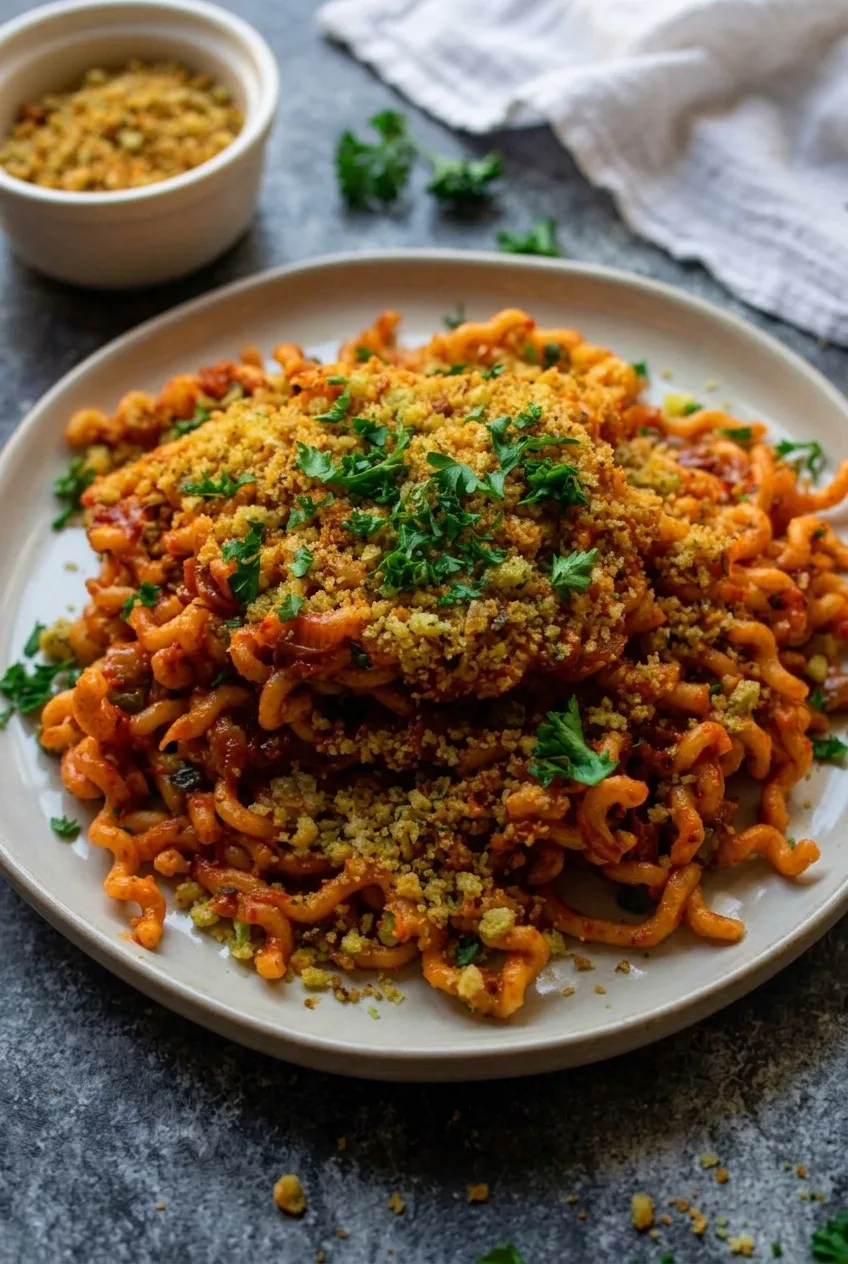
Caramelized Onion Pasta
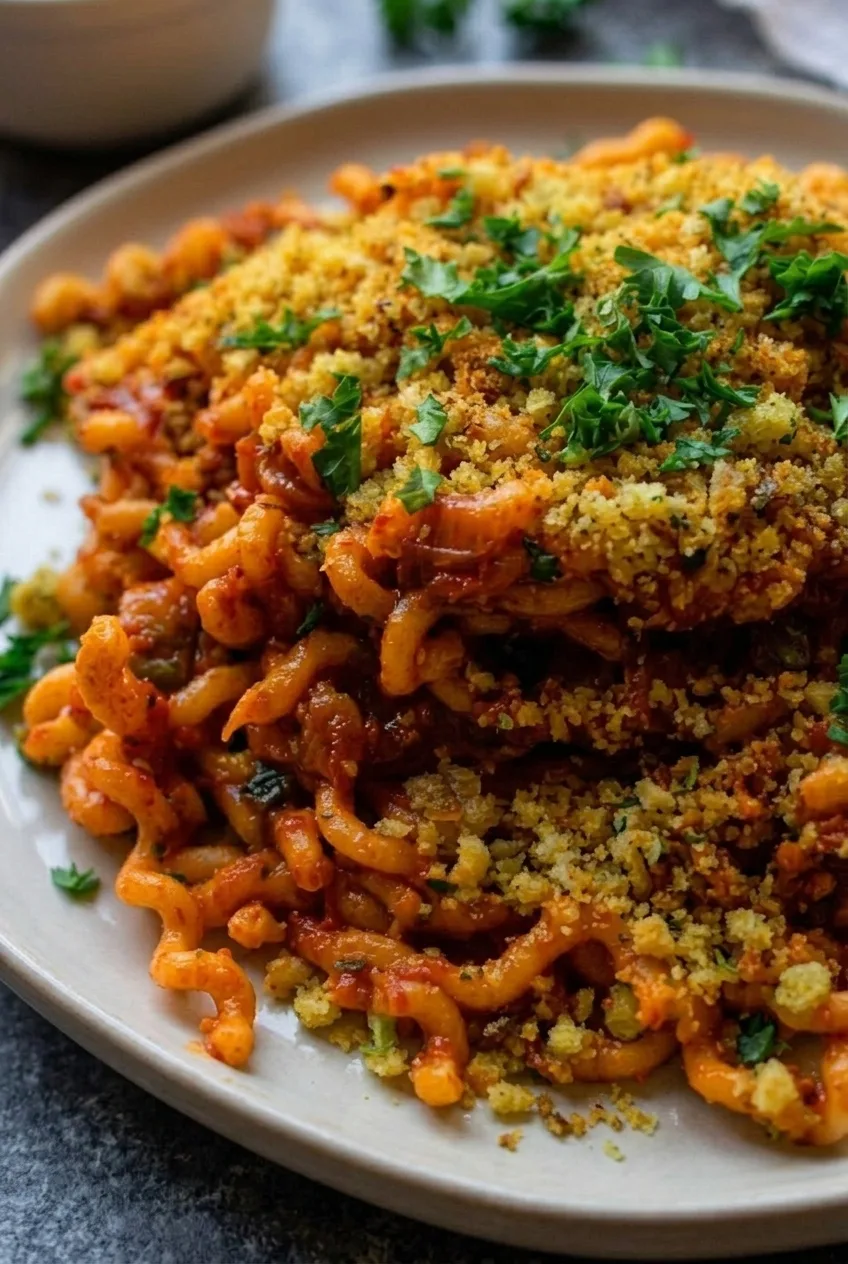
Deeply caramelized onions give this stovetop pasta its sweet-savory base. Tomato paste, red wine, and capers turn them into a red-orange sauce that coats short, curly pasta; reserved pasta water makes it glossy without cream. A generous layer of golden garlic-parsley breadcrumbs adds crunch.
The onions take the most time. Cook them until they have shrunk considerably and become deep golden and jammy, rather than stopping when they are merely soft. The exact timing depends on the skillet and stove.
Ingredients for Caramelized Onion Pasta
- 12 ounces short curly pasta, such as cavatappi (340g)
- About 2 pounds yellow onions, halved and thinly sliced (3–4 large; 900g)
- 4 tablespoons extra-virgin olive oil, divided
- 1 cup coarse breadcrumbs or panko (60g)
- 3 garlic cloves, finely minced and divided
- 2 tablespoons tomato paste (30g)
- 1/3 cup dry red wine
- 1 tablespoon capers, drained and roughly chopped
- Up to 1 cup reserved pasta water, as needed
- 3 tablespoons chopped fresh flat-leaf parsley, divided
- Kosher salt, to taste, plus more for the pasta water
- 1/4 teaspoon black pepper, plus more to taste
How to Make Caramelized Onion Pasta
- Toast the breadcrumbs: Warm 2 tablespoons olive oil in a 12-inch skillet over medium heat. Add the breadcrumbs and 1 minced garlic clove. Stir frequently for 4–6 minutes, until evenly golden. Stir in about 1 tablespoon parsley, then transfer the crumbs to a bowl so they do not continue browning in the hot skillet.
- Start the onions: Add the remaining 2 tablespoons olive oil to the skillet. Add the uniformly sliced onions, a pinch of salt, and the black pepper. Cook uncovered over medium-low heat, stirring occasionally. The onions may fill the skillet at first but will shrink as they soften.
- Caramelize the onions: Continue cooking for about 35–40 minutes, stirring occasionally and scraping the skillet as needed. Start checking for sticking and color after 20 minutes. The onions are ready when substantially reduced, very soft, and deep golden to light brown. If the pan dries or the onions stick, lower the heat if needed and add 1–2 tablespoons water. Scrape up the browned bits and let the water cook off as the onions continue to brown.
- Boil the pasta: When the onions are nearly ready, cook the pasta in a large pot of well-salted boiling water until al dente, following the package directions. Start checking at the earliest suggested time. Reserve at least 1 cup pasta water before draining; do not rinse the pasta.
- Build the sauce: Stir the remaining 2 minced garlic cloves into the onions for about 30 seconds, until fragrant but not browned. Add the tomato paste and cook briefly, until it darkens slightly. Pour in the wine and scrape up the browned bits. Add the capers and simmer over medium heat for 3–5 minutes, until the wine has reduced and the mixture looks saucy rather than watery.
- Coat the pasta: Add the drained pasta and about 1/2 cup reserved pasta water to the skillet. Toss over medium-low heat for 2–3 minutes, adding more pasta water a splash at a time until the sauce looks glossy and clings to the curls without pooling. Stir in some of the remaining parsley and adjust the salt and pepper to taste.
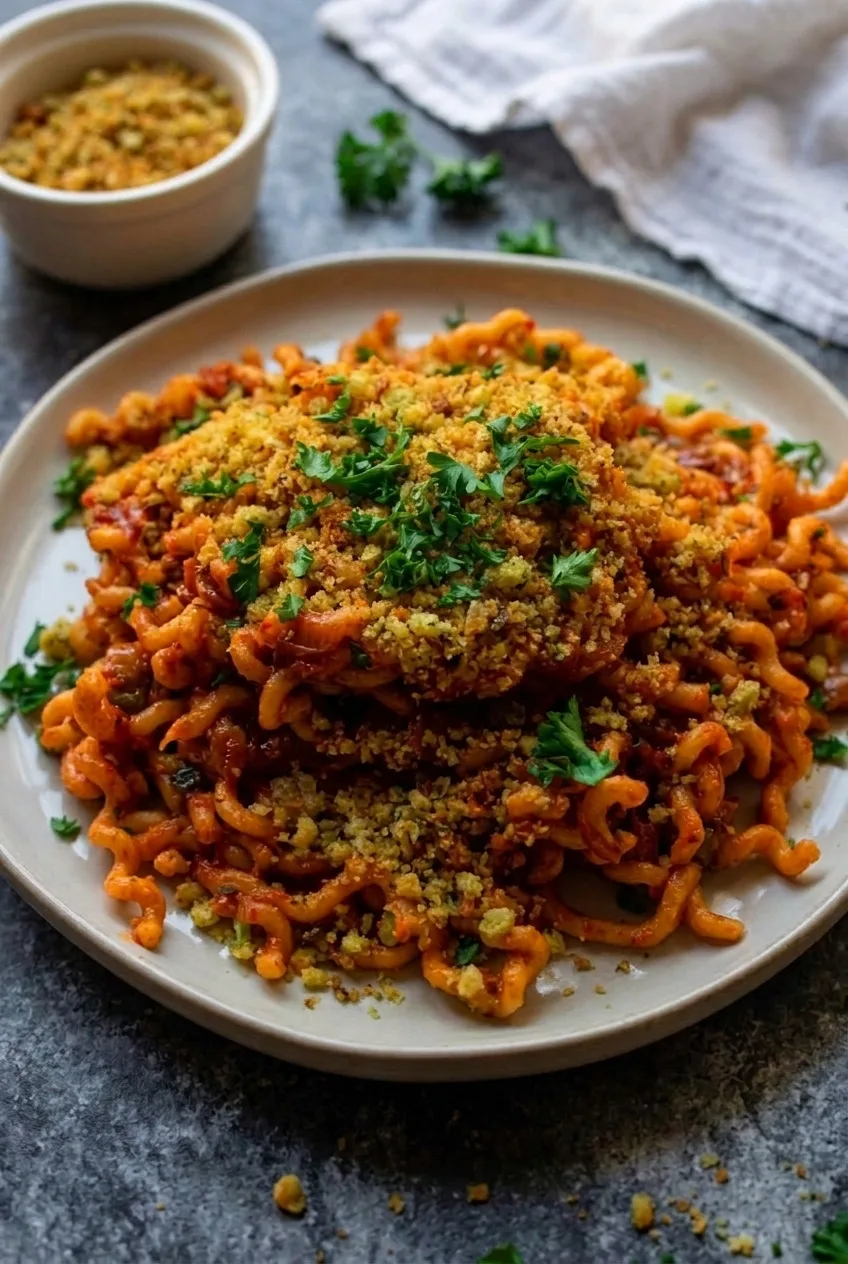
- Top and serve: Pile the pasta loosely on a broad plate or divide it among plates. Spoon the breadcrumbs generously over the center, scatter the remaining parsley on top, and serve promptly. Offer any extra crumbs on the side.
How to Tell When the Onions Are Caramelized
Translucent onions need more time. Look for a deep golden color, substantial reduction, and a soft, jammy texture. A wide skillet helps moisture evaporate; a smaller, crowded pan may take longer. Stir occasionally rather than constantly so the onions have a chance to brown, but check often enough to catch sticking.
Keeping the Sauce Glossy
Pasta absorbs liquid as it is tossed, so a sauce that first looks loose may tighten quickly. Start with about 1/2 cup pasta water and add more gradually. Stop when the sauce coats the pasta and looks moist, not dry or submerged.
Keeping the Breadcrumbs Crisp
Keep the toasted crumbs out of the sauce and add them just before serving. Store any extras separately from leftover pasta. If they soften, refresh them in a dry skillet before using.
Ingredient Swaps
Fusilli or rotini work in place of cavatappi; choose a short shape with curves or ridges to hold the sauce. For an alcohol-free version, deglaze the onions with a splash of reserved pasta water, then add a small splash of red wine vinegar to taste. Do not replace the wine with an equal amount of vinegar.
Make-Ahead, Storage, and Reheating
The onions can be cooked ahead and refrigerated in an airtight container. Cook the pasta and finish the sauce closer to serving for the best texture.
Refrigerate cooled leftover pasta in an airtight container for 3–4 days, keeping any extra breadcrumbs separate. Reheat the pasta gently in a skillet over medium-low heat with a splash of water, stirring until loosened and hot. Add the breadcrumbs after reheating. Freezing the finished pasta is not recommended because its texture may suffer.
Nutrition
Approximate nutrition per serving, based on 4 main-course servings: 610 calories, 16g protein, 16g fat, and 99g carbohydrates. Approximate nutrition per 100g: 175 calories, 5g protein, 5g fat, and 28g carbohydrates. Values are estimates and vary with the ingredients used.
Equipment
- 12-inch skillet
- Large pot
- Colander
- Mixing bowl
Ingredients
Pasta and sauce
- 12 ounces short curly pasta, such as cavatappi (340g)
- About 2 pounds yellow onions, halved and thinly sliced (3–4 large; 900g)
- 4 tablespoons extra-virgin olive oil, divided
- 3 garlic cloves, finely minced and divided
- 2 tablespoons tomato paste (30g)
- 1/3 cup dry red wine
- 1 tablespoon capers, drained and roughly chopped
- Up to 1 cup reserved pasta water, as needed
- 3 tablespoons chopped fresh flat-leaf parsley, divided
- Kosher salt, to taste, plus more for the pasta water
- 1/4 teaspoon black pepper, plus more to taste
Breadcrumb topping
- 1 cup coarse breadcrumbs or panko (60g)
Instructions
- Warm 2 tablespoons olive oil in a 12-inch skillet over medium heat. Add the breadcrumbs and 1 minced garlic clove. Stir frequently for 4–6 minutes, until evenly golden.
- Stir about 1 tablespoon parsley into the breadcrumbs, then transfer them to a bowl.
- Add the remaining 2 tablespoons olive oil to the skillet. Add the onions, a pinch of salt, and the black pepper. Cook uncovered over medium-low heat, stirring occasionally.
- Continue cooking the onions for about 35–40 minutes, scraping the skillet as needed, until substantially reduced, very soft, and deep golden to light brown. If the pan dries or the onions stick, lower the heat and add 1–2 tablespoons water; scrape up the browned bits and let the water cook off.
- When the onions are nearly ready, cook the pasta in a large pot of well-salted boiling water until al dente, following the package directions. Reserve at least 1 cup pasta water, then drain the pasta without rinsing.
- Stir the remaining 2 minced garlic cloves into the onions for about 30 seconds, until fragrant but not browned. Add the tomato paste and cook briefly, until it darkens slightly.
- Pour in the wine and scrape up the browned bits. Add the capers and simmer over medium heat for 3–5 minutes, until reduced and saucy rather than watery.
- Add the drained pasta and about 1/2 cup reserved pasta water. Toss over medium-low heat for 2–3 minutes, adding more pasta water a splash at a time until the sauce is glossy and clings to the pasta.
- Stir in some of the remaining parsley and adjust the salt and pepper to taste.
- Serve the pasta topped with the breadcrumbs and remaining parsley. Offer extra breadcrumbs on the side.
Tips
- Cook the onions until deep golden, substantially reduced, and jammy; translucent onions need more time.
- Stir occasionally rather than constantly, but check often enough to catch sticking.
- Add a little water if the skillet dries or the onions start to stick.
- Add reserved pasta water gradually and stop when the sauce coats the pasta without pooling.
- Keep the breadcrumbs separate from the sauce until serving so they stay crisp.
Variations
- Fusilli or Rotini Pasta: Use fusilli or rotini in place of cavatappi; short shapes with curves or ridges hold the sauce well.
- Alcohol-Free Version: Deglaze the onions with a splash of reserved pasta water, then add a small splash of red wine vinegar to taste instead of the wine.